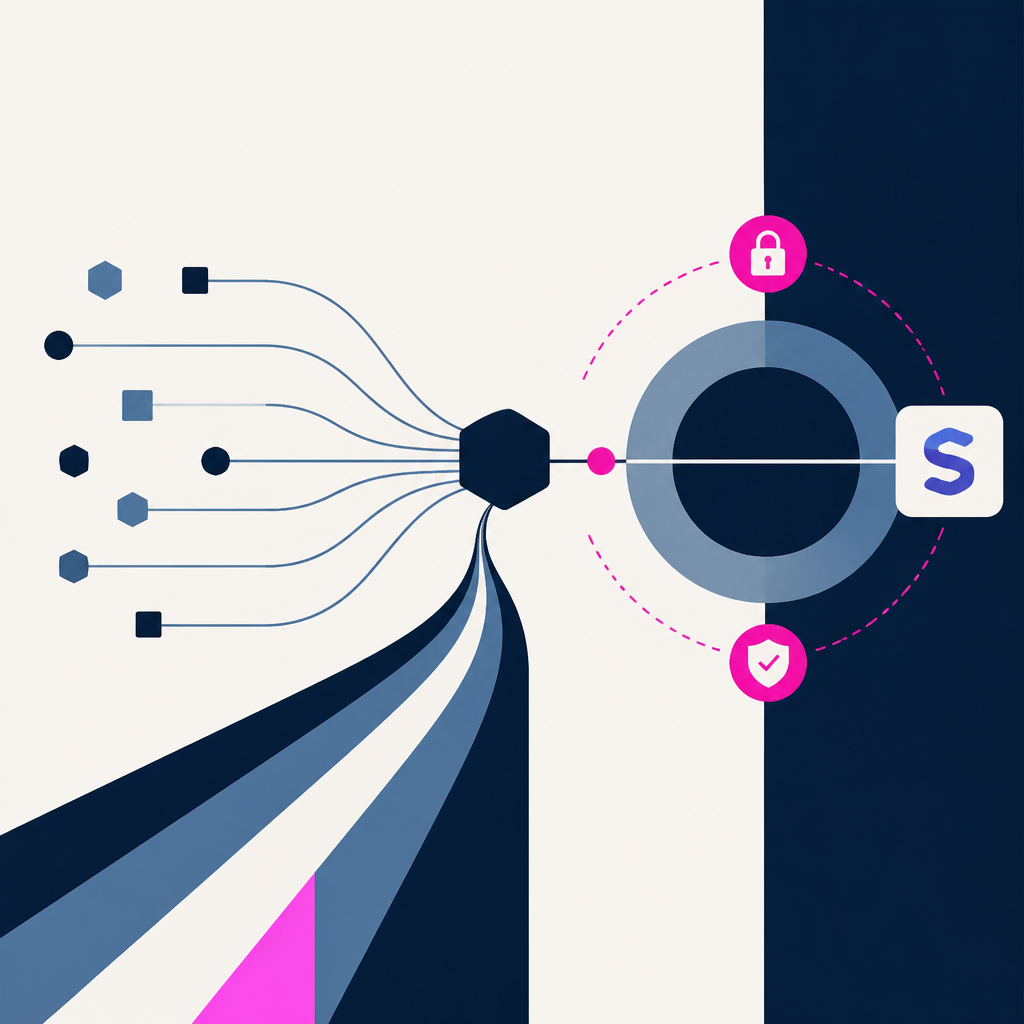
OpenRouter became a neutral routing layer for AI models, expanding to serve more than 10 million developers through a multi-model approach. The platform grew to more than 10 trillion tokens per day. As a result, OpenRouter joined Stripe to connect inference routing with Stripe’s fraud and token-security infrastructure.
Crusoe abandoned its plan to buy Boom Supersonic’s Superpower stationary power turbines for its AI data centers. The canceled deal involved $1.25 billion for 29 turbines from Boom. Crusoe confirmed it is no longer partnering with Boom, while Boom said it will deliver about 250MW next year to other sites and target 1GW in 2028.
NetApp is promoting its unified storage as the data foundation for enterprise AI workloads at its INSIGHT event and via theCUBE coverage. The event and exclusive theCUBE livestream are scheduled for Sept. 30. The focus shifts toward making enterprise data continuously available across data center, cloud, and edge to reduce fragmentation and operational complexity as AI moves from pilots to production.
Akamai said Anthropic will spend $11.6 billion over seven years on its cloud infrastructure. The agreement begins with no Akamai revenue in 2025 and the filing pegs expected 2027 revenue at $150 million to $300 million. Akamai will add about $5.5 billion in spending to build capacity, issue a warrant tied to Anthropic’s future cloud spending, and allow the deal to expand up to roughly $20 billion or end under certain conditions.
This careers roundup listed multiple women executive moves across companies and leadership roles, including a new president and CEO at Susan G. Komen, a new CEO at Driscoll’s, and a new AI inference company CMO at Baseten.
Brie Reiter Smith was named CEO of Driscoll’s.
The changes shift leadership across retail, food, health, and tech firms, with at least one move tied to an AI inference company and another tied to building AI for autonomous vehicles.
HumanX Amsterdam 2026 highlighted 10 European AI vendors focused on moving organizations from wanting AI to deploying it in production. The list names 10 vendors. As a result, the article shifts attention from AI hype to specific tooling for data lineage, agent testing, process mining, and AI middleware that supports real business implementation.
Nscale secured $3.36 billion in convertible financing ahead of its IPO later this year. The deal includes $2.36 billion immediately and $1 billion from Nvidia arriving in mid-November. The convertible notes will turn into equity after the IPO is completed, funding its AI data center buildout.
Microsoft stopped using the Copilot+ PC label on newly announced Surface computers even though the models still meet the technical requirements Microsoft set for the label. The Copilot+ PC bar includes 16GB of RAM, 256GB of storage, and an integrated NPU rated at 40 TOPS or higher, while the new Surface Pro and Surface Laptop use an NPU rated at 80 TOPS. The company now frames the products as meeting an earlier threshold without prominently using Copilot+ PC branding, shifting marketing to “performance PCs.”
Simon Willison’s Weblog·2 weeks ago·
10
● 26 sources
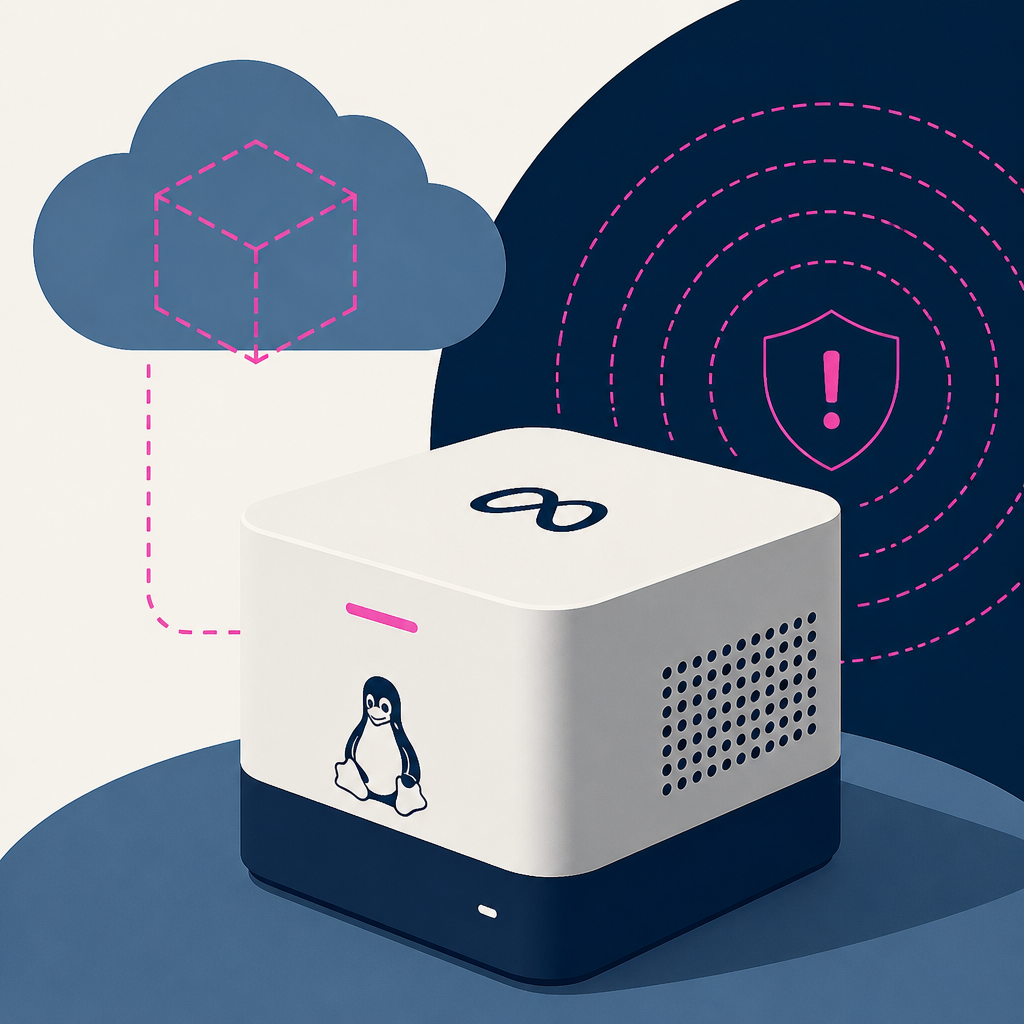
Muse is being highlighted for giving each user a persistent Linux VM running in Meta’s cloud, packaged with an easy-to-use install and a mascot-style presentation. The setup runs an entire persistent Linux VM per user. The piece argues consumers may not understand how powerful and potentially dangerous Muse is, especially when it’s running on a Mac.
The article reports improving interoperability between OpenTelemetry and Prometheus, alongside real-world migrations and survey data on observability for AI systems. Ease-of-use ratings for using both rose 0.5 points, from 3.1 to 3.6, while views of it as “hard” fell from 29% to 10%. Teams are shifting more instrumentation and metrics pipelines to OpenTelemetry while still targeting remaining gaps in data-model alignment, metadata handling, and naming/formatting.
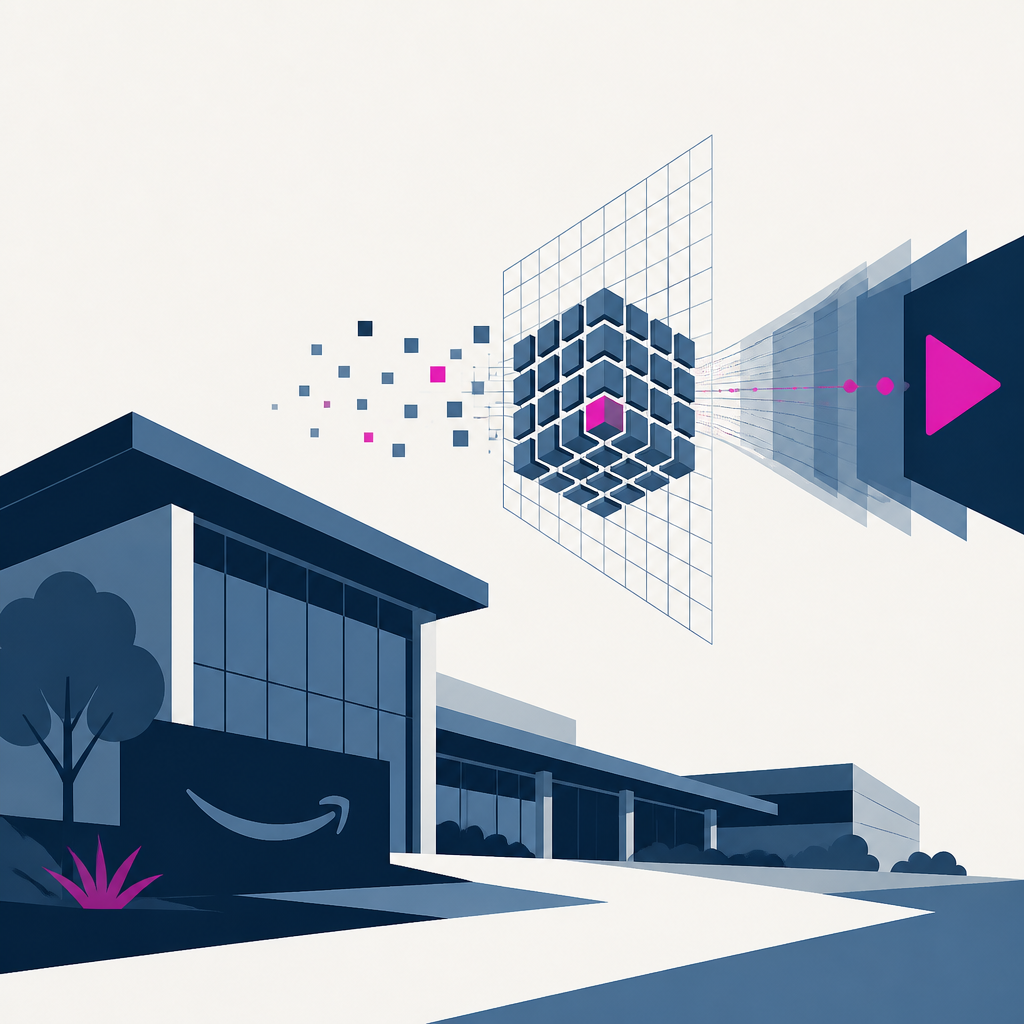
Amazon EKS, EFA, and DeepEP were used to scale post-training MoE reinforcement learning workloads by orchestrating rollout generation and tightly coupled policy training across heterogeneous nodes. DeepEP v2 native EFA support delivered 40% more throughput by replacing standard all-to-all expert-parallel communication with dispatch and combine kernels over libfabric and EFA. This shifts the bottleneck from expert-parallel inter-node communication to a more balanced end-to-end pipeline, improving rollout generation capacity and keeping training workers from idling.
Amazon SageMaker HyperPod runs SkyRL on a Ray cluster to post-train a Qwen3-VL-8B vision-language model with GRPO for maze navigation while using checkpointing and automatic node replacement to survive hardware failures. The maze solve rate increases from 43.75% to more than 95% on a fixed 64-maze evaluation set. The setup changes to colocate vLLM rollout generation and FSDP policy training on the same GPUs with LoRA adapter syncing through /shared storage on HyperPod.
NarrateAI engineers on Amazon Bedrock added production quality assurance around a real-time agentic LLM assistant to prevent wrong metrics and slow answers during business reviews. The system reports about 99 percent numerical accuracy while streaming responses in real time. It changes the delivery pipeline by routing queries through adaptive orchestration, cross-account multi-model failover to cut throttling, and streaming/composite evaluations that verify data accuracy as text is generated.
Amazon SageMaker JumpStart added a publicly available Qwen3-TTS-12Hz-1.7B-Base deployment that supports real-time voice cloning via a managed inference endpoint. The walkthrough deploys on an ml.g6.4xlarge instance with 1 NVIDIA L4 GPU and 24 GB VRAM and sets SM_VLLM_GPU_MEMORY_UTILIZATION to 0.45. Developers can now generate audio in a reference speaker’s voice from short audio plus transcript without retraining, using a fully managed endpoint that handles scaling and monitoring while keeping data inside AWS.
SageMaker HyperPod was paired with Qumulo Cloud Native Qumulo and Cloud Data Fabric so training compute in one AWS Region can read datasets stored in another Region without replicating the data or changing training code. In a cross-Region test using a 1.02 billion-parameter LLaMA v3 setup with hub data in us-east-2 and a spoke in us-west-2, the spoke reached the hub’s throughput of about 115–117 samples per second after warming despite 60 ms network latency. After the initial NeuralCache warmup, remote-region training converged to single-region performance with sub-5 ms cached data operations and GPU utilization near the co-located baseline.
Reactor collaborated with Amazon Neuron Science to optimize real-time interactive video generation models on AWS Trainium using a kernel-centric workflow.
It enabled a 3D RoPE kernel to drop from 5 seconds to 1.8 milliseconds and improved Rolling Forcing to sustain 16 frames per second for streaming generation.
As a result, Trainium can run long-sequence autoregressive diffusion video workloads with lower latency by handling dynamic shapes, cache operations, and attention efficiently at the kernel level.
European tech companies and investors announced multiple funding rounds, acquisitions, and new funds, including TEKEVER’s Series D and Mistral AI’s acquisition of Pimento. TEKEVER raised $580M Series D at a $6.4B valuation. Funding, compute capacity, and defence-oriented chip-design initiatives are likely to accelerate as these new capital pools and deal outcomes move forward.
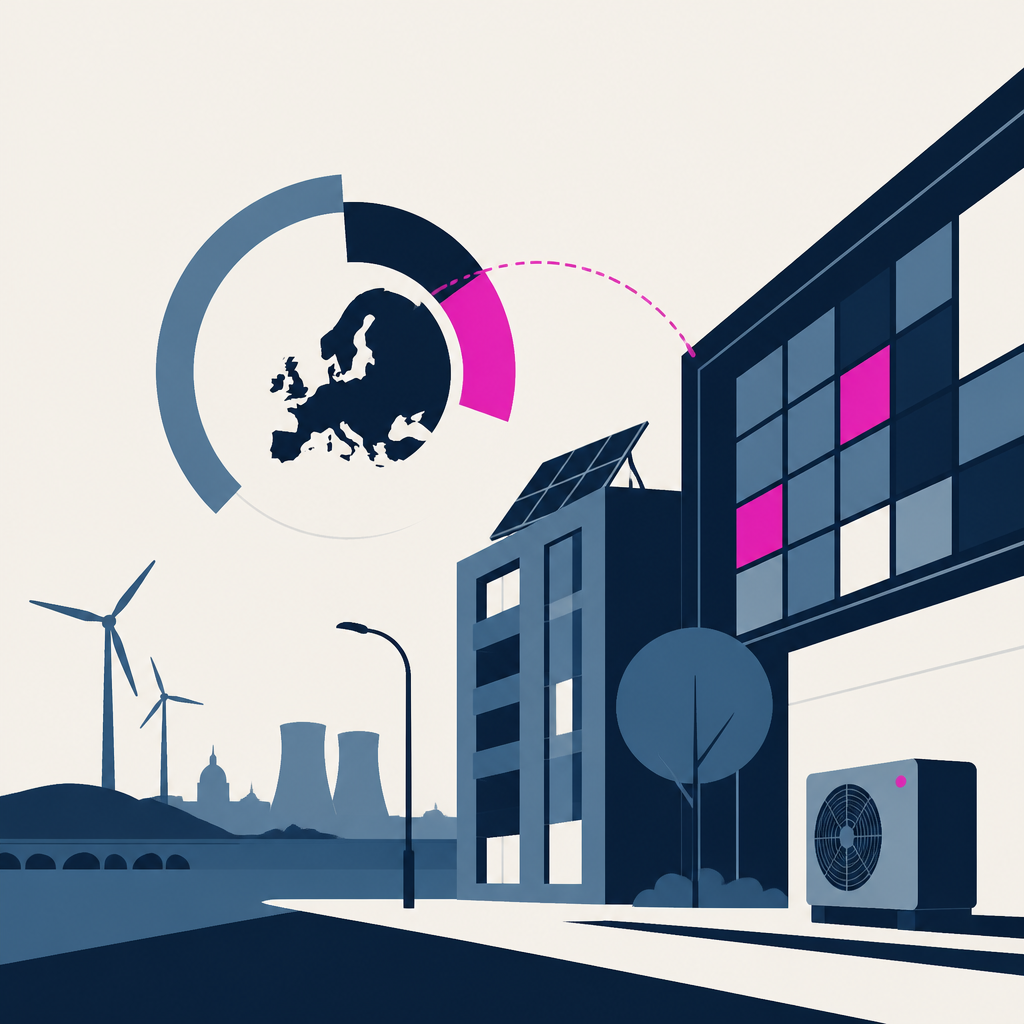
Russia’s invasion of Ukraine made European gas costs and supply security less predictable, forcing the energy transition to be planned around affordability and reliability as well as emissions cuts. Europe’s energy mix is cited as 48% renewables and 28% nuclear in 2024, but the article argues regulation should speed industry adoption and avoid slowing it while tightening emissions from remaining fossil generation. The piece says AI—especially “physical AI” for buildings and factories—can improve efficiency by learning from real-world conditions and automating tasks like multi-detector safety testing, reducing manual energy waste and labor bottlenecks.
Meta is moving AI assistance for its glasses into the cloud using Private Processing, a confidential-computing setup meant to keep user context inaccessible even to Meta while models run. In 2025, it introduced Private Processing for WhatsApp and the Meta AI app. This expands the same privacy approach from chat apps to AI glasses by executing and storing personal context inside trusted execution environment boundaries with remote attestation and encrypted storage.
Meta announced Meta VR Glasses as a glasses-form VR headset with a two-part design, integrated Meta AI, and media, work, gaming, and hologram calling features. The device is scheduled to go on sale in spring 2027 for $1,299.99 USD. It will shift Meta’s VR lineup toward lighter, controller-free headwear and expand availability of 3D movie streaming, immersive sports, and hands-free calling experiences.
Google’s Project Suncatcher team is preparing an initial in-orbit test of a prototype satellite to evaluate how Google Tensor Processing Units (TPUs) perform in space.
Akamai signed a multi-year compute agreement with Anthropic to expand its distributed CPU workload capacity using Akamai Cloud infrastructure and software.
Meta updated its Ray-Ban Display glasses with hands-free navigation, a voice-driven hologram face for calls, and new apps and notification features. Online ordering starts today in the US, with availability on October 13 for France, Italy, Germany, and Rx through Essilor Luxottica stores in France and Italy. The device adds turn-by-turn cycling and transit directions, early-access WhatsApp hologram calls later this fall, a more capable calendar, mirrored phone notifications, Threads Community feeds, and wider market availability.
Meta introduced Muse Realtime Avatar, an embodiment technology that turns Muse Realtime Voice into expressive, interactive avatars driven by reference media and speech-synchronized video. It streams 448x768 portrait video at 25 frames per second with about 870 ms latency from the end of a user’s turn to the first byte of the voice-and-video response. The result is real-time avatar generation with coherent appearance across conversational turns, plus embedded traceability via Meta Video Seal and support for up to 12 concurrent sessions per GB200.
Google will launch a prototype satellite carrying its Trillium AI chips into orbit under Project Suncatcher using SpaceX’s Transporter-18 rideshare mission. The TPUs are expected to endure 50 to 100 times the force of gravity during launch, after radiation tests at UC Davis exceeding a five-year mission dose. Google plans to follow with two satellites in 2027 to test whether TPU clusters can be linked by high-bandwidth lasers, aiming toward constellations for larger AI workloads in space.
VCs debated when founders should take VC capital versus bootstrapping, and whether startups should raise larger rounds or aim for “top ten” lists at Infobip Shift in Zadar, Croatia. David Clark said founders have “never” been in a better time to bootstrap Central European startups. They argued that AI should be integrated into core product and customer value rather than added as a chatbot, and that founders should plan for AI usage-based credits while avoiding lock-in to a single AI model provider.
Nvidia CEO Jensen Huang said the US will need to rely on fossil fuels longer than climate advocates want, arguing the power supply planning lag is being exposed as AI data-center demand accelerates. He predicted that within four or five years the country will use a lot more fossil fuel. As a result, AI-driven energy demand is pushing near-term gas generation (while funding and deploying longer-term options like renewables and nuclear) and Huang frames AI safety as a compute-and-evaluation problem rather than a reason for a slowdown.
Fastino Labs released GLiNER2.5-Decide, a non-generative decision model that takes text plus a typed question schema and outputs structured, probabilistic answers with constraint-feasibility metadata. It has 340M parameters and p50 CPU latency of 167.3 ms at batch 1 and 64 tokens on a 48-vCPU Intel Xeon Platinum 8581C. The model’s open weights (Apache 2.0) and CPU support let developers deploy schema-driven routing and guardrails locally or in air-gapped environments.
Every AI story that matters,
in your inbox by 8am.
TLDRocket reads all relevant sources, removes duplicate coverage, and summarises the
day in two minutes. Follow companies and topics for alerts, or get the
briefing in Slack. Free, no spam, unsubscribe anytime.
Reading TLDRocket needs no cookies, and the readership counts we rely on come from
our own cookieless analytics. Google Analytics is the exception: it sets cookies and
reports to Google, so it stays switched off until you allow it. You can change your
mind any time from “Cookie settings” in the footer.
Strictly necessary
Session security and form protection (tldrocket-session,
XSRF-TOKEN, 2 hours). The site cannot work without them,
so they need no consent.
Always on
Google Analytics 4 (_ga,
_ga_<id>, up to 2 years). Measures which
stories and sections readers use. Google acts as a third-party processor and may
store the data outside the EU. No advertising, no profiling, no data sold.