
OpenRouter: from Seed to Stripe — with OpenRouter’s Alex Atallah & AMP’s Anjney Midha
Latent Space
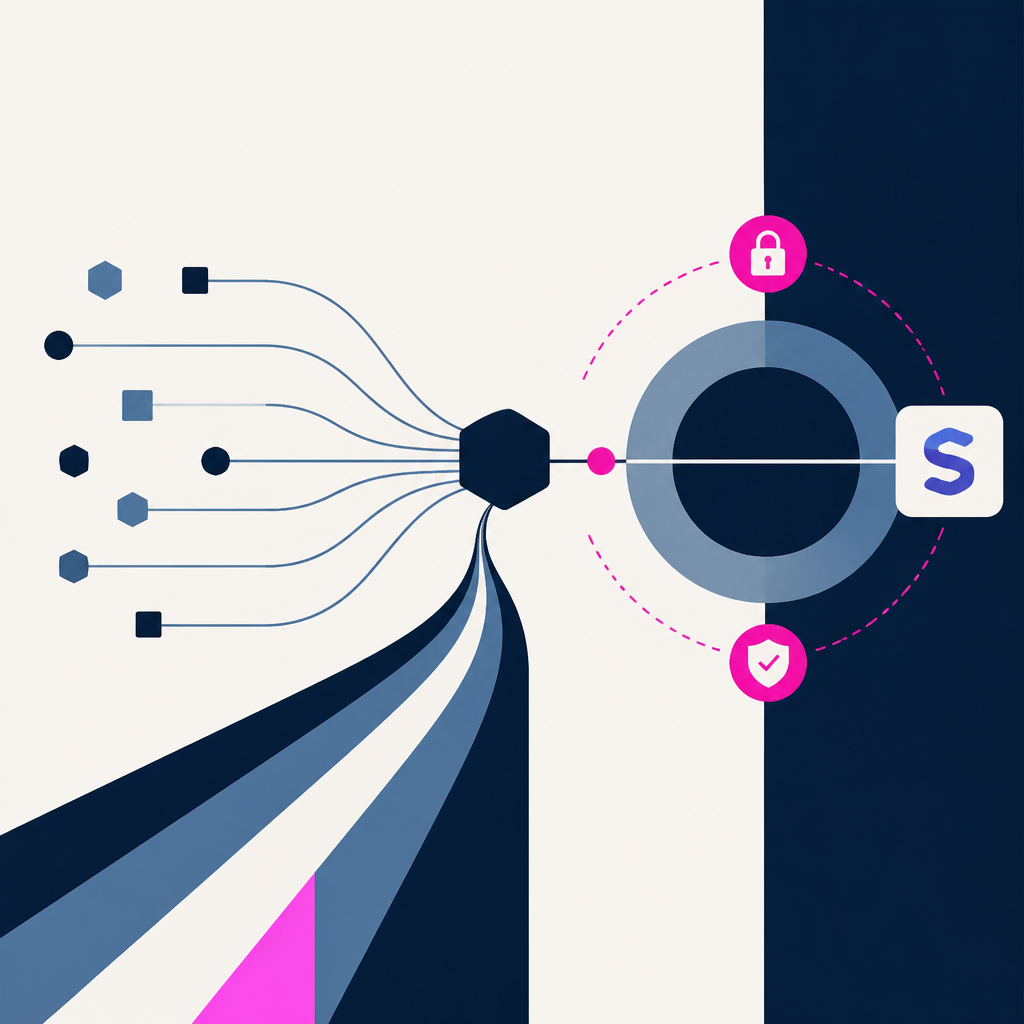
OpenRouter grew into a routing layer for 10 million+ developers. Now Stripe is stepping in, and the scary part is token fraud.
Based on reporting by Latent Space — read the original for the full story.
Summary, retelling and take written by AI under human oversight; images are AI-generated illustrations. How we work · Report an error
OpenRouter started as a bet that AI would not settle on one winner. That seemed unfashionable when OpenAI was still the obvious center of gravity, but the rise of Llama, Alpaca, Mistral, and other open-weight models made the case fast. Alex Atallah and Anjney Midha framed the company as something between an API and a marketplace: a place where developers can keep swapping models instead of marrying one SDK forever.
That idea got sharper as the ecosystem changed. Midha points to Alpaca as the moment it became obvious that a small team could turn a base model into something genuinely usable with a modest budget. He also argues that there was no real home base for watching how LLMs were being used, especially once closed models and open models started coexisting in the same market. OpenRouter filled that gap by making usage visible and by giving developers a way to route between models as conditions changed.
Atallah says the company could have chased a lot of adjacent products, including fine-tuning and memory, but chose to stay narrow. That focus mattered. OpenRouter’s rankings turned into a live map of shifting AI usage, and its model fusion experiments showed another side of the company: it tried an early version, deleted it, then brought it back years later. The platform now processes more than 10 trillion tokens per day, which is a long way from being waved off as “just a wrapper.”
The Stripe connection makes sense in a less glamorous, more dangerous way. If OpenRouter is becoming a critical layer in the token economy, then fraud starts looking like a core infrastructure problem, not an edge case. Midha’s warning is blunt: the next wave may not just come from humans gaming the system, but from autonomous agents attacking valuable token flows. That is exactly the sort of mess Stripe knows how to charge for, and how to police.
The other telling detail is what OpenRouter was and wasn’t willing to become. It did not try to be everything, and that restraint may be the most underrated part of the story. In AI, everyone wants to be the model; fewer people want to be the plumbing. But plumbing is where the traffic ends up.
My take — AI-written commentary, not fact-checked reporting
This is the uncomfortable truth for the model crowd: distribution, routing, and fraud control are becoming the real moat. Everyone loves announcing a smarter model; almost nobody wants to babysit the token pipes when agents start poking holes in them. OpenRouter looks less like a wrapper and more like the sort of boring infrastructure that ends up running the whole party.
Read more about this at: Latent Space