Keenable.ai Inc. launched with $26 million in funding to rebuild web search infrastructure for AI agents rather than human browsing. Keenable’s index spans more than 100 billion documents and it charges $1 per 1,000 API requests. With the new funding, it plans to double its headcount from 15 employees to speed up its go-to-market efforts.
Crypto mining firms are redirecting investment and data-centre capacity from Bitcoin toward AI workloads as Bitcoin rewards decline and coin prices fall. Bitcoin peaked at about $124,000 in October 2025 before dropping to around $80,000 in August. As a result, miners are signing long compute and colocation deals for AI (including multi-year GPU capacity leases), making it hard for many to switch back to Bitcoin quickly.
Perplexity AI launched Portable Computer, an on-device AI agent that runs on desktops using Nvidia silicon. Portable Computer ships with a 20-core CPU, 128GB of memory, and the Qwen 3.8 27B model with a 256,000-token context window. It adds context compaction to handle prompts longer than 100,000 tokens, permissioned access to external tools, and sandboxing/accuracy verification, with future support for more Windows RTX PCs and Nemotron 3.5 Lightning.
Perplexity launched Portable Computer, a version of its Perplexity Computer agent that runs locally on a user’s own machine in cooperation with Nvidia. It is first available on Nvidia’s DGX Spark and runs on the Grace Blackwell GB10 platform with a 20-core Arm CPU and 128 GB of unified memory. Work done locally costs no credits and the agent can escalate to the cloud only when needed for items like web information and model calls.
Enterprises rolling out AI agents are facing rising telemetry and monitoring bills that they struggle to attribute and predict, leading some to cancel or delay deployments. 59% of organizations have terminated or delayed agentic AI deployments due to monitoring costs. A pipeline-first telemetry architecture is being recommended to filter, sample, enrich, and route data before it reaches expensive centralized storage and analytics, reducing total cost of ownership.
Banco BS2 said it is scaling enterprise AI by first building infrastructure, governance, and operational discipline rather than deploying AI agents directly. Its CIO Danilo Zimmermann stressed that latency is mandatory and non-negotiable. This shifts the bank’s AI rollout to start with business and customer needs to shape infrastructure investments and automation for operational efficiency.
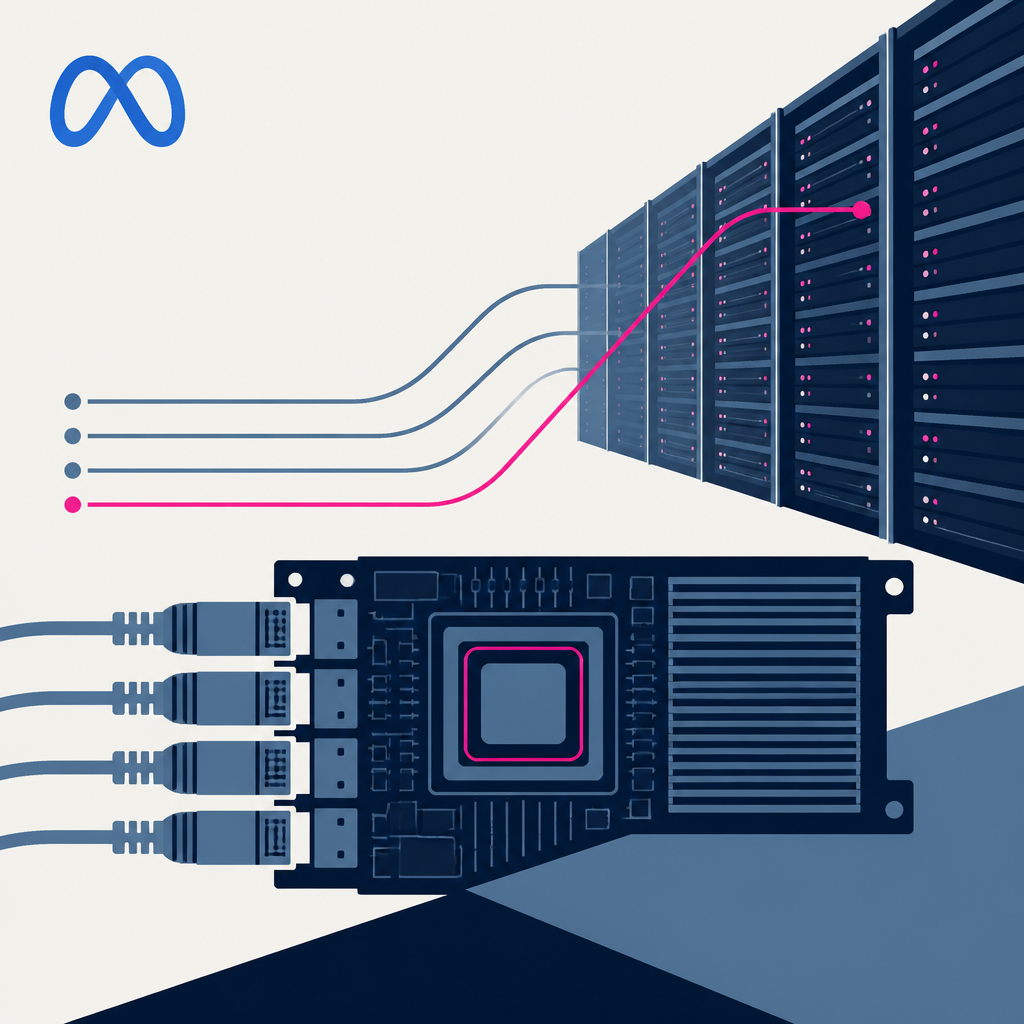
Meta introduced MetaRoCE, a clean-sheet RDMA transport protocol built for AI-scale Ethernet that shifts ordering, path selection, and recovery into the NIC instead of relying on in-order delivery and pause-frame behavior. Meta reported about 86% throughput at 1% packet loss on a 64-node AMD GPU cluster running RCCL collectives. Deployment-ready artifacts are planned for October 2026, with early hardware validation on AMD Pensando and further vendor implementations underway, making this a fabric-architecture decision rather than an immediate procurement change.
Perplexity brought its Computer agent to desktop as Portable Computer, running locally in a sandbox on supported Nvidia hardware. It requires at least 24GB of GPU VRAM, with a DGX Spark desktop costing $4,800 or an RTX 3090 priced at well over $1,500. Portable Computer now executes local file edits, shell commands, and PDF processing, but can route incomplete steps to Perplexity cloud models with user approval to keep execution controlled.
NVIDIA announced that major PC game publishers will bring titles and anti-cheat support to NVIDIA RTX Spark at Gamescom. EA, Embark, and Ubisoft are among the publishers added ahead of RTX Spark’s launch this fall, including EA SPORTS F1 25 and Apex Legends. RTX Spark will add native EA Javelin anti-cheat support and bundle RTX features like DLSS and Reflex for RTX-powered Windows PCs.
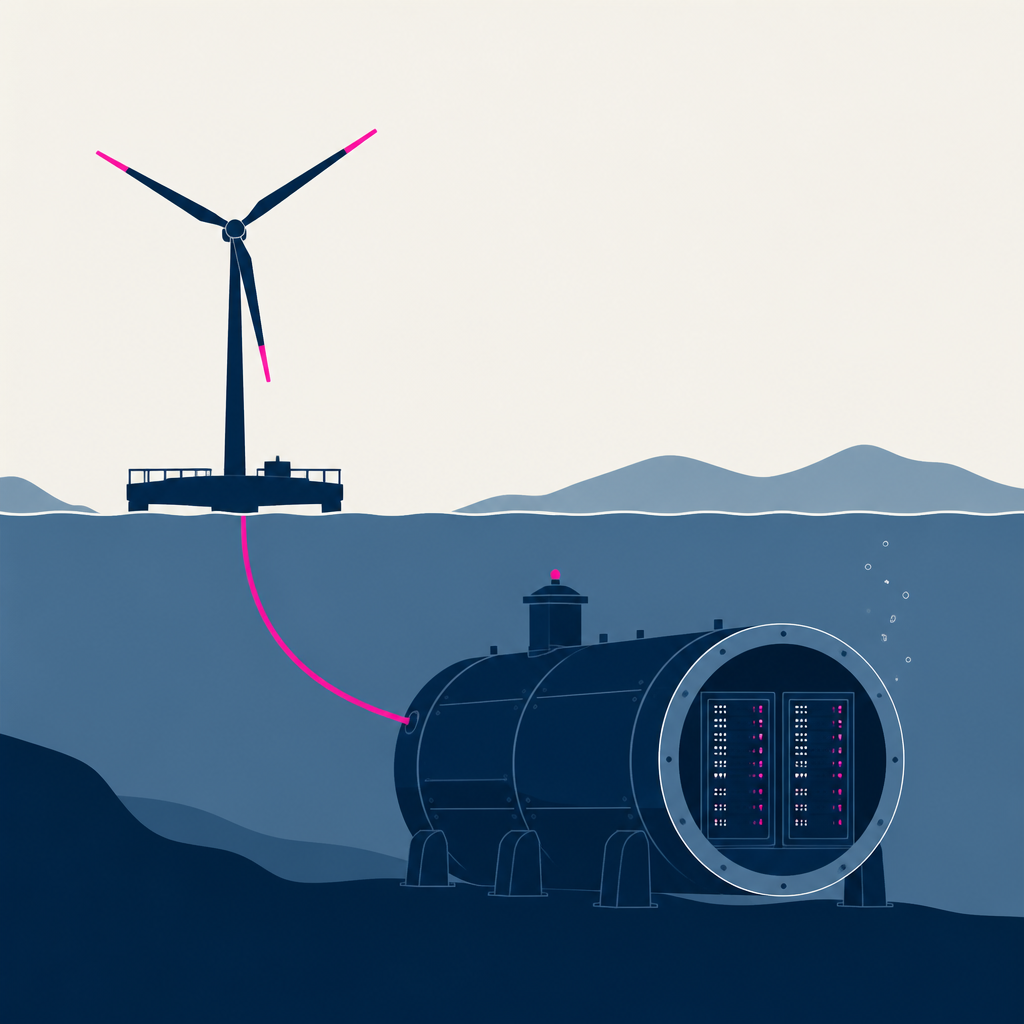
Ocean-based data center projects have expanded for AI and computing needs, despite environmental, regulation, and maintenance hurdles that keep traditional land sites attractive. The article cites a Chinese wind-powered underwater data center that launched in June 2025 and began full commercial operations in May 2026. The result is a shift toward experiments using seawater cooling and offshore power while ongoing analyses focus on how to limit marine thermal impacts and make operations maintainable and approvable.
OpenAI presented benchmark results for its Jalapeño inference chip at Hot Chips, comparing it against current state-of-the-art inference processors. On Semianalysis’ InferenceX benchmark, Jalapeño delivered more tokens per user and more throughput per kilowatt than the Nvidia Blackwell system used for comparison. OpenAI says the performance and power efficiency should enable more AI inference work per unit of power with faster, lower-latency responses, with deployment planned for end of 2026 in small volumes and more in 2027.
Cisco expanded its Secure AI Factory with Nvidia to rack-scale deployments, aiming to let enterprises operate production-ready AI across their infrastructure. The update adds rack-to-fabric liquid cooling beyond 200 kilowatts per rack for reasoning, agentic AI, and trillion-parameter training. It introduces Nvidia Spectrum-X switch silicon with Cisco OS integration and adopts reference architectures plus shared management tooling, changing the offering from rack-level setup toward an end-to-end AI-factory operations stack.
OpenAI published its first performance results for Jalapeño, a custom inference chip built with Broadcom and tested across multiple large language models. Jalapeño delivered 1.5 to 1.9 times more work per watt and cut end-to-end latency by 1.7 to 3.6 times, while the chip is rated at 700 watts and did not exceed 550 watts in these tests. OpenAI says it will start using Jalapeño in its own infrastructure by the end of the year and is already working on the next two generations.
Apple introduced the M6 chip for the new Mac mini and the M5 Ultra chip for the new Mac Studio to improve on-device AI model performance. The Mac Studio with the M5 Ultra can use up to 512GB of unified memory. The lineup shifts toward running larger local AI models on consumer hardware, with Mac mini targeting mid-sized models and Mac Studio targeting several-hundred-billion-parameter models.
Cisco and Nvidia expanded Cisco Secure AI Factory from networking-based deployments to rack-scale, liquid-cooled systems for production use. The rollout uses liquid cooling systems starting with Blackwell and moving to Vera Rubin. The change shifts customers from first-token setup toward ongoing operations by adding monitoring, health, availability, upgrades, and lifecycle management around Nvidia-aligned, Cisco-validated designs.
Ropedia launched HOMIE Gen2, a head-mounted wearable that records egocentric human movement data to train robotic AI models. The device synchronizes four camera streams, spatial audio, and inertial data to within 50 microseconds. HOMIE Gen2 enables faster and cheaper deployment than the previous generation, with deployment said to be 10 times faster and costing about one-12th the price of a full lab capture.
Apple released refreshed Mac mini and Mac Studio desktop computers aimed at running local AI development workloads. The Mac mini with M6 starts at $899 with 16GB of memory, and preorders open today with shipping on September 22. Developers can buy these systems to shift AI coding and open-weight model use from paid cloud inference toward local compute, while also getting faster storage and faster networking options.
Enterprises are adopting AI agents faster than their organizations are understanding and formalizing the rules needed to control them. 86% of 508 respondents said they use agents embedded in applications, while only 13% said sovereign AI concepts are widely or very widely understood across their organizations. As a result, companies are pushing for “sovereign” architectures—often air-gapped or offline deployments with tightly controlled access and responsibility—to manage security, privacy, observability, and guardrails for agents.
MotherDuck acquired Tower, the startup that was already supplying the execution and runtime layer behind MotherDuck’s AI-built data pipelines. The deal was announced on Tuesday and marks MotherDuck’s first acquisition in 4 years. Tower’s Python pipeline runtime will be folded into MotherDuck, enabling features like Flights and migration paths for Tower customers.
Keenable, an Accel-backed startup from former Yandex search leadership, is building a web search index for AI agents and using it via an API in production at AI labs and inference providers. Keenable says its index covers more than 100 billion documents. The company will use its $26 million seed funding to expand its team, pursue live retrieval via a partnership with Gradium, and develop tools like WebQueryLanguage for agentic question answering.
Nvidia’s GeForce Now will add official support for Valve’s Steam Controller and Steam Machine later this year. The update is due “later this year,” with Steam Deck/Steam Machine support and “later” availability on Windows and macOS. As a result, more GeForce Now users can use the Steam gamepad, and GeForce Now will also gain new DLSS 4.5 controls for DLSS Super Resolution, Dynamic Frame Generation, and Ray Reconstruction.
Lambda is in talks to raise up to $3 billion at a valuation of $12 billion or more, with a potential IPO as soon as 2027. The article says Lambda is expected to generate more than $1.5 billion in revenue in 2026. If the round closes, Lambda joins multiple neocloud rivals lining up for 2026–2027 listings, but public-market accounting for GPU depreciation will become a key test for its economics.
OpenAI says its Jalapeño AI chip finishes inference tasks more efficiently and returns faster responses than competing AI systems. The blog post and reporter briefing were published on Tuesday. Jalapeño, an ASIC co-developed with Broadcom, is positioned to reduce latency while increasing throughput for AI inference.
SpaceXAI is deploying NVIDIA’s new Vera CPU to power the next generation of its AI agents, including running an optimized Vera hardware setup on its first AI satellite, Starmind. The deployment is tied to Vera Rubin and the next-gen Vera CPU being sent “into orbit,” with the article describing Vera as delivering up to 1.8x faster agentic task completion than traditional x86 chips. This shifts more AI agent workload from GPUs toward a dedicated CPU role (coordinating tools and running code), and it signals that AI infrastructure could expand to space-based compute.
The article argues that the Federal Reserve is not well equipped to understand how a $3 trillion AI infrastructure buildout is being financed, despite its macro effects. It cites Morgan Stanley’s estimate of nearly $3 trillion of global AI-related infrastructure investment through 2028 and an estimated $1.5 trillion external financing gap. It concludes that monetary policy should place more weight on financial stability and better measure financing leverage and exposure networks to avoid harming future productivity and U.S. competitiveness.
Apple launched new Mac Studio models using the existing M5 Max and a new M5 Ultra chip inside the same small chassis as earlier generations. The updated M5 Max Mac Studio includes 36GB of unified memory. As a result, the Mac Studio line is brought back under a single chip generation after a prior split between different Studio chip families.
Apple announced a new generation of Mac Mini models with an M6 and an M5 Pro chip. The M6 Mac mini starts at $899 and the M5 Pro model starts at $1,699, with shipments scheduled for September 22. Pricing increased $100 versus the previous M4-generation starting prices and preorders began today for later delivery.
Itoflow raised $2.5 million in pre-seed funding led by Balderton Capital to let investment firms use portfolio AI agents that encode each firm’s own strategy, risk limits, and review process. The largest of its three pilots monitors about $3 billion in assets. The startup will use most of the new funding to hire researchers and engineers, expand beyond current pilots, and pursue regulatory and product work to deploy the platform at more firms.
The page titled “Warren” provides a discussion link about infrastructure for coding-agent workloads. No numbers, benchmarks, prices, or dates are provided. As a result, there’s not enough information here to determine any change in AI products, research, or deployment.
Revolut launched Revolut Research, a dedicated AI research unit in financial services focused on building the AI stack in-house. Revolut says its finance AI model PRAGMA, built with Nvidia, produced early results including 2.3x higher accuracy for credit default risk and 41% more product recommendations. It plans to use these native foundation models across functions like fraud detection, credit decisions, recommendations, and customer service instead of relying primarily on third-party tools.
Sarah Friar described how progress across chips, compute, models, and products adds up to deliver more useful intelligence at larger scale and lower cost.
She frames the improvement as lowering cost while increasing scale.
No specific product, benchmark, or date is given, so the main change is a conceptual explanation rather than a concrete new development.
Jalapeño, a custom OpenAI inference chip, reported faster, more power-efficient AI inference for modern models. No specific benchmark numbers were disclosed in the article. The stated result is higher throughput and lower latency compared with prior inference approaches.
Taiwan’s Taiwan Innotech Expo (TIE) is scheduled for September 17–19 at Taipei World Trade Center as a government-backed venue for moving AI, chip, quantum, and sovereign communications research into commercial use. Last year drew 50,000+ visitors from 65 countries with 422 exhibitors and about 1,100 technologies, and this year organizers target roughly 440 exhibitors from 19 countries and about 1,100 technologies. The show’s content is organized around three AI-forward pavilions and includes proof-of-concept and licensing tracks plus invention awards, conferences, and matchmaking sessions.
Volve raised $3 million in seed funding to expand its construction tendering and preconstruction intelligence platform across Europe. The round totaled $3 million (NOK 30 million). It plans to deepen its product with a graph-based knowledge structure and accelerate rollout beyond the Nordics into the UK and Continental Europe.
Embedd secured $2.7 million in pre-seed funding led by Seedcamp to automate how software integrates with multiple semiconductor chips. The round was also backed by Microchip Technology, with Embedd enabling Zephyr support. The company will use the funding to keep developing its platform and expand partnerships so chip developers can deliver software integration faster.
General Intuition is in talks to raise new funding at a $6 billion pre-money valuation. The company is seeking the higher valuation only weeks after raising $320 million at a $2.3 billion valuation. If the round closes, new investors would join existing backers and the money would be used to improve its foundation model, expand compute, and hire more talent toward robotics and real-world agent performance.
Stripe’s Southeast Asia, Greater China and South Korea managing director Sarita Singh says Asia-based firms are expanding cross-border faster and sometimes without fully defining their business. The top 100 AI companies on Stripe took a median of 11.5 months to exceed $1 million in annualized revenue, about four months ahead of the fastest-growing SaaS firms. Stripe’s response is more cross-border payment partnerships and support for agentic commerce, aiming to help businesses avoid rebuilding payment tech stacks later.
Generalist AI Inc. reportedly raised $200 million to develop artificial intelligence software for robots. The reported funding round was led by 8VC, and it followed a previous $400 million round in June. Generalist’s new capital is expected to support Gen-1.5, its robotic-arm model that can be taught by demonstrations and simulated clips, reducing the time and code updates needed to create automation workflows.
Every AI story that matters,
in your inbox by 8am.
TLDRocket reads all relevant sources, removes duplicate coverage, and summarises the
day in two minutes. Follow companies and topics for alerts, or get the
briefing in Slack. Free, no spam, unsubscribe anytime.
Reading TLDRocket needs no cookies, and the readership counts we rely on come from
our own cookieless analytics. Google Analytics is the exception: it sets cookies and
reports to Google, so it stays switched off until you allow it. You can change your
mind any time from “Cookie settings” in the footer.
Strictly necessary
Session security and form protection (tldrocket-session,
XSRF-TOKEN, 2 hours). The site cannot work without them,
so they need no consent.
Always on
Google Analytics 4 (_ga,
_ga_<id>, up to 2 years). Measures which
stories and sections readers use. Google acts as a third-party processor and may
store the data outside the EU. No advertising, no profiling, no data sold.