
Perplexity, Nvidia Run Chinese AI Model Locally on the “Portable Computer”
Trending Topics Jakob Steinschaden ● Covered by 5 sources
Perplexity launched a local version of its agent, built with Nvidia, that runs on your own machine. It could make private docs and routine AI work cheaper — and it lands as Nvidia eyes a bigger Perplexity stake.
Based on reporting by Trending Topics, Jakob Steinschaden — read the original for the full story.
Summary, retelling and take written by AI under human oversight; images are AI-generated illustrations. How we work · Report an error
Perplexity has rolled out a new version of its agent product that stays on the user’s own machine. The company calls it Portable Computer, and it was built with Nvidia. The timing is hard to miss: the launch arrived alongside reports that Nvidia is talking about putting more money into Perplexity at a valuation above 30 billion dollars.
The first target is Nvidia’s DGX Spark, a desktop-sized AI machine built on the Grace Blackwell GB10 platform. Perplexity says the setup uses a 20-core Arm CPU and 128 GB of unified memory. A version for PCs with RTX GPUs is next. For now, the release runs on Linux, with Windows support promised later, and access is limited to Pro and Max subscribers. Installation is meant to be simple: one click inside the app.
This is not just the model running locally. Perplexity says the whole apparatus comes along for the ride: the orchestrator, planner, tool router, scheduler, task queue and local search index. As long as the work stays on-device, it doesn’t consume credits, which makes repetitive tasks easier to justify. The local model choices are Qwen 3.8 27B and PPLX 27B, Perplexity’s post-trained version of Qwen. Nvidia’s Nemotron 3.5 Lightning is also set to appear in the picker, and dictation runs locally too through Nemotron 3.5 ASR, keeping audio on the machine.
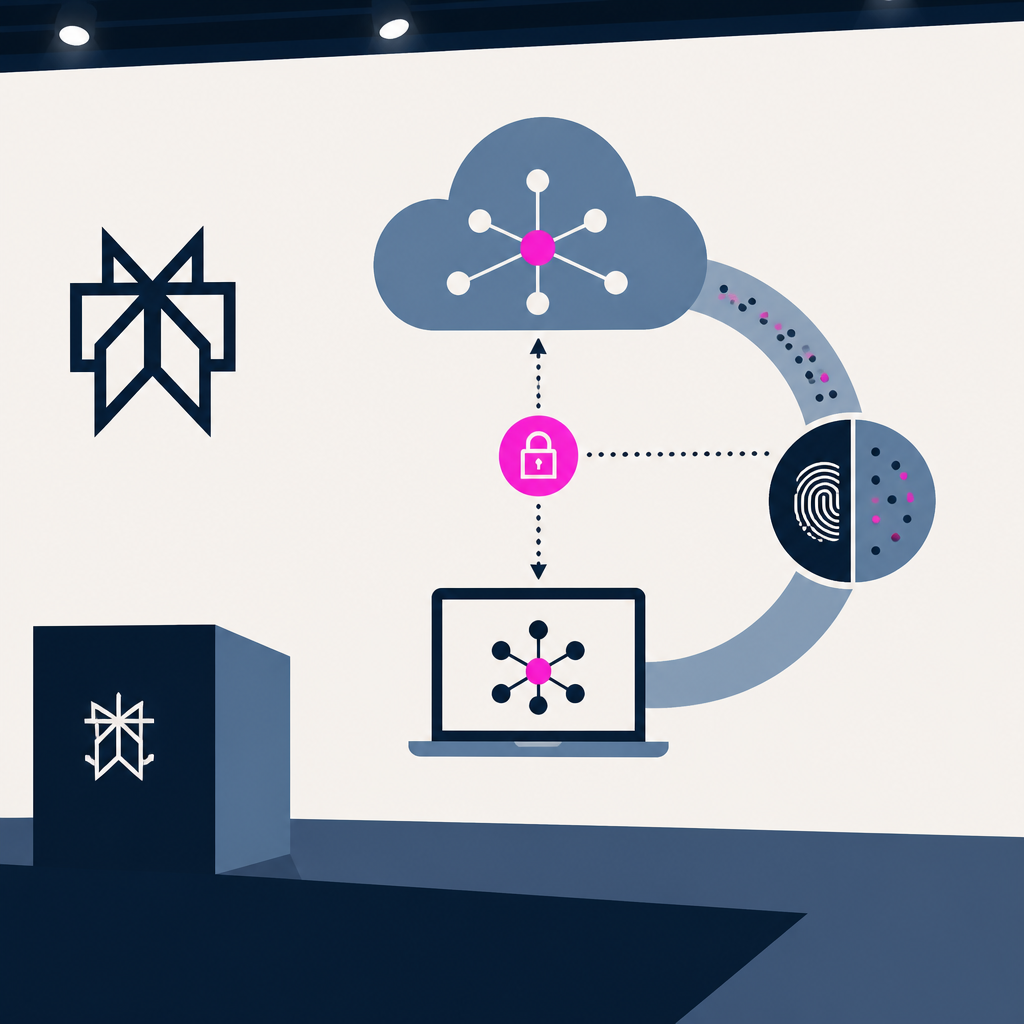
When the local setup runs out of steam, it can hand work to the cloud for current web information, browser actions, connected apps or one of more than 15 frontier models. Perplexity says it asks permission before anything leaves the device. Connectors cover Google Drive, Gmail, Slack and GitHub, while code and tool execution stay inside sandboxed environments, just like in the cloud version. The company’s pitch is simple: a lot of valuable agent work starts with private codebases, draft contracts and client files, so it makes sense to keep that data local first.
The Perplexity launch sits inside Nvidia’s wider two-track strategy. On one side, Nvidia keeps investing in the big model companies that soak up data-center hardware. On the other, it is pushing AI onto local machines through RTX PCs, DGX Spark and Jetson, while also releasing its own open Nemotron models and building more software around the desktop setup. Perplexity says its own expectation is that each new chip generation and model release will move more work onto people’s machines.
My take — AI-written commentary, not fact-checked reporting
This is Nvidia doing what Nvidia does best: selling you both the shovel and the mine. Local AI is the obvious next pitch because it flatters privacy, saves credits, and keeps the hardware story alive even if the cloud gets less fashionable. The catch is boring but fatal: if the agent keeps escaping to the cloud, the whole “portable” dream turns into a very expensive preview window.
Read more about this at: Trending Topics
Related stories
 Perplexity Portable Computer Is Now Available on Windows, Powered by NVIDIA RTX
NVIDIA Blog · 1 month ago ·
6
Perplexity’s new agent runs entirely on your GPU — with one expensive catch
The New Stack · 1 month ago ·
18
Perplexity Portable Computer Is Now Available on Windows, Powered by NVIDIA RTX
NVIDIA Blog · 1 month ago ·
6
Perplexity’s new agent runs entirely on your GPU — with one expensive catch
The New Stack · 1 month ago ·
18
 Perplexity Releases Hybrid Compute on Mac: Cloud Agents Orchestrate Down to a Local Model, Gated On Device
MarkTechPost · 1 month ago ·
32
Perplexity Releases Hybrid Compute on Mac: Cloud Agents Orchestrate Down to a Local Model, Gated On Device
MarkTechPost · 1 month ago ·
32