
Embedd raises $2.7M to tackle physical AI infrastructure challenge
Startups Magazine Startups Editorial ● Covered by 2 sources
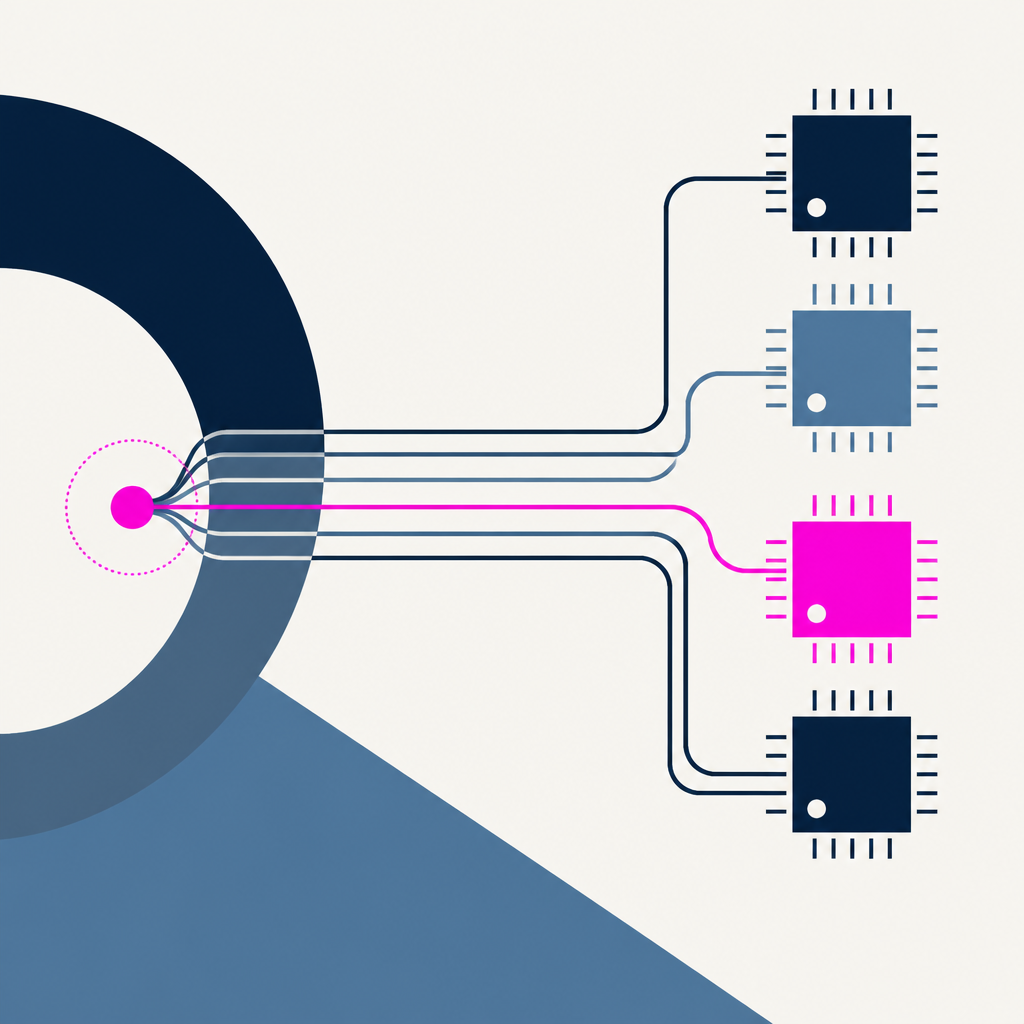
Embedd raised $2.7M to make chips easier for AI software to work with. It says that can cut chip integration from weeks of slog to much faster production-ready code.
Based on reporting by Startups Magazine, Startups Editorial — read the original for the full story.
Summary, retelling and take written by AI under human oversight; images are AI-generated illustrations. How we work · Report an error
Embedd has landed $2.7 million in pre-seed funding, with Seedcamp leading the round. Cocoa, Connect Ventures, 2100 Ventures, Vesna Capital, U.ventures, Underline Ventures, Common Magic, and Roosh Ventures also backed it.
The company is aiming at a very unglamorous but very expensive problem: hardware fragmentation. AI and robotics systems may be getting lots of money — nearly $19 billion has gone into robotics and physical AI so far this year — but every machine still has to get software talking to dozens of chips that don’t share a common language.
Embedd’s pitch is to automate that middle layer. Instead of engineers wading through pages and pages of chip documentation and writing the integration code by hand, the company creates a digital twin of the hardware, gives its AI agents the context they need, and generates the code that makes each chip usable by the software above it. The London-based company says that has helped customers deliver production-ready software for chips up to six times faster.
The timing makes sense. Embedd was founded by Ukrainian tech entrepreneurs Michael Lazarenko, Maxim Gorinov and Valentin Gololobov after their earlier hardware business was hit by chip shortages during Covid and then disrupted by Russia’s invasion of Ukraine. Rewriting software for newly sourced components, over and over again, showed them exactly where the bottleneck lived.
Since launching commercially in April 2026, Embedd says it has signed contracts with multiple semiconductor companies. One of them is Microchip Technology, where the startup is enabling Zephyr support. Microchip’s Rodger Richey framed the deal in blunt terms: in embedded systems, the question is less about whose silicon is fastest and more about whose silicon is easiest to build on.
Embedd says the new funding will go into building out its platform and expanding work with semiconductor companies. That’s the right place to spend it. If physical AI really is moving into factories, vehicles, robots and critical infrastructure, the boring software glue suddenly looks like the main event.
My take — AI-written commentary, not fact-checked reporting
This is the kind of startup that usually gets ignored until everyone is trapped by the problem it solves. The pitch is plain old infrastructure, which is exactly why it matters: physical AI won’t run on vibes and demo videos. The chip makers that make integration easiest will win more mindshare than the ones bragging loudest about raw silicon.
Read more about this at: Startups Magazine