
Ropedia launches next-gen wearable capture device for robotic AI training data
SiliconANGLE Kyt Dotson
Ropedia just launched HOMIE Gen2, a head-mounted device that records human tasks for robot training. It captures the action from the wearer’s view, so robots learn from better data, not random video.
Based on reporting by SiliconANGLE, Kyt Dotson — read the original for the full story.
Summary, retelling and take written by AI under human oversight; images are AI-generated illustrations. How we work · Report an error
Singapore-based robotics data firm Ropedia has launched HOMIE Gen2, a head-mounted wearable built to collect human movement data for robot training. The pitch is simple: if robots learn by watching people do work, then the camera should see the task the way the human sees it too.
That matters because a lot of robotics training still comes from video that isn’t very useful once you try to turn it into machine learning data. Ropedia co-founder and chief executive Zhaoxi Chen compared it to learning to drive from the back seat. The point is not just more footage. It’s footage from the right angle, in the right place, doing the right thing.
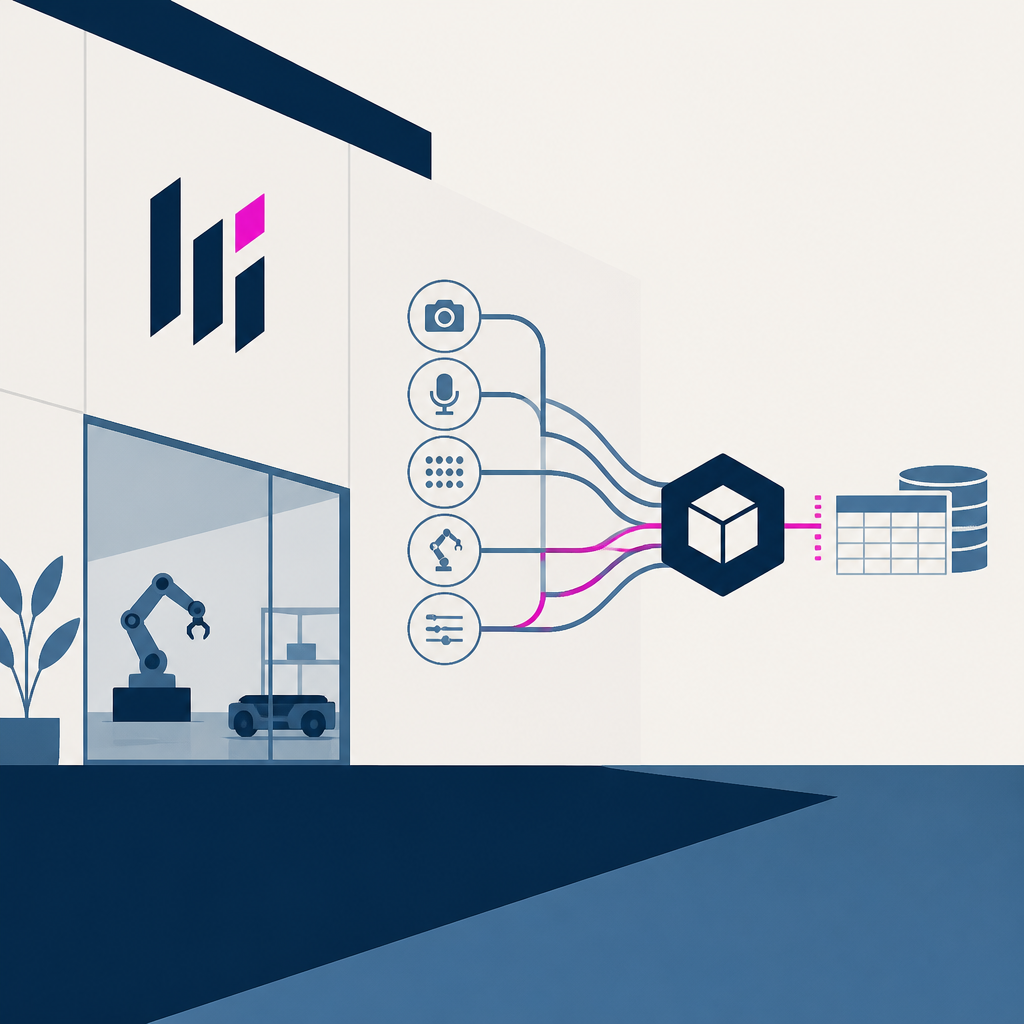
HOMIE Gen2 is meant to be the company’s first egocentric capture device with a 360-degree field of view for robot training. It uses four camera streams, spatial audio and motion data. The crown-like device sits on the head and moves with the wearer, recording hands, body, environment and how those pieces interact during a task.
Ropedia says the recordings include video, camera pose, depth, hand and body key points, and task annotations. A single session can train several target tasks or recreate one episode of human behavior. Chief Scientist Ziwei Liu, who is also an associate professor at Nanyang Technological University in Singapore, said the hardware syncs the four camera streams, spatial audio and inertial data to within 50 microseconds.
The company also says the device needs no external rig, so it can be used in homes, factories or shopping malls without an engineering crew setting everything up. Deployment is 10 times faster than the previous generation and costs about one-12th as much as a full lab capture. Ropedia didn’t share pricing, but said business customers can buy the devices individually or in bundles, and that it is open to partnerships, pilot programs and direct sales. The launch follows a $22 million pre-Series A round raised last month to expand engineering.
My take — AI-written commentary, not fact-checked reporting
This is the kind of unglamorous hardware that actually moves physical AI forward: less demo theatre, more useful data. Everyone loves talking about robot brains, but the body is still starving for decent training signals. Ropedia is betting that a better camera angle beats another round of hype, which is refreshingly non-stupid.
Read more about this at: SiliconANGLE
Related stories
 Reward AI Releases OM-1: A Robot Policy Trained on Human Demonstrations Only, With No Teleoperation or On-Robot Data
MarkTechPost · 1 month ago ·
1
Reward AI Releases OM-1: A Robot Policy Trained on Human Demonstrations Only, With No Teleoperation or On-Robot Data
MarkTechPost · 1 month ago ·
1
 Launch HN: Hebbian Robotics (YC S26) – Build scalable robotics data pipelines
GitHub · 1 month ago ·
48
Launch HN: Hebbian Robotics (YC S26) – Build scalable robotics data pipelines
GitHub · 1 month ago ·
48