Who’s taking your fast-food order? Chick-fil-A and McDonald’s have different answers
Fortune Tatiana Sataua
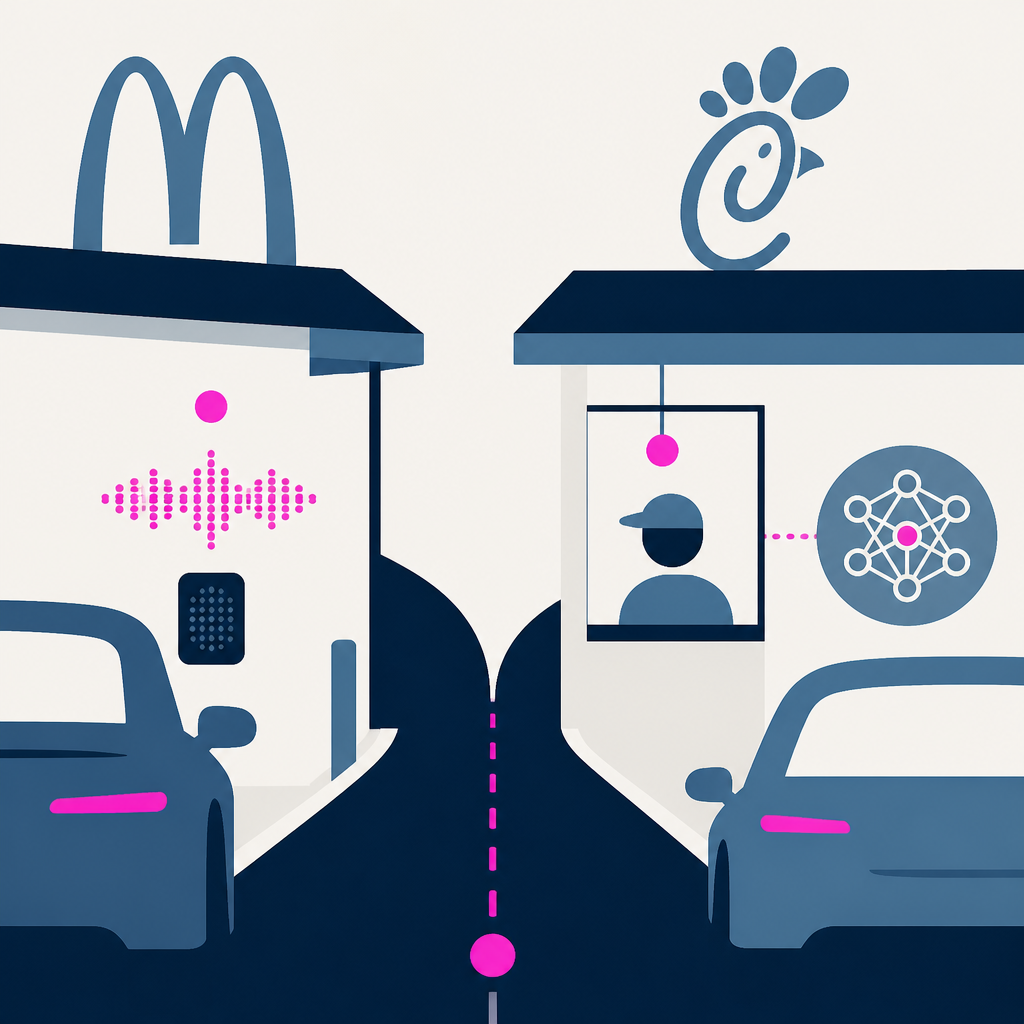
Chick-fil-A says a human will still take drive-thru orders. McDonald’s is testing AI there — and facing a lawsuit over AI pricing.
Based on reporting by Fortune, Tatiana Sataua — read the original for the full story.
Summary, retelling and take written by AI under human oversight; images are AI-generated illustrations. How we work · Report an error
Fast food has spent years trying to shave seconds off ordering, from apps to kiosks to digital menus. Now the drive-thru speaker is the next target, and the industry’s two biggest names are taking very different paths.
At Chick-fil-A, the answer is no: no AI voice bot at the window, no machine standing in for the greeting. CEO Andrew Cathy told CNBC the chain is exploring AI behind the scenes, but not at the point where customers place their orders. The company calls that approach “human plus,” and its bet is simple enough: the hospitality matters more than the automation.
That view gets support from Cornell professor Alex Susskind, who studies restaurant operations and hospitality tech. He pointed to Chick-fil-A’s outside order-takers with tablets, a setup that can help cars move through lines that stretch around the building. Human contact, he said, can make the wait easier to stomach. He’s not anti-automation; he just wants technology used where it removes grunt work without flattening the experience.
McDonald’s is heading in the opposite direction, at least in testing. The company is trying Archy, an AI voice system that takes drive-thru orders in English and Spanish and, McDonald’s says, is accurate more than 90% of the time. Archy sits inside a broader system called ArchIQ, which also handles inventory and equipment monitoring. McDonald’s says the goal is to simplify operations and free workers up for customer service. It is not the company’s first swing at this either: an earlier voice-ordering test with IBM ended in 2024 after more than 100 U.S. restaurants and a pile of viral mistakes.
And then there’s the other McDonald’s AI problem. A proposed class-action lawsuit filed Oct. 2 in federal court in Chicago says a pricing-recommendation system helped coordinate menu prices across independently operated franchises. The complaint says McDonald’s used confidential sales data, pressured franchisees to follow the recommendations and tracked deviations. McDonald’s denies it all, saying franchisees set their own prices and that AI does not set menu prices at its restaurants. The company also says it does not use dynamic pricing or adjust prices in real time based on individual customers.
My take — AI-written commentary, not fact-checked reporting
This is the right fight to have: not whether AI can be shoved into every customer touchpoint, but whether it makes the place better or just cheaper to run. Chick-fil-A sounds like it understands that hospitality is not a chatbot problem. McDonald’s, meanwhile, has managed to turn two different AI bets into two different trust issues, which is almost an achievement.
Read more about this at: Fortune