
Google Cloud Launches Gemini Agent, One Universal Agent for Enterprise Work
MarkTechPost Asif Razzaq ● Covered by 5 sources
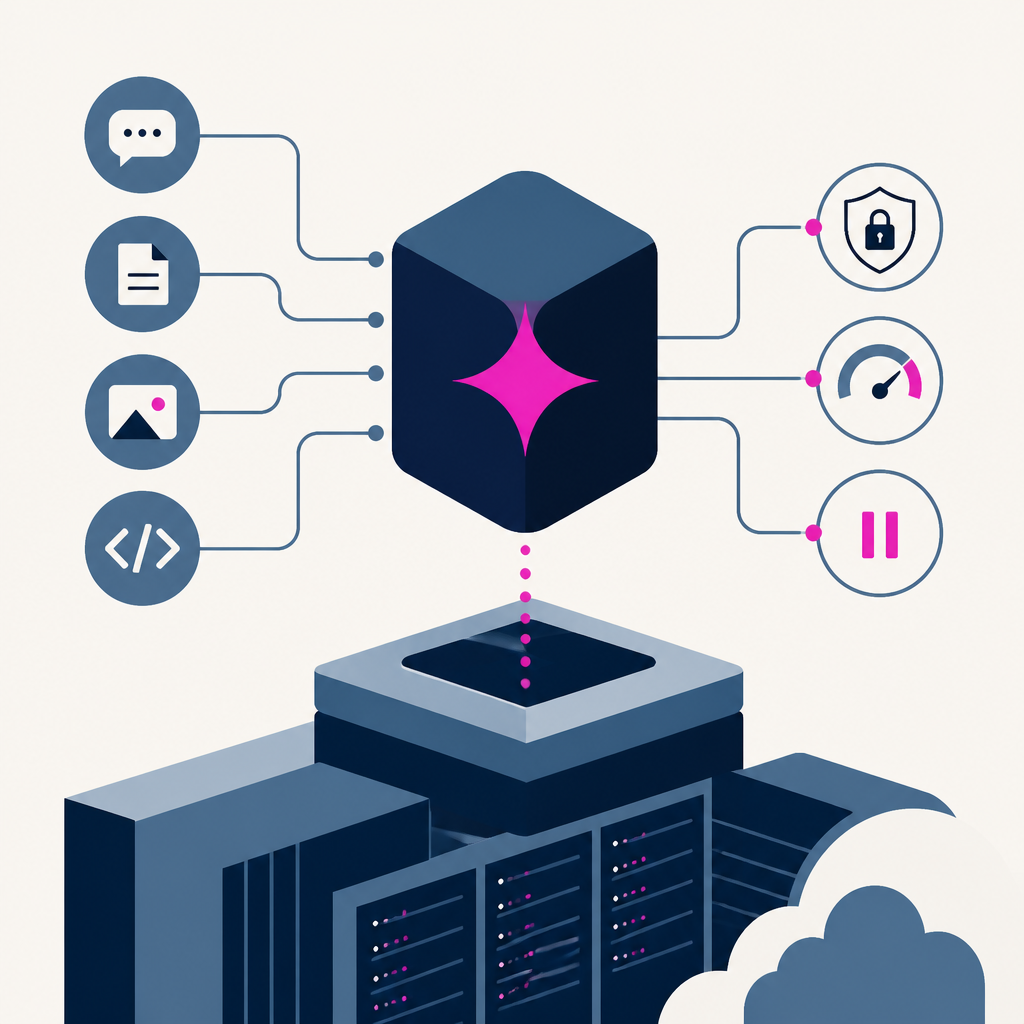
Google Cloud launched Gemini Agent, one work agent for questions, code, and media. It runs in the cloud, so jobs can keep going after you close the laptop.
Based on reporting by MarkTechPost, Asif Razzaq — read the original for the full story.
Summary, retelling and take written by AI under human oversight; images are AI-generated illustrations. How we work · Report an error
Google Cloud has rolled out Gemini agent as a single, cloud-hosted agent for enterprise work. The pitch is broad: ask it questions, delegate knowledge work, generate media, or write and run code from one prompt box and one API. Google is also framing it less like a chatbot and more like a delegation layer that plans work, picks tools, and sends back the result.
The company says the agent is built around six ideas: one interface for chat, autonomous work, and code; access from nearly anywhere; cloud execution with persistent memory; temporary sub-agents for parallel or chained tasks; context that improves as it learns a company’s tools and history; and model choice that can vary by job. That last point matters, because Google says the system already routes work across its Gemini models and Anthropic’s Claude models, with other private and open models planned.
Memory is a big part of the story. Google says the agent keeps session memory, semantic memory, procedural memory, and episodic memory. It also uses shared registries for skills and tools, and can connect to systems like Slack, Jira, Salesforce, ServiceNow, BigQuery, Snowflake, desktop files, and any Model Context Protocol server. In Workspace, a coworker agent can even get its own email address, calendar, Drive, and directory entry, with its edits tracked under its own name.
For data teams, the promise is more hands-on. Users can describe outcomes in plain language and have the agent write PySpark code, build notebooks, train models, and repair pipelines. Business users get saved BigQuery reports that rerun without token costs. Google also points to three grounding services: Knowledge Catalog, Smart Storage, and Borderless Lakehouse, which can query Amazon S3 and Azure Data Lake without variable egress fees.
Governance and cost controls are front and center, which is probably wise. Google says each agent gets a cryptographically attested identity, least-privilege permissions, logging tied to the agent rather than a person, and an Agent Sandbox behind an Agent Gateway. For spending, teams can set hard project limits in the Cloud Billing Console, and when the limit is hit, the agent pauses until someone restarts it. There’s no public benchmark slate, price sheet, or GA date here — just a fairly aggressive bid to make one governed agent sit on top of the whole enterprise.
My take — AI-written commentary, not fact-checked reporting
This is the right shape for enterprise AI: one agent, one policy layer, one bill to watch. The industry has spent enough time dressing up chatbots as coworkers; Google at least admits the useful thing is orchestration, not small talk. The catch is simple: when the vendor says “trust us, it’s governed,” the real product is the controls, not the demo.
Read more about this at: MarkTechPost