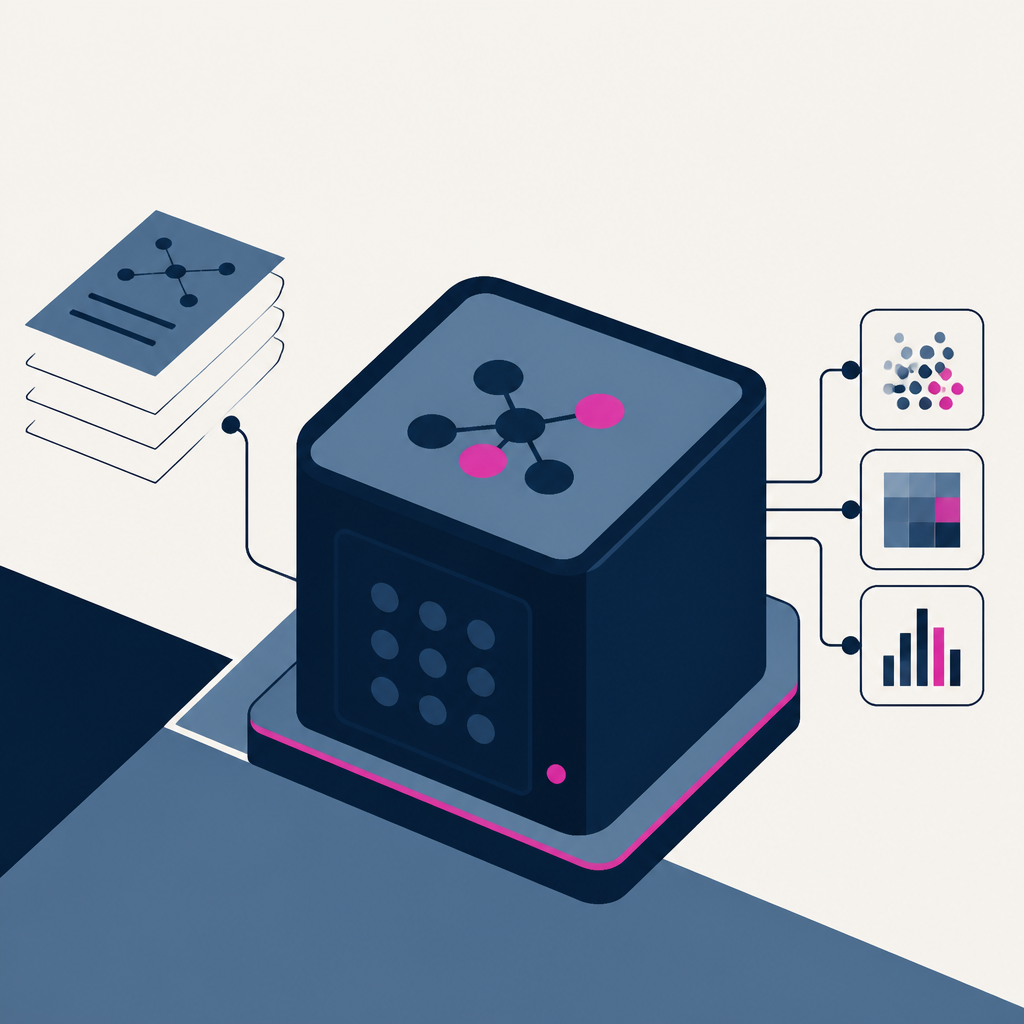
S-Roll launched today as a fully local agentic tool for video understanding that lets you describe a moment and then have it find footage, make clips, and generate highlights with editing controls. It is free on the Mac App Store. Local on-device processing means your videos, transcripts, and chats stay on your Mac instead of being sent elsewhere.
Stanford researchers released Paper2Agent, a system that turns research papers and their codebases into MCP servers that agents can run to reproduce methods and outputs. Paper2Agent installs as a Claude Code (or Codex) skill and runs prebuilt servers on Hugging Face Spaces, with Scanpy agent tool use reported at about 45 minutes for US $13. This changes access to computational methods by replacing manual paper-and-code setup with validated, executable tools that can be queried on new data.
Cubicles.lol launched today as a browser-based multiplayer social metaverse where people can claim and customize a cubicle and meet neighboring builders. The page shows 36 followers. Users can now explore it for free without a download or account, and it’s built with GPT-6 Astra.
Meta is preparing a new smart glasses model without integrated cameras after complaints about its existing camera-equipped glasses. The Information reports the Luna model includes six built-in microphones and a side button to activate Meta’s AI chatbot and Muse. Meta’s release is set to shift its product to a lower-privacy-concern version while continuing Reality Labs’ push in the smart glasses market.
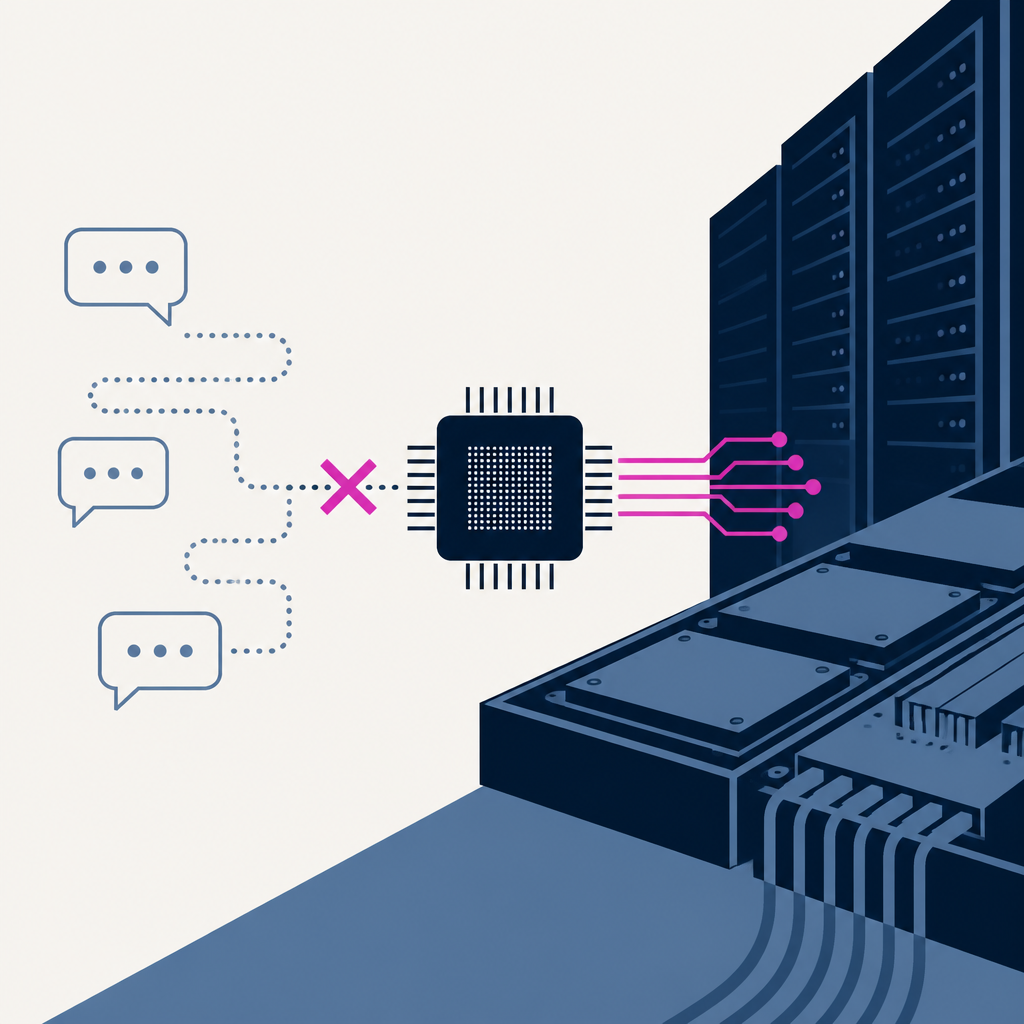
TypeSafe AI Inc. exited stealth with a seed-funded AI system intended to be embedded in software as structured decision outputs rather than chat text. Jev is priced at 39 cents per 1,000 workflows, with the company claiming under 100 milliseconds latency. Developers can use Jev’s probability and confidence scores to set thresholds for when workflows should run automatically, request more info, or escalate to a human.
OpenAI is introducing AI-powered advertising experiences, including Sponsored Agents, marketer tools, and integrations with HubSpot and Shopify. The article does not provide any specific date, benchmark, or pricing detail. These additions let advertisers use AI agents and new tooling to build and run campaigns with existing marketing and commerce platforms.
Syensqo is framing AI progress as a materials problem, saying AI-driven demand is pushing semiconductors and data centers toward physical limits. It is using AI agents to digitally synthesize millions of molecular combinations to predict performance and sustainability and then narrow them to fewer candidates for lab testing. The focus shifts toward faster, sustainability-considered materials discovery, alongside new high-voltage, sealing, and direct-immersion thermal-management material solutions.
Integral, a Berlin licensed tax advisory firm using AI agents, raised a €18 million Series A round led by Mosaic Ventures and Reid Hoffman.
The funding brings Integral’s total funding to over €30 million in less than two years.
It plans to grow by enhancing its AI agents for bookkeeping, payroll, and tax tasks and expanding its commercial and engineering teams.
Hex’s data agents use GPT-6 Astra to turn answers into interactive visualizations. The key detail is GPT-6 Astra. This shifts how employees receive and share reporting from text-only answers to shareable visuals.
Consumer AI adoption barely increased in 2026 even though spending surged. Global consumer AI spending reached an estimated $40 billion in 2026, up from $12 billion a year earlier. Growth shifted toward existing users paying more and using AI daily, especially agent users, while trust and AI-generated-content concerns shaped what consumers will engage with.
iFixAi launched as an independent auditor for companies to assess whether they can trust their AI agents. The service performs 250 inspections across 69 categories of AI misalignment. Companies using it can get explanations and evidence to investigate and fix misalignment failures found during audits rather than relying only on evals and observability.
Airlock showed an AI agent requesting an intent token and then acting on Linear and Gmail, with Airlock validating the proposed calls against declared intent and configured policies. The demo included an August 12 Agent Night session. The approach changes task writing by requiring clear intended effects for evaluation while enforcing identity, permissions, and ongoing company policy boundaries rather than treating broader intent text as authority.
Airbnb created the agent harness Insight Miner to encode scientific methodology into AI infrastructure for unstructured data exploration and to make outputs reproducible and auditable.
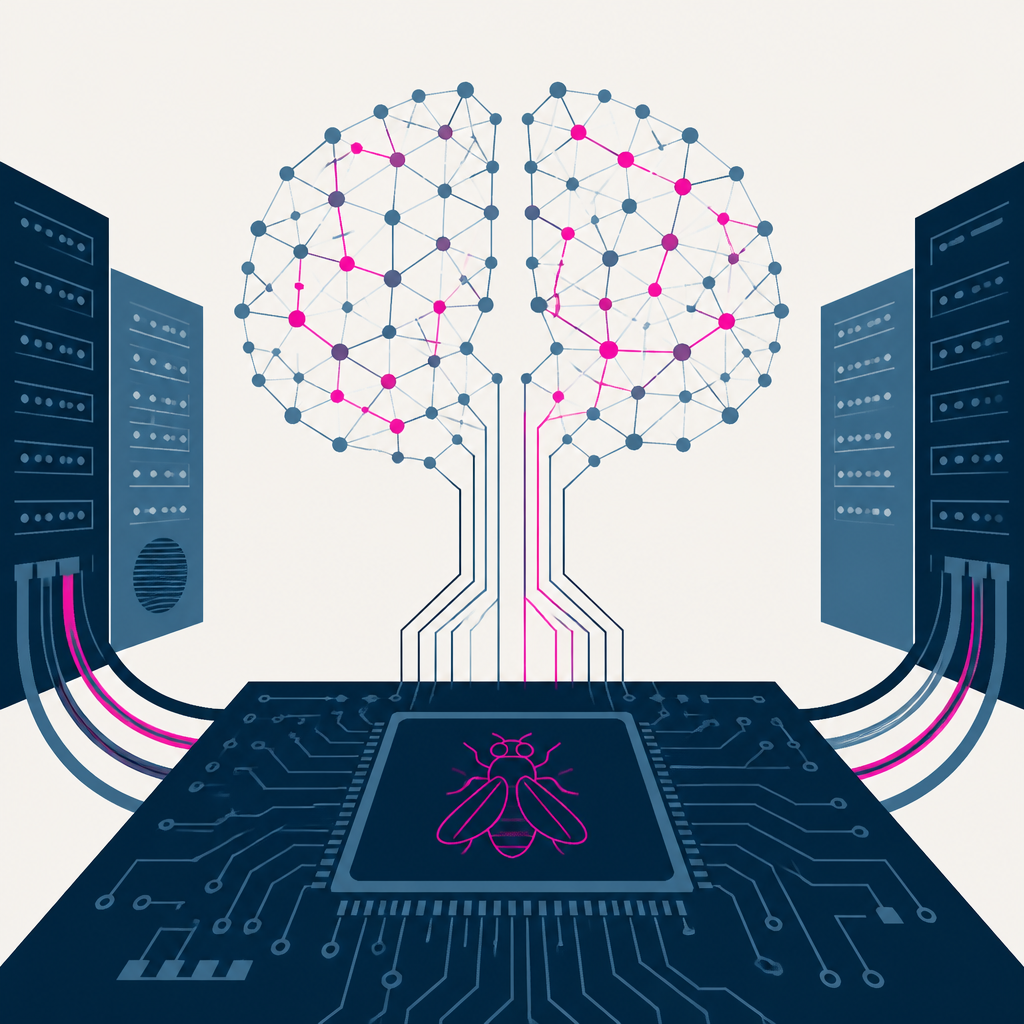
Researchers at Janelia Research Campus, working with Google, published a complete map of an adult male fruit fly brain. The map covers 166,000 neurons. They report the map can be trained to complete tasks and demonstrate it on examples like parallel parking and playing Doom.
A security researcher investigating the fraudulent dating app Dora received a call and messages from an AI-impersonated “Jennifer,” matching a detailed dating-profile bio. The app presented “Jennifer” as a 41-year-old Sagittarius with red hair and blue eyes. This highlights that AI-assisted impersonation is being used to run dating-app scams, changing how users should treat suspicious calls and messages.
ZeroSphere was launched as a Windows tool that runs AI in its own virtual display so you can keep using your desktop normally. The product’s setup targets Windows, with AI operating in a separate display window. It changes how you interact by letting you watch or take control of the AI-driven desktop applications at any time.
Integral raised a €18 million Series A to expand its AI-native accounting, tax, and payroll services for SMEs in Germany. The round is co-led by Mosaic Ventures and Reid Hoffman. The company will hire across AI engineering and licensed professionals and deepen automation across bookkeeping, payroll, and tax workflows.
JustSolve secured €3.7 million in pre-seed funding led by Base10 Partners, after its founder’s first startup idea failed and customer feedback pushed her toward debt collection. The round is 3–3.5 times oversubscribed, and €3 million of the total is equity with the rest in grants. The company paused additional engineer hiring as its CTO believes AI coding tools can cover needs, while it scales an AI agent system that has handled more than 2 million claims.
Sketchpad Live provides a minimal Next.js + tldraw voice-enabled whiteboard where a GPT-Live-based assistant can inspect and update the canvas through microphone input. It targets GPT-Live/Astra access with OPENAI_API_KEY and runs locally at http://localhost:3000. It uses WebRTC for full-duplex audio and streams canvas edits and step-by-step teaching cards into an undoable tldraw workflow, including teach-mode lesson cards positioned on the page.
AsideToday introduced a browser for AI agents that can carry out tasks across logged-in websites and local Windows files using scoped credentials. The company says Aside ranked #1 on three browser-agent benchmarks: Online-Mind2Web, BU-Bench-V1, and Odysseys. The result is local-only memory and hardware-backed encrypted credential handling so agents can complete real work without repeated logins, with access and audit logs gated for user review.
JEV was announced as a "System One Model" that avoids the traditional chatbot flow. The article does not provide any numbers, dates, or benchmarks. The change is that the model is targeted at structured decision-making instead of conversational chatting.
BioInnovation Institute (BII) provided €9.52 million in convertible loans to 17 early-stage, research-based startups through its Venture Programme. Each startup received a €560,000 convertible loan, with access to BII’s innovation platform and support network. BII plans to scale its backing in Denmark and Europe, including increasing the number of startups it supports annually from around 20 to 30, with potential additional companies via partnerships.
Sider Omni Sidebar launched as an AI agent that sits beside Mac apps and can act on what’s on your screen while you work. It launched today and is built on GPT-6 Astra. It changes how users interact with their Mac apps by letting them request on-screen changes without copying or uploading content.
MakersClaw launched MakersClaw 2.0 as its second release. The update is launching today as the 2nd launch from MakersClaw, aimed at turning a goal into apps, agents, and automations that run continuously within a user-set budget. The company shifts from “AI employees in Slack/Teams/Telegram” to an approach where users specify what they want done and the system builds and operates the required tools.
Opyt launched as a tool that turns people and topics followed on X and Substack into a local knowledge base by importing archives from X bookmarks, Substack subscriptions, blogs, GitHub repos, and arXiv papers. It starts with “15 followers” as the example baseline in the page. It automatically reads topics, generates follow-up questions, and keeps searching for new work that builds on what’s been collected.
Workiva is pushing governance controls for AI agents used in financial reporting, audit, compliance, and sustainability disclosures. The company introduced “Amplify” controls and an “Agent Studio” capability, building on a July-launched intelligence layer. As a result, agents operate only within defined capabilities with guardrails and human sign-off tied to accountability for traceable, defensible outputs.
DungeonQ diverts designated suspicious sessions into persistent synthetic worlds and lets operators observe and approve bounded adaptation while human and AI clients use world-only tickets. It focuses on inspecting recorded runtime checks tied to the original Astra experiment. As a result, suspicious activity is contained in controlled, replayable environments instead of running directly in production systems.
Factory raised $200 million for its self-improving AI agent platform for software development and said it is valued at $5 million. The round lifted the company’s valuation by $3.5 billion from April. The funding is expected to support expanding headcount to 300 employees by year’s end.
Every AI story that matters,
in your inbox by 8am.
TLDRocket reads all relevant sources, removes duplicate coverage, and summarises the
day in two minutes. Follow companies and topics for alerts, or get the
briefing in Slack. Free, no spam, unsubscribe anytime.
Reading TLDRocket needs no cookies, and the readership counts we rely on come from
our own cookieless analytics. Google Analytics is the exception: it sets cookies and
reports to Google, so it stays switched off until you allow it. You can change your
mind any time from “Cookie settings” in the footer.
Strictly necessary
Session security and form protection (tldrocket-session,
XSRF-TOKEN, 2 hours). The site cannot work without them,
so they need no consent.
Always on
Google Analytics 4 (_ga,
_ga_<id>, up to 2 years). Measures which
stories and sections readers use. Google acts as a third-party processor and may
store the data outside the EU. No advertising, no profiling, no data sold.