
Stanford Researchers Release Paper2Agent: Turning Research Papers Into AI Agents That Reproduce Results and Run on New Data
MarkTechPost Asif Razzaq ● Covered by 2 sources
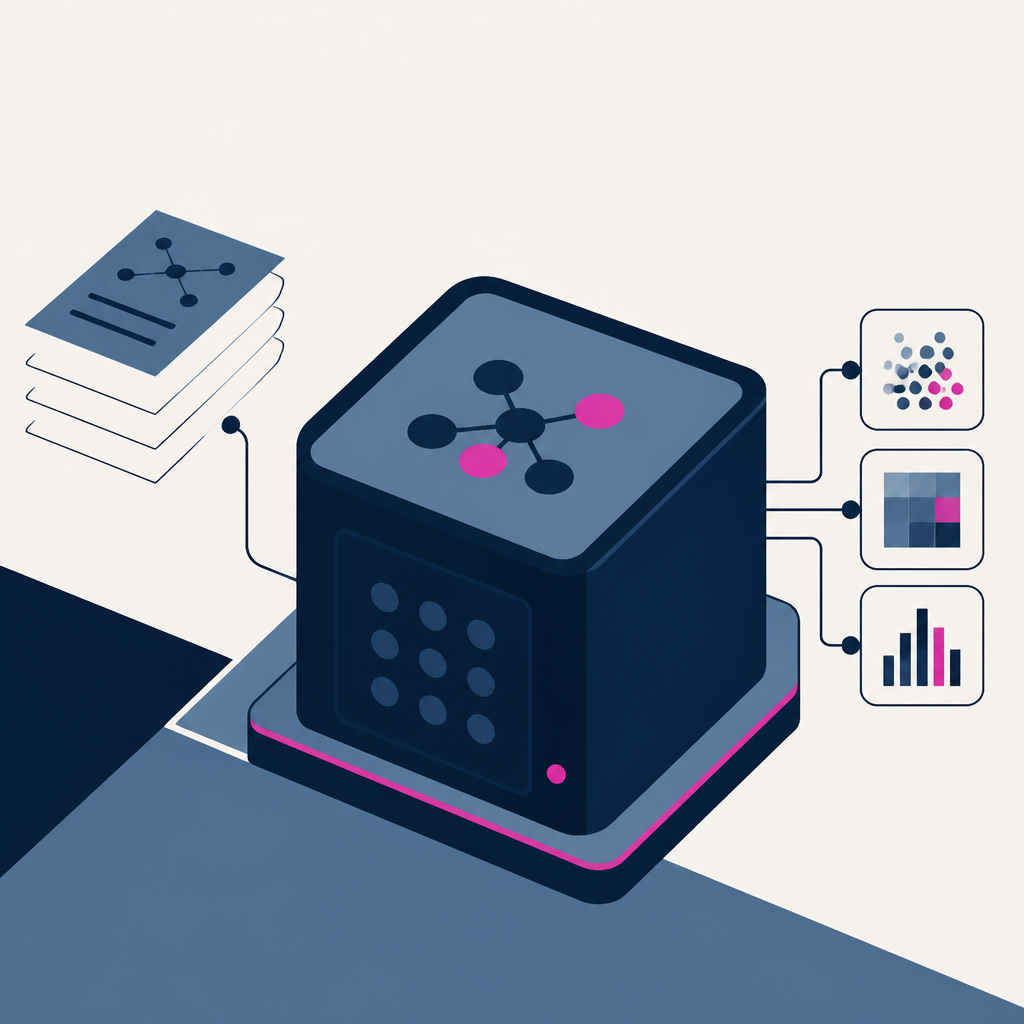
Stanford researchers turned papers into AI agents that can run the methods on new data. Paper2Agent even reproduced results and found new gene leads.
Based on reporting by MarkTechPost, Asif Razzaq — read the original for the full story.
Summary, retelling and take written by AI under human oversight; images are AI-generated illustrations. How we work · Report an error
Stanford researchers led by Jiacheng Miao and James Zou have built Paper2Agent, a system that turns a paper and its codebase into a Model Context Protocol server. The idea is simple enough: instead of forcing readers to clone, install, configure, and debug everything themselves, the paper becomes something an MCP-compatible agent can actually use. The team says the result behaves like a virtual corresponding author.
Paper2Agent was published in Nature on 16 September 2026. It runs on Claude Code’s agent SDK and breaks the work into a six-step pipeline. One part finds and downloads the codebase. Another creates an isolated virtual environment. Others scan tutorials, run them end to end, turn them into parameterized MCP tools, and verify the outputs before everything gets assembled into a single server.
The validation rules are tight. A tool only makes it through if the expected files appear and the numbers land within 3% of the reference. Figures must also match by perceptual hash, with Hamming distance under 20. The verifier gets up to six tries per function, and anything that still fails is left out. The final server exposes tools for execution, resources for the manuscript, links and datasets, and prompts for multi-step workflows.
The interesting part is that this is not just a demo. The code is MIT-licensed, and Paper2Agent can be installed as a skill for Claude Code or Codex. Prebuilt AlphaGenome, Scanpy, and TISSUE servers are already on Hugging Face Spaces, and there is a hosted version at paper2agent.ai. The research team says it used Claude Sonnet 4 for all Paper2Agent applications.
In one AlphaGenome case, the agent ranked SORT1 as the likely causal gene, while the original paper had emphasized CELSR2 and PSRC1. GTEx showed significant liver eQTLs for all three genes, which the team used to argue that causal assignment at these loci is genuinely messy. In another collaboration, AlphaGenome flagged GPR137 at a psoriasis locus, and only GPR137 knockdown matched the CRE perturbation signature. A second study paired AlphaGenome with an ADHD GWAS and nominated rs1626703 among 209 candidates, though that still needs experimental validation.
My take — AI-written commentary, not fact-checked reporting
This is the kind of AI plumbing that actually matters: less chatbot theater, more reproducibility with receipts. The loudest hype in science AI usually skips the boring part where code breaks; Paper2Agent leans into that part and makes it the product. That is a much healthier instinct than asking a model to sound smart in a lab coat.
Read more about this at: MarkTechPost
Related stories
 The AI Scientist: Towards Fully Automated AI Research, Now Published in Nature
Sakana AI ·
4
PaperBench: Evaluating AI’s Ability to Replicate AI Research
OpenAI · 1 year ago ·
7
Improving the academic workflow: Introducing two AI agents for better figures and peer review
Google Research · 5 months ago ·
5
The AI Scientist: Towards Fully Automated AI Research, Now Published in Nature
Sakana AI ·
4
PaperBench: Evaluating AI’s Ability to Replicate AI Research
OpenAI · 1 year ago ·
7
Improving the academic workflow: Introducing two AI agents for better figures and peer review
Google Research · 5 months ago ·
5