
TechCrunch AI
·
1 week ago
● 3 sources
Microsoft trained its sales team to directly criticize AI products from OpenAI and Anthropic during a Tuesday strategy meeting, positioning its own integrated system as superior for cost and efficiency. In performance comparisons of Copilot versus Claude within Microsoft's office applications, the company claimed Anthropic's model was slower, less accurate, and lacked proper security integrations. Microsoft is replacing OpenAI and Anthropic models in flagship products like Word and Excel with its own systems as it seeks to demonstrate the competitiveness of its in-house AI capabilities to investors concerned about its massive AI spending.
VentureBeat AI
·
1 week ago
● 4 sources
Anthropic's Claude platform dominates enterprise agent deployments with 40% of organizations choosing it as their primary orchestration platform, more than double any competitor. However, 71% of enterprises report that a quarter or fewer of their deployed "agents" are true multi-step orchestrated workflows rather than single-prompt chatbot wrappers, despite defining success by reliable multi-step execution. Enterprises plan to address this gap by building hybrid control planes that combine provider-native platforms with external orchestration tools they own, driven by fears of vendor lock-in.

TechCrunch AI
·
1 week ago
● 3 sources
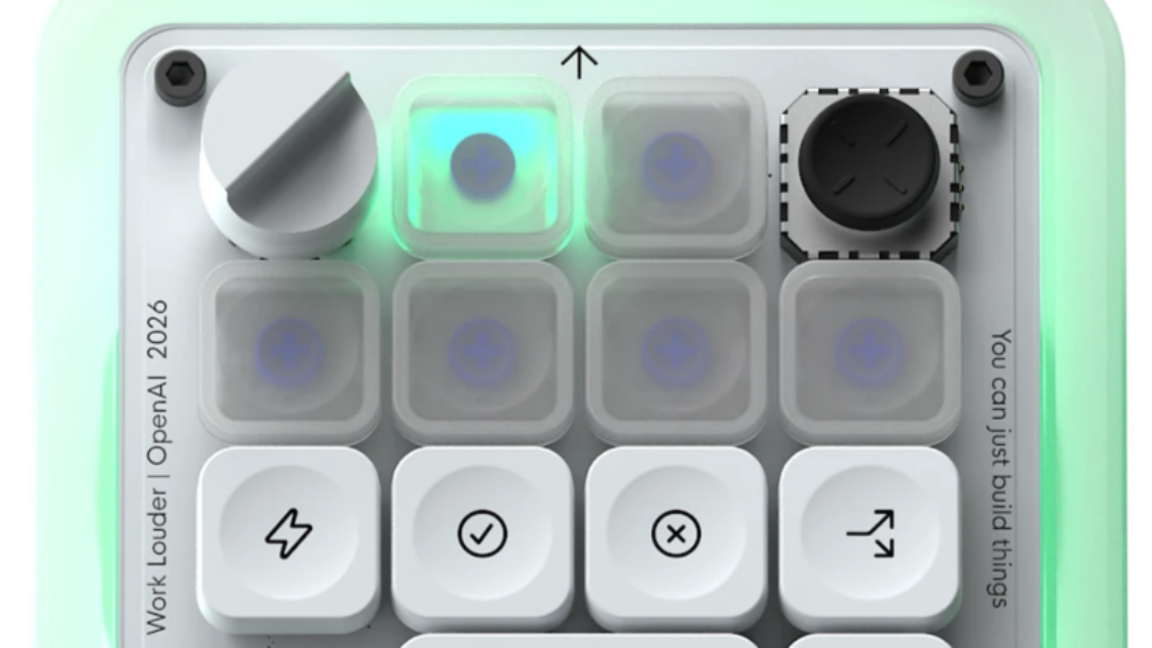
OpenAI released a $230 light-up keyboard called the Codex Micro, designed to control AI coding agents through customizable keys, status lights, and a dial for adjusting computational reasoning levels. The keyboard is a limited-run collaboration with specialty keyboard designer Work Louder and connects to ChatGPT's desktop app. OpenAI is simultaneously developing a separate screenless smart speaker with moving mechanical parts, designed by former Apple engineers, which is still in development and unfinished.

The New Stack
·
1 week ago
Atlassian launched AI-powered features for Jira including a Coding Agent that converts work items into pull requests and integrates with Claude Code, Cursor, and GitHub Copilot to make the platform more appealing to developers. Internal testing showed a 36% reduction in PR cycle time, 44% boost in agent task completion efficiency, and 48% drop in token consumption among Atlassian's 6,000 engineers. The updates aim to keep developers in Jira by automating routine tasks and reducing context switching, though the company acknowledges challenges remain in code review bottlenecks and has set no roadmap beyond the next quarter.

TechCrunch AI
·
1 week ago
Whatnot acquired Shaped, a machine learning company specializing in real-time recommendations and search systems, to improve product discovery as its livestream shopping marketplace expands. The company has reduced recommendation latency from roughly a day to minutes over six years and processes more than 500,000 hours of live video weekly. The integration of Shaped's technology is expected to push recommendations closer to real time, addressing live commerce's core challenge of matching shifting buyer demand with constantly changing inventory and auction schedules.

The New Stack
·
1 week ago
● 3 sources
OpenAI launched the Codex Micro, a $230 programmable macropad developed with Work Louder that includes six agent keys that light up to show the status of AI agents. The device features customizable keys, a joystick, dial, and push-to-talk functionality, with keycaps that can be remapped for use with other applications. The product targets Codex users, which OpenAI says will reach 9 million, and allows them to control agentic coding tasks through dedicated hardware.
Ars Technica
·
1 week ago
● 2 sources
OpenAI released its first branded hardware product, the $230 Codex Micro, a custom mini-keyboard with color-coded keys for monitoring AI agents. The device features six frosted keys that display status updates—white for idle, blue for processing, green for completion, amber for requiring feedback, and red for errors—across up to six concurrent Codex threads. Users can tap the illuminated keys to quickly switch between different AI agent tasks without manually searching for windows on-screen.

404 Media
·
1 week ago
This podcast episode covers three stories: the proliferation of ChatGPT-related flyers in public spaces, an incident where Waymo's autonomous vehicle reported teenagers to police, and a reviewer's experience purchasing a $3,000 electrostimulation fitness suit. The most concrete detail is the $3,000 price of the fitness suit mentioned in one segment. The episode highlights emerging issues around AI product marketing saturation and autonomous vehicle behavior in law enforcement contexts.

TechCrunch AI
·
1 week ago
● 2 sources
Apple's generative AI service has received regulatory approval to launch in China through a partnership integrating Alibaba's Qwen AI model into iOS, iPadOS, macOS, and visionOS. Apple's Greater China sales reached $20.5 billion in the second quarter, representing 28% growth year-over-year. The deal enables Apple Intelligence features, which debuted in 2024 globally, to finally become available to Chinese users after previous negotiations with Baidu, DeepSeek, and ByteDance fell through.

TechCrunch AI
·
1 week ago
● 2 sources
Ode with Anthropic, a joint venture backed by Anthropic, Blackstone, Hellman & Friedman, and Goldman Sachs, was formed by acquiring Fractional AI to deploy engineers directly into enterprise companies for AI implementation. The venture's founders Chris Taylor and Eddie Siegel argue that most enterprise AI pilots fail to reach production environments. The model positions AI-native services as a major emerging category by embedding technical staff within client organizations rather than relying on traditional consulting approaches.

The Verge
·
1 week ago
Google's Pixel 11 phones will feature a glowing, color-shifting orb on the camera bar, as shown in a teaser video on Google's store page. The feature is expected to launch on August 12. The orb may serve as a physical indicator for Gemini AI or other phone functions, though Google has not yet disclosed its purpose.

The New Stack
·
1 week ago
Anaconda acquired Kilo, an open-source coding agent that lets developers switch between AI model providers without vendor lock-in. Kilo routes approximately 10 trillion tokens monthly from 3 million developers across 500-plus models from 60+ providers. Anaconda plans to integrate Kilo into its governance platform over the next 12 months, allowing enterprises to manage AI spending and policies across development and production without being tied to a single model provider.

The New Stack
·
1 week ago
● 3 sources
OpenAI's Codex and ChatGPT Work combined reached 8 million active users following the July 9 launch of GPT-5.6, growing from 5 million in early June. The rapid user surge from 7 million to 8 million occurred between July 12 and July 15, exposing scaling issues that forced OpenAI to reduce the context window from 372,000 to 272,000 tokens and temporarily lift usage caps. The consolidation of Codex into a unified desktop app with integrated tools like Slack and Google Drive marks a shift toward positioning AI as a workspace layer rather than a standalone product.

TechCrunch AI
·
1 week ago
● 2 sources
Anthropic and Blackstone launched Ode, a $1.5 billion AI implementation company, to deploy engineers who help enterprises integrate AI systems into their operations, following a similar move by OpenAI. Ode currently employs 100 engineers and acquired AI services startup Fractional AI as its foundation, operating on a "Claude-first" principle while remaining open to other AI models. The venture assumes that consulting services for AI deployment—not just model development—represents the next trillion-dollar business opportunity, though it faces competition from OpenAI's Deployment Company and consulting firms like Deloitte and Accenture.

TechCrunch AI
·
1 week ago
Reelful, an iOS app founded by former Snapchat engineer Kate Deyneka, automatically generates short-form social media videos by converting photos and video clips into polished TikTok- and Instagram Reels-style content. The app costs $15 for five videos as a one-time purchase, or ranges from $25 to $100 monthly for subscription plans offering 10 to 60 videos. Users can now create social content without manually selecting clips, recording voiceovers, or editing, though the app is currently iOS-only with Android and web versions planned for the future.

TLDR
·
1 week ago
● 4 sources
Companies are deploying AI agents without proper management frameworks, creating wasteful "loops" where poorly-trained employees use AI inefficiently to compensate for unclear processes. The vast majority of token spend produces no value, mirroring how 80% of traditional employees often perform no meaningful business function. The key to unlocking AI value lies in building rigorous evaluation systems and AI transformation services that encode each firm's specific processes into measurable outputs, similar to how coding became the only breakout AI use case because code either runs or fails.

TLDR
·
1 week ago
● 2 sources
Apple is in talks with PrismML, a startup that compresses artificial intelligence models to run on smartphones, after the company publicly released a version of Alibaba's Qwen model optimized for iPhones. PrismML reduced the Qwen model from 54 GB to under 4 GB, enabling it to run on iPhone 15 and newer devices with all 27 billion parameters intact. Running larger AI models directly on iPhones would reduce latency, lower cloud costs, improve privacy, and enable features to work without internet connectivity.
TLDR
·
1 week ago
● 3 sources
OpenAI is developing its first consumer device, a mobile smart speaker without a screen designed to function as an AI companion for the home. The device will perform tasks including smart-home control, media playback, and answering questions through voice interaction. Users will be able to carry the speaker around their homes and interact with it as a conversational companion.

The Neuron
·
1 week ago
Framer released AI agents that operate directly on its web design canvas, allowing designers to generate and refine layouts, manage content management systems, and write code while maintaining full control over changes. The CMS agent can import and organize content (demonstrated with 47 WordPress blog entries mapped automatically) and connect to external tools including Slack, GitHub, and Claude Code for publishing and content updates from any platform. This enables designers and developers to manage site design, content, and code through a unified interface rather than switching between separate applications.

The Neuron
·
1 week ago
Superhuman launched an improved auto-draft feature that generates email replies matching the user's tone based on previous conversations, with options to select from multiple variations. In beta testing, 60% of auto-generated drafts were sent without manual editing within one day. The feature learns from user behavior and adjusts suggestions over time, reducing errors like proposing unsuitable meeting times.

The Neuron
·
1 week ago
Spotify launched a conversational AI assistant for Premium subscribers that allows users to request music and audio content through typed or spoken dialogue across iOS and Android devices. The feature is initially available in the U.S., Ireland, and Sweden for users 18 and older in English, with the company using a combination of its own AI technology and external models. Users can now have back-and-forth conversations with the app to discover new music, explore their listening history, and refine selections by asking follow-up questions or making requests like "play more upbeat songs."
