AWS Machine Learning
·
6 days ago
● 4 sources
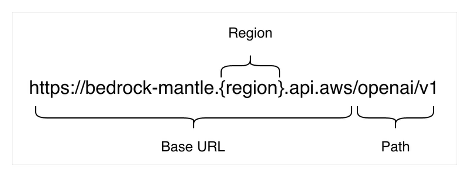
xAI's Grok 4.3 model is now available on Amazon Bedrock, accessible through OpenAI-compatible APIs and featuring a 1 million token context window for long documents. The model supports configurable reasoning effort levels, tool calling, structured output, image input, and multi-turn conversations, with xAI claiming it ranks first on multiple benchmarks including Artificial Analysis Omniscience and Tau2 Telecom. Users can access Grok 4.3 through region-specific Mantle endpoints using either long-term API keys or short-term bearer tokens generated from IAM credentials.

TechCrunch AI
·
6 days ago
● 2 sources
Google announced updates to Google Vids that enable users to create custom digital avatars resembling themselves from a selfie and voice recording, plus integrated Gemini Omni capabilities for multi-modal video creation. The feature supports step-by-step edits and background/lighting adjustments, with personal avatars limited to users aged 18 or older in certain regions and watermarked with SynthID. The expansion transforms Google Vids from a workplace presentation tool into a broader video creation platform that competes with AI video startups like HeyGen and Synthesia.

TechCrunch AI
·
6 days ago
● 2 sources
Roblox launched a mobile feature called Build that uses AI models to generate games from text prompts, allowing users without programming experience to create playable games. The feature enters public alpha testing on July 28 in New Zealand, with free and paid options available. The rollout addresses concerns about low-quality AI-generated content by ranking games based on player retention, ensuring only engaging games receive prominent placement.

The Verge
·
6 days ago
Epic Games is launching AI-powered character voices for Fortnite creators on July 30th, providing 36 pre-made characters with consistent voices that can be used as NPCs in player-created experiences. The company previously tested AI voice characters with a Darth Vader NPC using James Earl Jones' voice, which required approval from his estate. Creators will now have a library of established Fortnite characters available with AI-generated voices to populate their custom game modes and experiences.
Sequoia
·
6 days ago
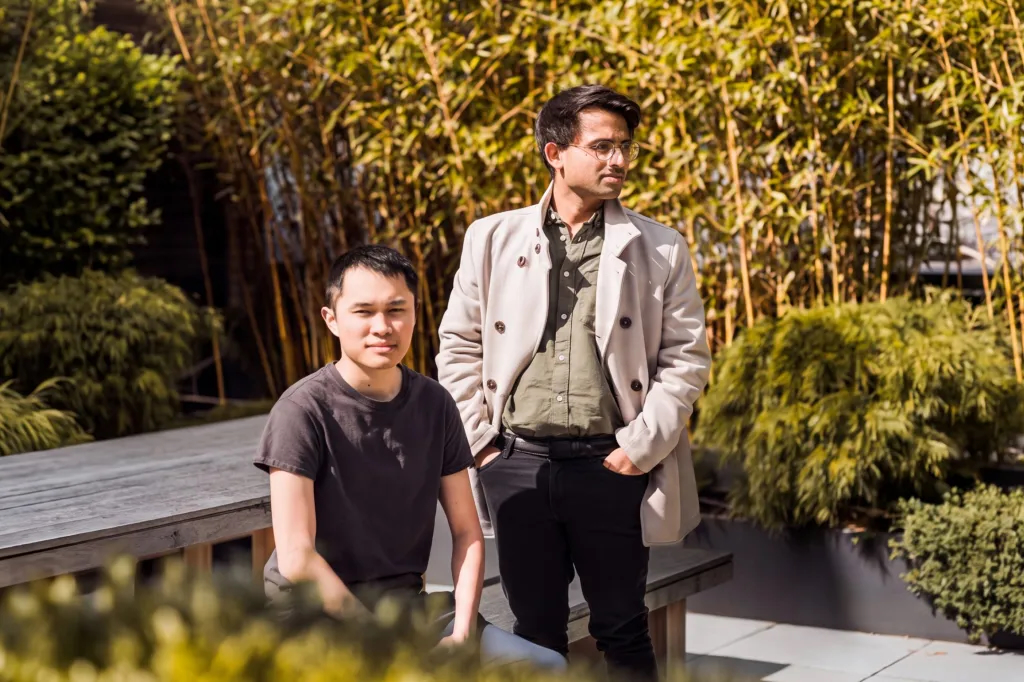
Bunkerhill Health, backed by Sequoia Capital, has developed Carebricks, an AI agent platform that enables health systems to deploy AI agents for clinical, operational, and administrative tasks. At UTMB Health, the platform scaled from one agent in production to more than twenty agents across multiple specialties. The platform allows hospitals to consolidate multiple vendor solutions into a single system while automating manual work so clinicians can focus more on patient care.

TechCrunch AI
·
6 days ago
Google expanded its AI Mode search feature to allow users to link and interact with select third-party apps including Instacart, Canva, and YouTube, enabling tasks like adding grocery items to shopping carts and saving playlists. The rollout started in the U.S. with plans to support additional apps in the future. This update positions AI Mode as a task completion tool to compete with ChatGPT and Claude, which already offer app integration capabilities.

TechCrunch AI
·
6 days ago
● 2 sources
DoorDash introduced dd-cli, a command-line tool that allows developers to order food directly from AI agents by searching stores, finding deals, and checking out. The tool is available in limited beta to U.S. and Canadian macOS developers via waitlist starting July 15, 2026. This enables agentic commerce where developers can build custom ordering tools or integrate DoorDash functionality into their own software and services.

TechCrunch AI
·
6 days ago
OpenAI released a $70 ChatGPT basketball alongside a $230 keyboard and merchandise as part of a "Pause. Play. Prompt." campaign to encourage offline creativity. The basketball is made of 100% rubber designed for outdoor weather resistance. The article critiques the unclear market appeal of branded sports equipment and broader issues with AI companies' product-market fit decisions.
Sakana AI
● 6 sources
Sakana AI partnered with DEEP DIVE, a private intelligence organization, to combine Sakana's AI technology with DEEP DIVE's defense and geopolitical expertise and open-source data for information analysis. The partnership aims to conduct analysis at scales, speeds, and resolutions previously difficult to achieve manually through joint research. Sakana AI is positioning defense and intelligence alongside finance as a strategic focus area to accelerate implementation of advanced AI technology.
Sakana AI
● 2 sources
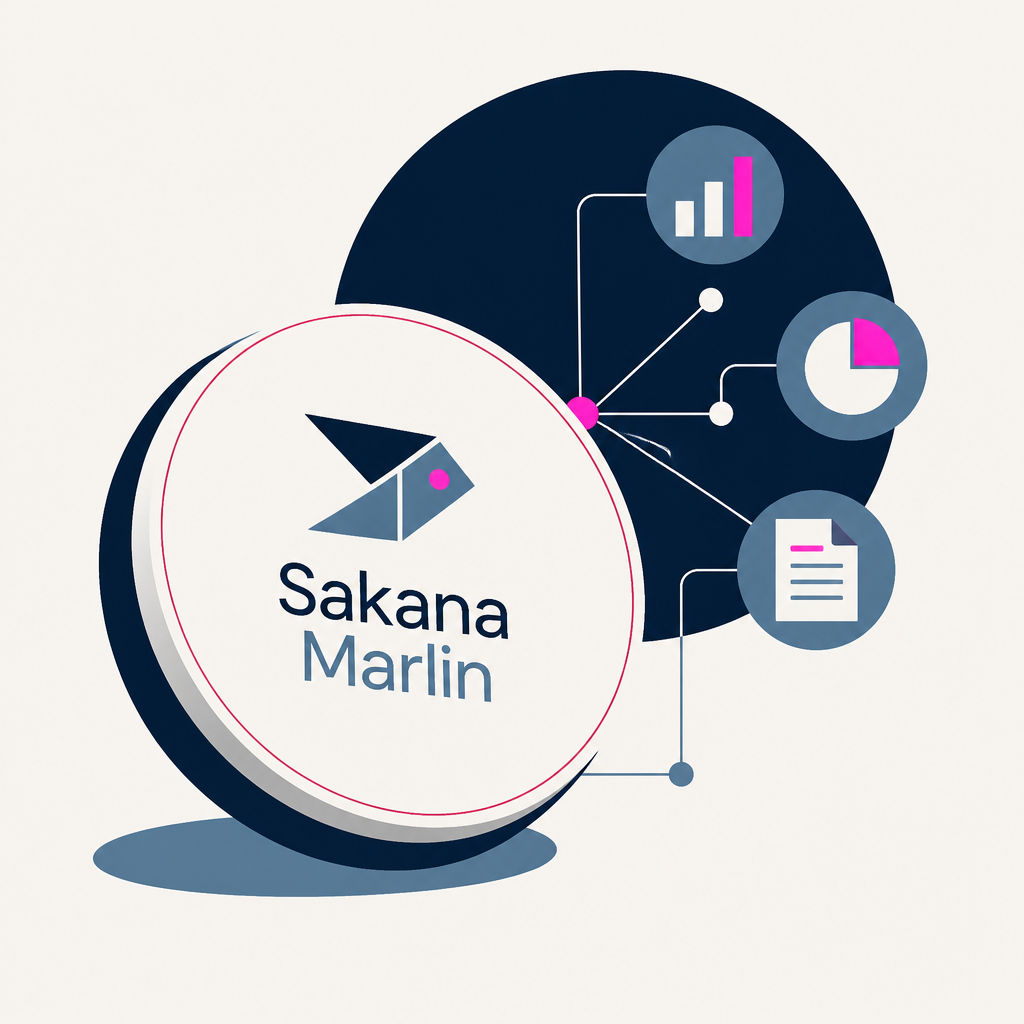
Sakana AI released Sakana Marlin, its first commercial product, an autonomous research assistant that conducts business research independently for up to eight hours and generates structured summary slides and detailed reports. The system underwent a closed beta test from April 2026 with approximately 300 professionals from financial institutions, consulting firms, and think tanks who used it for strategy formulation, market research, and competitive analysis. The release enables research teams to shift focus from information gathering to higher-value decision-making by automating comprehensive research and analysis tasks.
Sakana AI
● 3 sources
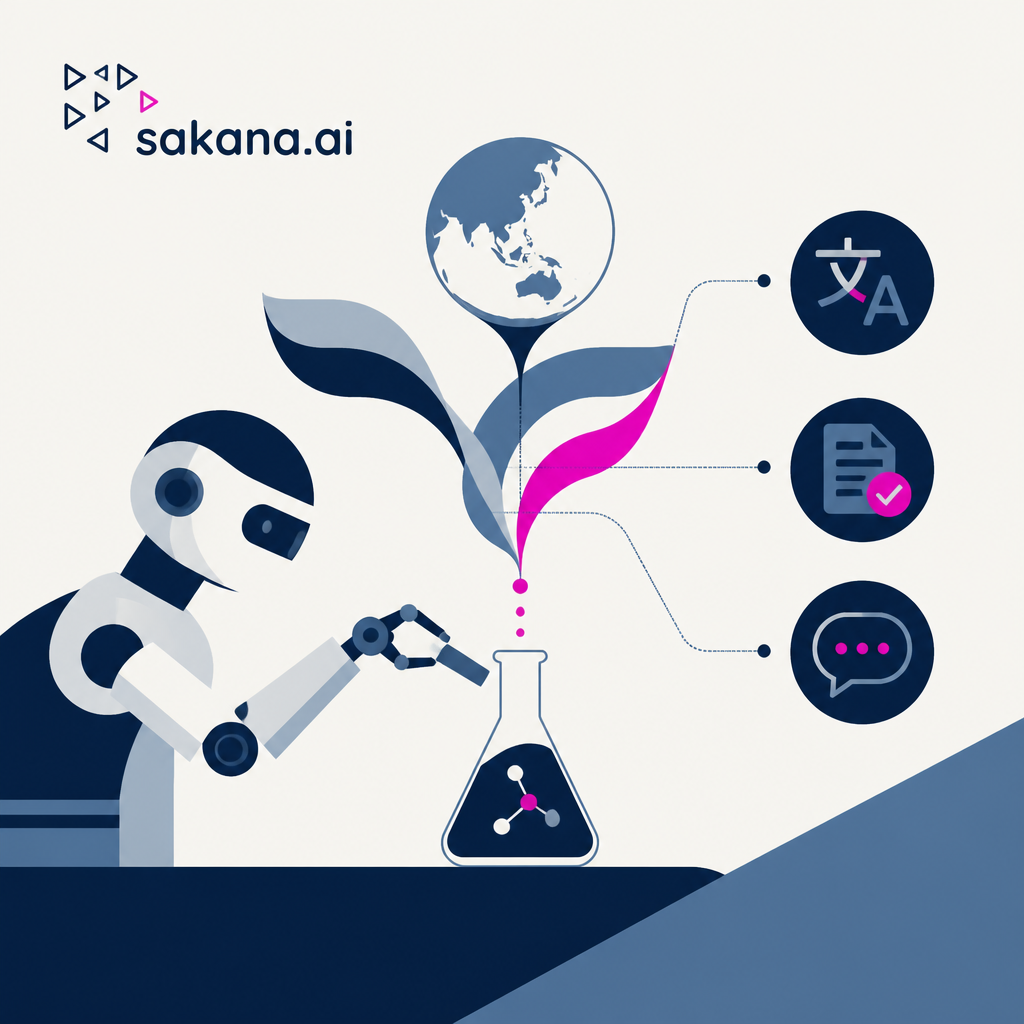
Sakana AI released Fugu Ultra, a multi-agent orchestration system that dynamically coordinates multiple language models to perform complex tasks through a single API. Fugu Ultra matches the performance of leading models like Anthropic's Fable 5 and Mythos Preview on engineering, scientific, and reasoning benchmarks while avoiding export control restrictions. The system allows organizations to reduce vendor dependency and maintain access to frontier-level AI capabilities even if individual model providers restrict access.
Sakana AI
Sakana AI launched Sakana Translate, a free web-based translation service supporting Japanese, English, and Chinese bidirectional translation using their Namazu model adapted for Japanese language and culture. In XCOMET-XL evaluation on WMT 2024 General Translation tasks, Sakana Translate achieved scores competitive with leading translation models. The service offers three modes—translate, proofread, and ask—with plans for industry-specific variants and enterprise features including API access and on-premises deployment.
Sakana AI
● 3 sources
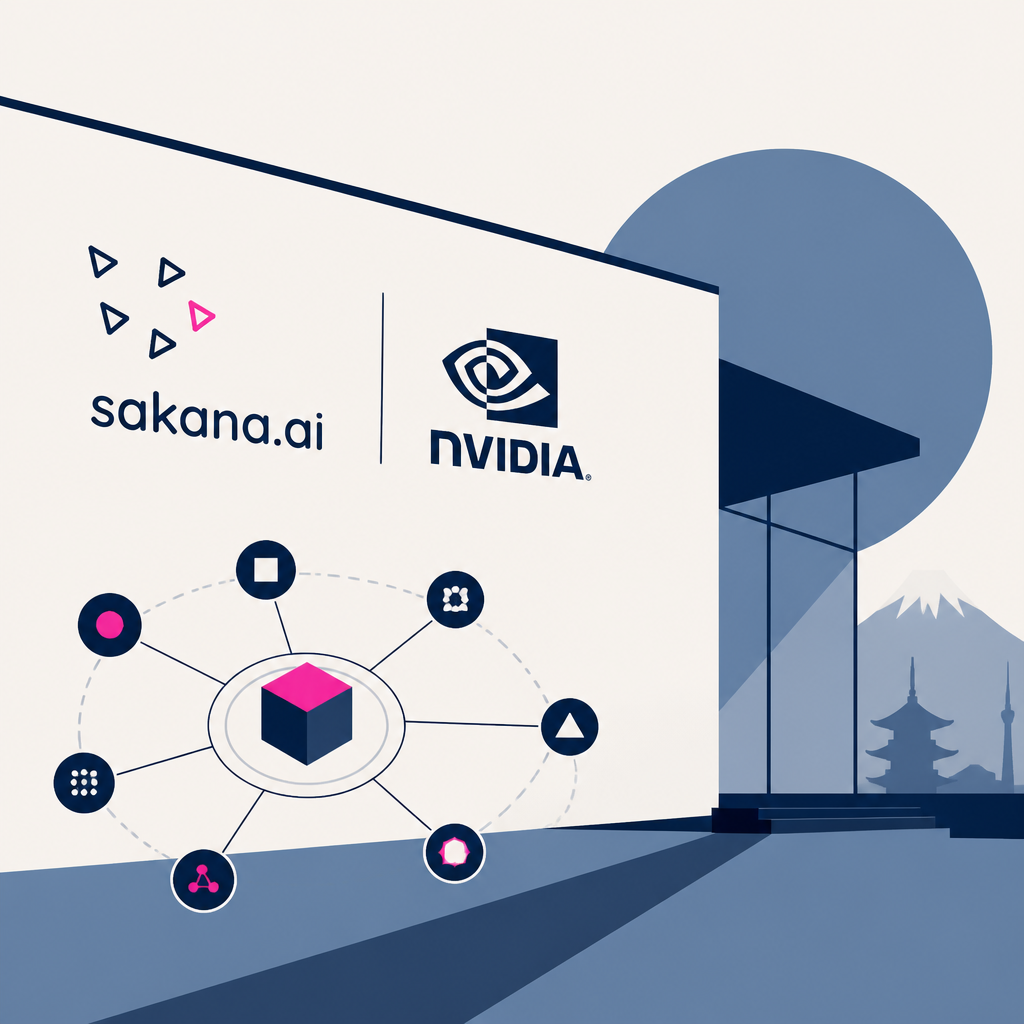
Sakana AI is integrating NVIDIA's Nemotron open models into its Fugu multi-agent orchestration system, which coordinates multiple specialized models to handle complex tasks. In early evaluations, the orchestration-based approach has shown strong performance alongside leading frontier systems, demonstrating that model coordination can serve as a scaling path. This collaboration aims to create a feedback loop where open models, orchestration, and real-world use reinforce each other, reducing dependence on single providers and enabling more capable AI systems.

The New Stack
·
6 days ago
● 2 sources
Linus Torvalds announced that Linux will support AI tools in development and told those opposed to either fork the project or leave, marking a shift from his skepticism a year earlier when he criticized AI hype. Torvalds stated this position explicitly as the top-level maintainer, saying AI is a useful tool like any other, though he acknowledged it presents challenges for maintainers. The Linux project will now actively integrate AI assistance while requiring human developers to take responsibility for understanding and explaining contributions.

TechCrunch AI
·
6 days ago
Alexandre LeBrun, CEO of AMI Labs, rejects industry terminology like 'AGI' and 'superintelligence' as poorly defined and unhelpful for describing his work on world models. AMI Labs raised $1.03 billion in March at a $3.5 billion pre-money valuation but has no product yet and is scouting partnerships in South Korea for access to real-world robotics and manufacturing environments. The startup aims to build AI systems that understand physical environments and enable safer, context-aware robots for applications where LLMs alone are insufficient.
Simon Willison
·
6 days ago
● 2 sources
Linus Torvalds stated that Linux will not adopt an anti-AI stance and that developers opposed to AI integration can fork the project or leave. He argued that AI's utility is now established, distinguishing it from theoretical questions about AI's long-term economic impact. This positions Linux as open to AI-assisted development tools, contrasting with open-source projects that have explicitly rejected AI contributions.

TechCrunch AI
·
6 days ago
● 2 sources
Apple Intelligence has been approved for launch in China after the company secured deals to integrate Alibaba's Qwen AI model and partnered with Baidu for localized features. Apple generated $20.5 billion in Greater China sales in the second quarter, up 28% year-over-year, making the market critical for the company's AI expansion. The approval removes the regulatory barrier that delayed Apple Intelligence in China since its 2024 debut, allowing the company to offer AI features through local large language models rather than its own systems.

The Verge
·
6 days ago
● 2 sources
Roblox is adding AI tools to its mobile app to help people create games directly on their phones. The company will provide an AI foundation model for generating 3D assets and an AI assistant chatbot to aid developers during game building. This expansion makes AI-powered game development more accessible to Roblox's user base but may increase the volume of low-quality content on the platform.

The Verge
·
6 days ago
● 4 sources
Google is renaming its note-taking app NotebookLM to Gemini Notebook while keeping it as a standalone product with deeper integration into Gemini and Google Search. The app, initially called Project Tailwind when announced in May 2023, has accumulated features including AI podcast summaries, narrated slideshows, and TikTok-style clips. The rebrand reflects Google's consolidation of its AI offerings under the Gemini umbrella.

TLDR Dev
·
6 days ago
Ubisoft reported a $1.98 billion loss in 2026 after canceling six major games and reducing its workforce by 20 percent, prompting CEO Yves Guillemot to pursue a turnaround strategy centered on AI and cutting-edge technology. The company has spent roughly $100 million on cloud gaming rights that have depreciated to $36 million net value, following previous failed bets on virtual reality, Stadia cloud gaming, metaverse, and blockchain technologies over the past decade. In contrast, Take-Two's CEO Strauss Zelnick consistently rejected hype around emerging technologies and instead focused on game quality, a skepticism that appears reflected in superior share price performance, suggesting that chasing technology cycles rather than executing games well may be the root of Ubisoft's decline.
TheSequence
·
6 days ago
● 2 sources
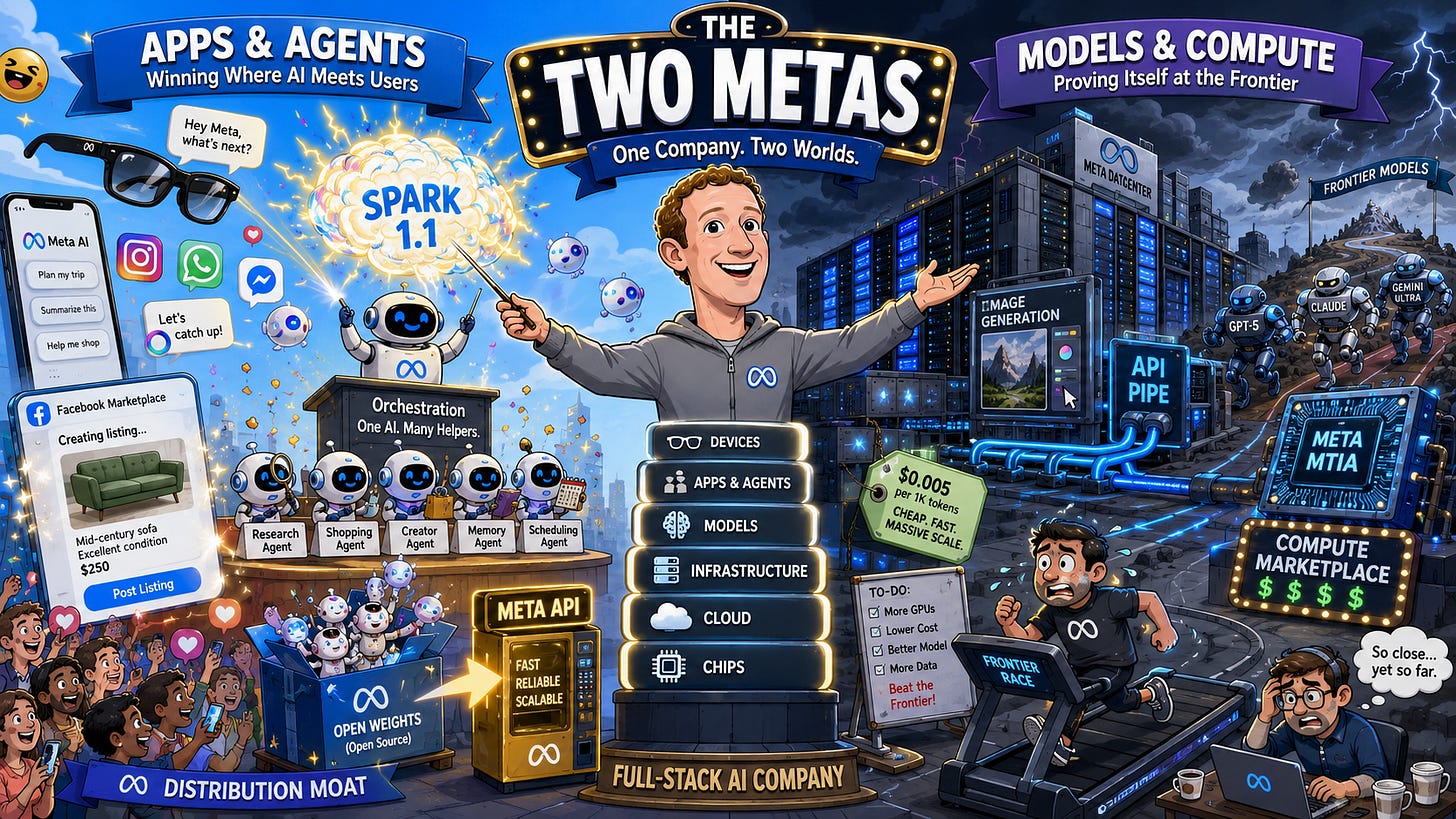
Meta launched Spark 1.1, a proprietary frontier model with pricing at $1.25 per million input tokens, marking a shift from the company's three-year commitment to open-weights AI. CEO Mark Zuckerberg announced the model publicly after a three-year absence from social media, while Meta simultaneously introduced the Spark Image model and began building Meta Compute, a cloud service to sell surplus AI infrastructure. Meta is now assembling a complete vertical stack including custom chips, datacenters, cloud services, and models, positioning itself to compete directly with frontier AI labs, though structural advantages favor the company in end-user applications rather than model development.
The Neuron
·
6 days ago
● 3 sources
OpenAI is developing a screenless ChatGPT speaker device equipped with cameras, sensors, and the ability to move around the home. The device will feature GPT-Live voice capabilities and support smart-home control functions. This represents OpenAI's entry into the hardware market as a physical interface for its conversational AI technology.

Meta AI Blog
● 3 sources
Meta released Muse Spark, a multimodal reasoning model that supports tool-use, visual reasoning, and multi-agent coordination as the first product from its restructured AI efforts. The model requires over an order of magnitude less compute than Meta's previous Llama 4 Maverick model to reach equivalent performance levels. The release includes a private API preview and marks the beginning of Meta's stated scaling roadmap toward what it calls personal superintelligence.

Meta AI Blog
● 3 sources
Meta launched Muse Image, an image generation model that uses search tools, code execution, and self-refinement to follow instructions and edit images precisely, alongside a preview of Muse Video for video generation. Muse Image ranks No. 2 on Arena's human-preference Elo rankings for text-to-image and image editing tasks as of July 5, 2026. The models are now available in Meta AI app, meta.ai, and Instagram Stories in the US, with integration into Facebook and broader creator access coming soon.

Anthropic News
Anthropic introduced a reflection dashboard in beta that lets Claude users track and visualize their usage patterns across different time periods, helping them decide whether their AI usage aligns with their goals. The dashboard allows users to review Claude activity over the past 1, 3, 6, or 12 months, organized by topics and task types, with upcoming features including time-spent metrics and break reminders. The feature aims to help users develop AI skills using a framework covering delegation, description, discernment, and diligence, while excluding incognito chats and health-related conversations from the analysis for privacy.

Anthropic News
Ben Bernanke, former Federal Reserve chair and 2022 Nobel Prize winner in Economics, was appointed to Anthropic's Long-Term Benefit Trust, an independent governance body overseeing the company's responsible AI development. The LTBT has authority to appoint board members and advise leadership on decisions involving AI risks and societal impacts, with Bernanke joining three existing trustees whose experience spans health, security, law, policy, and economics. Bernanke will contribute expertise on how AI affects workforces and economies, strengthening the trust's ability to anticipate and respond to the technology's economic effects.

Anthropic News
● 3 sources
UST, a technology and engineering services company, is integrating Claude into its platforms for hardware validation, healthcare, telecom, and banking operations, while training 20,000 of its engineers and consultants worldwide on the AI model. UST's iDEC validation platform already cuts chip validation cycle times by 50 to 70%, condensing standard four-day turnarounds into 48 hours by using Claude to read hardware designs and generate regression tests automatically. The integration enables earlier detection of design flaws and reduces manual scripting work, with all Claude-generated recommendations requiring human approval before implementation in regulated industries.
Anthropic News
● 3 sources
Anthropic launched Claude for Teachers, offering free access to premium Claude capabilities and curriculum-aligned teaching tools for verified K-12 educators in the US. Verified teachers gain access to Claude's Code and Cowork features, integrations with nine K-12 platforms including ASSISTments and Brisk Teaching, and connections to academic standards across all 50 states. The tool aims to reduce teacher workload by automating tasks like lesson planning, differentiation, and data analysis while protecting student data under a K-12 Data Processing Addendum compliant with FERPA.

Anthropic News
● 3 sources
Anthropic launched Claude Science, an AI workbench that integrates scientific tools, databases, and computing resources into a single environment for researchers. The platform includes over 60 pre-configured skills for genomics, proteomics, and cheminformatics, with access to major scientific databases like UniProt, PDB, and Ensembl. Scientists can now conduct multi-step analyses with auditable results and reproducible code, with one neuroscientist reducing review-writing time from two years to weeks using the system.

Sifted
·
1 week ago
Uma, a Paris-based robotics startup, unveiled its humanoid robot work at the Machina summit in France after nine months of operating quietly. The company raised funding and has established a team of 14 people across locations in Paris, Toulouse, and Lyon, with plans to develop humanoid robots for industrial and commercial applications. Uma positions Europe as an advantageous market for robotics development due to regulatory frameworks and labor costs compared to other regions.
