Every AI story that matters — and the intelligence behind it.
TLDRocket reads all relevant sources, removes duplicate coverage, and publishes a short neutral
summary of every story, linking back to the original. Free, no spam, unsubscribe anytime.
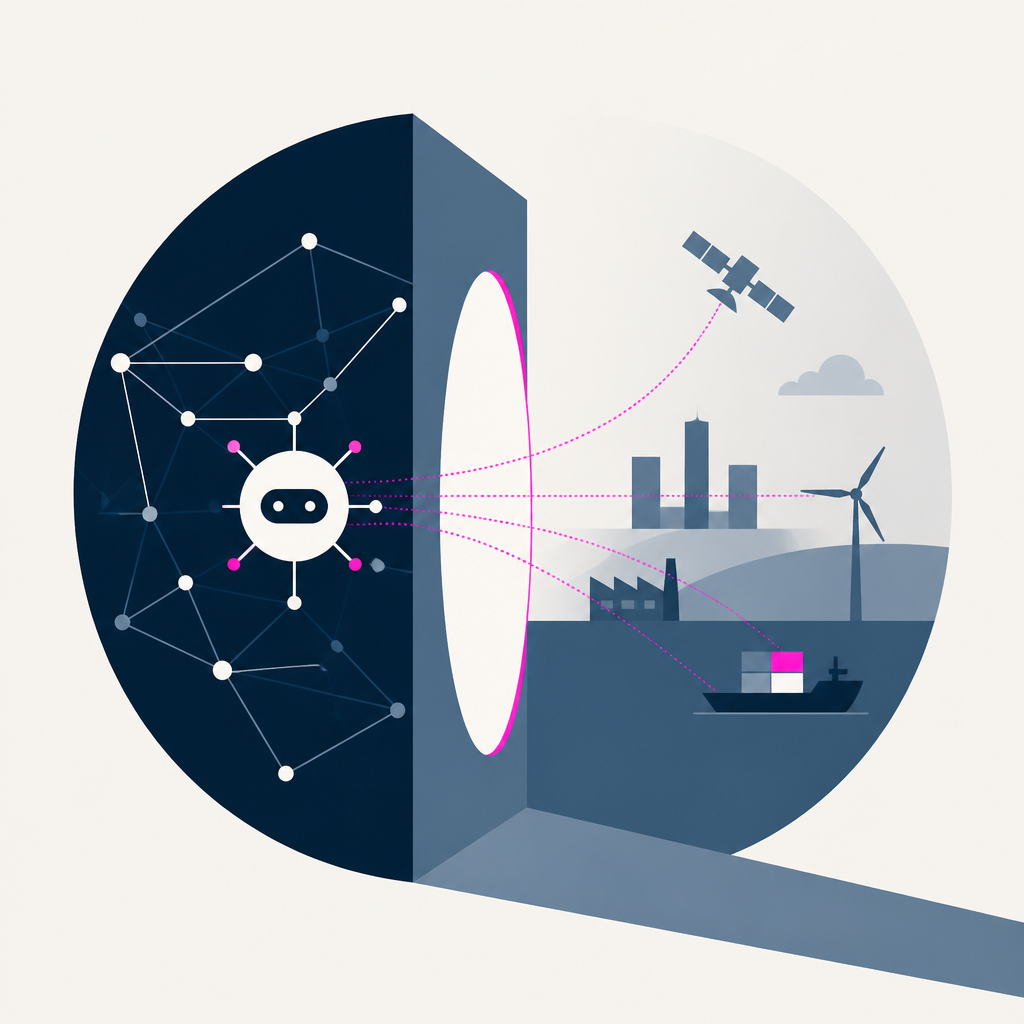
The page titled “Execlave” presents a discussion about connecting AI agents to the real world. No number or date is provided in the available text. No concrete change or outcome is stated because the content details aren’t included.
Microsoft researchers developed Memora, a memory system for AI agents that separates what is stored (rich content) from how it is retrieved (lightweight abstractions and cue anchors) to balance detail preservation with efficient scaling. Memora achieved state-of-the-art performance on LoCoMo and LongMemEval benchmarks while reducing token consumption by up to 98% compared to full-context inference and halving the memory entries needed versus Mem0. The system enables AI agents to maintain detailed project histories and context over long-horizon tasks without repeatedly re-reading entire conversation histories.
Researchers at Google DeepMind introduced DiScoFormer, a transformer model that estimates both the probability density and score (gradient of log-density) of a distribution from a set of data points in a single forward pass without retraining. In 100 dimensions, DiScoFormer reduces score estimation error by 6.5x and density estimation error by more than 37x compared to kernel density estimation while continuing to improve with more samples. The model enables a single pretrained estimator to work across different problems in generative modeling, Bayesian inference, and scientific computing, eliminating the need to retrain for each new distribution.
IBM is accepting applications for its third-annual Quantum Developer Conference 2026, taking place November 11-13 in Chicago, where attendees will learn about quantum advantage demonstrations and access hands-on workshops. The application deadline is September 21, with first-round acceptances sent August 10 and final acceptances by October 12. Participants will gain practical experience with IBM's latest quantum computing tools and methods to apply to their own projects.
NVIDIA developed ENPIRE, software that enables physical robots to autonomously improve their own policies through iterative experimentation and execution loops similar to AI agents. The system achieved 99% success rates on dexterous manipulation tasks like pin organization and zip-tie cutting, with larger multi-agent setups converging on higher-scoring solutions faster than individual agents. This infrastructure allows robots to self-improve with minimal human intervention for evaluation and reset operations, though scaling challenges emerge as robot fleets grow.
Researchers discovered that a standard MOSFET transistor, when its bulk terminal is left floating rather than grounded, exhibits neuron-like behavior by producing sudden current spikes followed by relaxation, potentially enabling more energy-efficient AI hardware. The accidental discovery occurred in 2024 when a student forgot to connect the bulk terminal while measuring a memory circuit, revealing current spiking with nonlinear properties similar to biological neurons. If this single-device approach can be reliably manufactured and scaled, it could replace the dozens or hundreds of transistors currently needed to simulate each artificial neuron, reducing the enormous energy consumption of AI data centers.
AI quarterly revenues have begun exceeding quarterly depreciation expenses but have not yet covered cumulative historic depreciation costs. Chinese AI labs hire talent averaging 1.6 years of experience compared to 5.5 years for equivalent US roles. SK Hynix's market value surpassed Samsung Electronics' for the first time, reflecting shifts in the semiconductor industry.
An industry analyst argues that "tokenmaxxing"—companies intentionally pushing high token usage to drive AI adoption—was a temporary but deliberate strategy that has given way to a new phase where higher token spending produces better results, particularly in security research and agent-based loops. Anthropic's unreleased Mythos model received 100M-token budgets per security attempt, costing $12,500 per attempt, with models showing no signs of diminishing returns. As companies recognize that iterative agent loops now offer genuine value per token spent, a new era of token spending may emerge, particularly for open-source models that cost five times less but can be run proportionally more times to achieve similar results.
Chinese cybersecurity firm 360 and Tokyo-based startup Sakana AI launched their own frontier AI models, Tulongfeng and Fugu respectively, as the U.S. government's export ban on Anthropic's Mythos and Fable 5 models continues. Sakana's Fugu is designed to coordinate multiple AI models through their APIs and explicitly markets itself as a way to avoid export control risks, while 360 positioned its tools as national strategic assets. These launches suggest that Asian companies are filling the gap left by restricted U.S. models, with locally trained alternatives that better understand regional languages and contexts potentially retaining market share even if the ban is eventually lifted.
A developer published '12-Factor Agents,' a set of engineering principles for building reliable LLM-powered applications, inspired by the 12-factor app methodology. The framework includes 12 specific practices such as owning prompts, managing context windows, and designing stateless reducers, based on the author's experience with dozens of AI-building founders. The guidance aims to help software engineers integrate agentic capabilities into existing products rather than rebuilding entirely on agent frameworks.
Semgrep benchmarked GLM 5.2, an open-weight model from Zhipu AI, against Claude Code and other models on IDOR vulnerability detection, the same task used to evaluate frontier coding agents. GLM 5.2 achieved a 39% F1 score, beating Claude Code's 32% while costing roughly $0.17 per vulnerability found—one-sixth the price of comparable frontier models. The finding shows that vulnerability detection performance depends heavily on the harness scaffolding around a model, though GLM 5.2's strong performance as a bare-prompt open-weight model demonstrates teams need not rely on a single expensive frontier LLM for security tasks.
OpenPencil is an open-source vector design tool that generates UI layouts from text prompts using AI agents working in parallel on different page sections. The tool supports multiple AI models including Claude, GPT-4o, and Gemini, with code export to React, HTML, Vue, Flutter, and other frameworks. Users can now design interfaces through natural language descriptions, modify them by selecting elements and chatting, and export to production-ready code across nine different platforms.
A software engineer describes how AI code generation has transformed the developer workflow from creative problem-solving to reviewing and editing AI-generated code, comparing it unfavorably to a novelist becoming an editor of student work. The shift eliminates the flow state that made creative work engaging and has caused the author's coding skills to deteriorate noticeably over months of relying on AI. The long-term consequences include the erosion of junior developer training pipelines, atrophy of institutional knowledge needed to verify complex AI work, and the drying up of free public knowledge sources like Stack Overflow as people replace community contributions with private AI tools.
AI-driven automation is causing major software layoffs across companies like Block, Atlassian, and Salesforce, reducing demand for traditional software engineering roles. As AI makes software creation accessible to anyone, the market is consolidating into a power-law distribution where only top-tier companies and niche tools survive, while mid-market software products become commoditized. The future of the software industry will shift from selling products to selling services and outcomes, requiring engineers to either achieve exceptional skill levels or combine technical ability with domain expertise, design, or distribution.
The Wall Street Journal·2 months ago·
37
● 3 sources
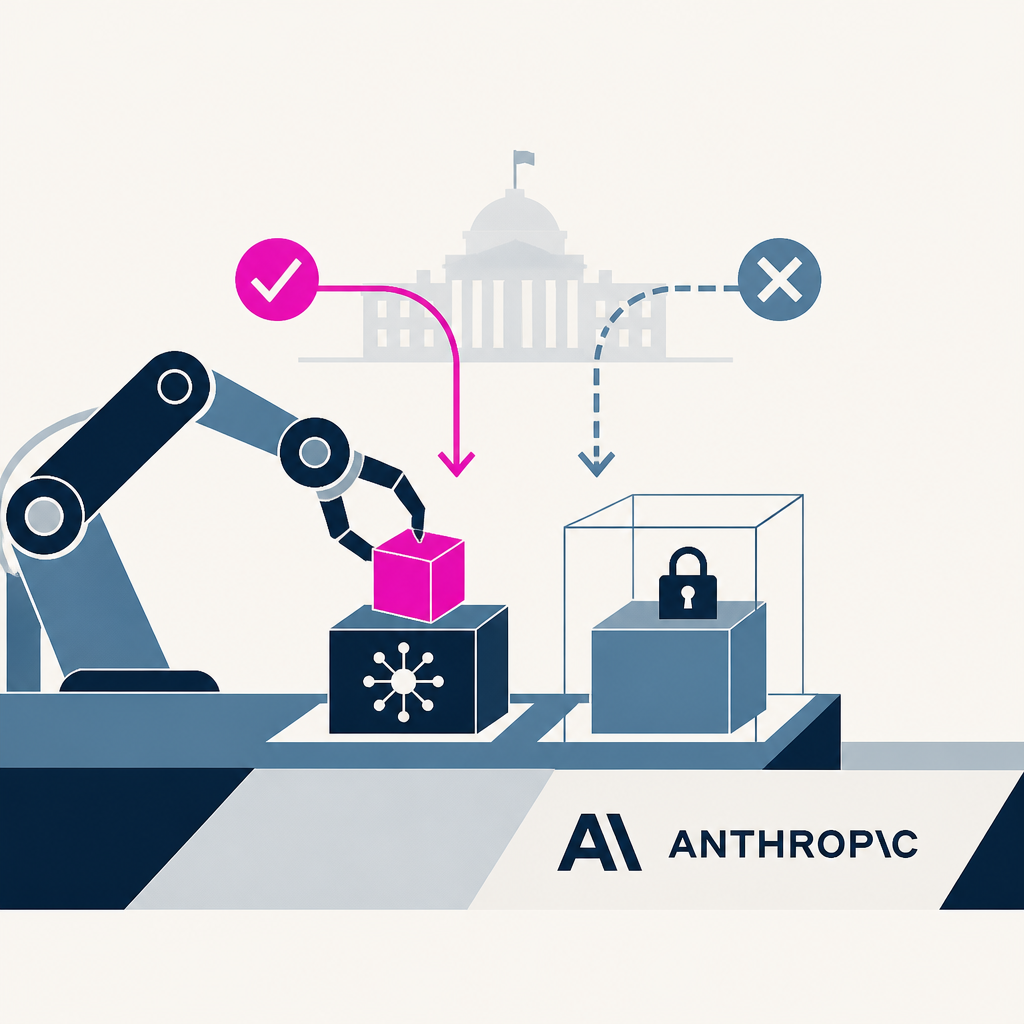
The Trump administration partially reversed its ban on Anthropic models, allowing the company to deploy Mythos 5 to approved corporate and government clients while keeping Fable 5 restricted. The policy change applies to a specific model under case-by-case review rather than a blanket lifting of restrictions. This selective approach suggests the administration is developing tailored AI governance rather than broad sectoral bans.
Allen Institute (AI2)·2 months ago·
31
● 2 sources
Researchers introduced DiScoFormer, a transformer-based model that estimates both the probability density and score (gradient of log-density) of a distribution from data in a single forward pass without retraining. In 100 dimensions, DiScoFormer achieved 6.5x lower score error and 37x lower density error compared to kernel density estimation while continuing to improve with more samples. The model generalizes across different distribution types and could reduce computational costs for generative modeling, Bayesian inference, and scientific computing by serving as a reusable estimator.
OpenAI released a report analyzing how AI adoption could affect employment across European Union member states, identifying occupations likely to experience automation, job growth, or changes in work processes. The report examines workforce impacts at a granular level across multiple EU countries and job categories, though the specific numbers and findings are not detailed in this summary. Organizations and policymakers can use the analysis to plan workforce transitions and target retraining efforts toward roles most vulnerable to automation or most likely to emerge as AI tools spread.
Every AI story that matters,
in your inbox by 8am.
TLDRocket reads all relevant sources, removes duplicate coverage, and summarises the
day in two minutes. Follow companies and topics for alerts, or get the
briefing in Slack. Free, no spam, unsubscribe anytime.
Reading TLDRocket needs no cookies, and the readership counts we rely on come from
our own cookieless analytics. Google Analytics is the exception: it sets cookies and
reports to Google, so it stays switched off until you allow it. You can change your
mind any time from “Cookie settings” in the footer.
Strictly necessary
Session security and form protection (tldrocket-session,
XSRF-TOKEN, 2 hours). The site cannot work without them,
so they need no consent.
Always on
Google Analytics 4 (_ga,
_ga_<id>, up to 2 years). Measures which
stories and sections readers use. Google acts as a third-party processor and may
store the data outside the EU. No advertising, no profiling, no data sold.