OpenPencil
GitHub
OpenPencil turns text prompts into live UI, no Figma needed. Multiple AI agents build different sections at once, then export straight to code.
Based on reporting by GitHub — read the original for the full story.
Summary, retelling and take written by AI under human oversight; images are AI-generated illustrations. How we work · Report an error
There's a new open-source tool called OpenPencil that wants to close the gap between typing "build me a landing page" and actually shipping one. It's a Rust-native canvas app: you describe a UI in plain English, and it streams onto an infinite canvas in real time, complete with a hero section, features grid, and footer appearing as the model thinks. Select any element afterward and tell it what to change, and it edits in place rather than starting over.
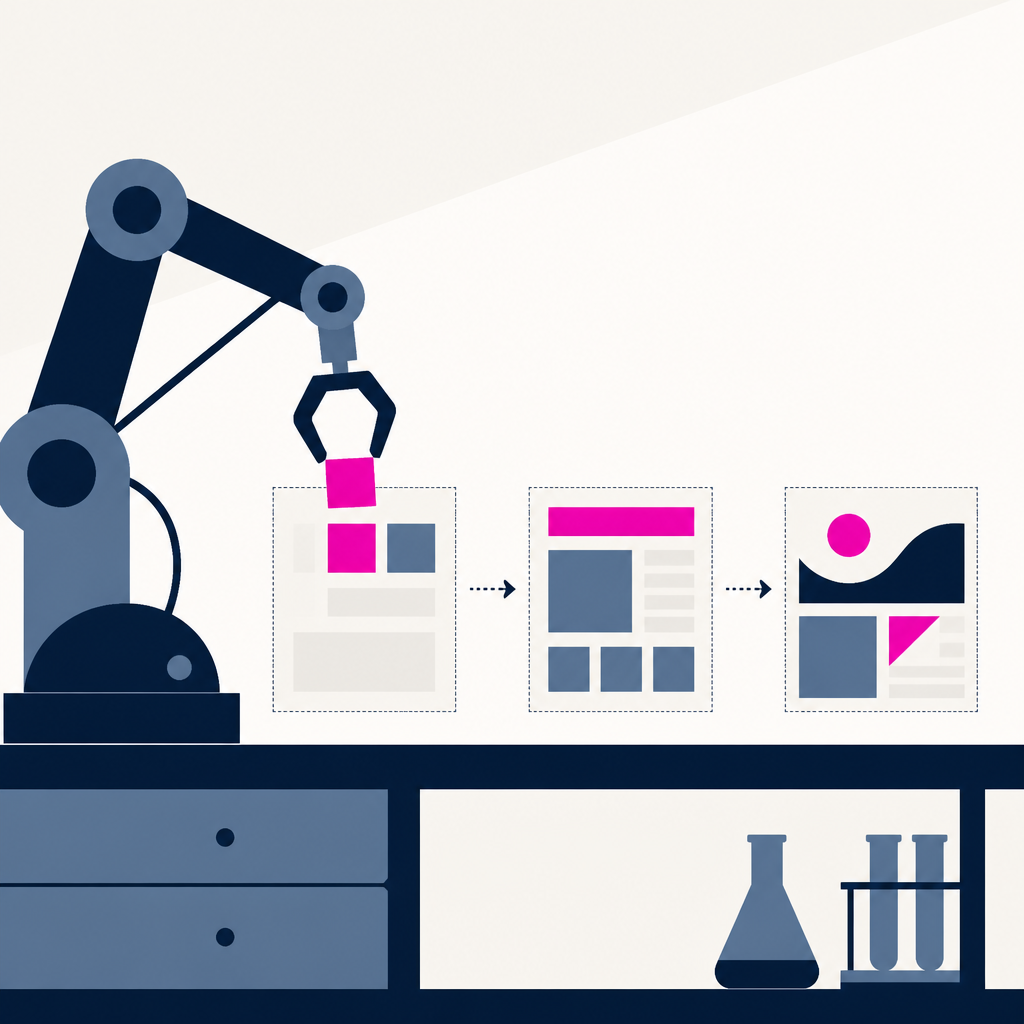
What sets OpenPencil apart from the usual prompt-to-design demo is what it calls Concurrent Agent Teams. Instead of one model grinding through a page top to bottom, an orchestrator splits the layout into spatial chunks and hands them to multiple agents working in parallel — one on the hero, another on features, another on the footer — each with its own canvas indicator so you can watch the build happen section by section. It's a small idea, but it changes the psychology of waiting for AI output: watching three things happen at once feels a lot less like staring at a spinner.
The tool also doesn't assume you're running Claude. It ships model-capability profiles that reshape prompts depending on what you plug in — Claude gets the full prompt with extended thinking, GPT-4o and Gemini get thinking disabled, and smaller open models like MiniMax, Qwen, and Llama get simplified, nested-JSON prompts so they don't choke on complexity they weren't built for. That kind of per-model tuning is unusual to see baked into a design tool rather than left to the user.
Under the hood, everything is stored as .op files, which are just JSON — meaning designs are Git-diffable and mergeable like code, not locked in a proprietary blob. There's a built-in MCP server so agents in Claude Code, Codex, or Copilot CLI can read and modify these files directly from a terminal, plus a CLI called op for scripting designs from stdin or files. Export targets go well beyond the usual React-and-Tailwind combo, reaching Vue, Svelte, Flutter, SwiftUI, and Jetpack Compose from a single source file.
And the whole thing runs as one self-contained Rust binary across macOS, Windows, and Linux — no Electron, no bundled browser engine, just a native GPU-Skia renderer. For a project still finding its footing, that's a surprisingly disciplined technical bet, one that trades convenience for speed and a much smaller footprint than most Electron-based design tools ship with today.
My take — AI-written commentary, not fact-checked reporting
What actually matters here isn't the multi-agent marketing language, it's that .op files are plain JSON that diff cleanly in Git — that's the part with staying power, not the parallel agents drawing a hero section and a footer at the same time. I'll believe the 'agent teams' claim saves real time once someone shows me a merge conflict it didn't cause. But shipping this as open source, self-hostable, and not locked to one model vendor already puts it ahead of every closed Figma-plugin clone racing to bolt AI onto the same old canvas.
Read more about this at: GitHub