Memora: A Harmonic Memory Representation Balancing Abstraction and Specificity
Microsoft Xuchao Zhang, Molly Xia, Mayukh Das, Anson Bastos, Rujia Wang, Chetan Bansal, Saravan Rajmohan
Microsoft built a memory system called Memora that lets AI agents actually remember past conversations instead of starting fresh every time. It beats existing memory tools while using up to 98% fewer tokens - a real efficiency jump, not just a lab curiosity.
Based on reporting by Microsoft, Xuchao Zhang, Molly Xia, Mayukh Das, Anson Bastos, Rujia Wang, Chetan Bansal, Saravan Rajmohan — read the original for the full story.
Summary, retelling and take written by AI under human oversight; images are AI-generated illustrations. How we work · Report an error
Ask any long-running AI assistant to recall something from three weeks ago and you'll usually get a shrug dressed up as an answer. That's because most LLM-based agents are stateless: each session starts cold, and any memory of prior context comes from either stuffing the entire chat history back into the prompt or leaning on a retrieval system that grabs loosely related text fragments. Microsoft Research's new system, Memora, tries to fix that by separating two things that most memory tools have always bundled together: the rich content you want to remember, and the lightweight index used to find it again.
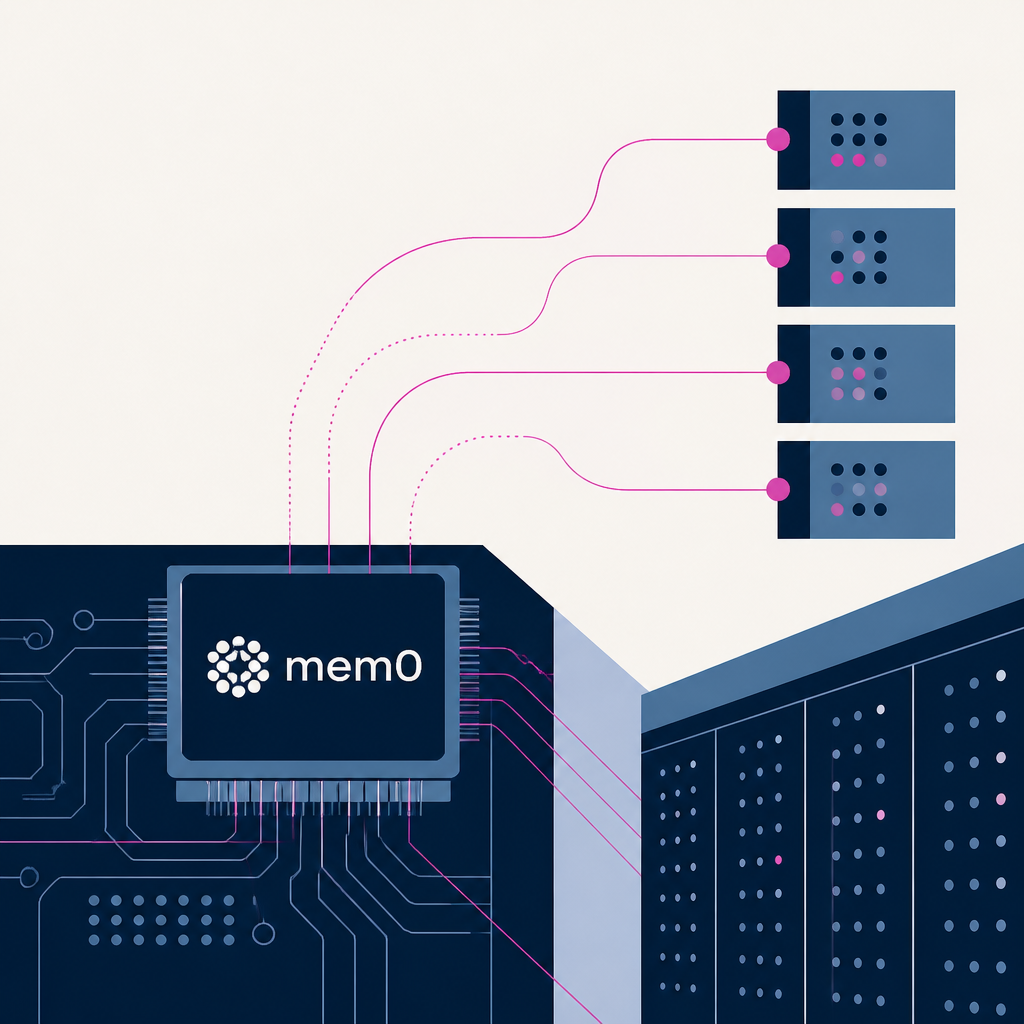
The trick is a split-layer design. Every memory gets a short "primary abstraction" — six to eight words summarizing what it's fundamentally about — plus a fuller "memory value" holding the actual detail. Only the abstraction gets embedded for similarity search, so when new information about the same topic shows up, it merges into the existing entry instead of spawning a duplicate fragment. Memora also attaches "cue anchors," short tags pulled from the content that give the system extra ways to find a memory later, without requiring a rigid schema or entity graph like Zep or GraphRAG demand. A retrieval policy then actively expands through those cues rather than just returning top-matching chunks, letting the agent chase multi-hop connections a plain semantic search would miss.
On paper, this solves a tension that's dogged memory-augmented agents for a while: fragmenting facts (as RAG and Mem0 do) preserves detail but loses coherence, while summarizing everything keeps things tidy but throws away the specifics that actually matter later — the deadline that got pushed, the stakeholder who objected. Microsoft's benchmarks back up the pitch. On LoCoMo, where conversations average 600 turns, Memora hits 86.3% accuracy by LLM judging; on LongMemEval, with 115,000-token contexts, it reaches 87.4%. Both numbers beat Mem0, RAG, Nemori, Zep, LangMem, and even feeding the model the full conversation history directly.
What's more interesting than the accuracy gains is the efficiency. Memora stores roughly half as many memory entries per conversation as Mem0 (344 versus 651) and cuts token usage by up to 98% compared to full-context inference. That's the kind of number that actually matters for anyone running agents at scale, since context tokens are the thing you're paying for and waiting on.
Microsoft is framing this as one piece of a bigger push toward agents that accumulate knowledge over months rather than resetting every session — with follow-on projects looking at learning from retrieval failures, delaying memory formation until there's enough evidence to commit, and sharing memory safely across teams. The code and paper, headed to ICML 2026, are already public on GitHub, which at least means outside researchers can pressure-test the claims instead of taking Microsoft's word for it.
My take — AI-written commentary, not fact-checked reporting
I'll believe the
Read more about this at: Microsoft