
Trump Administration Rolls Back Part of Anthropic Model Ban
The Wall Street Journal ● Covered by 3 sources
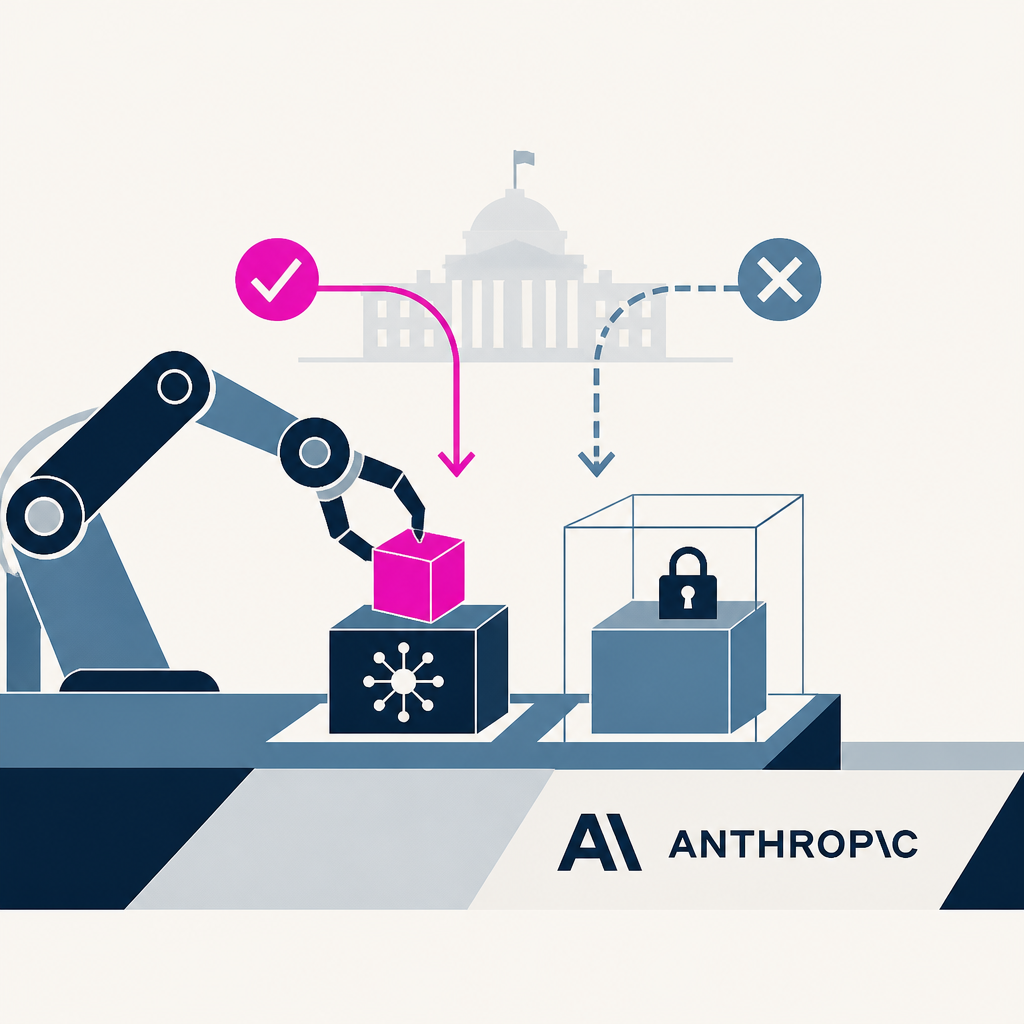
Trump's team just loosened a ban on Anthropic's AI, letting Mythos 5 reach trusted firms and government partners. Fable 5 stays locked up — the rules are being made up as they go.
Based on reporting by The Wall Street Journal — read the original for the full story.
Summary, retelling and take written by AI under human oversight; images are AI-generated illustrations. How we work · Report an error
The Trump administration has carved out an exception in its restrictions on Anthropic, clearing the company to supply its Mythos 5 model to select corporate and government partners it deems trustworthy. Fable 5, another Anthropic model caught up in the same restrictions, remains off-limits for now.
What's notable here isn't just the partial reprieve — it's the process, or lack of one. There's no published rubric explaining why Mythos 5 passed muster while Fable 5 didn't. Officials are making these determinations one model at a time, weighing factors that aren't fully public, which leaves companies building on top of Anthropic's stack guessing about what comes next.
Behind this is a scramble inside the federal government to actually build a standardized system for evaluating AI models before they ship into sensitive environments. That framework doesn't exist yet in finished form. Until it does, decisions about which models get greenlit and which stay benched are happening through ad hoc administrative calls rather than a fixed set of criteria anyone can point to.
For Anthropic, the immediate win is real: trusted partners, including government agencies, can now deploy Mythos 5. But the company is still operating under a cloud with Fable 5, and until Washington finishes writing actual rules, every AI lab selling into government and enterprise contracts is essentially waiting on case-by-case rulings that could change with the next review cycle.
My take — AI-written commentary, not fact-checked reporting
This is what happens when regulators try to referee a technology faster than they can write the rulebook — you get selective exemptions instead of policy, and that's worse for everyone than either a clear ban or a clear green light. I'd rather see a transparent evaluation standard published now, even an imperfect one, than watch labs lobby for one-off carve-outs while government picks winners behind closed doors.
Read more about this at: The Wall Street Journal