Every AI story that matters — and the intelligence behind it.
TLDRocket reads all relevant sources, removes duplicate coverage, and publishes a short neutral
summary of every story, linking back to the original. Free, no spam, unsubscribe anytime.
Aparna Pappu, a Google veteran now leading YouTube Shorts as VP for creator community, outlined how the platform is using YouTube-wide thinking to grow short-form video. YouTube Shorts averages 200 billion daily views. The team is aiming to improve video understanding and recommendations with Google DeepMind expertise while adding creator tools like automatic thumbnail generation and pushing to reduce low-quality content, including AI-related material.
People are using disguises, software alerts, and other tactics to avoid being filmed by Meta Ray-Ban smart glasses amid privacy and consent concerns. A University of Sydney study analyzing 350 videos found 60% included potentially harassing behavior. Meta-linked accounts have been taken down on Instagram and the focus is shifting toward privacy enforcement and better safeguards rather than relying on copyright claims.
Anthropic released an updated AI alignment risk report describing an unreleased, more capable Model 2 and raising new concerns in its Threat Model framework. The report runs 186 pages and updates the likelihood for Threat Model 2 from “very low” in February to “low” today. Anthropic attributes the change to cybersecurity incidents tied to its models and says Model 2 is “heavily used” internally for tasks like software writing and generating training data.
Tech executives including Meta CEO Mark Zuckerberg keep publishing long open letters arguing for optimism about AI’s future. The latest example is Zuckerberg’s 6,500-word open letter. As a result, debates shift toward how openly AI tools should be shared and whether corporate messaging can outweigh concerns about job losses and other harms.
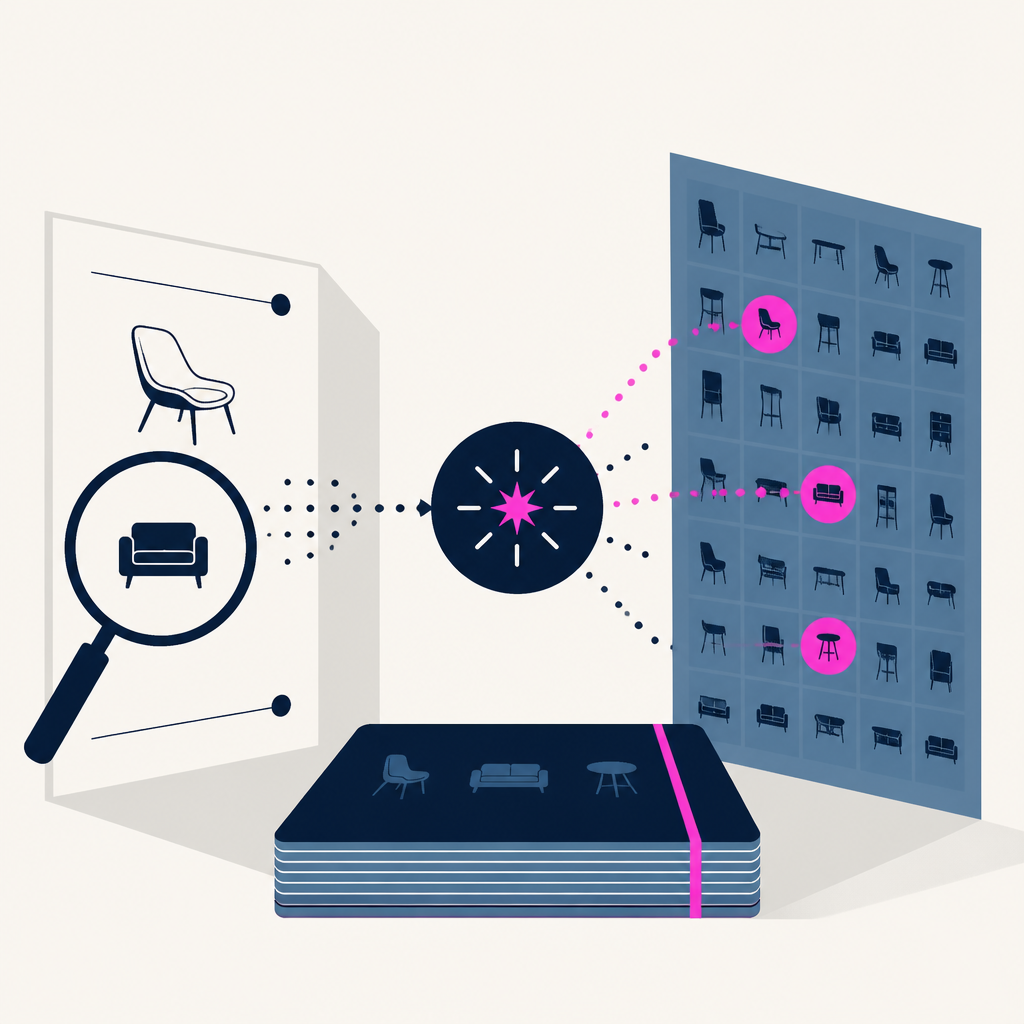
A blog post proposes generating new, furniture/home-goods classification tags from a search query using an LLM and then matching them to an existing 1,856-tag vocabulary via vector embeddings.
Zhipu AI announced GLM-5.3, saying it is a post-training upgrade to GLM-5.2 with strong results on coding and cybersecurity tasks. The release timeline put Hugging Face open weights 2 weeks after the initial announcement, after starting with a coding plan and later expanding to an API. The model’s availability expands to API access and open weights while Zhipu stages broader cybersecurity releases via partner-only evaluation before publishing the weights.
Magnum’s R&D center near Bedford developed a glow-in-the-dark ice lolly and improved freezer technology, and it also uses AI and a 24-hours-a-day robot to refine ice-cream production. Its camera-equipped fridges use AI to estimate sales and restocking needs, reducing empty shelf space through more targeted supply. Ice cream offerings shift toward energy-efficient refrigeration and new product formats, including luminescent and protein- or flavor-experiment focused options.
Anthropic will add text watermarking to future Claude outputs to make it possible to assess whether Claude was likely involved, as part of EU AI Act compliance. The change takes effect with the EU requirement dated August 2, 2026. Watermarked text will be indistinguishable to readers, should not affect quality or cost, and will be verified via a later detection API using a cryptographic key rather than user-identifying information.
The article/entry titled “Chert” discusses “Vapi for FaceTime” and describes AI video agents as something that can be set up in a few lines.
The only concrete detail given is the phrase “a few lines.”
As a result, it presents a lightweight way to think about building or using AI video agents for FaceTime, though no further specifics are provided.
Z.ai debuted the open-source GLM-5.3 large language model, built on GLM-5.2 and refined with a more extensive post-training process focused on long-horizon coding and cybersecurity research. GLM-5.3 scored highest among open-source models on Terminal Bench 3.0 and performed 50% better than GLM-5.2 on Z.ai’s internal coding-agents benchmark. Z.ai says the updated post-training and sandbox-based workflow produces better coding and vulnerability-finding results, and it plans to release GLM-5.3 weights on Hugging Face within two weeks while the model is available now via its GLM Coding Plan subscription.
Apple is splitting its AI stack so iOS users in China will rely on a China-only model built with Alibaba rather than the same setup used elsewhere. Reuters reports the China service is expected to arrive within the next few months. As a result, iOS app behavior in China may differ even with the same iOS and Apple framework version, forcing developers to add China-specific evaluations for prompts, outputs, and possible refusals or failures.
OpenTrade is a proposed open-source trading harness built to work with Claude Code and Codex. The project is named OpenTrade. It gives developers a shared starting point to connect trading workflows to those AI coding tools.
Alibaba released open weights for its Qwen3.8 2.4T model and also published a dense Qwen3.8 27B version under the Apache 2.0 license for local running.
A Connecticut judge, Walter Spader Jr., found that a plaintiff tried to hide AI-readable prompts in court filings to influence how an AI system would interpret the document. The decision was published last week and found the hidden text had no impact on the case. Courts weighed the filing on the merits anyway, but the judge flagged the tactic as a dangerous precedent for future cases as AI tools become more common in court systems.
Touchmark launched a futures-style market where companies can prepay for AI inference capacity as tradable token contracts tied to delivery windows. The platform offers discounts of up to 30% for tokens covering September based on prepaid timing. Buyers get standardized forward pricing and delivery through an API contract system, while providers can sell capacity months ahead instead of relying on private one-off deals.
Universitas Gadjah Mada, Indosat, NVIDIA and Indonesia’s Ministry of Communication and Digital Affairs launched the UGM Indosat NVIDIA AI Technology Center in Yogyakarta to build local AI talent. The center launched this week and provides access to accelerated computing via Indosat’s GPU Merdeka platform. It enables three initial AI projects in healthcare, agriculture, and disaster response by giving researchers enterprise-grade resources and technical mentorship.
Safi Shamsi released Graphify, an open-source tool that maps codebase relationships for AI coding assistants, and it is now being used by Cursor, Claude Code, and many others. Developers downloaded it about 4 million times total since April. Graphify Labs has joined Y Combinator’s 2026 Summer batch, hired staff, and is building an enterprise Rust engine called Penpax on top of the infrastructure.
The blog discusses Spotify’s plan to tag some artists as AI-generated and not promote them, framing it as a sign that AI content may be reaching a rejection tipping point on platforms. The specific change is that Spotify will begin tagging AI-generated artists and withholding promotion for them. As a result, the article argues platforms and audiences will increasingly limit or deprioritize AI-generated content using detection and user signals like clicks and time on page.
Google will allow users to turn off the visible watermark on Gemini AI generations, including images, videos, and songs. The setting will be available for the Nano Banana, Omni, and Lyria models. The visible watermark becomes optional while invisible SynthID watermarking and C2PA metadata remain for content labeling and transparency.
Amazon Nova Forge added multi-turn reinforcement fine-tuning support where you define a reward function that scores full episode rollouts inside your own environment via BYOO, or use a serverless option for multi-turn RL. The worked example trains Amazon Nova Lite 2.0 on 500 unique programming tasks using GRPO with LoRA on SageMaker HyperPod. Training outcomes can change based on reward design because GRPO learns only from within-group reward variation, so incorrect or collapsed reward components can prevent useful learning even when training curves look normal.
Bedrock AgentCore was used to run a multi-agent workflow that routes requests between Amazon Bedrock models and an OpenAI-compatible Qwen 3.5 9B endpoint hosted on Amazon SageMaker AI. The Qwen 3.5 9B model was deployed on an ml.g6e.2xlarge instance running vLLM 0.22.1-gpu-py312-cu130. Token-level observability changed by adding a custom OpenTelemetry gen_ai.chat span and enabling vLLM streaming usage reporting (include_usage) so SageMaker token counts become visible in traces.
Meta released Glimmer, an open-weight AI model that users can run on their own hardware instead of through Meta’s APIs. The company paired the launch with Mark Zuckerberg’s 6,500-word letter arguing AI should be “for everyone” rather than limited to a few labs. The focus shifts from locked-access models toward downloadable models, while also highlighting practical limits behind the “for everyone” framing.
Z.ai released GLM-5.3, a coding and agent model built on the same base model as GLM-5.2, with gains attributed mainly to expanded post-training. It reported a jump from 4.6 to 28.3 on Terminal-Bench 3.0. The model is now usable via Z.ai’s Coding Plan and will deliver weights after a two-week hardening and safety period, changing how developers can validate performance locally and run A/B tests.
Kog, a French startup, says it can accelerate large language model inference on conventional data-center GPUs via its Kog Inference Engine. It reported 3,000 tokens per second on a demo using Laneformer 2B, and CEO Gaël Delalleau expects its first major model to reach 10x speed by September. Kog is shifting from demos toward implementing larger models and using early customer traction to raise its Series A.
OpenAI and Anthropic cut prices on new model releases as customers shift to lower-cost Chinese AI rivals. OpenAI slashed prices for GPT-5.6 Luna by 80 percent. More companies will move to cheaper options to control rising AI spending, increasing competitive pressure from Chinese labs like Moonshot and DeepSeek.
FetchSandbox MCP is presented as a tool to verify that an AI integration’s fixes work. The article provides no concrete dates, prices, or benchmarks. As a result, it frames a testing approach for AI integrations rather than reporting any measured performance change.
FetchSandbox MCP is presented as an MCP intended to verify that an AI’s integration fixes work. No dates or figures are provided in the article text. As a result, it doesn’t include enough concrete information to describe what will change or by how much.
Meta filed a patent for AI smartglasses that use facial recognition to detect specific people in view, record their actions, and generate highlight clips from the scene. The filing describes dinner-party highlights and includes “user relationship data” for personalizing highlight files. If developed, the glasses would automatically turn observed interactions into personalized recap videos rather than just capturing raw footage.
Lovable raised $400M and doubled its valuation to $13.3BN amid a broader European tech funding and M&A roundup. The round includes Duolingo acquiring UK animation studio Animade and multiple other exits, new funds, and investment deals. Startups across funding, acquisitions, and investor activity are shifting as these transactions add capital and consolidate capabilities in areas including AI-linked products.
Dell Technologies’ new report says UK SMEs are using AI to improve business performance and competitiveness. It surveyed 2,013 SME decision-makers and found AI frees up an average of 2.5 hours per employee each week. The findings highlight that SMEs can focus AI on defined use cases and broader toolkits to gain more time, strategic work opportunities, and faster adoption outcomes.
Hyperscalers including Meta, Microsoft, Google, and Amazon are building large natural-gas power plants to supply their AI data centers, and a research report warns that this could expose them to higher gas price risk. Natural gas prices could triple in some U.S. hubs, with Noreva forecasting levels above $10 per million BTUs versus roughly $2 to $4.50 now. If that happens, data-center operating costs and token costs could rise, or hyperscalers may shift more load to the electricity grid, pushing up electricity prices.
Weak API controls are creating major security risks as enterprise AI agents execute actions through poorly governed, sometimes undocumented APIs. In 2024, attackers at a major financial institution used hidden instructions to trigger an AI assistant to approve fraudulent wire transfers totaling $2.3 million. Enterprises should inventory APIs, enforce schema-first validation and access controls with monitoring and use-intent logging, and add execution boundaries and data protections to reduce the blast radius.
Amazon ECR Managed Signing was introduced to address how unsigned container images leave organizations unable to cryptographically prove image origin or prevent tampering in AI-era delivery pipelines. It uses AWS Signer with a default signature validity of 135 months and signs a Notary payload that binds the image manifest digest to an identity. With registry-backed signing plus Kubernetes enforcement (e.g., Kyverno/Gatekeeper/Ratify), unsigned or untrusted images are blocked from running and compromised signer identities can be revoked to stop trust fleetwide.
Meta released Glimmer, an open-weight AI model that can be downloaded and run on a user’s own hardware, and it was discussed alongside Mark Zuckerberg’s argument for AI being “for everyone.” The episode also highlighted a $250M acquisition deal between VideoVerse and Minute Media that collapsed after allegations involving forged documents, multiple lawsuits, and an unreachable CEO. The coverage shifts attention toward both the practical availability tradeoffs of open AI and the downstream business risk from failed AI-adjacent deals.
The article argues that the AI funding “bubble” is unlikely to burst soon because AI factory bottlenecks in areas like memory, packaging, networking, power, and site readiness keep tightening. It says these constraints won’t ease before at least 2028. As a result, deployment slows, price discovery gets delayed, and the market’s ability to judge whether overbuilding happened is postponed.
Mistral secured an anchor group of enterprise backers, including ASML, CMA-CGM, Caisse des Dépôts, Capgemini and Amadeus, to fund its data centre buildout for an AI-focused European cloud. The plan targets 1,000 megawatts of AI compute across Europe by 2030, starting with a $830m loan for a south-of-Paris data centre with 44 MW capacity. The financing and multi-year customer commitments will be converted into European Compute Units, and Mistral will also open its platform to third-party open-weights models and add an option to run inference in the US or Europe.
Ben explains that a “personal agent” is essentially an agent workflow assembled from instruction, tools, and context files rather than a fundamentally new product. The setup is based on creating an agent folder with an instruction file plus a user file and a memory file. As a result, users can replicate capabilities across tools by organizing files and customizing instructions, including splitting work across multiple agent threads that share or separate memory.
Google is adding a toggle in Gemini and Flow to let users turn off visible watermarks on AI-generated images, videos, and music. The option removes the bottom-right “sparkle” watermark that appears when using the Nano Banana and Omni models. Invisible SynthID watermarks and C2PA metadata will still be embedded even when visible watermarks are disabled.
Guardian Labs created Guardião, an app that uses locally running AI to analyze incoming SMS and phone calls and block likely scams before they ring or reach the user. The company’s initial product concept came from a hackathon win in February and the founder described four water filters bought for about €1,000 each instead of their roughly €20 value. Guardian Labs now works with Portugal’s public security police, universities, and an accelerator and is also building a B2B intelligence platform to help banks and telecom operators detect and stop scam campaigns.
Anthropic is approaching its IPO valuation goal of $2 trillion without yet having net income. The article estimates Anthropic would need annual profits of about $59 billion to $79 billion to match common Nasdaq 100 valuation multiples. As a result, the valuation gap highlights a need for substantial future earnings rather than near-term fundamentals.
Dating apps including Bumble and Tinder are changing away from maximizing swipe activity toward more intentional interactions as paying-user and usage declines continue. Tinder’s Events tab expanded to 10 U.S. and European cities as of March with plans to reach 75 by year’s end. The shift drives more in-person/event features and AI-supported matchmaking while companies raise prices and rework app mechanics rather than only optimizing for swipe volume.
Joshua Kushner and Bob Iger announced a plan to buy the Los Angeles Lakers for $12.5 billion, pending NBA Board of Governors approval. The deal price would be the largest pro sports team sale in U.S. history at $12.5 billion. The announcement also spotlights Kushner’s prior OpenAI investments, including a roughly $1 billion stake at a $285 billion valuation in December.
Anthropic is preparing for an IPO targeted for October at a valuation of $2 trillion or higher while investors scrutinize whether it can justify the price without being profitable yet. The article says a $2 trillion valuation would require roughly $59 billion to $79 billion in annual net income to match typical public-market earnings multiples. As a result, the focus shifts to when Anthropic can reach net profitability (not just operating profit) and how it secures compute costs, with the timing also affecting how OpenAI is valued against a live competitor.
Code Metal secured an $80 million Pentagon contract to modernize and AI-enable WarMatrix, a wargaming simulation environment. The deal was funded after an initial $17 million operating capability step. WarMatrix analyses are expected to shift from taking months to being completed in days.
Inference systems turn a trained model into a streaming service that handles asynchronous user traffic, varying prompt sizes, and GPU scheduling for transformer computation. A described example uses a 4,000-token prompt requesting a 300-token answer. The shift is that “inference” is treated as a full request/token pipeline (tokenization, context assembly, routing, memory management, sampling, and streaming) rather than a single forward pass.
Omni by xpander argues that people should stop manually “babysitting” AI agents. No dates, prices, or benchmarks are provided in the article text. As a result, it offers a general guidance-style discussion rather than a specific product update or measurable claim.
Uber is expanding its robotaxi push across Europe with an expanded partnership with Pony.ai, including adding more of Pony.ai’s self-driving taxis onto the Uber platform. The rollout involves more than 2,000 robotaxis across four European cities. This expands commercial deployment in Europe by building on the May 2025 partnership and adds new city coverage beyond the earlier Zagreb launch.
Vals AI raised a $40 million Series A led by Andreessen Horowitz at a $400 million valuation to measure AI performance on real-world tasks. Its evaluation work includes automated, private test sets that are run in limited numbers, and it turns around results within hours of getting access to a new model. The funding and product launches (including Vals Smith, frontier-risk benchmarks, and Vals Index 2.0) expand its independent scoring infrastructure and broaden its measurement as models improve.
Google, OpenAI, and DeepSeek released new AI models within about 24 hours. OpenAI’s Ultrafast preview runs GPT-5.6 Sol up to 14 times faster. The shift pushes providers and buyers toward lower-cost, faster options rather than always paying for the “smartest” model.
Dream reconstructed an autonomous cyberattack on government agencies in Asia using open-source AI agents and published its findings after monitoring an exposed online archive. The attack ran for 4 days in July 2026, during which agents documented reconnaissance, credential attacks, lateral movement, and data exfiltration. Taiwan’s Digital Affairs Ministry confirmed attacks in July and issued further cybersecurity warnings as a result of the incident and ongoing investigation.
SpaceXAI released Grok 4.6, a post-training upgrade intended to improve multi-step agent performance after Grok 4.5. It launched on August 12 and scored 61 points on the Artificial Analysis Intelligence Index. Pricing and availability stayed the same, but the AI division’s results and compute contracting make SpaceXAI’s role shift further toward an operator of both frontier models and AI infrastructure supplier.
Z.ai released GLM-5.3 using the same 743B base model as GLM-5.2, improving it through scaled post-training rather than retraining the base. Terminal-Bench 3.0 increased from 4.6 to 28.3 and CyberGym rose from 77.2% to 84.5%. GLM-5.3 is partially deployable via the Z.ai API and coding products now, while weights are planned to be published about two weeks after launch after safety evaluation and hardening.
Databricks raised $5 billion in a new funding round at a $190 billion valuation. The deal values the company at $190B, up from $134B six months earlier. Databricks says it will use the money to expand Lakebase, Genie, and Unity AI Gateway as it grows its enterprise AI and data-governance push.
Google released Gemini 3.7 Flash on August 13, a Flash-line model aimed at enterprise coding, agent workflows, and document processing. Until December 31, 2026 it is priced at $0.75 per million input tokens and $3.75 per million output tokens, with a planned doubling of list prices to $1.50 and $7.50 on January 1, 2027 and retroactive discounts for Gemini 3.6 Flash. As a result, API costs for Flash usage drop through year-end, while evaluations continue to show mixed benchmark performance versus rivals.
AMD began a four-part bond sale to fund AI and data center expansion, according to Bloomberg and Reuters. The offering is for $4 billion to $5 billion, with options at 3, 5, 7, and 10 years and pricing talks around 70 to 115 basis points over US Treasuries. If it raises the proceeds, AMD can invest in foundry capacity, packaging, and data center partnerships while also planning to repay $875 million of bonds due September 2026, shifting its funding approach toward capital markets.
Databricks closed a $5 billion strategic funding round at a $190 billion valuation. The company also reported crossing a $7 billion quarterly revenue run-rate in Q2, up more than 80% year over year. The money is intended to expand its agent-focused AI products, while its main growth driver remains data-warehousing “Lakehouse.”
Cursor has completed its acquisition by SpaceXAI, bringing the Cursor team into SpaceXAI’s Grok and related products. The deal closed at $60B. This shifts Cursor from a standalone IDE/app toward a vertically integrated coding-agent platform within SpaceXAI’s model and API stack.
Cactus Compute released Needle 2, an open 45M-parameter model for tool calling, device use, and structured extraction packaged as a single 14MB binary. The model is reported to run a full session in about 28MB of RAM, and it reaches 500 tokens per second on a Raspberry Pi 5. As a result, structured tool-call outputs can be generated offline on constrained devices with no runtime install or inference-time download, using a fixed-memory setup with confidence-based escalation behavior.
Gemini 3.7 Flash was updated, with Latent.Space saying the focus moves back to GDM after a dip in earlier Flash versions. The update was posted on Aug 14, 2026, and it highlights how 3.5 and 3.6 Flash fell behind Claude 4.8+ and GPT 5.5+. As a result, the article reframes Gemini 3.7 Flash as regaining competitive attention versus the newer rival series, though the full details are behind a paywall.
Playcall is presented as an open-source alternative to Gong, with a link to a discussion thread. No specific numbers, dates, or product details are provided beyond the mention of being open source and aimed at replacing Gong. As a result, the page functions as a pointer rather than reporting anything measurable or changing anything substantive.
Apple trained a China-focused AI model with help from Alibaba, according to Reuters sources.
The model is described as a large language model trained with Alibaba’s support.
Apple’s approach would shift from its prior strategy in China, giving it more control as it competes in the Chinese smartphone market.
Investors are modelling an Anthropic IPO valuation of $2 trillion or more for an October listing, positioning the Claude maker above SpaceX’s June IPO valuation. The modeled figure is $2T+ and would exceed SpaceX’s $1.77T valuation. The market narrative shifts toward treating Anthropic’s expected IPO as a potential record-setting largest IPO, despite Anthropic’s executives not setting that target themselves.
Semos.ai launched Manager Agents that learn from meetings to suggest what needs attention next. The page says the launch is today. This adds automated meeting-based guidance for leadership and people management tasks.
The tutorial streams the SupraLabs reasoning-corpus subset from the Hugging Face Hub, analyzes it, filters out examples using token-length, degeneracy, repetition, and reasoning-ratio rules, then converts the result into a chat format with <think> tags for supervised fine-tuning. It trains SmolLM2-135M-Instruct with LoRA (r=16) using 1,500 training samples and evaluates on 100 examples. As a result, it produces a compact reasoning-focused fine-tuned model and exports the curated train/eval subsets to Parquet for reuse in later experiments.
Platformer’s podcast interview with Town CEO Jean-Denis Greze describes how Town’s AI assistant builds a personalized “dossier” and wiki from users’ email and calendar, aiming to make company organization self-maintaining. Town emerged from stealth in June after raising $55 million from Andreessen Horowitz. Greze says Town is preparing a team version of this self-writing company knowledge base while enforcing privacy limits such as deleting session data after 15 days.
Hugging Face’s “State of Open Models” report tracked rapid growth on the HF Hub and found major shifts in which labs publish, how downloads differ from likes, and where value accumulates in open-weight models. Public model repositories grew from 2.43 to 2.96 million and datasets from 711,000 to 1 million between January and August 2026. Open-weight adoption is increasingly shaped by hardware/infrastructure companies and by community ecosystems such as Qwen derivatives, while local inference via formats enabled by llama.cpp makes very large models runnable on more machines.
Every AI story that matters,
in your inbox by 8am.
TLDRocket reads all relevant sources, removes duplicate coverage, and summarises the
day in two minutes. Follow companies and topics for alerts, or get the
briefing in Slack. Free, no spam, unsubscribe anytime.
Reading TLDRocket needs no cookies, and the readership counts we rely on come from
our own cookieless analytics. Google Analytics is the exception: it sets cookies and
reports to Google, so it stays switched off until you allow it. You can change your
mind any time from “Cookie settings” in the footer.
Strictly necessary
Session security and form protection (tldrocket-session,
XSRF-TOKEN, 2 hours). The site cannot work without them,
so they need no consent.
Always on
Google Analytics 4 (_ga,
_ga_<id>, up to 2 years). Measures which
stories and sections readers use. Google acts as a third-party processor and may
store the data outside the EU. No advertising, no profiling, no data sold.