
Create a Reasoning-Focused LLM: A Practical Guide to Streaming, Curating, and Fine-Tuning the SupraLabs Reasoning Corpus
MarkTechPost Sana Hassan
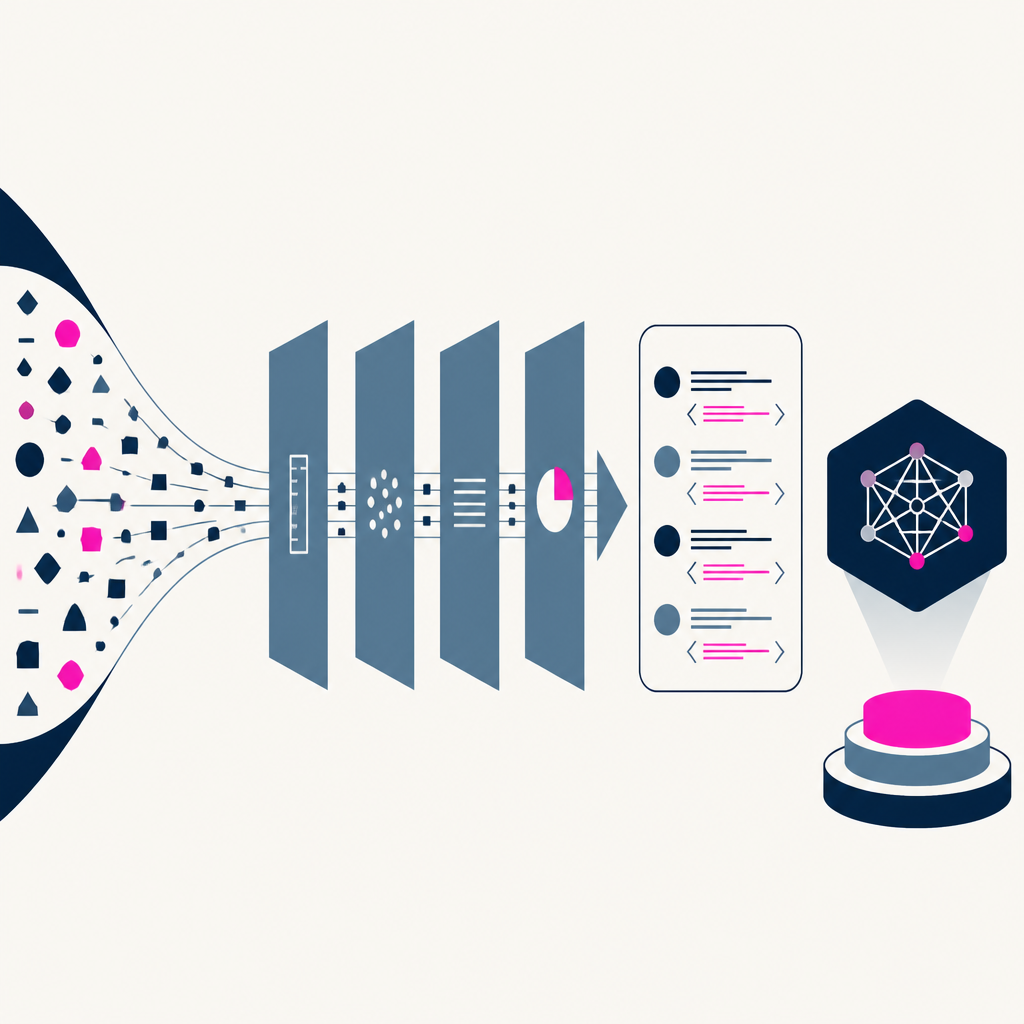
A tutorial shows how to turn SupraLabs’ reasoning corpus into a small fine-tuned model. It matters because the pipeline keeps the data in streaming mode and still ends with a usable LoRA-tuned LLM.
Based on reporting by MarkTechPost, Sana Hassan — read the original for the full story.
Summary, retelling and take written by AI under human oversight; images are AI-generated illustrations. How we work · Report an error
MarkTechPost walks through a full Colab workflow for the SupraLabs reasoning corpus, starting with a streamed slice from Hugging Face instead of pulling the whole dataset down at once. The sample is shuffled, turned into a DataFrame, and inspected for source repositories, token lengths, and how much space the thought trace takes versus the final answer. That gives the tutorial an actual data-cleaning angle, not just a training recipe dressed up as one.
The analysis is pretty hands-on. It looks at the top source repos in the sample, plots token-length distribution, and computes a reasoning ratio from the length of the thought trace and assistant answer. Then it uses a few simple heuristics to label tasks as code, math, medical, multiple-choice or general. Nothing fancy, but enough to show what kind of mix sits inside the corpus.
From there the tutorial gets picky about quality. It drops rows with token lengths outside a training-friendly range, removes empty or near-empty traces, filters out repetitive thought loops, and keeps only examples with a reasonable balance between reasoning and answer text. After that, the retained samples are converted into a chat format with a system prompt and explicit <think> tags, so the model is trained to separate its reasoning from its final reply.
The model of choice is HuggingFaceTB/SmolLM2-135M-Instruct, adapted with LoRA through TRL’s SFTTrainer. The configuration is small and practical: batch size 2, gradient accumulation 8, one training epoch, 2e-4 learning rate, cosine schedule, and gradient checkpointing. The tutorial also sets aside an evaluation split, runs a fine-tune, and then tests generation with a logic puzzle. Finally, it exports the curated train and eval sets as Parquet files for reuse.
The main point here is not that this makes a giant reasoning model. It’s that a messy multi-model corpus can be turned into something trainable without dragging the whole thing into memory. That’s the kind of unglamorous workflow the field needs more of, which is probably why the demo feels more useful than half the model launches that get a louder headline.
My take — AI-written commentary, not fact-checked reporting
This is the right kind of AI work: boring filters, explicit formats, small model, no theater. The industry keeps pretending capability comes from vibes and scale alone, when a lot of the gain is just better curation and less garbage in the mix. And yes, it’s deeply funny that a carefully engineered reasoning pipeline still needs a tutorial to remind people to remove repetitive loops.
Read more about this at: MarkTechPost