
Hyperscalers might regret embracing natural gas if new forecast proves correct
TechCrunch Tim De Chant
Big AI companies are betting on natural gas for data centers. A new forecast says that could backfire if gas prices spike hard.
Based on reporting by TechCrunch, Tim De Chant — read the original for the full story.
Summary, retelling and take written by AI under human oversight; images are AI-generated illustrations. How we work · Report an error
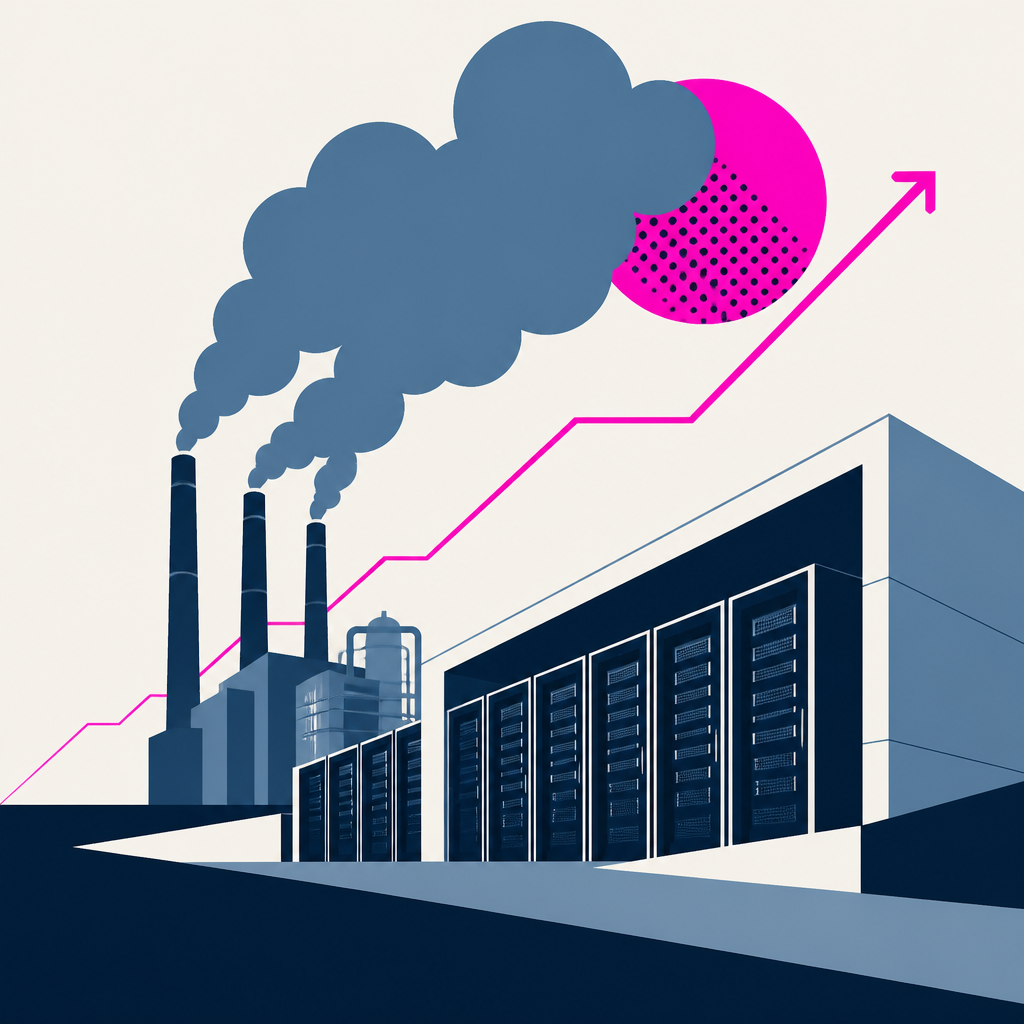
For a while, the big cloud companies looked like steady buyers of wind and solar. Now Amazon, Google, Meta and Microsoft are leaning hard into natural gas to keep their AI data centers running, and that bet may be getting made just as the market tightens.
Noreva, an energy research firm, says natural gas prices could triple in some parts of the U.S. over the next few years. The driver is a simple squeeze: more demand from hyperscalers, slower growth in supply, and more liquefied natural gas exports pulling fuel into global markets. Peter Gardett, Noreva’s CEO, told TechCrunch that the industry has grown too comfortable with the idea that gas prices can’t rise much.
The companies are already moving. Meta said in March it would build a 7.5-gigawatt gas plant in Louisiana for its Hyperion data center. Days later, Microsoft and Google each announced gigawatt-scale gas plants in Texas. Amazon plans a 7.6-gigawatt gas plant in Texas. These are not the usual cautious, asset-light software moves. They are huge physical bets, and they push the companies deeper into an energy system they do not know nearly as well.
Noreva expects prices in some hubs to climb above $10 per million BTUs. Right now, they sit around $2 to $4.50, with Henry Hub in Louisiana just under $3. That matters because fuel makes up about half the cost of electricity from a large power plant. If gas costs rise, “bring your own power” data centers get more expensive to run. If they choose the grid instead, electricity prices can rise there too.
Gardett says the real change is not just demand. West Texas, where hyperscalers have been lured by cheap gas, is getting tied more closely to national and international markets as new pipelines move fuel toward export buyers. That means local shortages or price jumps can ripple farther. And if that happens, the AI boom could end up feeding the same consumer backlash already building around utility bills.
My take — AI-written commentary, not fact-checked reporting
The bold move here isn’t the AI buildout, it’s pretending fossil fuel markets are a side quest. Silicon Valley loves to talk like physics is optional until the invoice arrives. A company can build a model faster than a pipeline, but it can’t out-code a gas shortage.
Read more about this at: TechCrunch
Related stories
 Data center gas plants to boost U.S. power emissions by 20%
Fortune ·
24
US data centers could consume more natural gas than Germany and Japan combined by 2035
TechCrunch · 1 month ago ·
28
A.I. Boom Drives U.S. Plans for Nearly Three Times as Much Gas Power as in 2023
Trending Topics · 1 week ago ·
27
Data center gas plants to boost U.S. power emissions by 20%
Fortune ·
24
US data centers could consume more natural gas than Germany and Japan combined by 2035
TechCrunch · 1 month ago ·
28
A.I. Boom Drives U.S. Plans for Nearly Three Times as Much Gas Power as in 2023
Trending Topics · 1 week ago ·
27