
Gen Z is swiping left on swiping and dating apps are getting the message
Fortune Tatiana Sataua
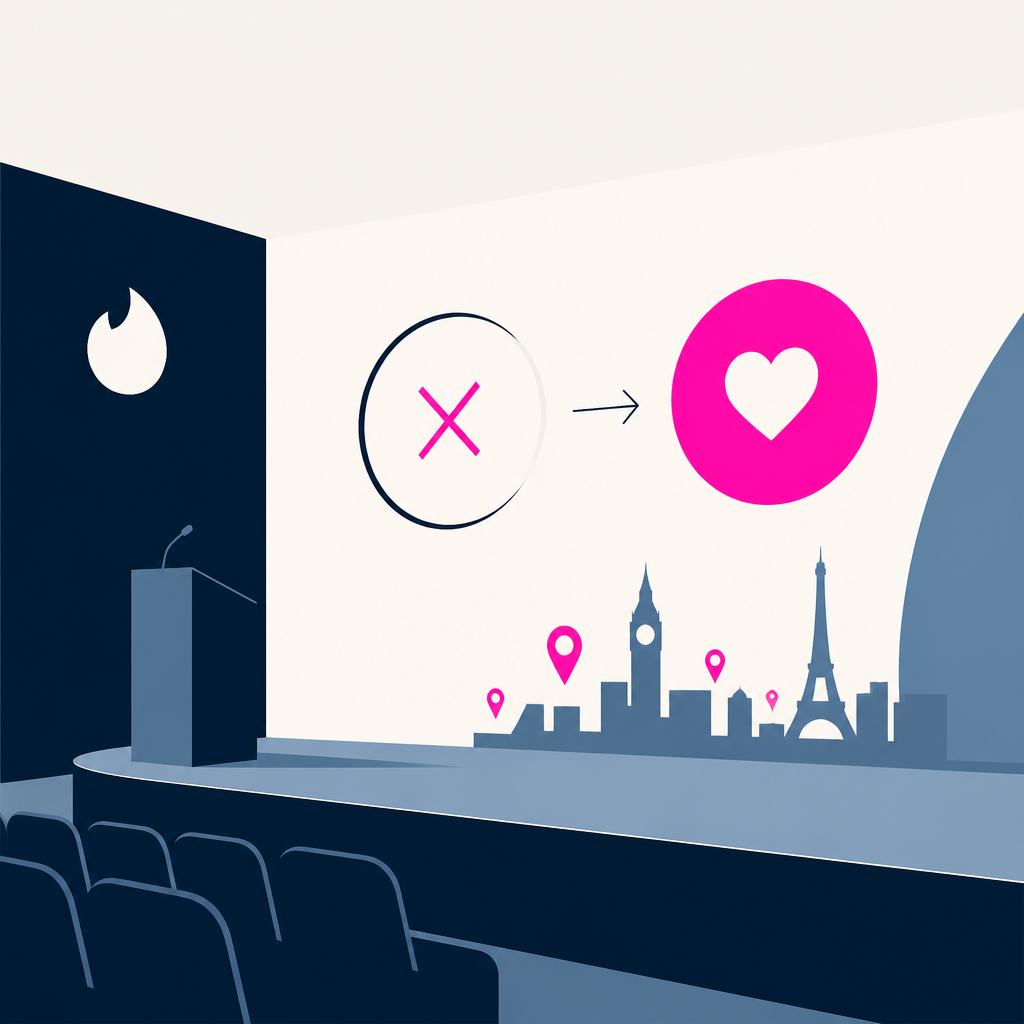
Bumble and Tinder are backing away from endless swipes and pushing fewer, more intentional matches. Gen Z wants dates, not another feed to scroll.
Based on reporting by Fortune, Tatiana Sataua — read the original for the full story.
Summary, retelling and take written by AI under human oversight; images are AI-generated illustrations. How we work · Report an error
Two of the biggest names in online dating are trying to undo the thing that made them huge. On an Aug. 5 earnings call, Bumble founder Whitney Wolfe Herd said the company is moving away from optimizing for “swipe speed and velocity” and toward “fewer, better, and more considered signals.” A day earlier, Match Group’s Spencer Rascoff said Tinder’s Events tab had grown to 10 U.S. and European cities since March, with a target of 75 by the end of the year.
That shift is happening because the core business is softening. Match Group ended the second quarter with 13.3 million paying users, down 6% from a year earlier, while Tinder’s monthly active users fell 7%. Bumble’s paying users dropped 16.4% to 3.2 million. Both companies are raising prices to make up for the smaller base, and the wider category has been slipping too: global dating app downloads have fallen for six straight years since their 2019 peak, while revenue dipped last year to roughly $6.07 billion.
For more than a decade, the logic was simple: more profiles, more matches, more messages. Now the bigger players are betting the opposite. Show fewer people. Push users offline sooner. Build more in-person events, more deliberate prompts, and more AI-driven matchmaking. Gen Z is forcing the reset, not because it has rejected apps outright, but because endless choice and dead-end chats are wearing thin.
Bumble is already changing the mechanics. On Aug. 11, it dropped its signature rule that women had to start heterosexual matches, stretched the reply window from 24 hours to 72, and started nudging users who send one-word openers to try again. The company is also testing Plans, a standalone app for curated events that lets people match with attendees afterward. Wolfe Herd calls it “meet first, match later.”
Tinder is making a similar move through its Events tab, which surfaces things like trivia nights, ceramic classes, and beach tennis. Rascoff said 71% of eligible 18- to 24-year-old users engaged with the feature during its Los Angeles pilot, and more than half came back the next week. Bumble’s AI tool, Bee, is meant to sit under the hood and recommend matches, but Wolfe Herd said it is not replacing the swipe. That caution makes sense. These apps still need people to keep opening them, even as their best outcome is for users to leave.
My take — AI-written commentary, not fact-checked reporting
Dating apps are finally admitting that more scrolling was never the same thing as better dating. The cleanest product idea in the category is now the one that hurts the business most: get people in, then get them out. Bumble and Tinder spent years selling infinite choice; now they’re discovering that endless choice is mostly just a very expensive way to waste a Thursday night.
Read more about this at: Fortune
Related stories
 Gen Z's religious turn, the data-center backlash and a 'lack of consent': how the youngest adults are winning battles the millennials lost
Fortune ·
20
Gen Z's religious turn, the data-center backlash and a 'lack of consent': how the youngest adults are winning battles the millennials lost
Fortune ·
20
 Gen Z founders are hiring while Boomers' corporate America freezes out—‘I’ve already proven to myself that I can thrive in this’
Fortune ·
30
Gen Z founders are hiring while Boomers' corporate America freezes out—‘I’ve already proven to myself that I can thrive in this’
Fortune ·
30