EliseAI raised $350 million to expand its AI work automation suite for real-estate and healthcare customers. The funding round led by Andreessen Horowitz and Bessemer values the company at $4 billion. The company plans to extend its automation features and hire more engineers, software deployment professionals, and salespeople.
Chat.sh launched a help center product that provides AI search answers with citations while serving the help content from a folder on the user’s own site.
Identity and access management is getting renewed attention as AI agents move from pilots into production, exposing integration costs and security gaps that enterprises now have to address. Okta’s Jon Addison said customers are prioritizing identity “housekeeping” as they prepare for the agentic era, with Okta’s event coverage mentioning 15M+ CUBE video viewers. As a result, enterprises are consolidating identity and access tools, aligning on reference architectures, and adding access controls to support agent reach while trying to keep up with business speed.
OpenAI launched new ChatGPT workplace features aimed at competing with Microsoft’s office software suite. The announcement happened at Dev Day in San Francisco on Tuesday. OpenAI added Space for shared collaboration, Pages for a word-processor-style document tool, and collaborative slides that can be created by voice and edited by multiple people and agents.
Amazon Quick documentation explains how prompt engineering affects the quality of AI-powered responses by showing reusable frameworks and prompting principles across Quick’s components.
Amazon Quick capabilities are explained component by component, with guidance on how prompt structure changes the results you get from Quick Research, Quick Flows, Quick Sight, chat agents, and action integrations. Quick Research can draw from 200+ trusted news outlets and other data sources, but specific objectives (including audience and timeframe) produce a more actionable, cited report than vague ones. Using the article’s patterns also changes workflows and analytics output by adding precise triggers, numbered logic steps, required query elements, well-bounded agent identities, and complete action parameters so the system builds the intended results instead of guessing.
Amazon Quick and Amazon Bedrock AgentCore were used to build an AI contract intelligence platform that extracts contract fields with AI agents, verifies them with a second model and Amazon Textract for signature detection, and stores results in a database for querying. The pipeline processes a contract in seconds under typical conditions. Instead of relying on retrieval-augmented generation that can return wrong portfolio totals, the system uses structured extraction for aggregation and keeps a document knowledge base for precise single-contract questions.
Upsolve AI launched Upsolve Data Models to let users register business vocabulary and metric definitions that its data agents use to produce governed, grounded answers. The release is its 6th launch from Upsolve AI. The system versions the models like code and refreshes column values nightly so agent answers stay up to date as data changes.
ADP says payroll and HR automation must be paired with human expertise because automating flawed processes can scale errors instead of removing them. ADP’s Potential of Payroll 2026 research found 68% of payroll leaders incur penalties for noncompliance once or twice a year. ADP argues organizations should adopt AI to streamline routine work while keeping oversight and context checks by people, especially as regulations and exceptions remain complex.
The article argues that enterprise leaders should thoroughly evaluate whether to build software with AI instead of buying third-party products like workflow and HR systems. It cites that companies building an LLM-based solution typically spend 5 to 10 times more than using a workflow automation platform, and warns that a CIO rewrite project could take 18 to 24 months to save about 0.5% of annual operating budget. As a result, leaders are urged to decide case-by-case by weighing competency, true total cost, security and governance, continuity if the CIO leaves, and whether proprietary data enables differentiation.
EliseAI raised $350 million in new funding to value the company at $4 billion after nearly doubling its valuation from a year earlier. The round was led by Andreessen Horowitz and Bessemer Venture Partners and includes Ontario Teachers’ Pension Plan, coming about 13 months after a $250 million Series E valued EliseAI at $2.2 billion. The money will go toward product development and expanding engineering, deployment, and sales teams, including plans for a second San Francisco engineering hub.
Formalini launched today to turn documents, photos, scans, and handwritten notes into structured data formats. The launch includes exporting to JSON and Excel in seconds. It also adds an automated personal vault, enterprise integrations (including UiPath, SAP, and Salesforce), and an MCP server for AI agents to interact with the extracted data.
CData introduced Connect AI Gateway to control how AI agents choose models, use tools, and access enterprise data through a governed gateway for IT teams. In early-access testing across 378 enterprise queries, CData reported 98.5% correct answers versus 65% to 75% for other MCP providers it tested. The shift expands governance from data connectivity to end-to-end agent requests (including routing, policy enforcement, and audit trails) and supports reusable business definitions and shared context outside individual models.
Reco broadened its AI agent security platform from mapping and securing SaaS/AI platforms to using a context graph to show what agents can reach and cut unnecessary access.
Reco said it found 21,000 unknown agents at a Fortune 100 customer and raised $55 million on Tuesday.
The funding and product shift expand its ecosystem-wide coverage, with plans for hiring, sales, partnerships, and support as demand for agent security grows.
Dodge AI Inc. raised $2.65 million in seed funding to automate enterprise software maintenance using AI agents instead of large consultant teams. The round was co-led by Accel and the Google AI Futures Fund. As a result, the company aims to let enterprises resolve failures in minutes and keep an auditable record of implemented fixes and custom logic to reduce technical debt and reliance on systems integrators.
Dodge AI announced a $2.65 million funding round to deploy AI agents that trace and fix production incidents across enterprise systems like SAP. The round came from Accel and Google’s AI Futures Fund for $2.65 million. The startup plans to expand its “AI control plane” maintenance layer to reduce reliance on SAP and other consultants while speeding incident and change-request resolution.
Claude Design fails to use an app’s existing component library by default, so the article describes syncing a React design system into Claude Code’s /design-sync to create a compiled “mirror” of components with real rendering and verification. The sync is triggered by running a single command from the repo that uploads the mirror after screenshots are graded, with Storybook used as the reference. After syncing, Claude builds designs from the snapshot in the user/org’s Claude Design system (not from regenerated code), and updates only happen when /design-sync is run again.
ChatGPT Space is launched as a shared canvas where teams can add links, files, and ideas and then use ChatGPT to turn them into plans, documents, and apps. The launch is dated “today”. Teams now have a single workspace for keeping shared AI context and collaboration in one place.
Atomic, a Boston startup founded by former Tesla planning leaders, raised a Series A and says its AI now automates most purchasing decisions for DoorDash DashMart sites. The round was announced as a $12.5M Series A, while an SEC filing shows $18.5M sold. It plans to extend its software from planning and decision support into a control system that automatically executes daily purchase orders.
The article promotes a free webinar on using AI-driven execution to move silicon engineers from manual tool management to supervising objective-based autonomy across the silicon development lifecycle. It highlights four critical technologies for enabling silicon design autonomy. As a result, engineers would define goals and oversee AI execution throughout design and verification instead of handling handoffs themselves.
Spotable, a Belgian construction software startup, raised €4 million in seed funding to expand its platform internationally. The round is €4 million, arranged by The Harbour and including team.blue, NewSchool.vc, and multiple individual backers. With the funding, Spotable will keep developing its product and push further across Europe and the United States, targeting markets like France, Germany, and the US.
Instinct raised a $1B Series C at a $10B valuation led by Sequoia, Benchmark, and Coatue. The funding round followed its $250M Series B that valued the company at $2.5B, coming 33 days earlier. Instinct remains invitation-only and in early access without disclosed user or growth metrics, leaving the public model and trust needed to scale largely unproven.
Bearconnect.io launched Bearconnect 2.0, an AI-powered LinkedIn platform for both content outreach and inbound lead generation. The update adds tools like content scheduling and AI messaging plus team workspaces, role-based access, Brand Voice, CRM integrations, and webhooks. It expands the product beyond a basic LinkedIn outreach tool into a broader workflow platform for managing prospects and conversations, while also keeping free options for launch tags.
Rayon, a Paris-based browser interior-design platform, raised a €10M Series A led by Partech and has grown its total funding to €16M after creating over four million drawings. The company plans to launch Version 4 by the end of the year with advanced AI tools plus 3D modelling inside a single browser tab. As a result, Rayon will add a dedicated 3D mode, expand AI features in the drawing workflow, and build out its sales team.
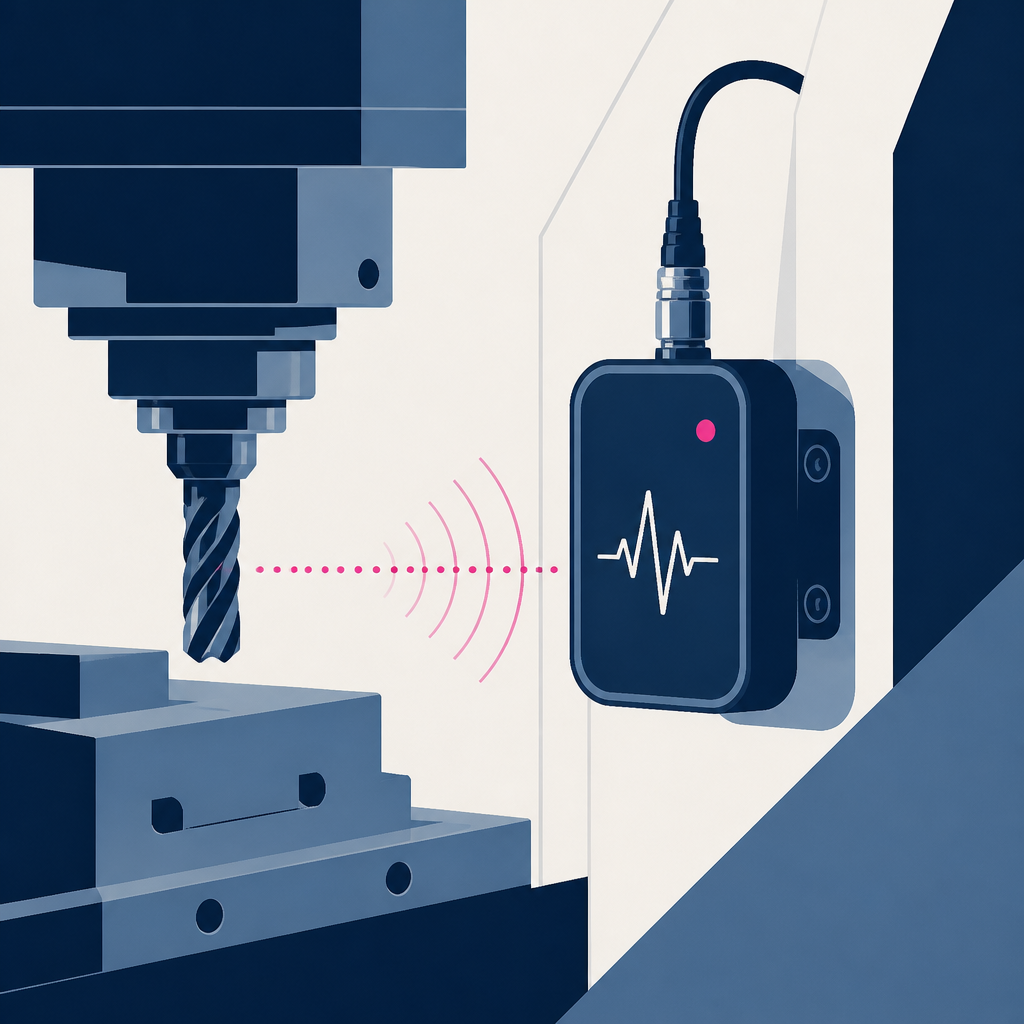
IPercept raised a $16.5M Series A funding round to expand its machine fitness tracker for predictive maintenance of CNC machines. The round was led by Isogon Ventures and 2150 and includes participation from Luminar Ventures, RunwayFBU, J12 Venture, and AI.Fund. The startup plans to launch in the US with first local hires and use the money to improve its AI technology already used by Airbus, Bosch, and Volvo.
Checkout.com reported that its annualised net revenue rose 28% year over year to $750m and said it expected $150m in profit for 2026. The article cites $480bn as the expected payment volume for full-year 2026. It will use the renewed profitability to fund expansion in money management and to speed up its AI strategy for agentic commerce and payments.
Prefer launched today as an AI-focused SEO tool that aims to turn AI search mentions into execution steps for brands. It is shown with 103 followers on its page. As a result, it positions its approach as less reporting and more action using autonomous agents to improve visibility in how ChatGPT, Claude, Gemini, and Perplexity describe brands.
IPercept, a Stockholm startup, raised a Series A to add diagnostics for CNC machines on factory floors without needing access to their controllers. The company secured $16.5 million, with Isogon Ventures and 2150 co-leading. It plans to use the funding to grow, make its first dedicated US hires, and expand through industrial service partners.
hello again closed a growth financing round led by Munich private equity firm EMERAM for a double-digit million euro amount.
The undisclosed investment is reported to be well above 10 million euros and EMERAM takes a stake of more than 25%.
The funds will be used to expand in the DACH region, move into more European countries, and add new AI features, while the founders and initial investors keep majority control.
Cupola is a Mac productivity app positioned as an AI coworker that works across Apple Calendar, Reminders, and Notes. It offers a 7-day free trial and then costs $20 once. After trying it, users either pay for a $20 license or stop using it.
The author of an AI company article argues that Anthropic’s push into financial-adviser tooling is unlikely to hurt their startup and frames their view around the Future Proof adviser event. The piece cites “59” as part of the author’s timeline for why the competitive move won’t derail plans. As a result, the author keeps focusing on their own product work and positioning rather than changing course.
Okta turned its agent security framework into a multivendor reference architecture through the Blueprint Alliance to help enterprises secure AI agents in production. It structures agent runtime security into four questions: where agents are, what they can do, what they are doing, and how to respond. As a result, identity and security signals are layered across endpoint and network telemetry, and Okta plans to expand an agent kill switch to revoke active tokens and sessions when risk is detected.
Peak XV Partners increased Surge’s per-startup seed investment ceiling and launched Surge 12, a cohort of 18 companies. The new ceiling is up to $5 million per company, raised from $3 million previously. As a result, Peak XV is investing more money per startup and its seed cohort includes more capital-intensive deeptech and AI-focused companies spanning multiple global markets.
Every AI story that matters,
in your inbox by 8am.
TLDRocket reads all relevant sources, removes duplicate coverage, and summarises the
day in two minutes. Follow companies and topics for alerts, or get the
briefing in Slack. Free, no spam, unsubscribe anytime.
Reading TLDRocket needs no cookies, and the readership counts we rely on come from
our own cookieless analytics. Google Analytics is the exception: it sets cookies and
reports to Google, so it stays switched off until you allow it. You can change your
mind any time from “Cookie settings” in the footer.
Strictly necessary
Session security and form protection (tldrocket-session,
XSRF-TOKEN, 2 hours). The site cannot work without them,
so they need no consent.
Always on
Google Analytics 4 (_ga,
_ga_<id>, up to 2 years). Measures which
stories and sections readers use. Google acts as a third-party processor and may
store the data outside the EU. No advertising, no profiling, no data sold.