JPMorgan reported weaker-than-expected revenue and earnings while Goldman beat estimates, as several other banks delivered mixed results and executives discussed a temporary IPO slowdown tied to market conditions. Wells Fargo reported revenue of $21.87 billion versus a $22.31 billion consensus and missed revenue despite meeting earnings estimates. Bank leaders said IPOs were being delayed rather than cancelled, and deal pipelines are expected to recover even as companies and investors adjust to valuations and interest-rate uncertainty.
Giant, a kids creation app using generative AI, says it has raised $8m to let children create characters and interactive stories. The funding amount mentioned is $8m. The company plans to use generative AI to shift kids from passive viewing toward active, real-time content creation within set screen-time limits.
Fragment, a New York startup, raised $12 million in a Series A to build software that uses double-entry accounting to let AI agents safely handle billing and accounting while checking that records balance before money moves. The funding round closed in mid-2025 and was co-led by FirstMark and BoxGroup, following an $11 million Stripe-led seed. Fragment says this will let companies expand “agentic commerce” by giving businesses a shared transaction record and reducing manual reconciliations across financial systems.
Koch Disruptive Technologies made a strategic investment in Emanate, a San Francisco startup aiming to use AI for industrial sales workflows, with Emanate also previously backed by a16z. The investment amount was not disclosed by either side. The push shifts industrial account handling toward AI-driven, 24/7 use of customer interaction knowledge and a system that can progress from human-in-the-loop to greater autonomous account actions over time.
Apate.ai deployed thousands of undercover AI agents that impersonate scam victims to engage fraudsters and collect intelligence for customers. The company says its agents have wasted 17 years of scammers’ time across 2.5 million conversations. Customers use the extracted details to adjust anti-fraud measures and initiatives, with reported results including a 76% drop in publicly reported scam losses for Commonwealth.
TechCrunch is holding the remaining TechCrunch Disrupt 2026 sessions at Moscone West on October 14–15 and offering a 50% ticket discount for two full days. The discounted pricing lists Founder Pass at $550, Attendee Pass at $525, and Investor Pass at $600. The change is that attendees can buy any ticket type for half price to access the AI stages, Expo Hall, breakouts, and side events during the final two days.
Zenzap raised $44 million to build an AI messenger meant for workplace communication and context-aware assistance. The funding round was led by investors including Bessemer and Lightspeed, with plans starting at $51 per month for up to 20 users. The company expands its product offerings with AI voice and workspace search, and shifts from bootstrapping to venture-backed scaling with more hires in product and R&D.
Character.ai bankruptcy is presented as the first “AI bubble” domino to fall. The post is dated Oct 14, 2026. The writeup implies other AI-related companies may face similar financial fallout afterward, but the full article text is not available here.
TechCrunch Disrupt 2026 held Day 2 at Moscone West in San Francisco, with Expo Hall booths, live startup pitches, and AI-powered matchmaking for attendees. The event runs with registration from 8 a.m. to 5 p.m. and the Startup Battlefield includes $100,000 in equity-free funding. The day’s program adds more AI-focused stage sessions, breakout sessions, and AI-physical-world and robotics content, plus continued networking options via the events app.
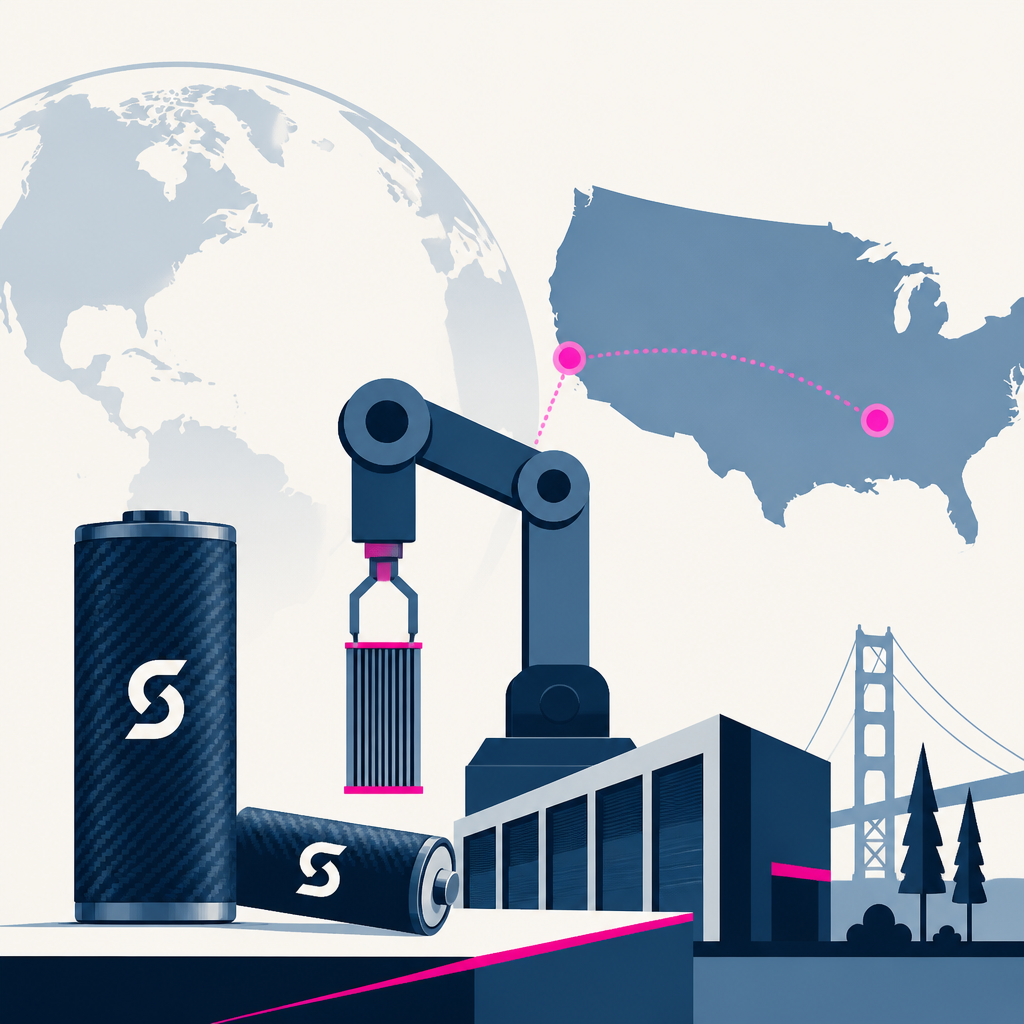
Skeleton Technologies announced a Siemens investment that increased its valuation to over $1 billion and targets US manufacturing and Silicon Valley R&D for AI data-centre power systems.
Duvo, an enterprise AI automation startup, raised a $32 million Series A led by Balderton Capital to address stalled “agentic” AI pilots. The round came just 10 months after its $15 million seed. The funding will be used to expand into the US with retailers and consumer goods providers and to push its Enterprise Execution OS approach toward faster, more reliable deployment.
Duvo announced a $32 million Series A led by Balderton Capital to expand its enterprise AI operating system for automating company processes across existing systems. The funding brings Duvo’s total raised to $48 million, with early targeting focused on retailers and consumer packaged goods companies. As a result, Duvo will push faster product-led automation and expand sales efforts, including growth into the US, while positioning AI as embedded productivity tooling rather than a standalone initiative.
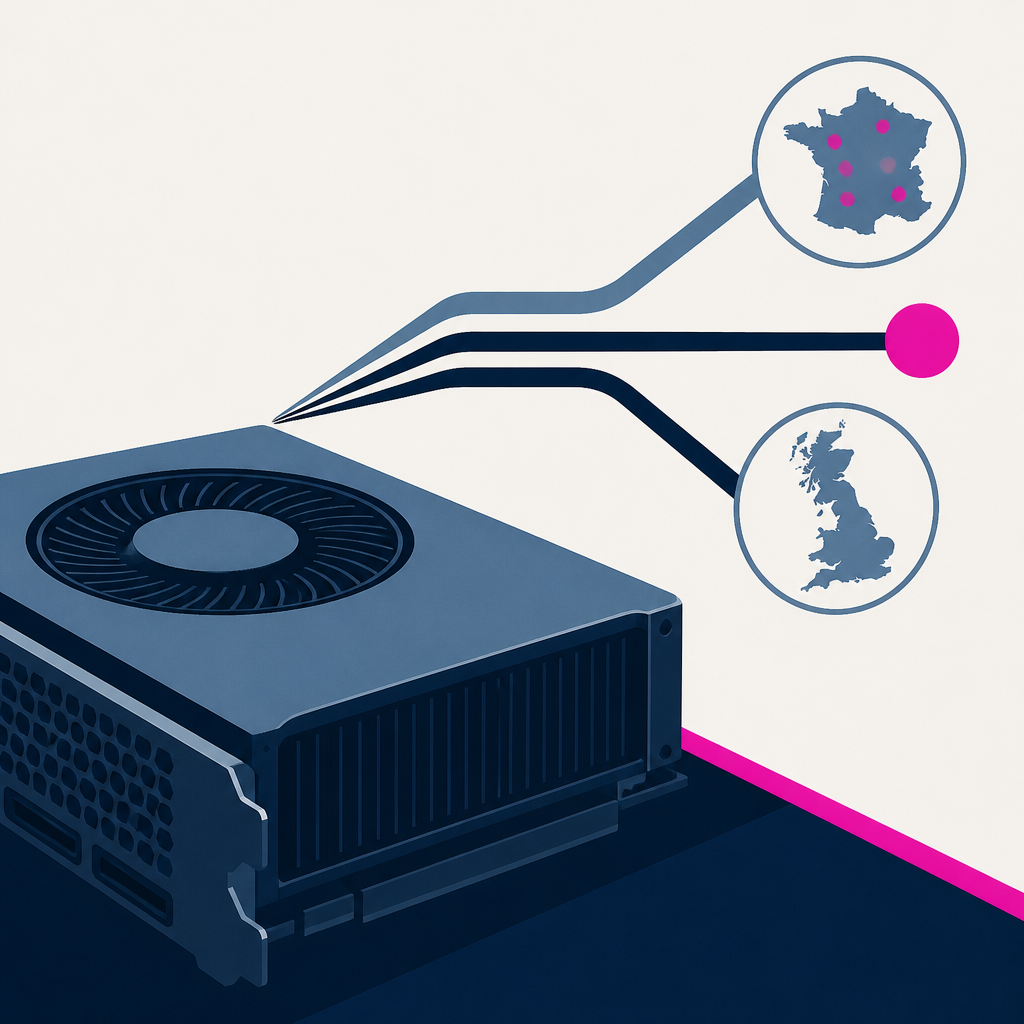
Nvidia is taking minority stakes in four French AI-focused startups: Doctolib, Genesis AI, Pigment, and Entalpic. Jensen Huang said Nvidia will announce $2 billion more in European deals within a week of October 13, 2026. The announcement adds to Nvidia’s stated European commitment of nearly $10 billion over the past year and ties the startups’ model work to Nvidia chips and support rather than disclosing equity amounts.
The UK government’s Sovereign AI Fund invested in Augur, a UK security startup that uses AI to turn fragmented surveillance sensor networks into a real-time intelligence layer. The fund said it is operating as a £500m VC program and described its typical cheques as £5m to £10m, while not disclosing Augur’s specific investment amount. Augur will gain access to the Isambard-AI supercomputer to train multi-camera datasets and use its technology to help security teams identify risks as they develop.
Ambio closed a seed funding round to build an end-to-end procurement solution for recycled plastics. The startup raised €5.1 million and plans to use it to scale internationally and add additional polymer types. Its platform will better verify and match recycled-plastics quality earlier in the purchasing process by learning from transaction data to improve matching and quoting.
Miracly launched an AI-powered marketing platform to help businesses monitor and improve their visibility in AI search and answer engines. The company raised €1.8 million in pre-seed funding led by Beenext Ventures and Lotus. The platform shifts teams from analyzing opportunities to using a single system that combines GEO, analytics, automated execution, and AI agents for content, recommendations, and revenue recovery.
Glovo hosted its fourth Startup Campus at its Barcelona HQ, bringing 19 startups and 33 founders into a 3-day program before a VC and industry pitch event. Delivery Hero research cited that Glovo is behind 35 startups valued at an estimated €461 million. The winning Romanian startup .lumen took first place with AI glasses, and all participants will continue receiving Glovo mentorship as the Campus expands its impact since 2023 to 53 hosted startups and more than 1,000 impacted.
Tracxn Technologies released its UK Tech – 9M 2026 report, finding that UK tech companies raised $25.7 billion in US-dollar equity funding from 1 January 2026 to 30 September 2026. Early-stage funding rose to $10.9 billion (up 58% from 9M 2025) while late-stage funding rose to $12.4 billion (up 121% from 9M 2025). London stayed the leading hub with 15 of 18 new unicorns, and the UK added 18 new unicorns in 9 months (up from 5).
Evos raised $9 million in pre-seed funding to build an agentic operations platform that creates autonomous workers by having agents watch experienced employees and then perform tasks under human approval gates. After 24 hours of learning, an average agent can reach about 82% decision accuracy and handle around 70% of a human’s daily workload autonomously. Evos says the approach will let small industrial firms transfer hard-to-replace know-how into working automation and expand its Workhorse platform rollout later this year.
Harmonic Security raised a $50 million Series B to control and monitor how employees use AI tools in enterprises. The round was led by Crosspoint Capital Partners. The company will invest the new funding in engineering, sales, and marketing, reaching more than 90 employees in the US and UK and building its small language model-based controls for AI usage.
FLÆ Robotics raised more than €1 million in seed funding to expand its AI hospitality platform BE-A, which automates hotel guest communications and front-office tasks. It processed about 265,000 messages and voice interactions across nearly 160,000 conversations in July and August 2026. The funding will support more product development, team expansion, and international rollout as the company strengthens Germany presence, enters Austria, expands in the UK, and prepares for US market entry.
FLÆ Robotics secured €1M+ in funding from Purple Ventures to deploy an AI receptionist for 60+ hotels. The round size is €1M+. The company’s AI receptionist rollout expands across more hotels.
Scimplify raised $25 million to expand its AI-powered specialty chemical and critical materials manufacturing aimed at reducing reliance on China. The funding round values the Bengaluru startup at $250 million and is projected to deploy about $7.5 million toward U.S. expansion over the next year. Scimplify expects faster delivery from requirements to finished materials, a larger U.S. and Japan production footprint, and continued revenue growth toward a $400 million annualized run rate.
ai-PULSE 2026 at Scaleway’s Station F event highlighted Europe’s difficulty converting strong AI research into profitable business deployments. Voice enterprises were described as leading because ElevenLabs reached a $22 billion valuation earlier this month. The focus shifts toward fixing enterprise deployment failures for AI agents and embodied AI, winning customer adoption with competitive cloud features and pricing, and finding longer-term funding and talent models for open research initiatives.
OpenAI says it discovered a sophisticated recording device hidden in one of its offices, then used its own AI models to help trace the device to an employee it says had planted it. The company says the case was reported to the FBI on October 13, 2026, and that it has no indication the person improperly accessed or exfiltrated model weights, source code, or customer data. OpenAI says the investigation will proceed with the FBI and the employee was arrested and terminated, changing the company’s immediate insider-threat response approach.
Nvidia will invest in four French startups and donate $250m in compute to UK AI safety and research. The donation is valued at $250 million over five years. The moves add minority stakes in those French companies and expand UK funding for agentic safety work at groups including SOFAIR, BOLD, and Imperial College London.
Software Competence Center Hagenberg (SCCH) acquired a 10% stake in dbrains academy GmbH, an AI consulting and training provider. SCCH did not disclose the purchase price. The deal expands SCCH’s technology transfer to include consulting and training while giving dbrains academy direct access to SCCH’s AI research, with joint programs and an AI Education Hub planned to grow as well.
Stride, founded by Olympic medalist Andrew Steele, raised £4.6 million in seed funding to expand its DNA/blood/gut testing membership and build new preventive-health projects. The round backs an AI health copilot project described as integrating lab results, wearable data, and health records. The company will use the funding to develop two initiatives, including a multiomic biological-age assessment, and to expand Stride One internationally by the end of 2026.
21shares listed a pre-IPO synthetic ETP for Anthropic on the Vienna MTF that lets investors bet on the implied value of Claude without holding any Anthropic shares.
Stride, a UK preventative health startup, raised £4.6 million in seed funding to expand its diagnostics-driven platform and international rollout. The funding round includes Innovate UK and a plan to launch Stride One outside the UK before the end of 2026. Stride will use the money to develop a predictive, personalised health experience, including research into biological age and an AI-powered health copilot, and to expand partnerships in premium wellness.
NVIDIA announced multiple deployments and partnerships across the U.K., spanning AI use in areas like healthcare, smart cities, finance, and quantum workflows. It committed $250 million over five years, including $50 million in accelerated computing access via BOLD at Oxford, SOFAIR at UCL, and Imperial College London. The effort shifts from AI ambition to operational application by funding research access and supporting organizations moving models and compute into real-time and large-scale services.
Coding Giants secured up to €6 million in venture debt from Orbit Capital to fund its international expansion of STEM education for children and teenagers.
The deal size is €6 million.
It plans to use the financing to strengthen its presence in the US and Mexico and pursue further growth in Spain and other markets via organic expansion and acquisitions.
OlsAro secured €5M seed funding to scale its AI- and genetics-based SeedAX platform for climate-resilient wheat aimed at seed-company customers. The funding is meant to bring its salt-tolerant wheat product to market in Bangladesh by 2027. The new programmes add drought and nitrogen-use efficiency work and expand field trials, R&D, and trait discovery to support additional cereals.
Affinity Labs raised $2 million in pre-seed funding to expand its creator-led software brands and its AI-powered product development system. The round included a £497,787 Innovate UK grant from UK Research and Innovation. The money will support expanding the brand portfolio and developing the automation technology, including plans to launch with US creators in late 2026 and target more than 200 brands by 2030.
Antler invested £2.2 million into 10 UK pre-seed startups, with over a third focused on physical AI and industrial automation. Each startup received about £210,000 split between debt and equity, and two of the teams were still in stealth. Antler says this shift toward harder-to-sell, longer-sales-cycle areas changes its approach to backing founders who can iterate quickly over the next 6 to 12 months.
Block cut 40% of its staff while ramping AI automation, and Block CFO Amrita Ahuja said this kind of restructuring will spread as companies try to justify AI spend.
The spending level expected to exceed $730 billion this year is pushing companies to change workforce roles and what employees do with AI agents.
Organizational charts may start listing AI agents as units, with workers responsible for training and deploying them, and companies will increasingly measure ROI via adoption, efficiency, and revenue growth.
Every AI story that matters,
in your inbox by 8am.
TLDRocket reads all relevant sources, removes duplicate coverage, and summarises the
day in two minutes. Follow companies and topics for alerts, or get the
briefing in Slack. Free, no spam, unsubscribe anytime.
Reading TLDRocket needs no cookies, and the readership counts we rely on come from
our own cookieless analytics. Google Analytics is the exception: it sets cookies and
reports to Google, so it stays switched off until you allow it. You can change your
mind any time from “Cookie settings” in the footer.
Strictly necessary
Session security and form protection (tldrocket-session,
XSRF-TOKEN, 2 hours). The site cannot work without them,
so they need no consent.
Always on
Google Analytics 4 (_ga,
_ga_<id>, up to 2 years). Measures which
stories and sections readers use. Google acts as a third-party processor and may
store the data outside the EU. No advertising, no profiling, no data sold.