River AI raised $1.1 billion in seed and Series A funding from a consortium backed by Nvidia and AMD. The company says its River API can customize supported LLMs with 35 billion to 1 trillion parameters in 15 to 20 minutes using LoRA. River AI plans to expand its product suite beyond the API into features for personalization and continual learning for agents, and pursue its own AI silicon and PyTorch-to-compiler tooling.
AWS and OpenAI made OpenAI’s Daybreak Red and Daybreak Blue available on Amazon Bedrock for eligible customers. Daybreak Red gives access to GPT-5.6 Cyber. This shifts cyber defenders to run governed, audit-friendly cybersecurity models inside Bedrock while expanding capabilities for vulnerability research and fixes.
Unsloth Desktop lets users run and train AI models locally on their own desktop. It focuses on local execution rather than a specific benchmark, price, or date. As a result, model training and running can happen on-device instead of relying on remote servers.
Google and Arm discuss why CPUs are becoming more central as AI shifts from chatbots to autonomous agents that orchestrate tool calls and code execution. They say gVisor-based GKE Agent Sandbox can spin up 300 sandboxes per second per cluster and that CPU-specialized workloads can reach about 25 tokens per second. The result is a broader agent infrastructure emphasis on CPU orchestration plus isolation for running agent code securely, alongside smaller models for tasks like summarizing and evaluating.
The article reviews criticisms of hyperscaler spending on AI infrastructure and tests the claim that AWS, Google Cloud, and Azure are overspending on AI compute.
Snowflake built an AWS integration to provide a governed enterprise data layer for AI without requiring continuous data copying across systems. The approach centers on keeping costs and latency down by avoiding repeated storage and pipeline maintenance for each new data copy. As a result, AI tools like Snowflake Cortex Analyst and Cortex Agents can use semantic, permissioned context across Iceberg tables and Snowflake data through open interoperability patterns.
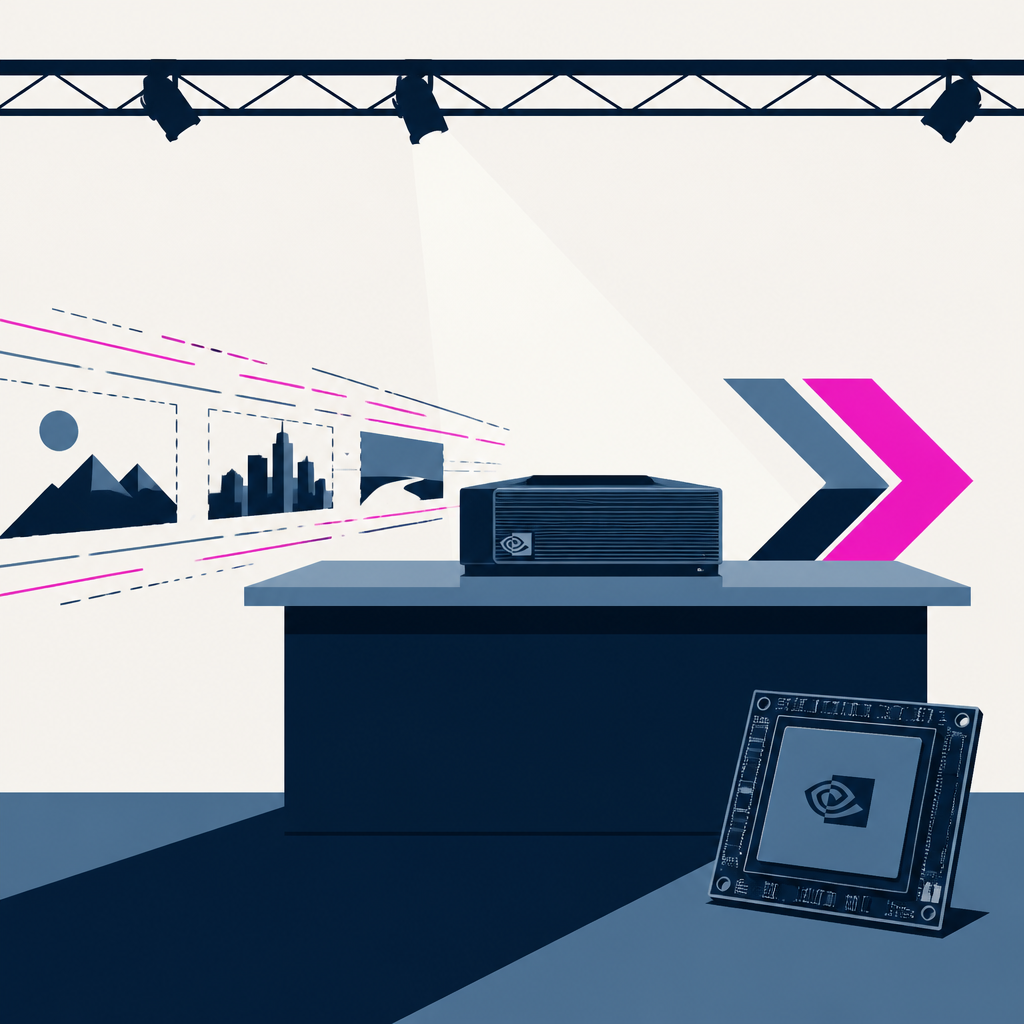
LTX released LTX-2.5, an open-weights video world model optimized for local generation on NVIDIA RTX GPUs and DGX Spark. A 10-second clip runs in 6.8 seconds on-prem, compared with 23.7 seconds via the LTX API. Native multishot generation, a Gemma 4 backbone, and a new high-motion decoder aim to make campaign-ready, consistent sequences usable locally inside ComfyUI, reducing reliance on cloud or studio workflows.
Avalara built an agentic AI tax-compliance workflow that routes requests to agents while relying on a deterministic tax engine to keep calculations exact. The company says its tax engine draws from more than 87,000 regulatory sources across more than 190 countries. As governments push toward real-time tax reporting, the approach shifts AvaTax toward near-real-time validation, forecasting and more secure agent coordination to preserve trust while automating complex steps.
Arm and Google explained that AI infrastructure is shifting from chatbot responses to agentic tool use, making CPUs more central for orchestration and secure code execution. They said their GKE Agent Sandbox can spin up 300 sandboxes per second per cluster. As agents scale, customers rely more on CPU-based isolation/orchestration alongside small models and coordinated CPU/GPU/TPU compute.
Multi-tier storage architectures are being promoted to cut the cost of AI inference and improve performance by combining flash, object storage, and disk capacity tiers across training and inference pipelines. Samsung’s PM1723 drive is cited as delivering up to 28.4 gigabytes per second sequential read throughput and up to 6.6 million random read IOPS. Enterprises respond by redesigning storage tiering around KV-cache access and reducing data movement to better use GPU resources without relying only on more hardware.
River AI, founded by xAI co-founder Igor Babuschkin, raised a $1.1 billion seed/Series A round led by General Catalyst and AMP PBC with participation from Nvidia, AMD Ventures, Y Combinator, and Temasek. The funding was announced after the company came out of stealth in June and it plans to build training-first “personally trainable” agent assistants. With the new capital, River will push its API/API training approach that supports reinforcement learning and LoRA fine-tuning and aims to shift agents toward being end users’ own assistants via a rebuilt training-to-product stack.
Databricks announced it is acquiring Electric to combine Electric’s sync engine with PGlite so agentic applications can use Postgres databases per agent or sandbox. PGlite grew from 1 million to 13 million weekly downloads over the last year, and it can run in the browser, in Node.js, or inside agent sandboxes with support for dynamic extensions like pgvector. The Electric team will join Neon and the Electric Cloud hosted service is being wound down, while Databricks positions the acquisition as enabling near real-time syncing of a central Postgres database across agents and clients.
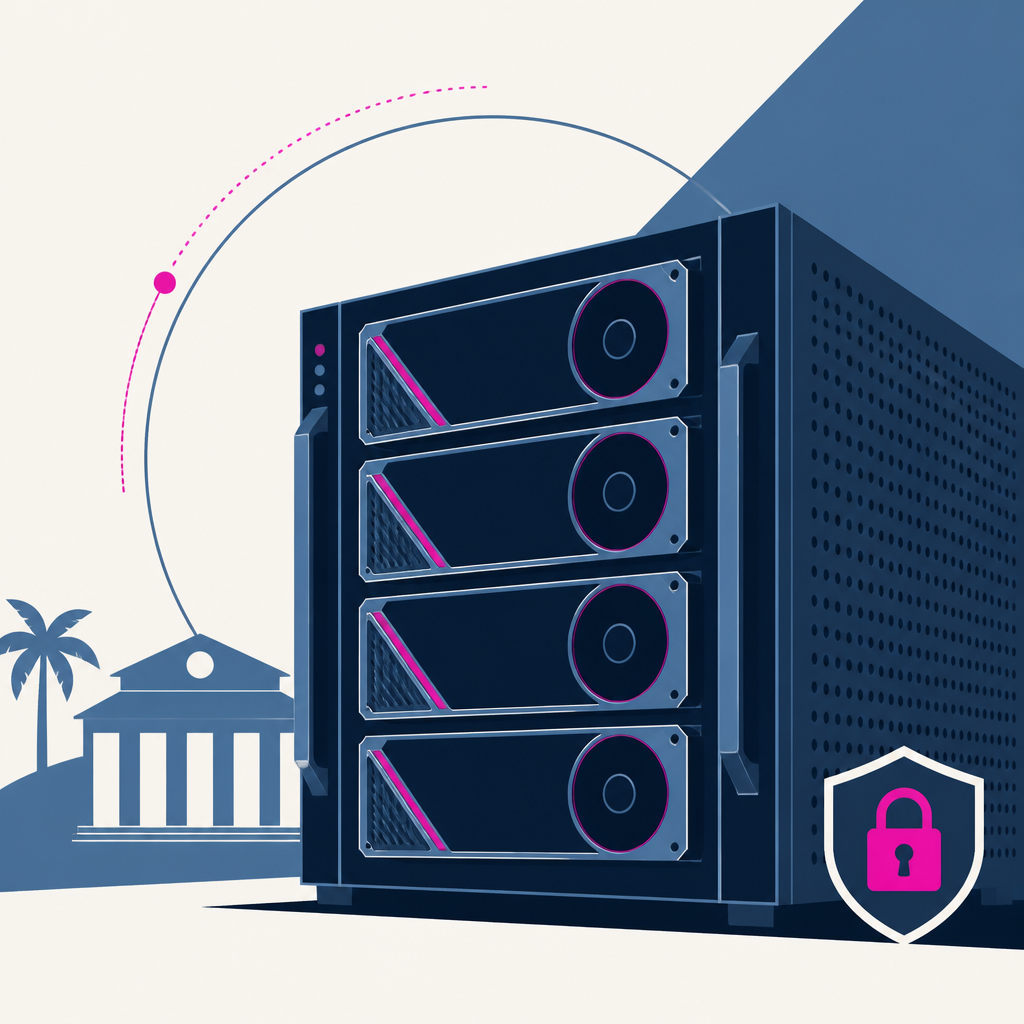
B3IQ (B3IQ/B3 Labs) provides rent-to-own dedicated GPU machines to privacy-conscious university researchers, and a PhD student at the University of Hawaii uses the setup to avoid limited campus compute and privacy/cost issues. Customers can put 30% down on machines such as a Nvidia H200 rig that starts at $54,516, with payments spread over 5 years. The option gives researchers more predictable costs and the ability to keep compute on dedicated hardware for compliance, and it also supports hosting in Oregon and selling spare compute through a dashboard.
Recall.ai introduced a startup program focused on meeting recording infrastructure discussions.
No specific dates or numbers were provided in the article text.
It directs startups to a discussion link, but it does not include further technical details or measurable outcomes.
Amazon’s Automated Reasoning Group has grown from a 2016 internal demo team into production services that apply formal logic to prove AWS systems’ security and correctness. It says its authorization engine was verified against quadrillions of production authorizations while handling 1 billion API calls per second. The work is now used across AWS security and reliability tooling and is being extended to guardrails and requirements checks for agentic AI systems.
ONESTRUCTION and AWS built Ishigaki-IDS, a construction/BIM domain-specialized foundation model trained to generate and validate IDS files using a three-stage approach (CPT, SFT, RLVR) and an IDS-Audit-Tool reward signal under GENIAC Phase 3 with AWS GenAIIC advisory. In their IDS-Bench evaluation, Ishigaki-IDS scored close to 100 percent on XML structural compliance and IDS structural compliance, and above 80 percent on IDS content consistency, while general frontier models scored roughly under 25 percent on IDS structural compliance and near 0 percent on IDS content consistency. The outcome changes by making IDS authoring and review more accurate and usable for construction practitioners—including non-specialists—especially in a data-scarce domain where general models struggle with IDS structure and content.
OpenWALDO launched as an open-source AI project sponsored by Ctrl IQ Inc. with Gregory Kutzer leading efforts to create a community-led corpus of AI training data. The project’s AI Bill of Materials is set to include full training data plus object references, documents, tokens, inventory, and licenses, enabling auditable, reviewable models that can be rebuilt and corrected publicly.
Axle raised a $17.5M Series A led by Base10 Partners to automate insurance policy workflows via its AI-native clearinghouse. It clears $100B+ in coverage annually across 4,000+ customers. The funding lets Axle expand engineering and go-to-market efforts and extend its clearinghouse across 50+ insurance segments.
Claude apps gateway for AWS is a self-hosted governance layer inserted between Claude Code/Claude Desktop and Amazon Bedrock or Claude Platform on AWS to centrally control authentication, model access, telemetry, routing, and spend enforcement for enterprise teams. It issues short-lived bearer tokens valid for 1 hour by default, and requests use that token to apply per-user policies and budget caps. This changes deployments by moving sign-in, policy evaluation, and spend enforcement to the gateway (with no upstream credentials on developer machines) while enabling per-identity usage attribution and immediate HTTP 429 responses when budgets are hit.
Mecka AI received $60 million in funding to help it convert large-scale video into verified robot training data, with an engineer tasked with controlling the company’s video-processing cost stack. Encoding an hour of video now costs about a quarter of the previous GPU approach, after Basil Yusuf moved the encoding path from GPUs to dedicated video-transcoding ASICs. The change makes ASIC-based processing the default (with GPUs as spillover), aiming to keep Mecka’s per-hour costs falling as volume grows so margins can hold.
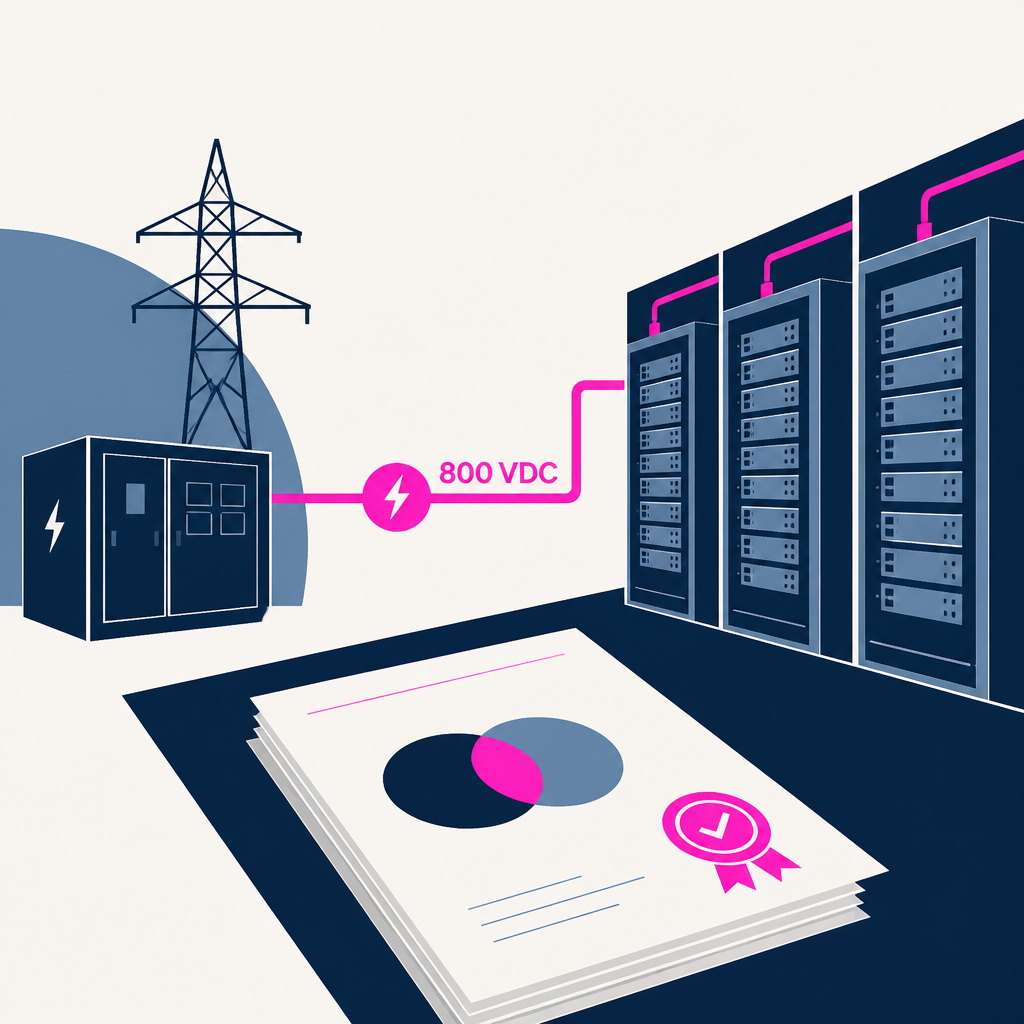
AI infrastructure needs higher-voltage power delivery to reduce conversion overhead and deliver more power efficiently to next-generation GPU racks. 800 VDC is being standardized via Open Compute Project work, with a joint white paper published in March 2026 and a LVDC Solid-State Transformer Specification released in July 2026. Hybrid 800 VDC deployments let existing AC-based facilities keep their building electrical systems while scaling power density, with rack (MGX-compatible), row (up to 2 MW per row), and facility-scale DC options planned for 2026–2027, supported by 80+ vendor products.
FriskAI launched a runtime intelligence platform to log and profile what enterprise AI agents actually do in production so teams can detect changes and anomalies. The company raised $3.6 million in pre-seed funding. The result is a new monitoring layer for agent behavior, with Python/TypeScript tooling and real-time alerts when agents shift their activity patterns.
IBM Research and collaborators released GENCO and the GridFM Development Framework as part of the OpenGridFM project to enable faster, unified steady-state grid analysis with neural solvers. GENCO is reported to be up to 30 times faster than a Newton–Raphson AC solver for power flow on relevant grid sizes. The release changes how researchers and operators can train, benchmark, and adopt AI-based grid models by consolidating power flow, optimal power flow, and state estimation into one shared approach and providing open tooling and data for reproducible comparisons.
ZeroDrift launched Command, a compliance control plane that intercepts human and AI-generated communications to detect and correct regulatory violations before delivery. The company says its small-language-model approach can reduce detection and rewrite latency to milliseconds, with overall performance under one-second for detecting and rewriting messages. The service changes compliance workflows by enabling real-time flag/warn/repair/block decisions (optionally rewriting content) instead of relying on after-the-fact review or fully manual checks.
NVIDIA released Nemotron 3.5 Lightning and NeMo Switchyard to support agentic AI deployments using open models and automatic model routing. Nemotron 3.5 Lightning is a 30-billion-parameter mixture-of-experts model that NVIDIA says delivers up to 4x faster output speed and 30% faster agentic task completion versus other models in its class. Enterprises can now route each agent step to a suitable model and post-train Lightning on their own data, reducing deployment integration work and lowering task completion cost.
Nvidia announced Nemotron 3.5 Lightning and NeMo Switchyard to expand enterprise options for agentic AI deployments. Nemotron 3.5 Lightning is a 30 billion-parameter mixture-of-experts model that Nvidia says can deliver up to 4 times output speed and complete agentic tasks 30% faster than other models in its weight class. Enterprises can now more quickly post-train and route prompts across models using the new open router library and added training datasets/recipes.
Nvidia launched Nemotron 3.5 Lightning and NeMo Switchyard, an open-source library for routing between models in AI systems. Nemotron 3.5 Lightning is a 30-billion-parameter mixture-of-experts model that Nvidia says can produce up to 4x faster outputs. The releases aim to make it easier to customize small models via post-training and lower task-completion costs by having model routers choose the right model per workflow.
Mistral is expanding its AI sovereignty offering for enterprises and countries by adding regional inference control, committed service levels, support for third-party open models, and a coalition to secure European compute capacity. The company plans to build up to 1 GW of capacity by 2030. As a result, customers can run inference in Europe or the US under specified conditions, choose more open models without fragmenting deployments, and access Mistral infrastructure backed by multi-year compute commitments.
Nvidia signed memorandums of understanding with six asset managers to set up financing platforms for AI infrastructure. The deals target mobilising more than $500 billion in third-party capital over time. This reframes GPU compute as long-lived, financeable infrastructure so customers can fund data centres and buy Nvidia hardware without bearing all costs on their own balance sheets.
Pratyush Choudhury, co-founder of Activate AI, said AI is forcing venture capitalists to invest with deeper hands-on understanding of frontier models. He spends between 300 and 500 million tokens per day and $ several hundred to a few thousand dollars daily to test expensive frontier systems, with OpenAI Codex and Anthropic Claude driving about 90% to 95% of usage. This approach changes venture investing toward technical fluency for founders and experiments by investors to avoid backing companies built on temporary capability gaps.
The United States widened its lead in PitchBook’s Global VC Ecosystem Rankings as growth concentrated among fewer companies, and the gap over China grew alongside a $1T AI boom. The US scored 94.6 in the fourth annual report, more than 19 points ahead of China. VC growth shifted toward a smaller set of companies while the US maintained a larger ecosystem advantage.
Zuckerberg published a 6,500-word manifesto outlining Meta’s “superintelligence for everyone” priorities and highlighting five funding themes the company is already backing. Meta guided full-year 2026 capital expenditures up to $145 billion, up from $72.2 billion in 2025, and disclosed $279 billion in future AI data-centre lease commitments. The emphasis shifts investment toward personal AI agents plus AI compute, energy and cooling infrastructure, open-source governance and deployment tools, and funding opportunities for startups building the enabling stack.
Nvidia signed memorandums with six large asset managers and private capital firms to set up independent financing platforms for AI infrastructure buildouts. The platforms are intended to mobilise more than $500 billion in third-party capital over time. The plan is set up to reduce concerns about circular financing by having investors independently assess and underwrite each opportunity, with Nvidia possibly supporting residual value in some cases up to 25%.
Palette, a Copenhagen AI software startup, raised €3 million in pre-seed funding to expand its platform for AI-native teams integrating AI agents into workflows across functions. The round brought in €3M led by Ugly Duckling Ventures, with backing from Emblem, Acadian Ventures, and angel investors. It plans to grow its sales team and further develop Palette Desktop and a broader Palette OS, including a company-owned context library, shared AI skills, and a connector gateway so models and tools can be switched and reused while keeping organizational data.
The tutorial builds an end-to-end MiniMax-H3 multimodal (video and audio) generation pipeline on top of ComfyUI’s headless HTTP/WebSocket APIs by installing ComfyUI, downloading required model weights, and constructing the execution graph in Python. It uses a hardcoded generation configuration of 5.0 seconds with 20 sampling steps (CFG: SECONDS=5.0, STEPS=20). As a result, MiniMax-H3 experiments can be run reproducibly without using the ComfyUI graphical interface, including text-to-video plus conditioned modes like first/last-frame and reference-image conditioning.
Palette, a Copenhagen startup, raised €3 million in pre-seed funding led by Ugly Duckling Ventures to build a model-neutral “context layer” for teams. The company says its Palette Desktop lets teams use any AI agent on files stored in Google Drive, OneDrive, or Dropbox. The funding will be used to convert design partners into paying customers as more companies move toward AI-native workflows without locking into a single model vendor.
Every AI story that matters,
in your inbox by 8am.
TLDRocket reads all relevant sources, removes duplicate coverage, and summarises the
day in two minutes. Follow companies and topics for alerts, or get the
briefing in Slack. Free, no spam, unsubscribe anytime.
Reading TLDRocket needs no cookies, and the readership counts we rely on come from
our own cookieless analytics. Google Analytics is the exception: it sets cookies and
reports to Google, so it stays switched off until you allow it. You can change your
mind any time from “Cookie settings” in the footer.
Strictly necessary
Session security and form protection (tldrocket-session,
XSRF-TOKEN, 2 hours). The site cannot work without them,
so they need no consent.
Always on
Google Analytics 4 (_ga,
_ga_<id>, up to 2 years). Measures which
stories and sections readers use. Google acts as a third-party processor and may
store the data outside the EU. No advertising, no profiling, no data sold.