XDOF, a robotics data startup that emerged from stealth less than three months ago, entered late-stage talks for a Series B led by 8VC at a valuation of about $1.2 billion. The company said its annualized revenue is approaching $50 million, after a $70 million Series A in June. If the deal closes, it will change XDOF’s funding plans sooner than expected to support expansion of its data pipelines, collection tools, and annotation systems.
Gimlet Labs raised $300 million to support its disaggregated inference platform that splits and assigns different LLM modules to the most suitable chip hardware. The Series B round valued the company at $3 billion. The funding expands serverless infrastructure capacity with several hundred megawatts of computing power and pushes into the custom hardware market.
A multimodal WhatsApp ordering assistant was deployed using Amazon Bedrock AgentCore with Amazon Nova 2 to handle chat, voice notes, and voice calls under one backend and shared memory. It processes inbound WhatsApp events by immediately returning HTTP 200 to Meta and then handling the rest asynchronously via an Amazon SQS queue. This setup lets customers be recognized across channels and keeps ordering/menu backend logic unchanged when adding or removing a WhatsApp channel.
Nscale, a British AI infrastructure company, is in talks for pre-IPO financing ahead of a potential public listing as early as later this month. It is seeking $3.5 billion total, including $1.5 billion in convertible notes and an additional $2 billion from Nvidia. If the funding closes, it would bolster the company’s balance sheet for the planned IPO and continue expanding its AI compute business.
Cisco introduced Unified Edge to turn edge sites into AI-ready infrastructure for distributed, data-intensive workloads. The platform debuted in November 2025 and includes up to 120 terabytes of storage plus 25-gigabit networking. Cisco is extending its Intersight management across data centers and edge locations and integrating security and telemetry into the edge system to support large-scale agentic AI operations.
Insights from Tirias Research founder Jim McGregor argues that AI inference and agentic AI require data centers to be rearchitected so memory, storage, and networking are optimized together rather than in isolation. The article says data movement has become the most pressing constraint due to workloads like retrieval-augmented generation that need immediate access to large databases in real time. Enterprises should shift procurement and system design toward workload-aware, modular, efficiency-focused infrastructure to reduce memory/storage bottlenecks and stay flexible as demands and technology change.
Amazon Bedrock AgentCore memory lifecycle management was introduced to prevent long-running agents from accumulating outdated memories that can hurt answer quality and compliance. The workflow runs nightly and uses a default 90-day TTL for episodic memories. It adds configurable scoring, consolidation via Amazon Bedrock, and pruning (with CloudTrail-based access tracking) so memories are expired, merged, or deleted over time.
NVIDIA and AWS describe how to run a continuous Physical AI “model factory” pipeline using NVIDIA Cosmos 3 on Amazon SageMaker HyperPod, moving through synthetic-data generation, post-training, and closed-loop evaluation on a single shared cluster and storage setup. Cosmos 3-Super is a 64B-parameter model that can be post-trained into a deployable policy. The workload no longer requires separate GPU pools per pipeline stage because the same persistent node pool under one control plane time-shares generation, training, and evaluation for better GPU goodput across the whole loop.
InstantStart lets an AI agent run multi-stage Amazon SageMaker HyperPod cluster setup by driving the same control-plane APIs behind the web console and terminal workflows. EKS control-plane creation takes about 8–12 minutes before dependency installation and HyperPod cluster creation proceed. As a result, long-running steps become retryable, the agent asks only decision inputs (like zone and instance details), and it returns a verified running cluster with storage mounted instead of a pending request.
Amazon Bedrock was integrated with Amazon Textract to let teams preprocess utility bills and query them instead of feeding raw documents directly into a RAG system. The setup deploys an AWS CloudFormation stack via bash custom_kb_deployment_setup.sh that creates 2 Lambda functions and an OpenSearch Serverless cluster. The pipeline now automatically converts uploaded multi-format files into a knowledge base format for more reliable LLM answers, with post-deployment configuration steps including syncing an Amazon Bedrock Knowledge Base and testing with an Amazon Nova Micro model.
Intuit built an agentic disaster recovery assistant, EWOK Agent, on top of its internal EWOK disaster recovery system using Amazon Bedrock. The assistant has been used to run failovers for eight months and reduced recovery times to about 20 minutes for supported workloads. Failover requests that previously required runbook lookups and engineer coordination are now validated and executed through a managed AI reasoning layer plus deterministic EWOK actions, returning an execution ID and status to engineers.
Apple’s John Ternus took over as CEO after Tim Cook stepped down, with Ternus immediately signaling a “huge launch next week.” The transition comes just in time for Apple’s next iPhone event, before he has settled into the role. The leadership shift refocuses shareholder expectations on how Ternus can deliver progress in this AI-driven software era, while Cook stays on as executive chairman for policy relationships.
Tech.eu’s Europe roundup reported 50+ funding deals, 10+ exits/M&A items, and investor and industry updates across the region. Wonderful raised $550M at a $5B valuation, while Nvidia confirmed its $12.93B purchase of Hugging Face and Londoners gained the ability to hail autonomous vehicles via Uber with safety drivers. The mix of capital raises, acquisitions, and product rollouts expands AI infrastructure and tooling investment while new autonomy and deeptech bets roll into market pilots.
Enterprise AI adoption is lagging behind industry hype as organizations struggle with infrastructure modernization, cost control, and picking suitable AI use cases. Most agentic applications David Linthicum sees do not need an agent-based architecture, estimating that 95% don’t. As a result, companies are shifting from early experiments to more controlled deployments while exercising restraint on autonomous agents and focusing on readiness rather than broader rollout.
Workers’ share of U.S. income has fallen to its lowest level on record even before an anticipated AI productivity boom starts. Labor’s share dropped to 52.8% and margins reached a record 14.9% of GDP. Analysts say productivity gains have protected corporate margins rather than labor income, so labor’s share may keep falling as AI-related capital spending concentrates benefits.
Apple replaced Tim Cook as CEO with John Ternus at a time when the company is under pressure to define its artificial-intelligence strategy amid slowing growth and other operational challenges. The transition is scheduled to play out at Apple’s Sept. 9 product event. With Ternus in charge, Apple’s leadership and product direction are expected to shift toward more investment and more prescriptive device and user-interface design to better compete in the AI era.
Coder announced Coder Agent Relay for Cursor with SpaceXAI as its launch partner, enabling coding agents to run in customers’ isolated Coder workspaces while Cursor performs inference and planning in the cloud.
Thinking Machines is negotiating a $1 billion funding round at a valuation of at least $40 billion, according to The Information. Nvidia is in discussions about joining the round, on top of Accel leading. The company’s valuation target has dropped from earlier $50 billion talks and it now rests more on its shipped open-weight model Inkling and compute partnerships than on past leadership pedigree.
WebLLM released as an in-browser LLM inference engine that runs fully in the browser using WebGPU hardware acceleration and can integrate via an OpenAI API-compatible interface.
It supports chat streaming by setting stream: true in engine.chat.completions.create.
Developers can now deploy certain models locally in web apps without server support, including structured JSON generation and optional worker/service-worker execution for better UI responsiveness.
LLMs are becoming commodities as model quality differences shrink and providers shift toward application fit and packaging other capabilities rather than distinct core models. GPT-4o reportedly cut cost and latency by 2x over 6 months compared with GPT-4 Turbo, and reported task parity keeps tightening (e.g., Gemini-1.5 Pro within 1.5%). As a result, consumers and enterprises increasingly choose based on price/speed and perceived safety with default providers, forcing newer entrants to find niches and differentiate in ways other than raw model quality.
Three-LLM runs several small language models locally in the browser by converting each model’s inference graph into Three.js TSL WebGPU compute shaders and loading Hugging Face checkpoints directly.
Chinese banks, cafes, and telecom operators are rolling out free or discounted AI tokens to attract customers, extending tokenized AI usage beyond tech apps. Daily token consumption in China jumped to 500 trillion in mid-2026 from 100 billion in early 2024. Token access is shifting into consumer products such as credit-card rewards, mobile-data-style plans, free restaurant/cafe “computing” vouchers, and even token-based loan sizing by banks.
Crusoe raised over $3B at a $30B valuation after securing a $13B, five-year Jane Street cloud deal. The financing round lifted its valuation from about $10B in October 2025. It signals a shift toward supplying AI infrastructure at larger scale, while also increasing pressure to convert contracted GPU demand into faster data-centre capacity.
Gimlet Labs raised $300 million to support software that routes AI inference workloads across multiple chip types. The funding valued the company at $3 billion. Gimlet said it is moving beyond software toward helping customers configure and building data centers to handle heterogeneous hardware needs.
Nscale signed a multi-year AI cloud agreement with humanoid robotics company Figure and also took an undisclosed equity stake. The deal commits at least $3.5 billion in AI cloud compute, with capacity to scale past $6 billion, and targets initial systems for the second half of 2027. Figure gains priority compute and orchestration support from Nscale for its robotics training and models, while the partnership expands Figure’s ability to run large-scale training needed for robot shifts.
Microsoft named its developer-optimized Windows experience “Project Zenith” for new developer-focused devices. The devices are built with 64GB or more of unified memory. Microsoft will ship a preconfigured Windows setup plus curated development tools on those machines so developers can run large models locally without metering for experimentation.
Nvidia completed its $12.9 billion acquisition of Hugging Face, moving the French-founded open-source AI platform fully into US ownership on September 2, 2026.
Ugreen launched its HomeAgent smart home platform at IFA to combine local storage, on-device AI, and smart home control in one hub. The system is offered in three hub configurations. This adds a local-first AI brain and the Uliya voice assistant for natural-language control of your devices and camera storage.
Nvidia introduced Personal AI Router (PAIR), a local distributed clustering tool that lets people use idle home PCs and Macs to run agentic AI subtasks across multiple machines. Nvidia said the client is available in beta for macOS, Windows, and Linux. PAIR sets up automatic proxy connections to tools like LM Studio and Ollama, discovers devices via mDNS/IP, dynamically redistributes subtasks when nodes become unavailable, and returns results to the main node for faster task completion.
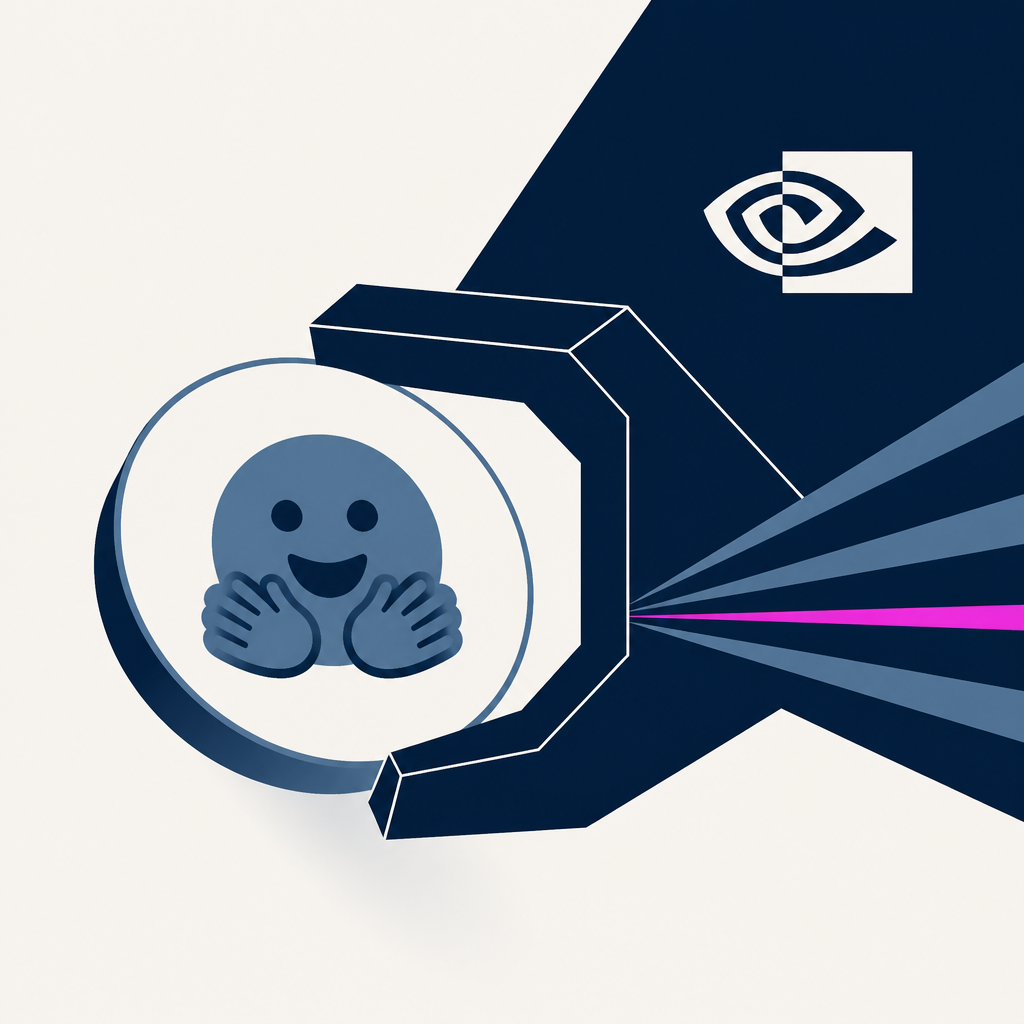
Nvidia agreed to acquire Hugging Face for $12.93 billion, making the open model hub part of Nvidia’s business rather than treating it as just a chip supplier. Hugging Face runs a library of more than 3 million models and hosts about 18 million developers and researchers. The acquisition is expected to fund enterprise-focused tooling for safety evaluation, deployment, and inference so more companies can move from testing open-weight models to production.
Crusoe raised a new $3B funding round at a reported $30B valuation with investment partners including Atreides Management and Valor Equity Partners. The round values the company at $30 billion. The extra capital adds to its AI infrastructure push following its $13 billion, five-year GPU and AI infrastructure cloud contract with Jane Street.
Upwind Security raised $300 million in additional funding for its automated cloud security platform, led by Bessemer and TCV in a Series C. The round values the company at $3.8 billion, up $2 billion from the start of the year. It expands platform operations by refreshing cloud asset data every 30 seconds and integrating more third-party cloud services, enabling broader coverage including AI model monitoring and AI-BOM generation.
Nvidia agreed to acquire Hugging Face, the open-source AI platform founded in 2016. The purchase price is $12,930,300,000 (about $13B). This turns Hugging Face’s ownership into Nvidia’s while Nvidia says Hugging Face will remain an open platform, sparking debate over whether developers will increasingly favor Nvidia hardware.
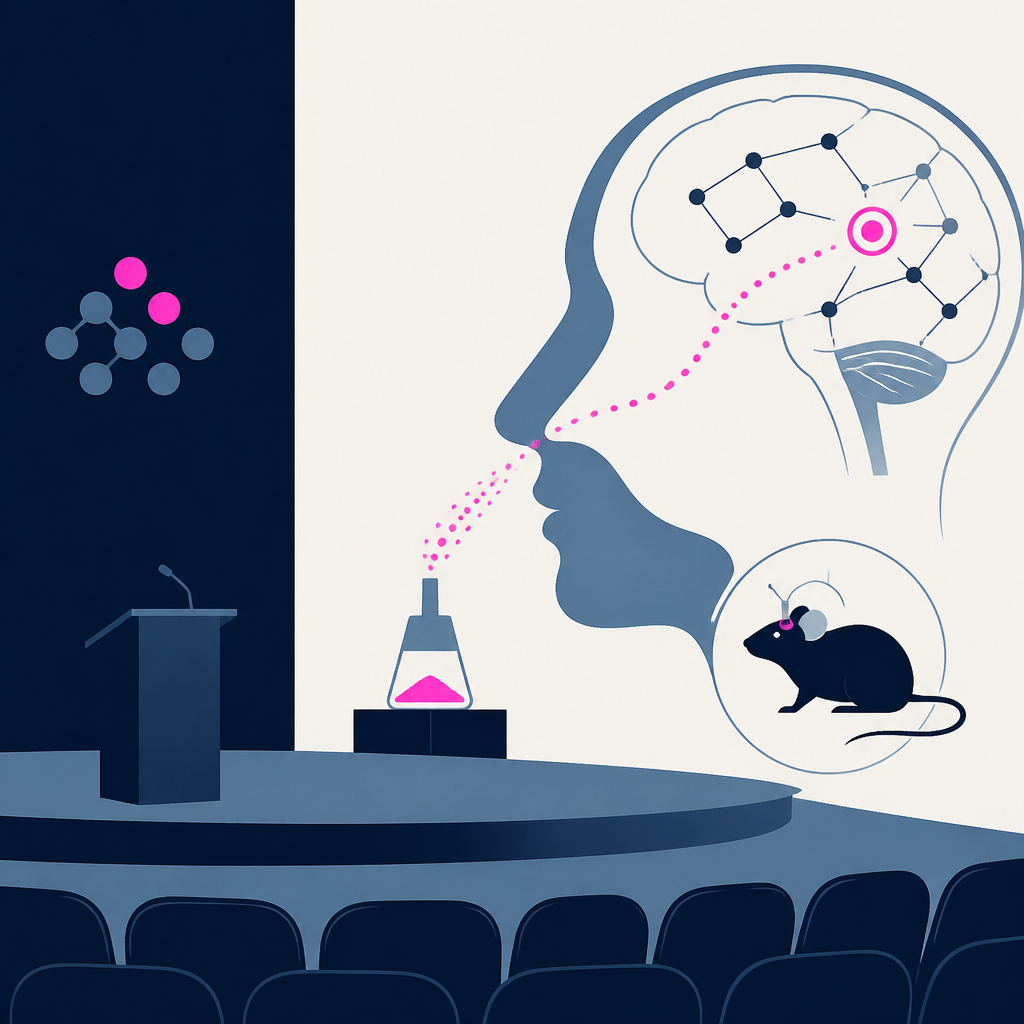
Ray Kurzweil joined Subsense, a Silicon Valley startup working on a brain-computer interface that delivers brain-linked functions via snorted charged nanoparticles. The company has raised $27 million in funding and is doing preclinical work on mice. Subsense says Kurzweil will advise its technology roadmap and the way AI-neural interfaces could reshape human-computer interaction, though the approach is still years from medical or consumer use.
Every AI story that matters,
in your inbox by 8am.
TLDRocket reads all relevant sources, removes duplicate coverage, and summarises the
day in two minutes. Follow companies and topics for alerts, or get the
briefing in Slack. Free, no spam, unsubscribe anytime.
Reading TLDRocket needs no cookies, and the readership counts we rely on come from
our own cookieless analytics. Google Analytics is the exception: it sets cookies and
reports to Google, so it stays switched off until you allow it. You can change your
mind any time from “Cookie settings” in the footer.
Strictly necessary
Session security and form protection (tldrocket-session,
XSRF-TOKEN, 2 hours). The site cannot work without them,
so they need no consent.
Always on
Google Analytics 4 (_ga,
_ga_<id>, up to 2 years). Measures which
stories and sections readers use. Google acts as a third-party processor and may
store the data outside the EU. No advertising, no profiling, no data sold.