
AI visionary Ray Kurzweil is joining a Silicon Valley startup developing a brain computer system that involves snorting nanoparticles
Fortune Alexei Oreskovic
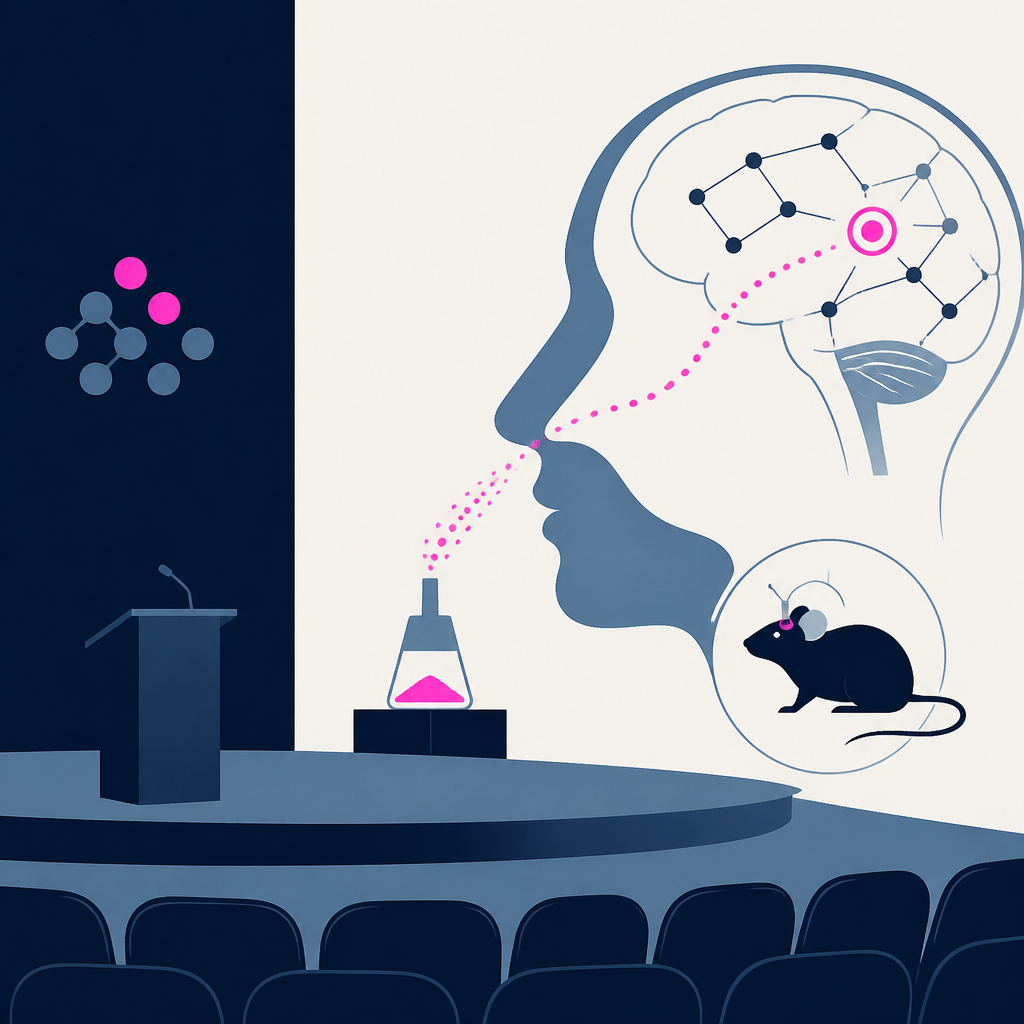
Ray Kurzweil is joining a startup that wants to reach the brain through the nose. It’s a wild shortcut to brain-computer links, and it’s still in the lab.
Based on reporting by Fortune, Alexei Oreskovic — read the original for the full story.
Summary, retelling and take written by AI under human oversight; images are AI-generated illustrations. How we work · Report an error
Ray Kurzweil has picked a new perch in the brain-computer interface race. The longtime AI thinker, Google researcher, and singularity evangelist is joining Subsense, a four-year-old Silicon Valley startup that says it’s working on a way to put computers in the brain by sending nanoparticles in through the nose.
Subsense announced the move on Wednesday evening at its Palo Alto headquarters, with Kurzweil on hand. He framed the work in classic Kurzweil terms: humans should be pushing past the limits of biology, and the smartphone, in his view, is a clunky middleman that slows access to AI.
The company’s approach is very different from Neuralink’s. Neuralink has implanted wireless chips in the brains of roughly a dozen people, using surgery to place electrodes. Subsense is trying to avoid drilling into the skull, instead using charged nanoparticles delivered intranasally. Think allergy spray, but for the brain. Those particles would then be influenced by a cap or headset with magnetic coils, either to stimulate neurons in specific areas or to read neuron activity.
That remains a long way from anything a consumer could buy, or even a patient could use. Subsense showed a nonfunctional mock-up of its cap — part baseball cap, part bike helmet — and said the work is still preclinical. The company is testing different pieces of the system and running experiments on mice.
Subsense has raised $27 million and says it wants to move first toward medical use, then eventually toward a consumer product. CEO Tetiana Aleksandrova called brain-computer interfaces one of the most intimate technologies people will ever build. Kurzweil will advise on the company’s roadmap and on how AI and neural interfaces might reshape the way people interact with computers.
My take — AI-written commentary, not fact-checked reporting
This is exactly the sort of moonshot that keeps neurotech half science and half theater. Kurzweil’s involvement buys attention, but attention is not a working brain interface, and the industry has a habit of mistaking a dramatic demo for progress. Still, the nose route is a neat reminder that Silicon Valley never met a body part it couldn’t turn into a product spec.
Read more about this at: Fortune