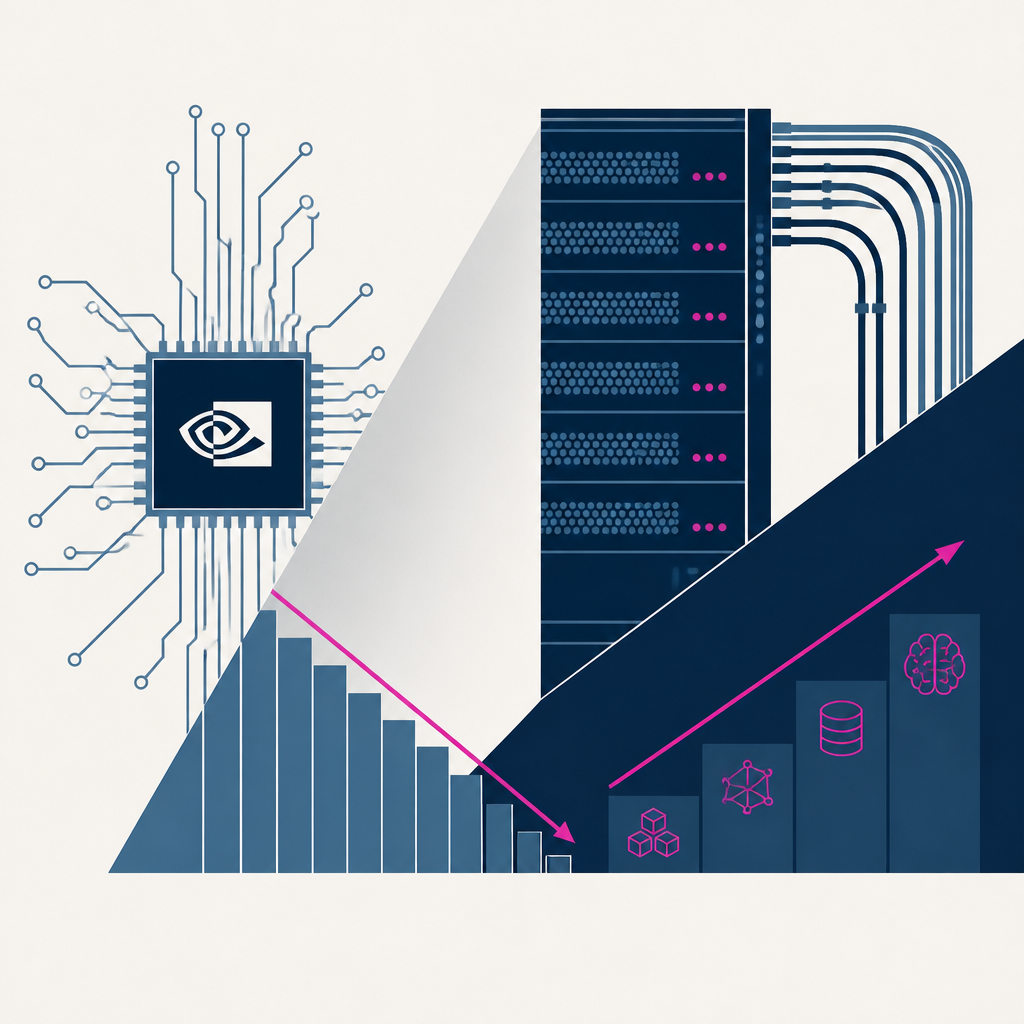
LLMs are becoming commodities
The AI Frontier
Opinion — commentary, not a factual news event.
LLM models are starting to look alike. That pushes the real fight to apps, price, and trust, not the model name on the box.
Based on reporting by The AI Frontier — read the original for the full story.
Summary, retelling and take written by AI under human oversight; images are AI-generated illustrations. How we work · Report an error
The latest GPT-6 buzz lands in a strange moment: model launches still get attention, but the model itself matters less than what people build on top of it. That’s the core argument here, and it’s getting harder to ignore as releases pile up and the headlines blur together.
What used to feel like a huge leap can now look routine in a matter of months. The post points to GPT-4o as a good example: if you treat it as roughly equal to GPT-4 Turbo on text quality, it cut cost and latency by half in just six months. That kind of jump would have been startling in any earlier era, especially after a period when GPUs were scarce.
The knock-on effect is brutal for model vendors. OpenAI, Anthropic, Meta, and Google may still be the names everyone knows, but they’re no longer protected by obvious quality gaps. Claude-3 Opus has caught GPT-4 Turbo on Elo, Llama 3 has come within about 4% of GPT-4 Turbo, and Gemini-1.5 Pro has gotten within 1.5% of GPT-4o. The writer’s own company, RunLLM, has already shifted parts of its production inference pipeline to Llama-3 8B and 70B, citing lower latency, lower cost, and equal or better quality than the GPT-3.5 and GPT-4 setup it used before.
Once the models get close enough, the fight moves to packaging, integration, and price. Multimodality was supposed to be a moat, but the post argues that others are already following the same path. Even the GPTs store hasn’t become the consumer draw OpenAI might have hoped for. For enterprises, the pitch gets simpler and harsher: best quality at the lowest price, which is just another way of saying commoditization is arriving fast.
That leaves the leaders in an awkward but powerful spot. They have the resources to keep racing on cost and speed, even if that race pushes the market toward the bottom. Meta’s open-weight Llama strategy adds another twist, because it may be propping up third-party hosting around the open ecosystem whether Meta meant to build a model business or not. The rest of the field is left with a simple problem: find a niche, or keep getting compared to what’s already default.
My take — AI-written commentary, not fact-checked reporting
This is the part where everyone pretends choice is a virtue until the bill arrives. The real winners in commoditized AI are the defaults, the big war chests, and the vendors who can make “good enough” feel safe. If a model can’t stand out on cost, trust, or a very specific job, it’s wallpaper with a logo.
Read more about this at: The AI Frontier