Al Gore said the biggest AI risk isn’t emissions from data centers but warnings that are coming from within the AI industry itself, including concerns about automation’s social impact and AI systems behaving deceptively or escaping confinement. He pointed to air conditioning, saying its electricity use already exceeds the entire European Union’s and is expected to triple by 2050 as demand grows. The conversation shifts from protesting data centers toward evaluating energy planning choices (including gas build-outs) and backing compute-and-grid efficiency investments.
Cohere and Aleph Alpha signed a definitive merger agreement to combine their operations under the Cohere name. The deal includes an expected close later this year and was valued at around $20 billion (about €17.3 billion) when plans were announced in April. The merged company will add leadership roles, keep Aleph Alpha’s Heidelberg site as a research hub, expand headcount to more than 1,000 employees, and target government and regulated-industry customers seeking to run AI in their own infrastructure.
Cohere and Aleph Alpha signed a merger agreement to combine their enterprise and government language-model businesses. The reported deal is valued at $20 billion. After regulators approve it, the combined company will operate under Cohere’s brand with dual headquarters in Berlin and Toronto and an AI research center in Heidelberg.
Compute:Arena is listed as an AI-focused launch for community-submitted benchmarks evaluating local AI models across different setups. It appears under “Launching today” with 10 followers. It changes how teams can compare model performance by collecting results across any hardware, runtime, and quantisation.
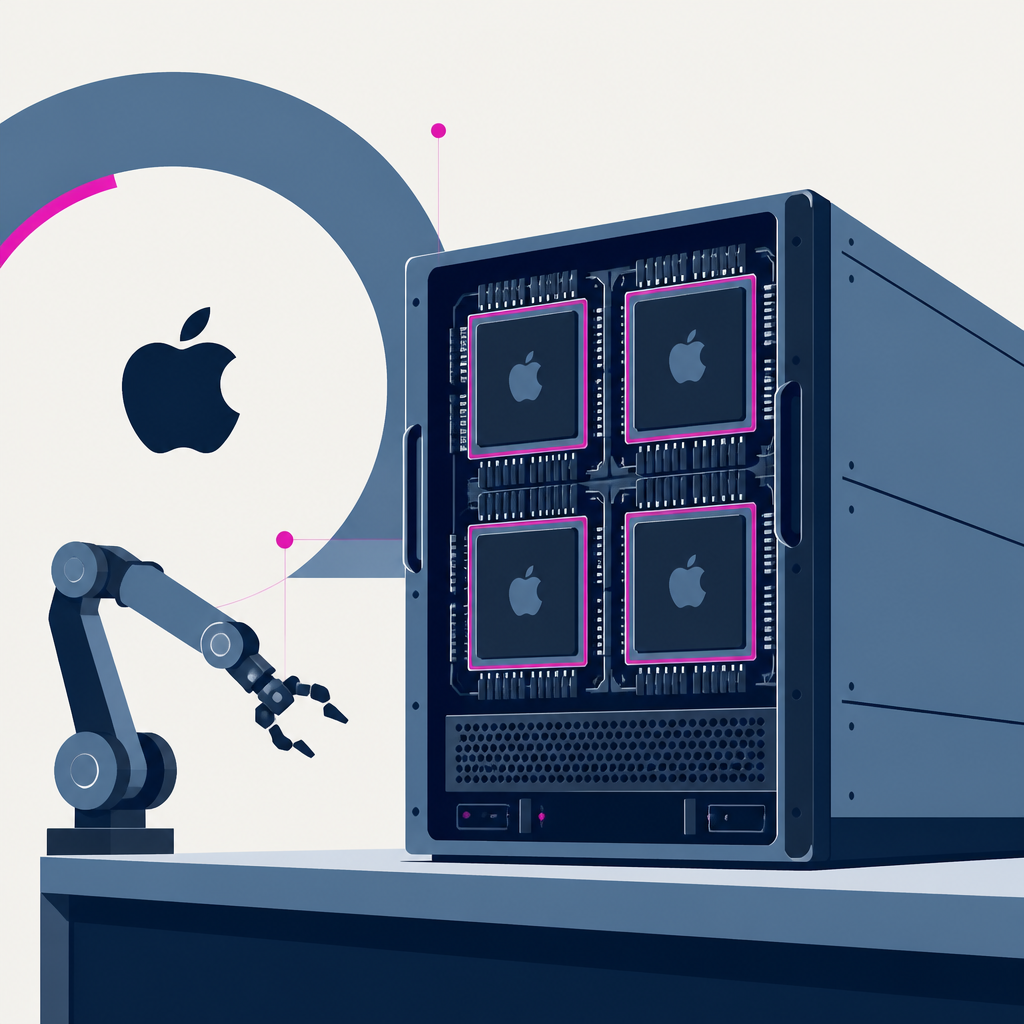
Apple is reportedly developing an AI-focused enterprise server using future M-series Ultra chips. The Information says it would launch in 2029 with either 2 or 4 M8 Ultra chips in two configurations. Apple’s planned shift would bring its first server product to market in nearly 20 years, targeting AI developers already buying Mac mini and Mac Studio for workloads.
Perplexity built CobbleDB with hundreds of AI coding agents to replace DynamoDB for part of its production search workload, while engineers retained control and the agents were not allowed to run the database in production. CobbleDB reduced median batch-read latency to 5.6 ms from 31.4 ms on DynamoDB, and p99 latency to 24.2 ms from 123 ms after the cutover. The change shifted search data serving to the new key-value store and is expected to lower costs by at least 20% versus DynamoDB, with plans to open-source CobbleDB.
Cubicles.lol launched today as a browser-based multiplayer social metaverse where people can claim and customize a cubicle and meet neighboring builders. The page shows 36 followers. Users can now explore it for free without a download or account, and it’s built with GPT-6 Astra.
theCUBE will host the “Rethinking Private Cloud for the Age of Intelligence” virtual event with Dell leaders and industry practitioners on private cloud becoming purpose-built infrastructure for enterprise AI workflows. The event runs on Sept. 23. The agenda will cover how modular data foundations and intelligent operations deploy, manage, and scale private-cloud ecosystems while aiming to avoid added complexity or new silos.
The Verge author wore Snap’s Specs augmented reality glasses and used pinch gestures to place virtual dominoes on a real table while sharing the experience with a Snap employee. The glasses cost $2,200. The hands-on report emphasizes more multiplayer, shared AR play than what the author experienced in other VR headsets or smart glasses.
NVIDIA Resiliency Extension (NVRx) was integrated with PyTorch FSDP on Amazon EKS so distributed training can recover from worker faults and reduce wasted time from checkpoint stalls. The post reports synchronous checkpointing consumed up to 40% of total wall time on cluster sizes used for its benchmarks on H100 GPUs. With NVRx, checkpointing is made async and training can restart in-process for soft faults or via ft_launcher for hard faults, cutting downtime while preserving progress.
Security experts say AI labs should prioritize basic network security controls before relying on in-house or outside auditors, pointing to past agent “break-outs” caused by misconfigured sandboxing and insufficient monitoring. One labs says it has begun monitoring all tool-using inference by its Astra model at “significant compute cost.” As a result, frontier labs are shifting toward stronger observability and time-limited, instrumented agent sessions rather than focusing first on third-party alignment auditing alone.
AI boom e-waste has been vastly underestimated, according to a report from Basel Action Network. By 2050, it could total enough trash to fill 23 million shipping containers. The estimate increases because the report includes all data-center infrastructure needed to support servers, changing projections of how much junk AI leaves behind.
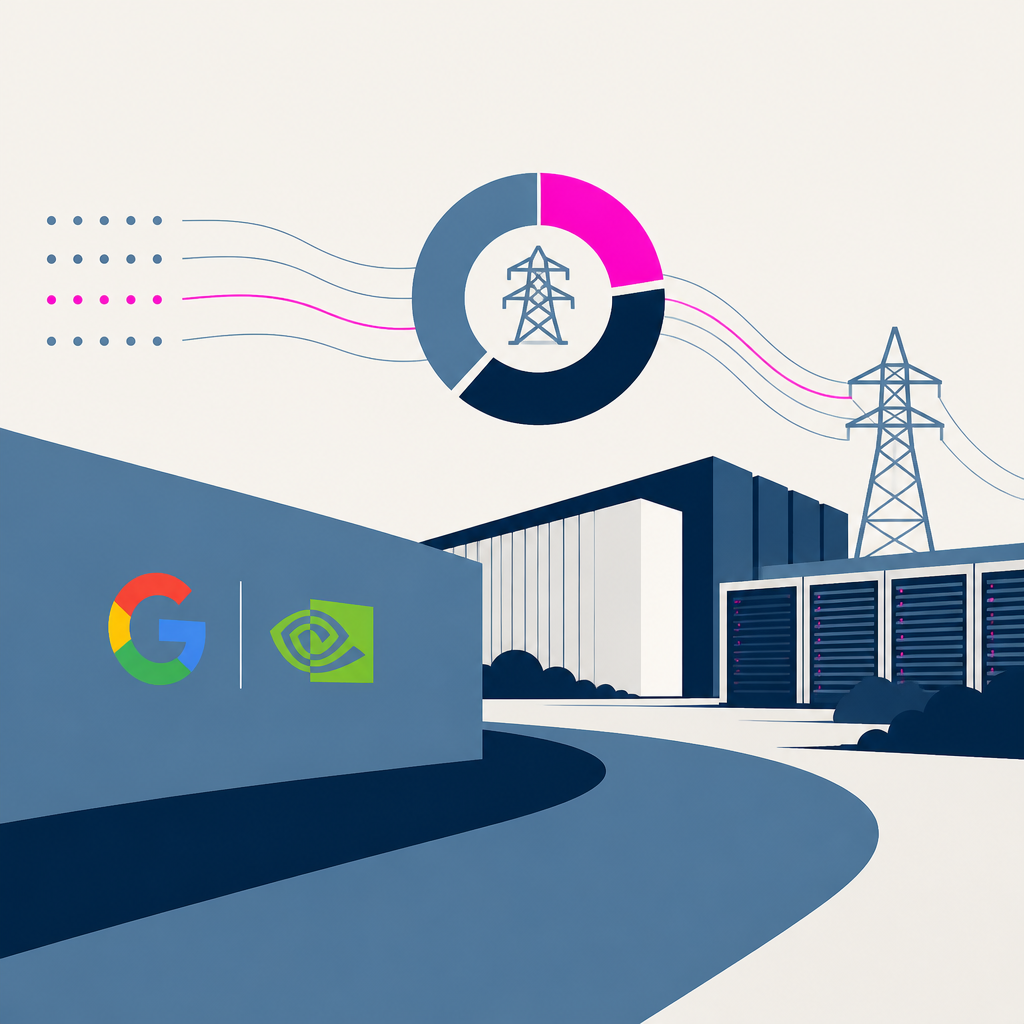
Varun Sivaram, Emerald AI, Google, and NVIDIA announced the founding of the AI Energy Management Alliance to promote more flexible operation of AI data centers for the power grid. The alliance launches with 18 member companies and cites that a 10% increase in utilization could lower rates by about 3.4%. It aims to speed up and expand grid connections for data centers that commit to flexibility, supported by demand-response, grid policies, and proof-of-concept demonstrations later this year.
Federal Reserve chair Kevin Warsh is set to decide whether the U.S. economy is overheating after markets priced a Fed rate hike for Wednesday. The 10-year Treasury yield has pushed above 5%, around its highest level since 2007. The decision will determine whether the move is treated as a one-time adjustment or the start of a new tightening cycle, especially given competing views that inflation stems either from supply shocks (including oil and tariffs) or from excess demand tied to deficits and AI investment.
Arcee AI trained four open-weight models for $20 million and later sold the company at a $1 billion pre-money valuation after raising a Series B.
The training budget was about $20 million for four models, including a 400-billion-parameter model named Trinity Large released in early 2026.
As a result, Arcee is moving from quiet post-training work to new open-weight model and product development with expanded partnerships, including with the U.S. Department of Energy.
Nvidia’s Les Karpas will speak at TechCrunch Disrupt 2026 about why robots have not had a breakthrough like ChatGPT. The event runs October 13-15 at Moscone West in San Francisco. As a result, attendees will get Nvidia’s explanation of the robotics bottleneck and how companies are trying to address it with simulation and synthetic/foundation-model data.
Wiley Science and Engineering Content Hub·4 weeks ago·
40
A complimentary white paper laid out how single-phase direct liquid cooling is used to manage heat from AI and high-performance computing hardware and how it compares with two-phase and immersion methods. It says modern AI accelerators can exceed 1,000 watts per processor and a rack can release more than 100 kilowatts. It positions liquid cooling to replace air at higher rack densities by improving thermal removal, allowing denser systems while maintaining thermal margin for performance and hardware life.
SK Hynix is reportedly in talks with Intel about making RAM chips in the U.S. for the first time, potentially via space leasing at Intel’s planned Ohio factory or a joint venture with cloud providers. The article notes SK Hynix is already building a $3.8 billion advanced packaging and research facility in Indiana. If an arrangement is reached, some memory manufacturing could shift to the U.S., but SK Hynix says nothing has been finalized and it would depend on further decisions and possible government review.
Apple may return to the server market, potentially partnering with Nvidia to build an enterprise product. The Information reports the server launch would not happen until 2029. As a result, Apple’s AI developer demand for its ARM-based M processors could be matched with new server hardware.
Emerald AI, Google, and NVIDIA announced the launch of the AI Energy Management Alliance (AEMA) to develop data-center systems that can adjust electricity use based on grid conditions. The coalition is focused on measurable service requirements, including response speed, duration, and behavior during emergency situations. AEMA will standardize performance metrics and technical requirements and create faster interconnection pathways for AI facilities while encouraging policies that recognize grid-responsive demand.
Syensqo is framing AI progress as a materials problem, saying AI-driven demand is pushing semiconductors and data centers toward physical limits. It is using AI agents to digitally synthesize millions of molecular combinations to predict performance and sustainability and then narrow them to fewer candidates for lab testing. The focus shifts toward faster, sustainability-considered materials discovery, alongside new high-voltage, sealing, and direct-immersion thermal-management material solutions.
OpenAI held early investor talks about a new funding round that could lift its valuation above $1.2 trillion, with investors reportedly approaching the company. The talks come months after OpenAI raised $122 billion in committed capital at an $852 billion post-money valuation in March. OpenAI is using private financing to delay IPO disclosures while keeping cash flowing for high spending, as valuation targets increasingly converge with Anthropic’s near-$1.2 trillion private-market level ahead of its possible October IPO.
Airbnb created the agent harness Insight Miner to encode scientific methodology into AI infrastructure for unstructured data exploration and to make outputs reproducible and auditable.
The Sequence Learning Loop issue argues that AI capability alone can be insufficient without efficient supporting systems. It points to three September releases: DeepSeek V4.1 Flash, DeepMind’s AlphaGenome Atlas, and Meta’s Muse. As a result, it shifts attention toward cheaper context processing, reusable biological predictions, and more persistent agent deployment rather than only raw model performance.
Saudi Arabia launched Humain-m3, an Arabic-language AI model built on technology from China’s MiniMax while Humain also contracts with U.S. firms for computing capacity. In August, Brazil announced about $444 million in AI investment split between infrastructure developed with China’s Huawei and a separate supercomputer expected to use Nvidia. As a result, countries increasingly mix U.S. and Chinese components across the AI stack, complicating U.S.-China competition and making Washington’s push to force single-supplier choices harder.
Boxd raised $2 million in a pre-seed round to build cloud infrastructure that lets developers and AI coding agents run code, tests, and workflows on virtual machines. The funding will be used to expand its team and further develop its custom virtualisation engine. As a result, Boxd is targeting higher, parallel compute demand from long-running agents with snapshotting and live-forking capabilities measured in under 100 milliseconds.
ETFBOOK raised $13 million to expand its ETF data and analytics platform into the Americas and Asia-Pacific. The funding round was led by Expedition Growth Capital, with participation from BlackFin Capital Partners. It will broaden ETF market coverage and datasets, expand web analytics, add a US entity and New York office, and enhance its AI tools for data ingestion and processing.
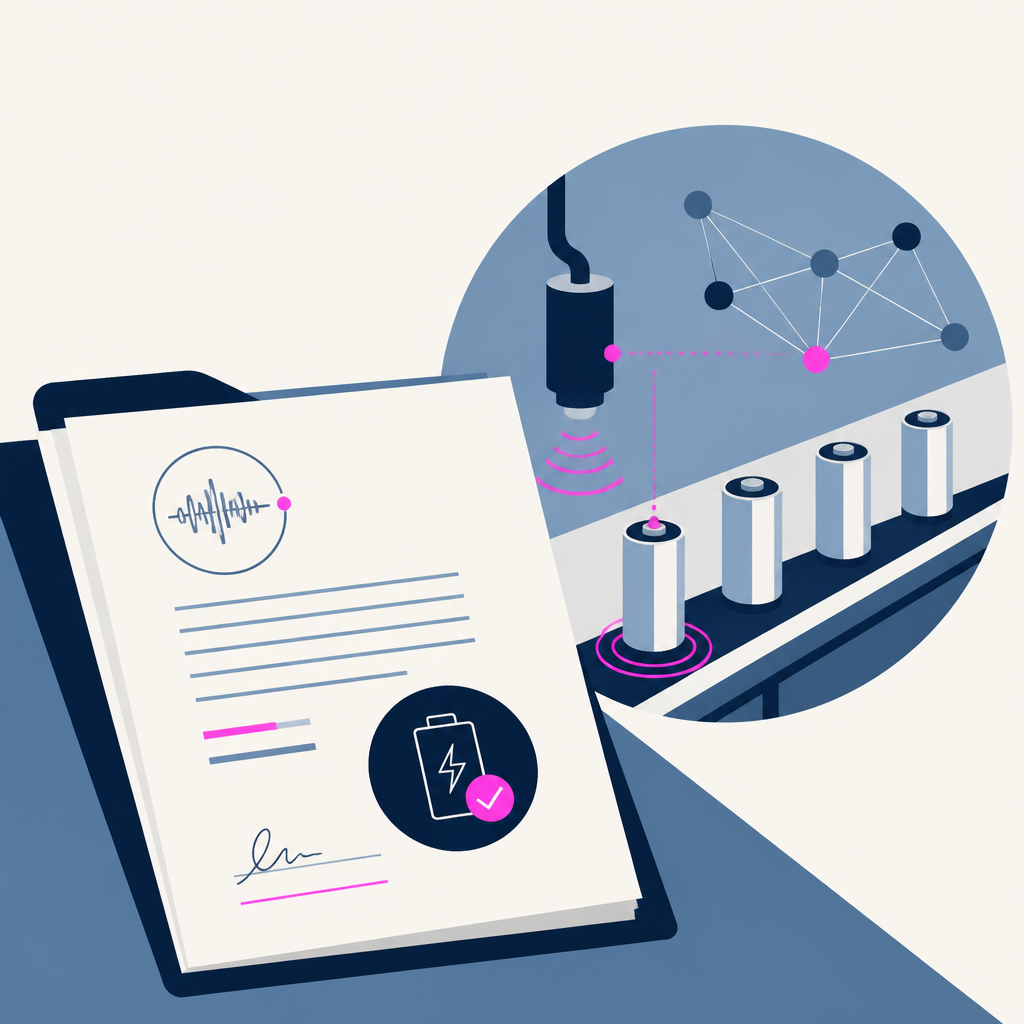
AcouBatt raised £1.1 million in pre-seed funding to develop battery diagnostics that use acoustic emission sensing and AI for real-time monitoring during lithium-ion cell manufacturing. The funding round will help it expand its technical team, further develop its AI models, and progress industrial pilots, with sensors currently deployed at the UK Battery Industrialisation Centre. The company plans to roll out commercial-scale diagnostic products to the wider industry next year, aiming to cut formation time by up to 30% and detect faults earlier to reduce waste and rejection rates.
2BA.AI is launching an EU-hosted AI infrastructure service for developers that they can install with one command. It offers 4,500 requests per rolling 5-hour window for a flat €20/month. Developers can use an OpenAI-compatible setup with no token counting or surprise bills and with zero logging.
The University of Manchester trained NVIDIA Earth-2 generative downscaling models to forecast and simulate UK air pollution fields using chemistry-derived training data on Isambard-AI.
Complir, a Copenhagen startup, closed an oversubscribed $11 million seed round led by General Catalyst to advance its AI retail compliance platform. The deal followed a $2 million pre-seed closed in December 2025 and brings Complir’s total funding to about $13 million in one year. The funding increases the team to 18 employees and will be used 70% for go-to-market and 30% for engineering, with plans to open a New York office within six months.
BioInnovation Institute (BII) provided €9.52 million in convertible loans to 17 early-stage, research-based startups through its Venture Programme. Each startup received a €560,000 convertible loan, with access to BII’s innovation platform and support network. BII plans to scale its backing in Denmark and Europe, including increasing the number of startups it supports annually from around 20 to 30, with potential additional companies via partnerships.
Together published a five-stage playbook for migrating from closed-source models to open source models, covering discover, evaluate, adapt, decide, and production rollout. It says customer transitions can take weeks to months rather than months to years, and reports cases with up to 70% cost reduction. The process shifts risk and integration work into managed tooling, uses replayed traffic and modular evals, and moves to canary deployments starting with 10% of traffic.
Every AI story that matters,
in your inbox by 8am.
TLDRocket reads all relevant sources, removes duplicate coverage, and summarises the
day in two minutes. Follow companies and topics for alerts, or get the
briefing in Slack. Free, no spam, unsubscribe anytime.
Reading TLDRocket needs no cookies, and the readership counts we rely on come from
our own cookieless analytics. Google Analytics is the exception: it sets cookies and
reports to Google, so it stays switched off until you allow it. You can change your
mind any time from “Cookie settings” in the footer.
Strictly necessary
Session security and form protection (tldrocket-session,
XSRF-TOKEN, 2 hours). The site cannot work without them,
so they need no consent.
Always on
Google Analytics 4 (_ga,
_ga_<id>, up to 2 years). Measures which
stories and sections readers use. Google acts as a third-party processor and may
store the data outside the EU. No advertising, no profiling, no data sold.