
AcouBatt raises £1.1M to improve battery manufacturing safety and reliability
Tech.eu Tamara Djurickovic
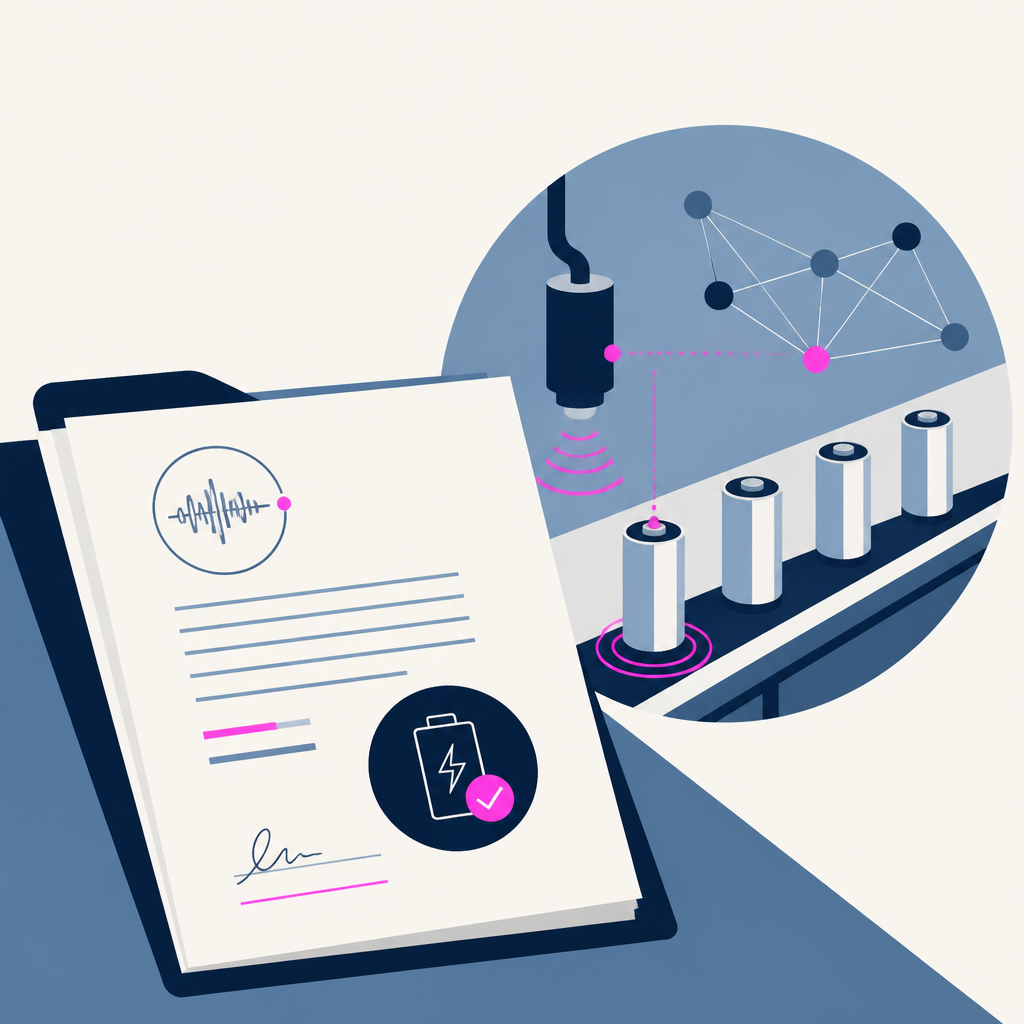
AcouBatt raised £1.1M to spot battery defects while cells are still being made. Its sensors and AI could cut formation time by up to 30% and catch bad batches earlier.
Based on reporting by Tech.eu, Tamara Djurickovic — read the original for the full story.
Summary, retelling and take written by AI under human oversight; images are AI-generated illustrations. How we work · Report an error
London startup AcouBatt has raised £1.1 million in pre-seed funding to push its battery diagnostics technology into industrial pilots with manufacturers. Creator Fund led the round, with Ada Ventures also backing it.
The company was spun out of UCL Ventures and was founded in 2025 by Dr Arthur Fordham and Chris Haoxin Xu. Its pitch is simple enough, even if the engineering isn’t: use acoustic emission sensing and AI to listen to what is happening inside battery cells during manufacturing, then turn that into useful signals for factory teams.
That focus matters most in lithium-ion production, especially during formation, when manufacturers have limited real-time visibility into cells. AcouBatt says that blind spot can create bottlenecks, high rejection rates and missed defects. Its system combines acoustic and electrochemical data to judge when key formation steps are done, which the company says could reduce formation time by as much as 30 per cent while flagging faults before an affected batch is finished.
The technology comes out of Fordham’s PhD research at University College London’s Electrochemical Innovation Lab, with support from the Faraday Institution through the SafeBatt project. AcouBatt is already testing sensors at the UK Battery Industrialisation Centre, where it is benchmarking the system ahead of a planned commercial rollout next year.
The company is also looking beyond manufacturing. It wants to apply the same approach to battery energy storage systems, and possibly electric vehicles later on, so operators can spot failing or underperforming cells before they cause safety incidents or downtime. The new money will go into hiring, more AI development and the industrial pilot programme.
My take — AI-written commentary, not fact-checked reporting
Battery factories have spent years pretending visibility is optional, which is a charming way to end up with waste and scrap. AcouBatt is betting that listening to cells beats guessing at them, and that feels like the right kind of boring: practical, measurable, and not wrapped in AI theatre.
Read more about this at: Tech.eu
Related stories
 AcademyAI raises £1.65M to close the workplace AI skills gap
Tech.eu · 23 hours ago ·
33
Munich’s Furo lands $4M for to optimise commercial battery storage with AI
Tech Funding News · 5 days ago ·
45
AcademyAI raises £1.65M to close the workplace AI skills gap
Tech.eu · 23 hours ago ·
33
Munich’s Furo lands $4M for to optimise commercial battery storage with AI
Tech Funding News · 5 days ago ·
45