
University of Manchester Uses NVIDIA Earth-2 to Forecast Air Pollution Across the UK
NVIDIA Blog Isha Salian
Manchester researchers used NVIDIA Earth-2 to build a UK air-pollution model. It ran in two days on Isambard-AI, then on a desktop box; that could make local forecasts far easier.
Based on reporting by NVIDIA Blog, Isha Salian — read the original for the full story.
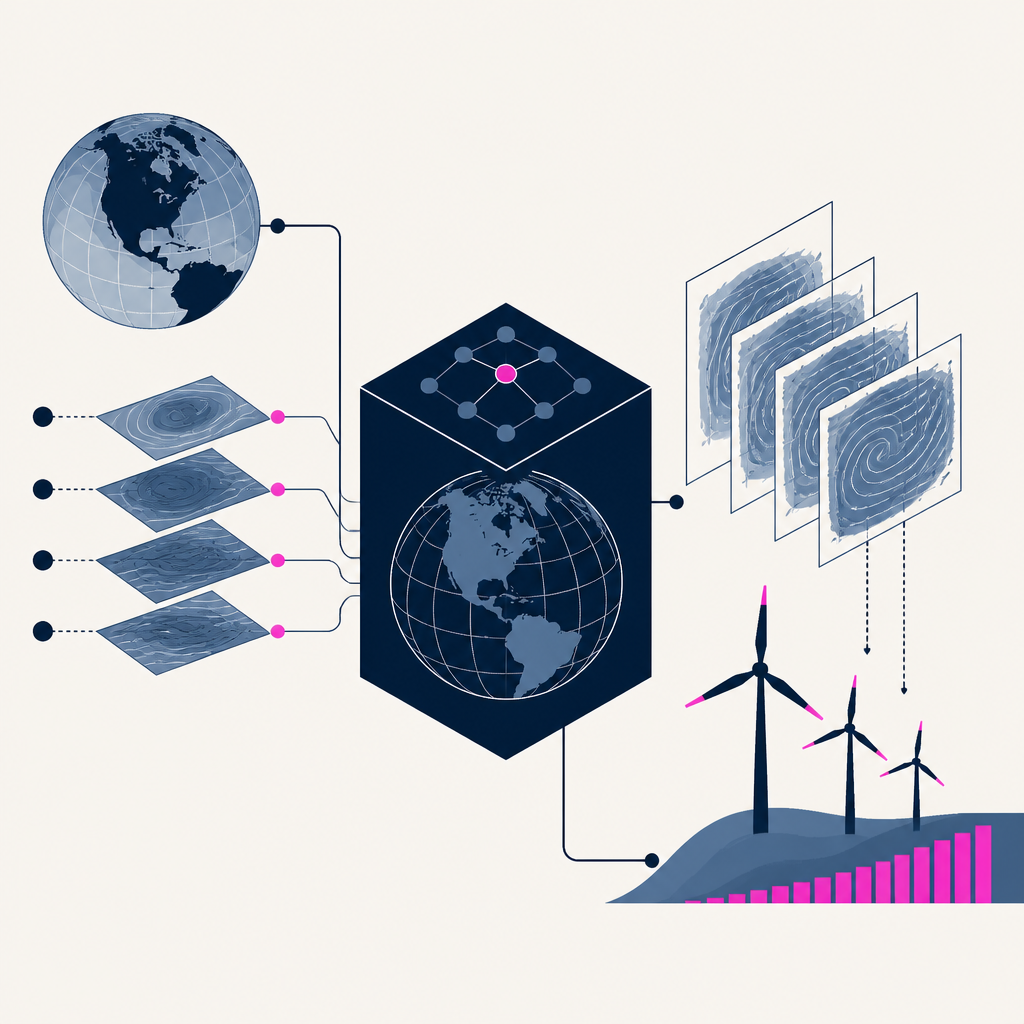
Summary, retelling and take written by AI under human oversight; images are AI-generated illustrations. How we work · Report an error
Air pollution isn’t just a gloomy backdrop. In the U.K. it was tied to an estimated 30,000 deaths last year, and the usual chemistry-heavy models for predicting it are slow and expensive to run. That makes detail hard, and frequent updates harder still.
At the University of Manchester, professor David Topping looked at NVIDIA’s Earth-2 tools and saw a shortcut. Weather researchers had already used the open models to speed up climate work, so he asked whether the same generative approach could be turned toward pollution fields. Working with NVIDIA’s Earth-2 team, the group built training data from existing chemistry-climate simulations and used it to train Earth-2 CorrDiff on Isambard-AI in Bristol.
The result came together fast. The model worked on the first attempt, and the retraining job took two days on a single eight-GPU node of Isambard-AI, the U.K.’s national AI supercomputer. The team says the output is a U.K.-wide pollution model at 2-3 square kilometer resolution, based on a year of pollution data simulated at hourly intervals. Simon McIntosh-Smith of the Bristol Centre for Supercomputing said the hardware was used efficiently, with relatively low GPU hours.
And the project didn’t stop at static maps. The team added Earth-2 StormCast, which lets them make time-dependent forecasts that use air-quality observations directly, and demonstrated the workflow on NVIDIA’s DGX Spark desktop system. Topping now has one in his office retraining models, which turns a national-supercomputer workflow into something a researcher can keep on a desk.
The uses are broad but specific. Topping talks about testing policy changes, warning healthcare services when asthma patients may face bad air, and eventually folding in edge AI data for real-time decisions during events like wildfires. The team also plans to open source the training data and workflows, so other countries and cities can build their own versions instead of waiting for a central platform to do it for them.
My take — AI-written commentary, not fact-checked reporting
This is the rare AI story that actually sounds useful: not a chatbot with a costume, but a way to make expensive science less expensive. Open workflows matter here, because pollution doesn’t politely stop at national borders just to match a vendor pitch deck. If the model really can move from supercomputer to desktop, the bigger surprise may be how much climate and health work has been gated by compute all along.
Read more about this at: NVIDIA Blog
Related stories
 Building Custom Batched Ensemble Weather Forecasting with NVIDIA Earth2Studio
MarkTechPost · 2 weeks ago ·
32
From pixels to planning: Earth AI for nature restoration
Google Research · 3 months ago ·
51
Planetary prediction engine: Automating global models via Earth AI
Google Research · 3 weeks ago ·
4
Building Custom Batched Ensemble Weather Forecasting with NVIDIA Earth2Studio
MarkTechPost · 2 weeks ago ·
32
From pixels to planning: Earth AI for nature restoration
Google Research · 3 months ago ·
51
Planetary prediction engine: Automating global models via Earth AI
Google Research · 3 weeks ago ·
4