
Data centers can be good citizens. It’s why we’re partnering with Google and Nvidia to create the AI Energy Management Alliance
Fortune Varun Sivaram ● Covered by 6 sources
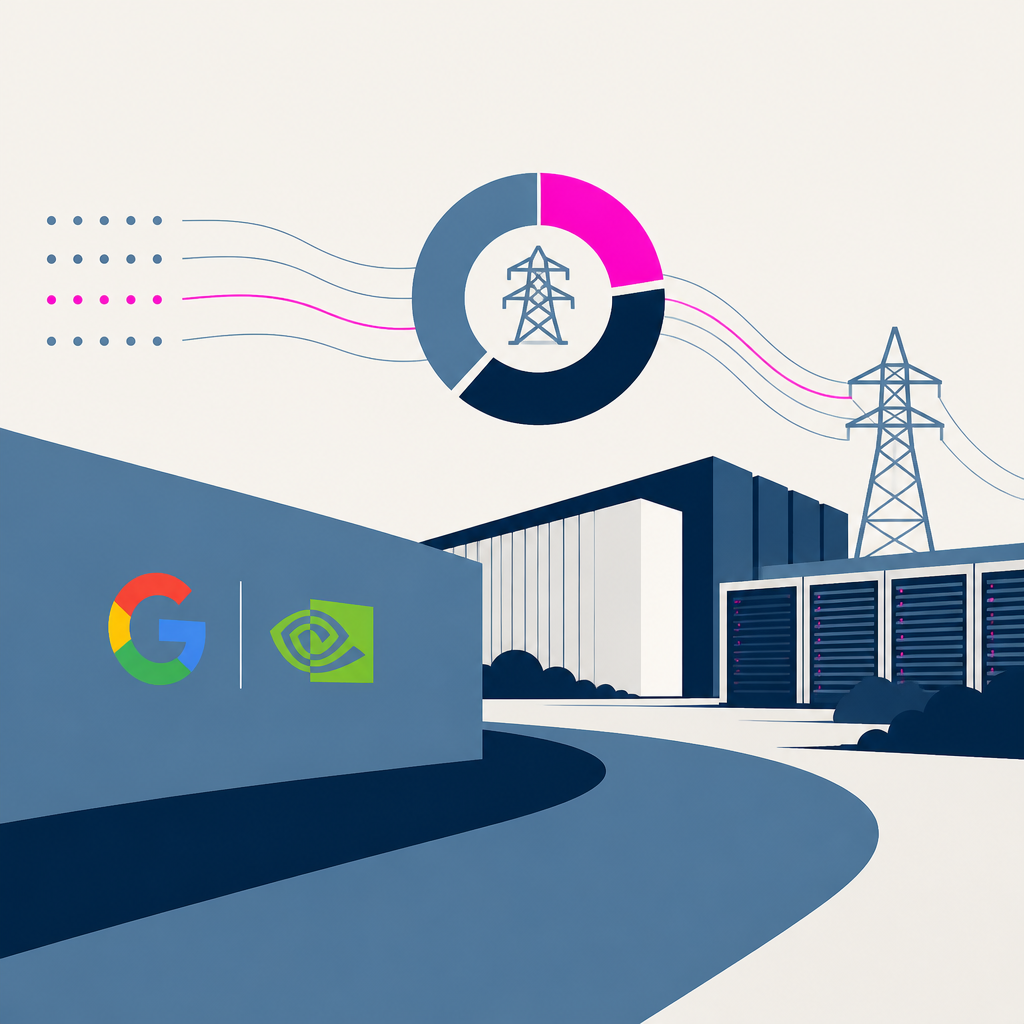
AI data centers may start acting like grid helpers instead of giant drains. Google, Nvidia and 18 others just launched a group to push that model faster.
Based on reporting by Fortune, Varun Sivaram — read the original for the full story.
Summary, retelling and take written by AI under human oversight; images are AI-generated illustrations. How we work · Report an error
A new push from inside the AI world is trying to change a basic rule of the data center business: if a facility can ease up when the grid is under stress, it should get to connect faster. Emerald AI, the company behind the effort, has joined with Google and NVIDIA to launch the AI Energy Management Alliance, or AEMA, with 18 founding members drawn from the AI and energy sectors.
The pitch is blunt. Utilities are stuck serving data centers that want power right now, on grids built to keep everyone covered at the worst possible moment. That forces expensive upgrades, and the bill eventually lands on local customers. Varun Sivaram, Emerald AI’s founder, argues the better bargain is flexibility: let AI facilities shift, slow, or pause some work during the few hours when demand spikes, and reward them with quicker access to the grid.
The alliance says that could help on several fronts at once. It could ease pressure on electricity bills, since the grid would not need as many peak-time upgrades. It could also help the U.S. move faster on AI buildout, since a new data center can now wait a decade or more for a connection. And if more of the existing grid can be used more efficiently, the alliance says there is room for as much as 100GW of flexible AI data centers on the current system.
There is already some evidence this can work. Google says it runs a nationwide demand-response portfolio of roughly a gigawatt. Emerald AI and NVIDIA say they have completed six global demonstrations of flexible data centers. Later this year, NVIDIA, Digital Realty and Emerald AI plan to switch on what they call the world’s first power-flexible AI factory in Virginia, at nearly 100 megawatts.
The timing matters because regulators are already moving. In June, the Federal Energy Regulatory Commission told the six regional grid operators it oversees to make room for large customers that will limit their draw in exchange for faster hookups. Texas is finalizing similar rules, and Silicon Valley Power has started the nation’s first flexible-load interconnection program. AEMA wants governors, regulators and federal policymakers to make that trade the default: more flexible load, faster connections, and a grid that doesn’t have to pretend every server is a space heater running flat out all day.
My take — AI-written commentary, not fact-checked reporting
This is the first sensible AI story in a while: make the machines behave like adults and the grid stops acting like a hostage. The catch is obvious enough that even Silicon Valley should spot it — flexibility only counts if someone actually enforces it, not just applauds it at a conference. Still, this beats the usual model of asking the public to bankroll ever larger power upgrades so chatbots can sprint.
Read more about this at: Fortune