OpenAI president Greg Brockman argued on the a16z show that developers are overbuilding software “retooling” for AI agents and that agents should instead be able to use a computer directly. He referenced a plan from an offsite meeting in November 2015 and said a reinforcement-learning setup could use screen pixels plus keyboard and mouse as the environment. The shift would reduce reliance on purpose-built integrations like MCP servers, CLIs, and plugins, though connector infrastructure is still being built by companies like AWS and still remains important in the near term.
Google launched Gemini 3.8 Live and Gemini 3.8 Live Extended Thinking to cut latency in voice AI by enabling near-real-time reasoning and simultaneous speech-and-thought processing while running background tool calls. Gemini 3.8 Live Extended Thinking scored 82.6 on the Artificial Analysis Speech to Speech Quality Index. Developers and enterprises can now use the models via the Gemini API, Google AI Studio, and Gemini Enterprise private preview, with Gemini 3.8 Live priced at $0.005 per minute for audio inputs and $0.018 per minute for outputs, and the Extended Thinking variant adding separate charges for reasoning tokens and extra inputs like video and documents.
Residents in multiple U.S. cities, especially in industrially scarred communities like Philadelphia, are pushing back against new AI data center construction over environmental, energy, health, and surveillance concerns.
BloombergNEF projects that by 2035 U.S. data centers will consume more natural gas than Germany and Japan combined, nearly doubling its prior estimate from nine months earlier.
Philadelphia and other cities are responding with steps like executive orders and moratoriums to pause or limit permits while officials gather more information about local impacts.
Elon Musk said he is living in an Airstream trailer in Memphis to oversee xAI’s expansion. The trailer is parked near xAI’s Colossus project, which began being built in 2024. This places Musk physically at Memphis as xAI expands its supercomputer infrastructure, including a fourth data center planned as Minihard.
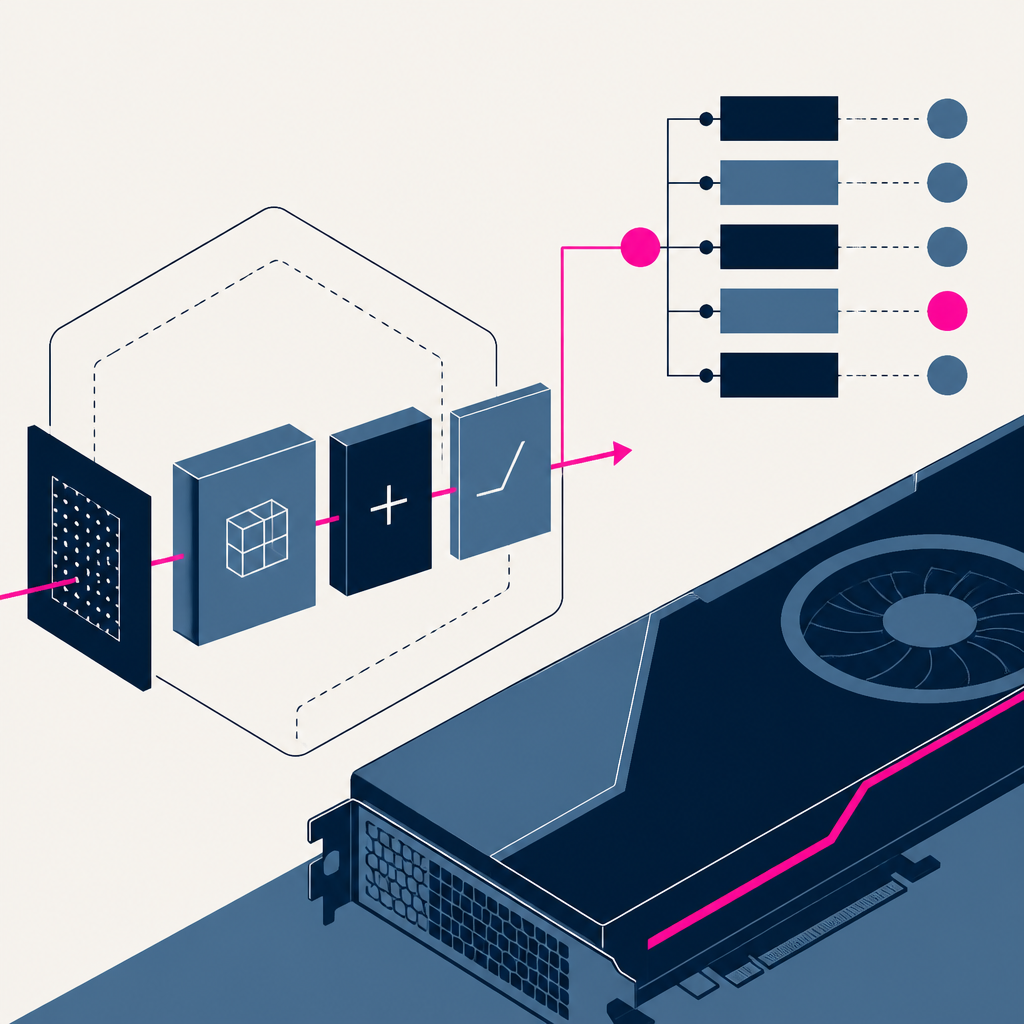
The article presents a tutorial that builds cuDNN Frontend graph API examples that fuse convolution+bias+ReLU, then expands to autotuning across multiple engine configurations and plan handling. It validates numerical correctness by asserting the maximum error stays below 5e-2 versus a PyTorch reference. As a result, it shows how to benchmark fused execution and how shipping a preselected autotuned plan (or a serialized one) can outperform relying on cuDNN’s default engine pick for fixed “hot” shapes.
Voters in the New York Times and Siena University poll largely opposed constructing data centers intended to power AI technology. 61% of 1,503 likely voters in early September said they were opposed, versus 14% who strongly support. Politicians are responding to this public resistance, with AI- and data-center-related plans likely facing more pushback.
U.S. data centers are projected to drive natural gas consumption higher than Germany and Japan combined by 2035, according to BloombergNEF. The forecast estimates about 18 billion cubic feet per day of gas use. As grid-connected demand and onsite power plants expand, natural gas prices and greenhouse gas emissions are expected to rise.
Emerald AI’s Conductor platform on an NVIDIA GPU data center automatically adjusted flexible workloads in response to Silicon Valley Power grid signals, reducing power draw while keeping high-priority AI jobs running. Power dropped from 4 megawatts to 3 megawatts within a minute, and the utility sent more than 200 demand signals that worked every time. NVIDIA’s DSX platform and related tooling are positioned to let AI factories increase token throughput and GPU capacity within fixed megawatt limits using dynamic power allocation and demand-response automation.
NVIDIA presented AI infrastructure updates at the AI Infra Summit, covering partnerships and performance results for its AI factory stack focused on token efficiency. Lambda reported running 19 nodes within a power budget typically used for 16 nodes, raising cluster-wide token throughput from about 4 million to 5 million tokens per second and improving performance per watt by 23%. The focus shifts from peak performance to validated agentic tokens per megawatt, with platform features meant to optimize power and improve efficiency at large scale.
Microsoft will hold a Windows and Surface event in San Francisco to outline the future of Windows and Surface devices, featuring a discussion about how local AI will shape the next PC chapter. The event is scheduled for October 7th. The focus shifts toward local AI on PCs, and potential RTX Spark-related details (including Surface Laptop Ultra pricing) may be discussed.
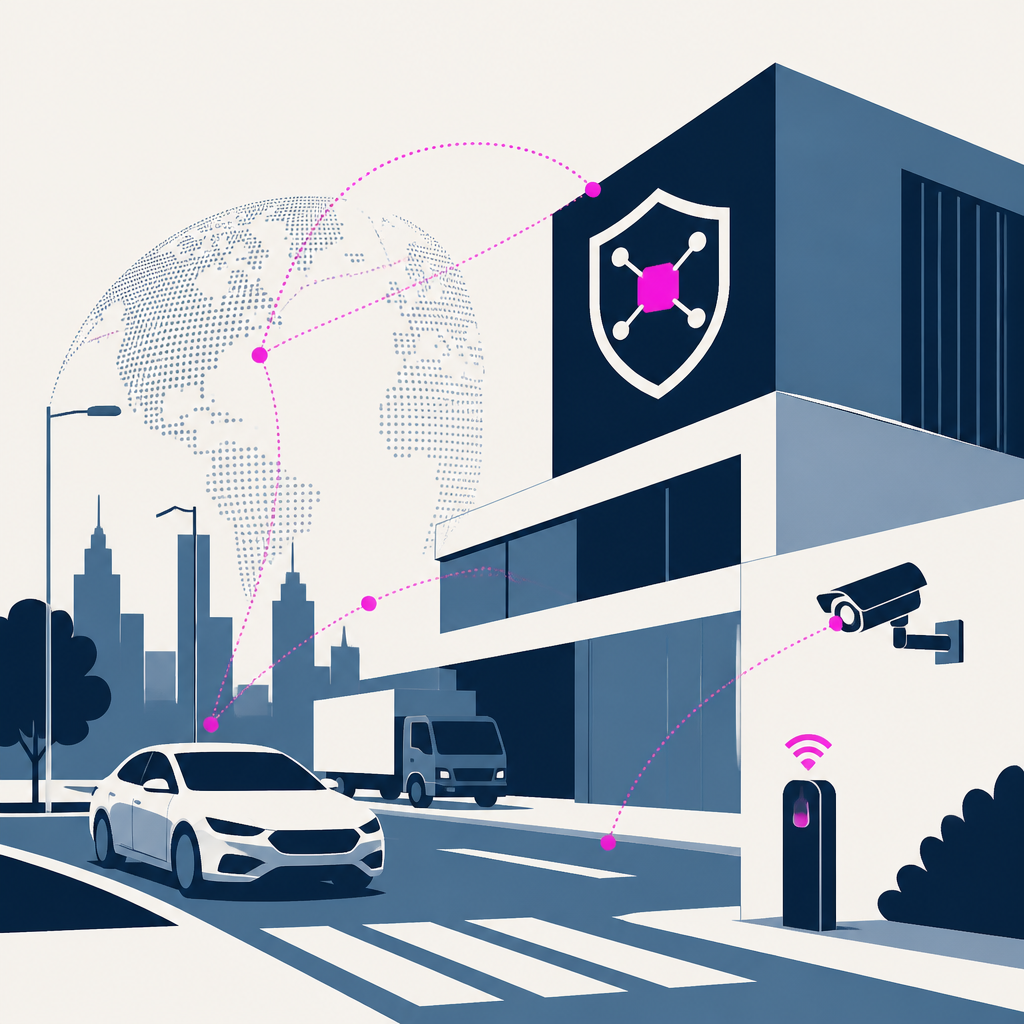
Exein raised new capital to expand its cybersecurity work protecting AI-enabled physical systems. The funding totals $270 million, valuing the company at $1.7 billion. Exein will use the round to scale across the US and Asia-Pacific, expand hiring and a Bay Area office, and progress toward foundation models and autonomous security agents.
Amazon Bedrock prompt caching can store partially processed input context and reuse it on later requests, reducing how often the model reprocesses the same tokens. It cuts billed input token costs for cache reads by up to 90% when the request hits an existing cache entry. This changes deployments by shifting static prompt sections (like long documents or system/tool definitions) into cached prefixes to lower time-to-first-token and input token charges without changing the model or prompt quality.
Amazon SageMaker AI introduced instance preference lists for Training Jobs and Processing Jobs so a single job submission can automatically select the first available GPU instance type from an ordered list. The ordered list supports up to 5 instance types and launches on the first one with available capacity. Jobs no longer require manual retries or monitoring scripts and can automatically fall back to on-demand (including optional Flexible Training Plans priority), reducing time spent waiting to start.
IBM Quantum Platform and Qiskit are presented as supporting a continuous path from quantum error mitigation to quantum error correction, including demonstrations of hybrid approaches that aim toward fault-tolerant quantum computing. A recent result encoded 64 logical qubits into 76 physical qubits using 314 T gates and reported about a 10x effective improvement in gate error rates after syndrome post-selection for a 2,336-CZ-gate circuit. The stack is positioned to let researchers experiment across mitigation, detection, and correction with more control (including pulse-level and directed execution) so tradeoffs for larger circuits can be explored before full fault tolerance is available.
TechCrunch is hosting a Real World AI Stage session at TechCrunch Disrupt 2026 on scaling a prototype into production across industries including space communications, autonomous systems, and AI infrastructure. The event runs October 13–15 in San Francisco and includes 10,000+ founders, investors, and operators with 250+ sessions. The focus shifts from proving a concept in the lab to addressing manufacturing, infrastructure, reliability, and day-to-day operations required for deployment.
Keewano launched KeewanoDB, an event-oriented database built to provide AI agents real-time context for analytics and decision-making, and the company announced its funding round. Keewano said it can query about 250 million events in less than half a second. The launch adds agent-focused database and analytics layers priced by active entities, plus an acceleration engine intended to reduce token use for agent context retrieval.
Endra launched Power Studio, an agentic electrical engineering platform, and acquired Planlabs to expand into mechanical engineering. Power Studio is claimed to complete electrical design for a 500,000-square-foot commercial building in less than a day versus around two months traditionally. The workflow shifts from multiple disconnected tools to an AI-agent system that generates calculations, simulations, and connected documentation while engineers review and sign off at each stage.
Salesforce introduced Koa, its first in-house reasoning model, built from Nvidia’s open-weight Nemotron and post-trained with synthetic sales, marketing, and customer-support scenarios. Nvidia’s Nemotron 3 Ultra is listed at about 550 billion parameters (55 billion active) and Koa is positioned as matching or exceeding Salesforce’s CRM benchmarks with three times fewer errors. Salesforce is shifting Agentforce customers toward selecting Koa as a managed LLM and standard model, while also rolling Nemotron 3 Nano into Agentforce for additional on-prem or private-cloud deployment options.
Anthropic engineers scaled their deterministic test impact analysis service after agent-driven CI growth caused the test-result listener to fall behind and make the selector use stale data. CI jobs rose 25x over six months, forcing multiple emergency patches that bought 70 days, then 29 days, then under 1 day. They redesigned the system to use an in-memory database with stateless, horizontally scalable listener workers and a separate consumer to roll up per-test history, stabilizing it after a three-week rebuild.
Euclyd closed a Series A round led by Samsung to develop AI inference chips aimed at competing with Nvidia. The startup raised more than €200 million, including support from Samsung and ex-ASML chairman Peter Wennink. The funding will expand its engineering team, accelerate its silicon and systems roadmap, and target starting supplies to two customers in 2027.
AI hyperscalers’ spending on AI data centers faces break-even pressure because the earnings growth needed to justify the buildout depends on productivity gains materializing. By 2030, the analysis estimates AI companies must raise their own productivity by a factor of 2.7 to break even, given the cost of capital and a 15% return. If that acceleration fails, the article warns profits may not cover debt and free-cash-flow, increasing the risk of stranded infrastructure and broader economic drag.
Ramp launched in the UK and added ElevenLabs as a client, positioning its AI token spend platform to attract more UK startups. Ramp said AI spending across its customers has grown about 21 times since June 2025. The company is expanding its spend management offerings for UK businesses, including breaking down token costs by model and team and partnering with Visa to support corporate cards.
Mark Carney held a Canada Investment Summit in Toronto to persuade global investors to move capital into Canada despite U.S. tariff pressure and uncertainty. The summit said major outcomes are likely to appear over the next 12 to 18 months. Canada will focus investors on expanding overseas exports and greenlighting large deals by prioritizing tax rulings for investments of at least $1 billion, alongside scaling data-center capacity tied to AI and other sectors.
Temporal raised a $550M Series E at a $12.55B valuation led by Lightspeed and backed by multiple new and returning investors. The round values the company at $12.55 billion, up from a $5B valuation in February’s Series D. Temporal will use the funding to expand platform R&D and go-to-market teams, strengthening durable execution infrastructure meant to keep AI agents from restarting after failures.
Children’s Hospital of Philadelphia built an open-source AI cardiac modeling workflow that turns pediatric heart imaging into patient-specific 3D models for congenital heart disease planning. It cuts model creation from about four hours of researcher work to seconds. The hospital is now expanding from routine pre-op modeling to near-real-time physics simulations using NVIDIA Warp and Newton within broader clinical workflows across disciplines.
Bitpanda appointed co-founder Christian Trummer as Co-CEO as Lukas Enzersdorfer-Konrad steps down in the first quarter of 2027 to join Erste Group, with a structured succession process already under way. Enzersdorfer-Konrad previously became Co-CEO in August 2025 and has run the company on his own since last November. Trummer will shift to operating leadership focused on product quality while Bitpanda also overhauled its executive committee with new roles across growth, compliance/risk/AFC, and finance, as well as multiple other top departures and appointments.
OriginalVoices raised a £1 million pre-seed round to build a platform that lets AI systems query human-backed digital twins for real opinions and preferences. The funding round is led by Iona Star and totals £1M. It plans to expand its team, grow its tens of thousands–profile digital-twin network, develop real-time data technology, and push more customers and revenue, especially in the US.
Exein, a Rome-based cybersecurity company, announced a Series C funding round and expanded its revolving credit facility. The round totals $270 million, valuing the company at $1.7 billion. Exein says this capital and added lenders will support expansion in the United States and Asia-Pacific, hiring, a Bay Area office, and moving on its agentic security and foundation model plans.
OpenController by lyzr launches a unified control plane to govern AI agents across clouds, SaaS tools, Kubernetes, and devices. It launches today. It provides discovery, safe deployment into a customer’s own cluster under their keys, plus evaluation, governance, real-time monitoring, and usage signals driving actions.
Boxd raised $2 million in a pre-seed round to build cloud infrastructure for developers and AI coding agents. The platform can live-fork machine copies, including memory and active connections, in under 100 milliseconds. It will expand Boxd’s team and continue developing its custom virtualisation engine to scale persistent, hardware-isolated environments for running multiple autonomous agents in parallel.
Exein announced a $270 million funding round at a $1.7 billion valuation, with an AI-powered physical-device runtime security platform used across more than two billion connected devices. The company said its H1 2026 ARR was up 4x year on year, and it also described seeing about 5,000 non-repetitive attacks per week. Exein will use the money to expand globally and bring Photon to market by the end of 2026, while training a Physical AI security foundation model expected in Q1 2027.
Donald Trump urged Americans not to oppose AI data centers, arguing voters are wrong and warning against “kill the Golden Goose” resistance while backing his administration’s approach to AI. A poll by the Annenberg Public Policy Center found 61% of Americans oppose a new data center in their community. The political fallout shifts further against Trump’s party as public opposition remains high and investors react to AI regulation and possible model “pacing,” with chipmakers down and some security and Big Tech stocks up.
Appwrite launched version 2.0, its second major generation of the platform, as its 6th launch overall. It replaces the platform engine underneath and rebuilds the Console on top. It adds support for storing relational and schemaless data plus vector data, includes native PostgreSQL and MySQL engines, S3-addressable storage, a standards-compliant identity provider, and a network layer in front of everything.
Jensen Huang took a live call from Trump while an audience focused on the phone he used for it.
The article provides no numbers or dates.
As a result, attention shifted from the call itself to the device Huang was holding rather than to any specific AI product.
Every AI story that matters,
in your inbox by 8am.
TLDRocket reads all relevant sources, removes duplicate coverage, and summarises the
day in two minutes. Follow companies and topics for alerts, or get the
briefing in Slack. Free, no spam, unsubscribe anytime.
Reading TLDRocket needs no cookies, and the readership counts we rely on come from
our own cookieless analytics. Google Analytics is the exception: it sets cookies and
reports to Google, so it stays switched off until you allow it. You can change your
mind any time from “Cookie settings” in the footer.
Strictly necessary
Session security and form protection (tldrocket-session,
XSRF-TOKEN, 2 hours). The site cannot work without them,
so they need no consent.
Always on
Google Analytics 4 (_ga,
_ga_<id>, up to 2 years). Measures which
stories and sections readers use. Google acts as a third-party processor and may
store the data outside the EU. No advertising, no profiling, no data sold.