Crusoe raised $3.9 billion in a Series F to support large data center projects and smaller, truck-transportable modular “AI factories” it calls Spark. The round increases Crusoe’s valuation to $30.9 billion. It plans to finance existing sites used for OpenAI compute and expand modular deployments to reduce construction labor needs and local community backlash.
Freddo the robot was trained in a virtual simulation to walk, recognize a bottle, and grasp it in just minutes and then ran the resulting policy on its hardware.
Peter Oppenheimer updated his earnings-bubble warning for technology stocks with a new Goldman note arguing that AI infrastructure spending and government borrowing are competing for capital and raising the cost of capital. He cites U.S. convertible bond issuance at $135 billion year-to-date, with AI-related borrowers making up 44% of the total. The update strengthens his case with capex-to-cash-flow data, record credit issuance, and a worsened near-term outlook for stocks.
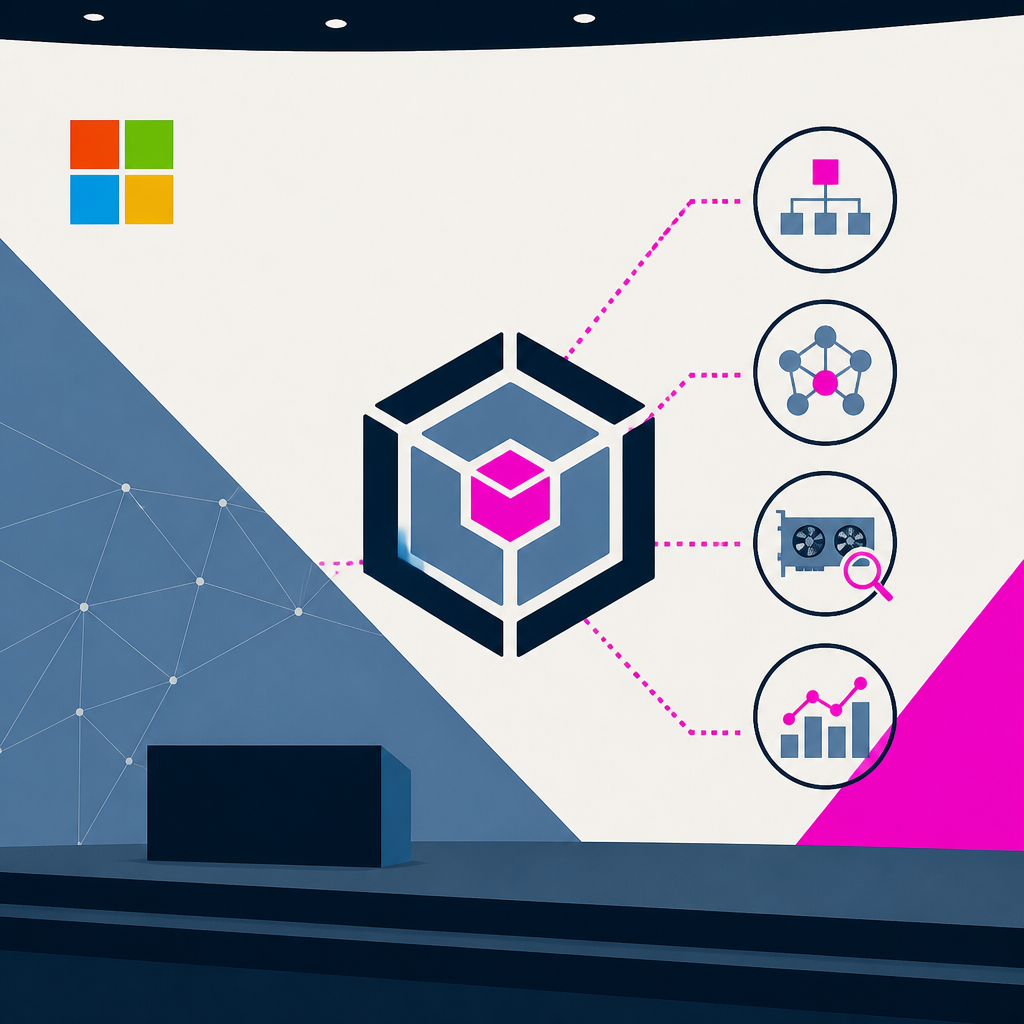
Microsoft open-sourced TauGrid, a Kubernetes-native platform that bundles queueing, Ray orchestration, GPU health monitoring, and observability for AI workloads into a single Helm install. It was released on August 28, 2026, under the MIT license with version 0.4.2 available via a Helm chart from Microsoft Container Registry. Platform teams now deploy AI job submission and execution through one install and use Tau evidence records to make runs more reproducible and auditable, with telemetry disabled by default but Azure Data Explorer observability still Azure-specific.
The United Nations is partnering with Google to replace its UNData portal with UN System Data Commons for easier access to UN agency statistics by AI systems via natural-language search and MCP support. UNICEF reported that an evaluation of six large language models across more than 133,000 answers achieved an average accuracy of 21.2%. The rollout is expected to move statistical datasets onto the platform, with 26 UN entities committed and a goal to have 80% of datasets transferred by 2027.
Forma turns a prompt or image into an editable hardware project that includes parts, wiring, mechanical layouts, cost estimates, and assembly instructions.
It launches today as an open-source, local-first workspace that connects supported AI agents to shared project data with rule-based electrical checks and CAD tools.
As a result, users can generate concept renders, inspect designs, and revise the hardware layout as the idea evolves.
Base Labs launched a safety infrastructure partnership with Hugging Face and Goodfire to build evaluation and monitoring for open-weight AI models. Hugging Face currently lists over 6,000 abliterated models, a practice tied to weakening model safeguards. The effort aims to publish methods and an open call so safety controls are built into how models are trained and deployed.
Zhang Yiming, the founder of ByteDance (TikTok/Douyin parent), overtook Gautam Adani to become the richest person in all of Asia as his wealth climbed amid AI investment. His net worth reached $105.5 billion. New AI valuations and ByteDance’s ability to train AI models on its social-media data helped drive the rapid increase in his fortune.
Amazon Bedrock Knowledge Bases guidance compared three customer-managed vector store backends for RAG—Amazon OpenSearch Service, Amazon Aurora PostgreSQL with pgvector, and Amazon S3 Vectors—showing how vector-store choice affects retrieval performance and cost across different use cases. Amazon S3 Vectors can reduce vector storage costs by up to 90 percent compared with traditional vector databases (and the post also notes OpenSearch Serverless NextGen collections planned for May 2026 are not yet compatible with the Bedrock Knowledge Bases Retrieve API). The benchmarks and tuning recommendations change how teams should select embeddings, indexing, and storage options so they can trade off latency, cost, and retrieval quality for their workloads.
Wood Mackenzie built APEX, a shared agentic platform based on Amazon Bedrock AgentCore, to move teams from quick agent prototypes to production deployments. About 88 percent of Wood Mackenzie’s AI proofs-of-concept never reached widescale deployment, and APEX adds a standardized runtime layer for orchestration, safety, observability, identity, and connectivity to prevent rebuilding duplicated infrastructure. As a result, teams can ship agents through their chosen frameworks and models while using centralized evaluation/evaluability, governance, and traceable operations instead of bespoke, per-team stacks.
MRH Trowe deployed a governed self-service setup for employees to use AI agents instead of letting teams experiment with unmanaged tools in a regulated environment.
Industrial safety AI pipelines using Amazon SageMaker AI and Amazon Rekognition added photo-realistic, automatically labeled synthetic images by inserting people into real equipment scenes to train person-detection models. Person detection mAP50 improved by up to 160 percent in their experiments, without manual annotation or hazardous photography sessions. The training approach changes by shifting from collecting and labeling rare high-risk images to generating labeled synthetic edge-case images via diffusion-based editing and Rekognition pseudo-labels.
HP discussed how sustainability data governance affects business decisions as AI expands the use of that information across departments and supply chains. In June, HP fed data from its compliance intelligence platform into its Workforce Experience Platform to provide IT leaders a dynamic carbon footprint for PC fleets. The company’s approach emphasizes traceability, standardized internal datasets, and controls so AI-assisted reporting and customer-facing products rely on trusted sustainability data.
Emerald AI formed the AI Energy Management Alliance with Google, Nvidia, and Anthropic to use its grid software to expand where data centers can connect. It targets demand response measures that could add 100 gigawatts of additional data center capacity to the grid. The coalition aims to make utilities treat temporary load reductions as part of data center development, reducing reliance on backup generators but not removing the need for new power generation entirely.
The Sequence Opinion (Issue 935) argues that Chinese frontier labs emphasize algorithmic efficiency while American labs pursue scaling via major infrastructure plans like OpenAI’s Stargate, and that this is often misframed as “cleverness vs purchasing power.” Issue 935 is the specific edition cited. The focus shifts to how each side decides whether to spend the next dollar on more computation or on making existing compute more productive, which can change model design and what training runs are worth attempting.
Finland’s tech ecosystem attracted around €1.3 billion across 53 funding deals in H1 2026, with investment concentrated in space and spread across multiple deeptech and early-stage sectors.
Space drew about €900 million (nearly 69% of the total), while the largest individual round was ICEYE’s €900 million across three rounds.
The result is a funding mix skewing toward established technology backers in space, alongside continued startup formation in areas like AI infrastructure, quantum computing, energy, semiconductors, and cleantech.
Apple is working on an AI server powered by its M-series Ultra chips. The server is expected to be released in 2029 with two or four M8 Ultra chips. As a result, Apple would be moving deeper into enterprise AI compute with a dedicated, chip-packed server offering.
Z.ai says its GLM-5.3-Flash model helped create the inference infrastructure it and its related system run on. Z.ai built that production inference service on a cluster of more than 100,000 Chinese-made AI accelerators and claims the model reached production readiness in less than two weeks. The company reports faster throughput (about 3x), improved hardware efficiency and per-token cost, and partial automation of engineering via an “Infra Agent,” while still saying true recursive self-improvement has not been reached.
South African civil rights and advocacy groups protested and sued over American companies expanding data centers, calling for a moratorium amid concerns about water and electricity use. The groups cite Equinix’s proposed 174-megawatt Cape Town facilities as using over 4.4 billion liters of water annually. The effort is pushing for investigations, pauses, and new rules requiring operators to disclose resource use and provide community benefits as AI compute demand grows.
FaceHeart introduced the CardioMirror smart mirror at the Taiwan Innotech Expo to compute vital signs from a ~40-second camera scan of a person’s face. It says heart-failure screening using that scan reached an AUC of 0.90 (accuracy 89.71%) in a study of 68 participants. The product expands FaceHeart’s rPPG offering (including an SDK and smartphone app) while its FDA clearances currently cover only pulse rate and respiratory rate, leaving heart-failure and NT-proBNP estimates awaiting regulatory approval.
AI News reports that Databricks switched about 3,500 engineers toward Astra for GPT-6 workloads while other items in the same roundup included Reality checks on tooling and model-cost claims. Databricks said the switch raised overall spend by +60% for their AI Engineers. The result is more selective Astra budgeting alongside continued debate over model transparency and external oversight.
Databench by Alkera launched as an open-source, multiplayer workspace for data science, analytics, and engineering that lets teams and agents collaborate live and run notebooks and agents across devices or GPU nodes. The release provides a free tier to try the product and also supports self-hosting via the GitHub repo. As a result, data teams can deploy or run the collaborative agentic workspace either through Alkera or on their own infrastructure.
Treble Technologies raised an $18M Series A-2 round to expand its physics-based acoustic simulation and synthetic data platform for testing audio-enabled products and AI systems. The round was led by Paladin Capital Group and brings Treble’s total funding to €36M. The added capital will be used to further develop the platform and broaden its use, including more physical-AI applications for voice and audio in consumer and enterprise devices.
Logibot, a Belgian software platform for logistics robots, raised €1.4M to add an AI layer that helps warehouses pick, train, steer, and monitor robots. The funding round was led by BeamBerlin and includes RDY Ventures, PMV, and BAN Business Angels. The company plans to use the money to roll out its first robots at client sites and assemble a second robot with sensors mounted in Zellik.
Creem raised €5 million to develop its billing and monetisation platform for AI-native startups and extend it with more revenue and growth tooling. The seed round raised €5M and brings Creem’s total funding to €7M. Creem will scale “Creem 2.0” over the next 12–18 months, including agent-operated billing, affiliate and analytics features, and expanded global compliance plus payouts across fiat and stablecoin rails.
Treble, an Iceland-based startup, raised $18 million to develop a voice simulation platform for testing and feedback across voice AI models and audio hardware. The funding is an extension of its Series A led by Paladin Capital Group. The company will expand its simulation testing into more physical AI areas like wearables, robotics, automotive, and drones.
Nearby Computing secured a €680,000 investment from SETT to scale its NearbyOne cloud-to-edge orchestration control plane. The funding is part of a €1.4 million financing operation. It will be used to grow the company and expand NearbyOne’s single-platform management, policy automation, and edge resilience across distributed environments and AI stacks.
Edgee launched Codex Compressor V2, a token-compression and routing gateway for coding agents using LLM providers like Anthropic and OpenAI. The launch claims Codex + Edgee reduced total session cost by 35.6% in benchmarks. This lowers input tokens by 49.5%, increases cache hit rate to 85.4% (from 76.1%), and automatically routes or falls back when models or plans fail.
Arcee AI raised funding to lift its valuation to over $1 billion as it builds open-weight AI models.
The new round values the company at more than $1 billion.
The money will be used to train a new generation of its Trinity models and expand work with the U.S. Department of Energy and national labs.
Snap executives used a Los Angeles event to update Specs smart glasses with new entertainment, enterprise, and connectivity features after the $2,200 launch drew backlash. The event introduced Specs Intelligence, an “anticipatory AI” system that Snap says works across Specs and user devices including iPhones and Macs. Snap is positioning Specs as an AI-assisted productivity and IT-deployment device rather than a consumer novelty, with support aimed at corporate workflows and Verizon-enabled cellular plans.
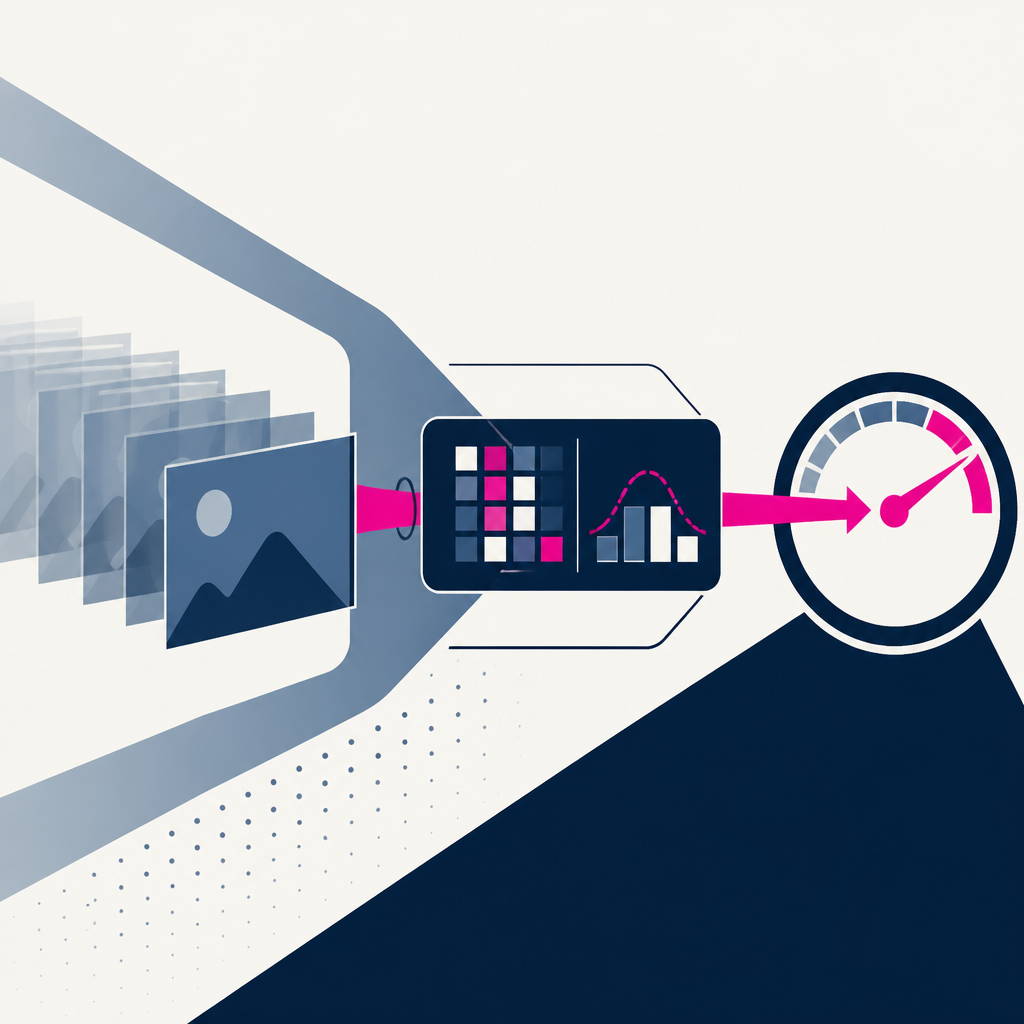
Nunchux AI released VC-Attention, a training-free low-bit attention kernel aimed at speeding up video Diffusion Transformers by improving both low-bit value handling and the softmax stage. The writeup says attention takes more than 64% of generation time on an RTX 5090. The company reports that V-Smooth and ExpCast-FP8 cut pipeline cost enough to reduce one V-Smooth call from 42.2 ms to 4.8 ms on a B200 and lower attention-time overhead overall.
Every AI story that matters,
in your inbox by 8am.
TLDRocket reads all relevant sources, removes duplicate coverage, and summarises the
day in two minutes. Follow companies and topics for alerts, or get the
briefing in Slack. Free, no spam, unsubscribe anytime.
Reading TLDRocket needs no cookies, and the readership counts we rely on come from
our own cookieless analytics. Google Analytics is the exception: it sets cookies and
reports to Google, so it stays switched off until you allow it. You can change your
mind any time from “Cookie settings” in the footer.
Strictly necessary
Session security and form protection (tldrocket-session,
XSRF-TOKEN, 2 hours). The site cannot work without them,
so they need no consent.
Always on
Google Analytics 4 (_ga,
_ga_<id>, up to 2 years). Measures which
stories and sections readers use. Google acts as a third-party processor and may
store the data outside the EU. No advertising, no profiling, no data sold.