
Microsoft Open-Sources TauGrid: A Kubernetes-Native Stack for GPU AI Workloads
MarkTechPost Asif Razzaq
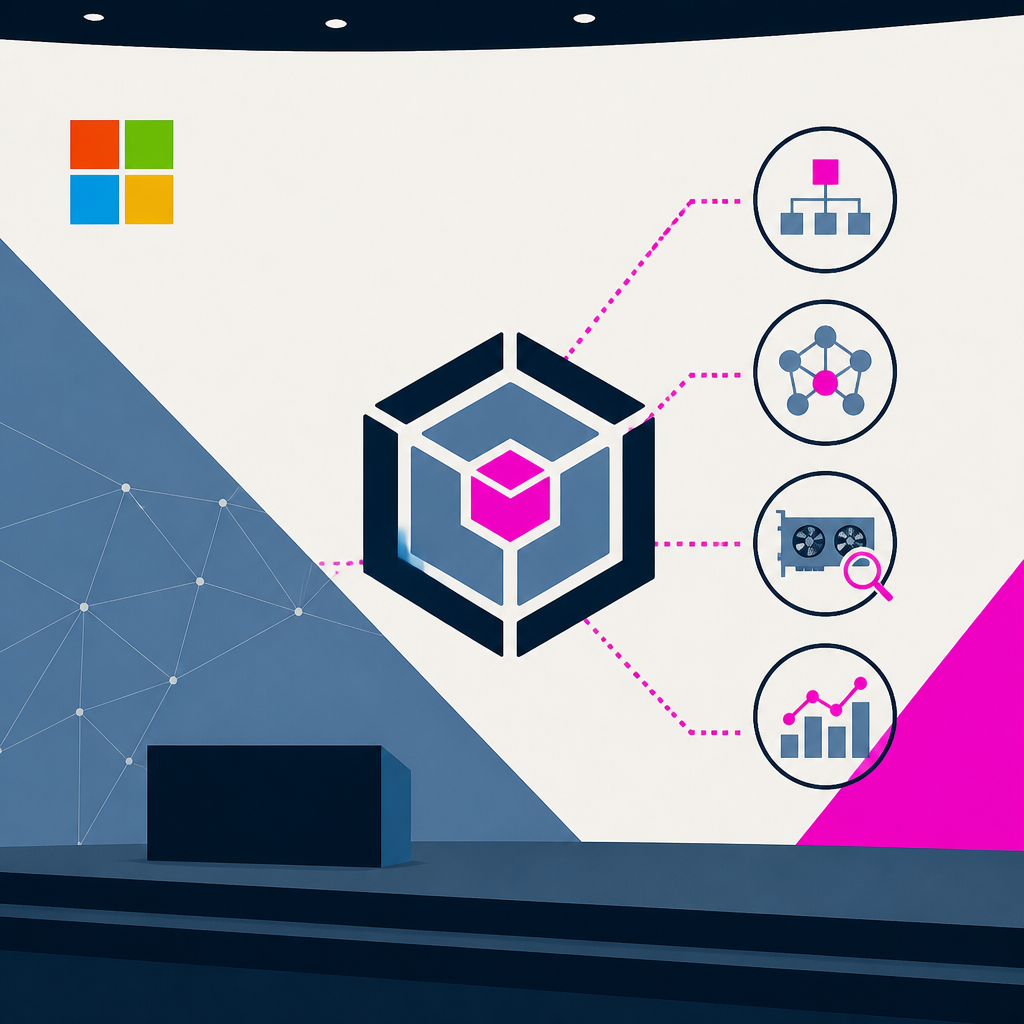
Microsoft open-sourced TauGrid, a Kubernetes stack for GPU AI jobs. It bundles queueing, Ray, GPU checks, and logs into one Helm install.
Based on reporting by MarkTechPost, Asif Razzaq — read the original for the full story.
Summary, retelling and take written by AI under human oversight; images are AI-generated illustrations. How we work · Report an error
Microsoft’s Azure Kubernetes Service team has open-sourced TauGrid, a self-hosted stack for running AI workloads on Kubernetes without stitching half a dozen tools together by hand. It’s MIT licensed, the images and Helm charts are published as public OCI artifacts on Microsoft Container Registry, and the project is already framed as deployable on any Kubernetes 1.30+ cluster with GPU nodes, kubectl, and Helm 3.0 or later.
TauGrid is not just a wrapper. Microsoft says it combines the tau CLI, Kueue for workload queueing and admission, KubeRay for Ray cluster orchestration, node-level GPU health monitoring, and cluster and workload observability. The split is deliberate: platform teams own the workspaces, queues, compute profiles, storage, identity, and observability, while researchers stay in a repository and use the CLI instead of touching Kubernetes directly.
A workload starts in a tau.yaml file. In Microsoft’s published GPU training example, that file describes a PyTorch job on a single A100 with one GPU, one worker, 16 CPUs, and 64Gi of memory. On tau run, TauGrid resolves platform policy, renders either a Kubernetes Job or a KubeRay RayJob, and sends it through Kueue.
Microsoft breaks that journey into six stages: submission, queueing, execution, monitoring, recovery, and evidence. Recovery includes retry, resume from checkpoint, and failure diagnosis. Evidence records keep workload metadata, configuration, logs, metrics, checkpoints, and execution history so the run can be reproduced and audited later.
The packaging story is fairly clean. The Helm install comes straight from MCR, the first-party images are under mcr.microsoft.com/aks/ai-runtime/, and Microsoft recommends pinning versioned tags or immutable digests instead of latest. The CLI is installed from GitHub Releases on Linux and macOS, with a PowerShell installer for Windows amd64 that checks the release checksum and does not modify PATH.
Two caveats stand out. TauGrid sends no telemetry to Microsoft by default, and remote export stays off unless an operator sets it up. But some pieces are still Azure-specific, including observability through Azure Data Explorer. Microsoft says the goal is cloud and on-premises Kubernetes without an Azure dependency, and the contribution path is open.
My take — AI-written commentary, not fact-checked reporting
This is the kind of open source move that actually matters: not a demo repo, but a pile of operational glue packaged for real clusters. The interesting bit is the restraint — no default telemetry, MIT license, and a clean nod toward non-Azure Kubernetes — which is a nicer look than the usual cloud-shaped “open” release. The Azure Data Explorer hook still gives away where the company’s comfort zone is, of course.
Read more about this at: MarkTechPost