
Huawei plans Q1 2027 launch of new AI chip as it takes on Nvidia
TechCrunch Kate Park
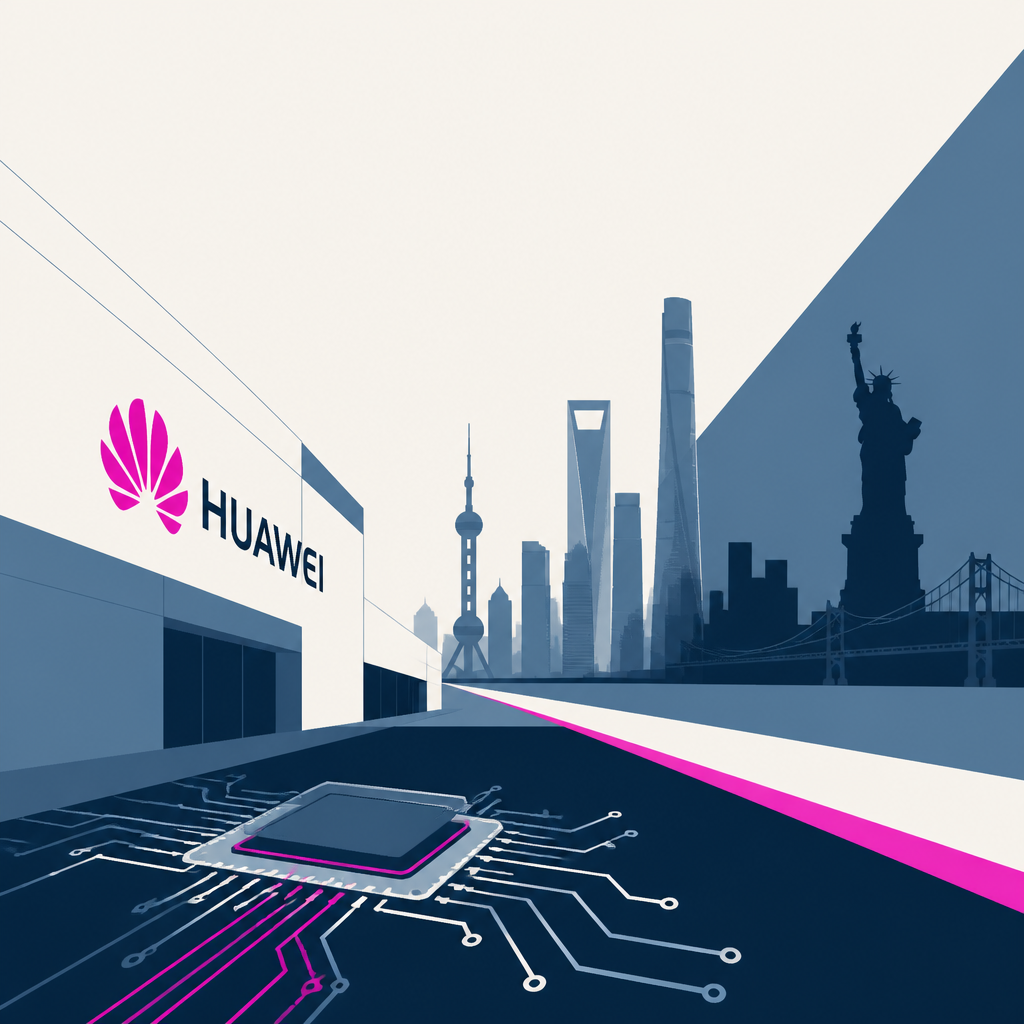
Huawei just moved its next big AI chip to Q1 2027, months earlier than planned. It’s trying to build giant AI systems fast enough to challenge Nvidia.
Based on reporting by TechCrunch, Kate Park — read the original for the full story.
Summary, retelling and take written by AI under human oversight; images are AI-generated illustrations. How we work · Report an error
Huawei says its next-generation Ascend 960DT AI chip is now due in the first quarter of 2027, not the third quarter as previously planned. The update came Thursday at Huawei Connect, where the company said the chip is moving ahead of schedule and, in its words, will double performance year by year.
That matters because Huawei isn’t treating this as a one-chip story. The company is trying to stitch together hundreds of thousands, and eventually millions, of AI chips into one giant computer through what it calls Peerium Computing Architecture. The setup depends on UnifiedBus, Huawei’s own technology for connecting processors with memory, storage and networking hardware.
Eric Xu, one of Huawei’s rotating chairmen, said the architecture is meant to support bigger AI systems for both training and inference. The first systems built on it are the Atlas 950 SuperPoD and SuperCluster. Huawei says an Atlas 950 SuperCluster can link as many as 256,000 accelerator cards.
But the company’s faster chip timetable raises another question: how much of the larger plan is actually holding together. Chinese tech analyst Rui Ma pointed out on X that Huawei had previously described its Atlas 960 SuperPoD as scaling to 15,488 Ascend 960 chips, while this week’s announcement referred to a system with 4,096 chips. The chip is arriving earlier, then, but the system around it appears smaller than first pitched. All of this lands as Huawei keeps pushing ahead under U.S. restrictions on advanced semiconductor access, and just before Trump and Xi are set to meet on September 24 in Washington, DC.
My take — AI-written commentary, not fact-checked reporting
Huawei is doing what Huawei does best: turning a sanctions problem into a branding exercise about self-sufficiency. The real story isn’t just the earlier chip date, it’s whether the bigger system claims can survive contact with engineering reality. China’s AI race keeps getting sold as scale first, details later, which is a bold strategy if the details are the whole game.
Read more about this at: TechCrunch
Related stories
 Inside China's All-Out Push to Catch Up With American AI Chips
The Wall Street Journal · 1 month ago ·
35
Huawei Ascend Production Ramp: Die Banks, TSMC Continued Production, HBM is The Bottleneck
SemiAnalysis · 1 year ago ·
14
Anthropic is discussing a new custom chip with Samsung
TechCrunch · 2 months ago ·
37
Inside China's All-Out Push to Catch Up With American AI Chips
The Wall Street Journal · 1 month ago ·
35
Huawei Ascend Production Ramp: Die Banks, TSMC Continued Production, HBM is The Bottleneck
SemiAnalysis · 1 year ago ·
14
Anthropic is discussing a new custom chip with Samsung
TechCrunch · 2 months ago ·
37