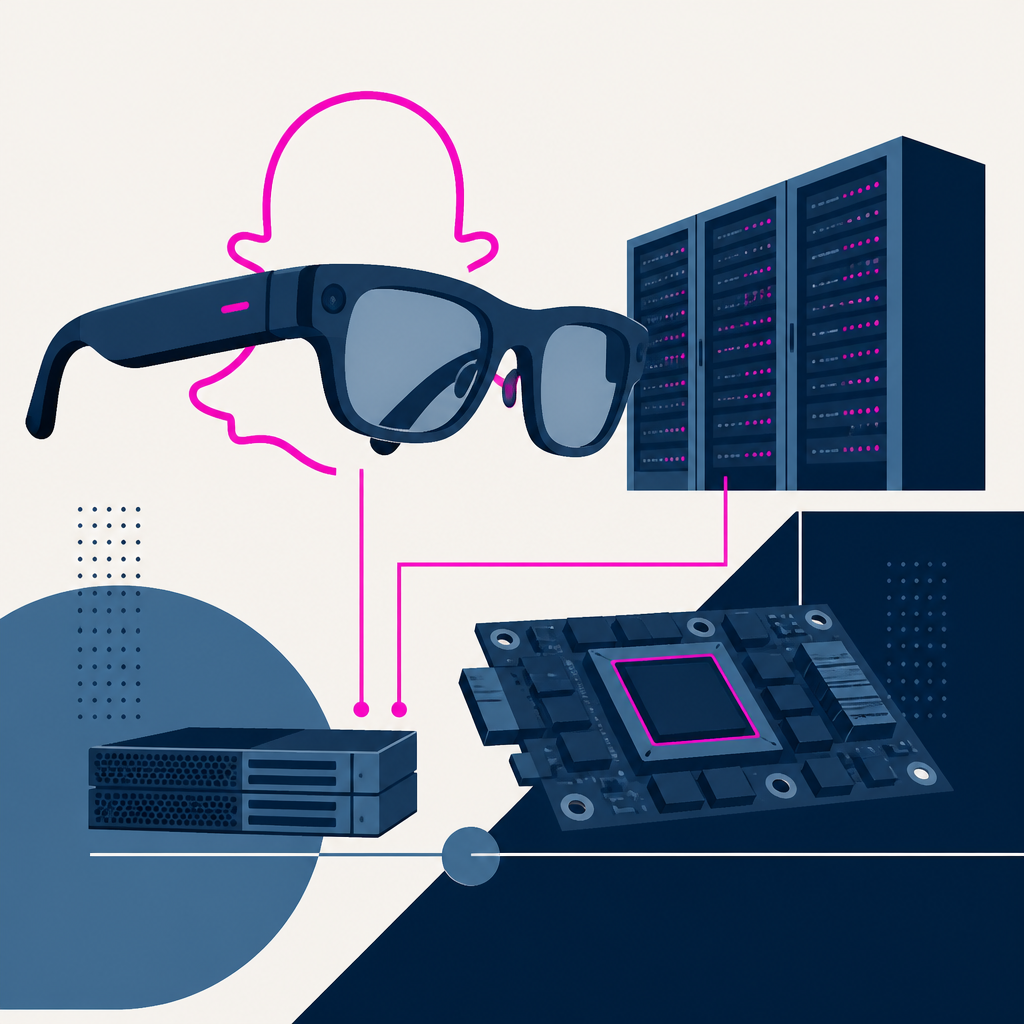
Snap announced new AR glasses partnerships aimed at making its Specs usable in business workplaces. The program has reportedly consumed more than $3.5 billion so far. Snap is trying to shift from consumer-focused glasses toward enterprise features with Nvidia, Amazon Web Services, and Salesforce AI and agent integrations.
SageMaker AI published a review of 2026 year-to-date launches for its two generative AI inference deployment paths: managed endpoints and HyperPod Inference.
World model startups AMI Labs and World Labs have kept details about their commercialization plans and ongoing work largely unclear despite buzz and funding, with AMI’s VP of world models saying the company is still building and won’t discuss product timelines publicly. AMI is described as having been founded less than a year earlier, contributing to the lack of public specifics. The secrecy limits near-term competitive pressure and supplier alignment, leaving commercialization paths uncertain even though world-model tech could later be applied to robotics, interactive video, or self-driving-like systems.
Anthropic PBC opened a wet lab in the San Francisco Bay Area to use robots for biology research tasks. The robots will be powered by Claude, and Anthropic reported Claude Mythos 5.1 generated 12 candidate molecules with a 50% hit rate. The lab will likely use Claude with its MHS protocol to automate lab-instrument workflows and may involve external partners for some work.
CoreWeave is preparing a user conference called Fully Connected while describing services and infrastructure aimed at cutting the cost and effort needed to deploy AI at production scale. CoreWeave says its autonomous improvement for AI agents can reduce costs by over 40% and speed up training by about 1.4 times without loss in quality. The event coverage and interviews are expected to focus on how CoreWeave and its partners tackle operational challenges like validation, reliability, and observability for increasingly complex AI models.
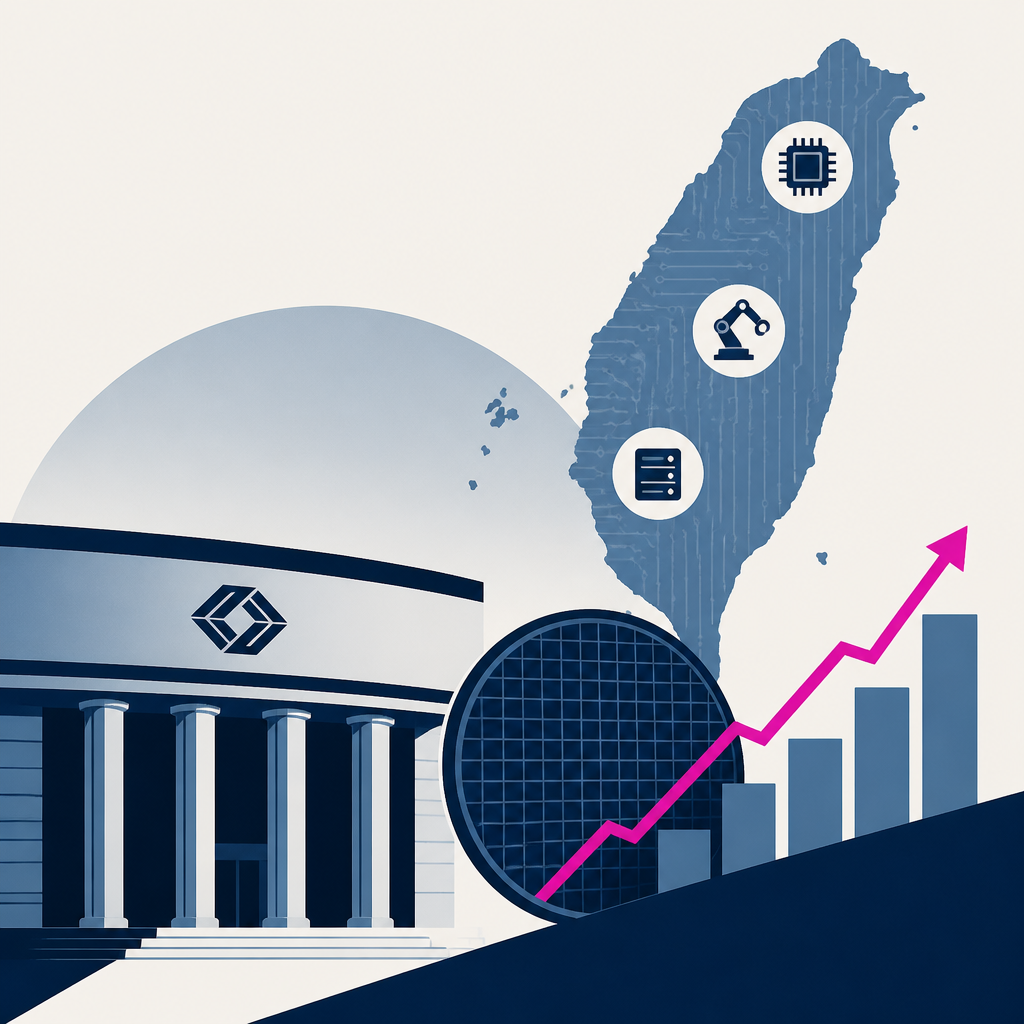
Taiwan Stock Exchange chair Sherman Lin outlined efforts to broaden the TAIEX beyond TSMC and improve listing standards to attract more investors. TAIEX is up about 55% for the year so far, while TSMC is up by 50%. The exchange is pushing more AI-supply-chain and “hidden champions” listings and using its Power Up corporate governance program, with IPO fundraising still far below Hong Kong.
Kubernetes-focused updates are expanding to support production AI inference while infrastructure vendors and users debate whether Kubernetes can accurately account for inference costs. The article cites a measured 60% reduction in processing the cost for 1 million tokens for China Merchants Bank’s Kubernetes-based setup. It pushes teams toward evolving scheduling and memory/serving layers (and better telemetry and platform readiness) so token-level economics can drive inference decisions.
Open Cosmos raised €300M to expand its satellite intelligence and connectivity business. The round totals €300M. The funding is intended to support further growth in its satellite-related AI capability, while the wider report also highlights other European tech funding and exits rather than changing any single existing policy or product broadly.
Amazon Bedrock AgentCore runtime was used to migrate a multi-model healthcare agent from self-managed deployment on Amazon ECS with AWS Fargate to a managed container that preserves the agent’s existing logic and multi-backend orchestration. Deployment takes about 10–15 minutes using the AgentCore CLI. Teams can reduce container lifecycle, scaling, identity, and observability work by letting AgentCore manage those operational concerns automatically while keeping triple-model orchestration and vector-enhanced retrieval.
Amazon Bedrock announced the new AgentCore runtime for running production agents with improved memory handling and start-time behavior. It reported a P75 cold-start latency of about 2 seconds that stays roughly the same from a 200 MB image to a 2 GB image, while the original runtime rose from about 5.4 seconds to nearly 30 seconds. The runtime now reclaims memory during sessions, delivers consistent cold starts independent of image size or concurrency, and changes billing to track on-demand, reclaimed usage.
Nvidia’s Nader Khalil and Sydney Sykes will lead a TechCrunch Disrupt 2026 session focused on whether AI startups should build on open models or proprietary frontier models. The session runs October 13-15, 2026 in San Francisco. It will shift founders’ and investors’ attention from abstract open-vs-closed arguments toward business trade-offs like cost, infrastructure control, data control, and product roadmap flexibility.
Virginia Gov. Abigail Spanberger issued Executive Order 22 to regulate data center development and establish an AI task force to evaluate risks to Virginians. The order bans executive branch officials from signing non-disclosure agreements (NDAs) for data center projects. It requires slower or more controlled approvals via noise and backup-generation reviews and adds government oversight through the AI task force.
Mozilla’s State of Open Source AI report says open-source and open-weight AI has moved from experimentation to production use, with Europe gaining ground mainly in deployment and infrastructure. On Hugging Face, it cites 2.5 million public models and 13 million users, and on OpenRouter open-weight models grew to about a third of usage by late 2025. Europe is pushed to focus on tooling, orchestration, compliance, and sovereignty efforts (including UK plans like a £500M program) rather than only chasing frontier model capability.
Amazon announced SageMaker HyperPod Inference Gateway, a Kubernetes-native GPU-aware routing addon for EKS that replaces naive load balancer routing for LLM inference. It reports reducing first-token latency by up to 82% versus Kubernetes round-robin, including a benchmark where TTFT P99 improved by 98% in bursty traffic for Llama-3.1-70B. The change is that inference requests get steered to the best-suited model pod using real-time GPU signals and routing rules (including KV cache state, queue depth, and LoRA adapter residency), rather than round-robin balancing.
The article says AI agents can review pull requests quickly in testing but slower in production because the execution environment changes while the agent logic stays the same. It points to p99 latency increasing first when infrastructure is provisioned for average load rather than the bursty peaks created when tool results return. As a result, teams need agent-specific infrastructure that handles long step chains reliably and scales for bursty, sequential workflows to keep latency and costs predictable.
Open-weight models took a majority of tokens routed through Vercel’s AI Gateway, reaching 56% of monthly token volume for the first time. Anthropic still accounted for 64% of the estimated dollars spent via the gateway in August, even though open-weight models processed 56% of the tokens. As open-weight usage grows and average per-token pricing declines (down 23.2% in August), spend remains concentrated with Anthropic while teams shift within and across model labs based on cost and consistency.
Instinct is in talks with Sequoia Capital and Benchmark to raise $1B at a $10B valuation. The valuation would be four times its $2.5B Series B valuation from three weeks earlier. If the deal closes, Instinct’s reported rapid jump from seed levels to a $10B valuation in under five months would intensify focus on monetisation and compute scaling for its invite-only AI assistant.
The author argues that over-abstraction in code makes AI agents spend more tokens and money by forcing them to traverse many layers and cross file boundaries. They estimate over-abstracted codebases cost about 30% more for AI agents, with a measured worst case of 5x on a color-change task. As a result, the article recommends abstracting only when needed and avoiding unnecessary boundaries that increase the amount of code agents must load and retrieve.
Spotify described how its AI-assisted development increased the pace of change while quality issues still came from monitoring gaps, scheduling/capacity problems, and reduced spare capacity during regional failovers. On June 24, changes including batch/job competition, higher compute per episode, and a scheduling bug reduced throughput by about 10%, delaying episodes that usually publish within minutes for hours. Spotify responded by adding end-to-end monitoring, fixing the scheduler, reprioritizing workloads and tiering, strengthening safeguards/rollback for automated fleet changes, doubling reserved edge capacity, and broadening long-term quality signals in its release process.
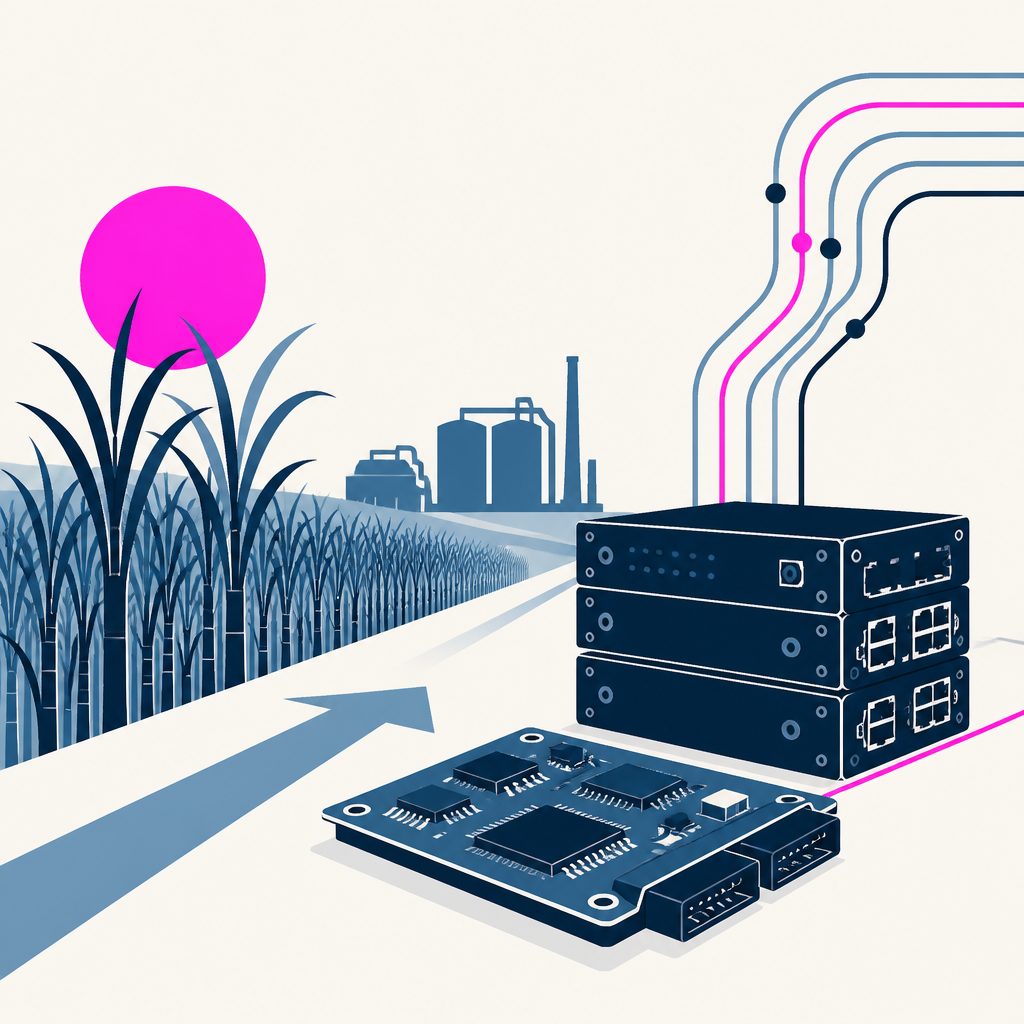
xFarm Technologies acquired Sibium Analytics to expand its global AgData footprint, including deeper coverage of Brazil’s sugarcane and bioenergy industries. The deal adds Sibium’s 8 million tracked hectares to xFarm’s ecosystem, following xFarm’s second acquisition in Brazil within a year. xFarm will integrate Sibium’s remote sensing and ESG/traceability offerings with its IoT and decision-support tools to build a single end-to-end agricultural intelligence platform.
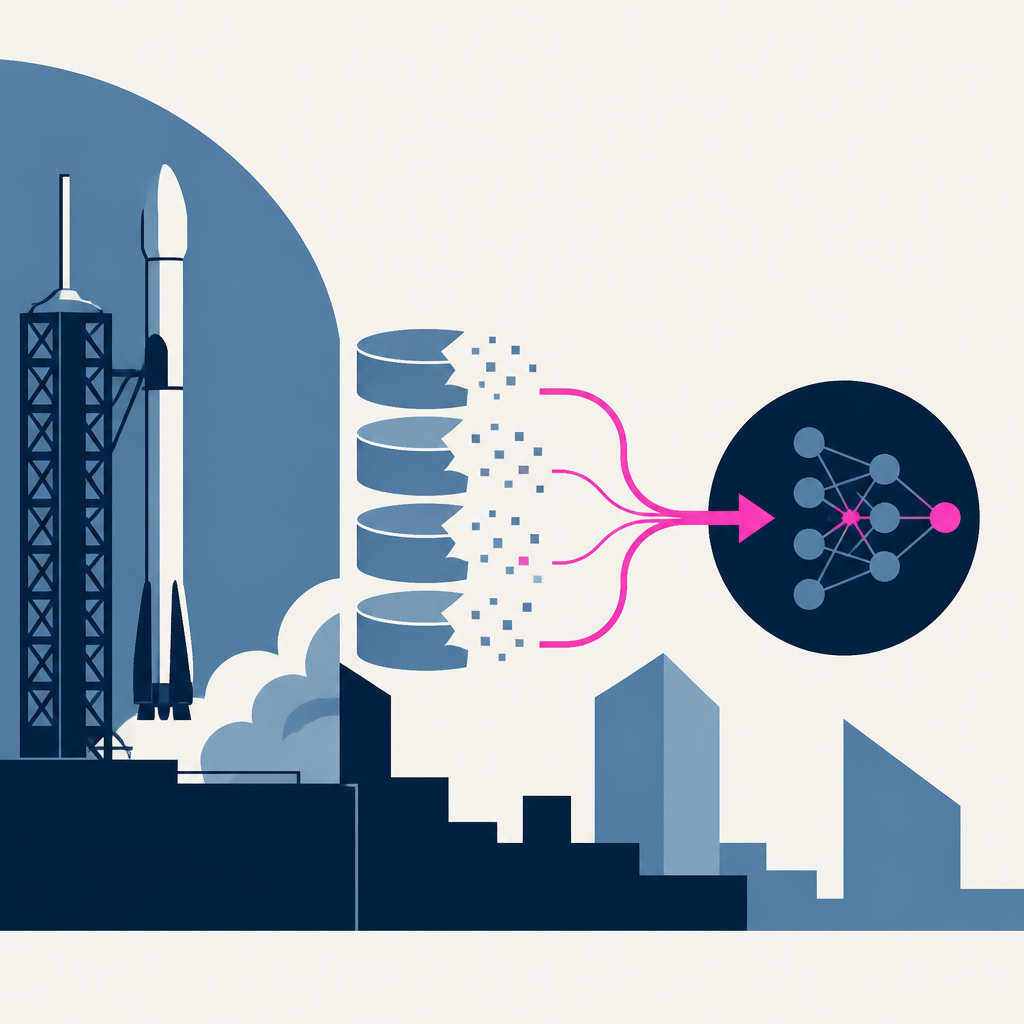
SpaceX discussed buying data from failed startups to train AI models, according to Bloomberg.
The report centers on AI model training data sourced from failed companies.
This highlights a shift toward more direct data acquisition for training rather than relying only on existing datasets.
Crusoe announced an initial closing of its $3.9 billion Series F funding round to expand its vertically integrated AI infrastructure and AI-factory buildout. The round values Crusoe at a $30.9 billion post-money valuation. The new capital will scale its programs and support buildout of its own AI factories, including large campuses and modular Crusoe Spark units, to accelerate Crusoe Cloud growth.
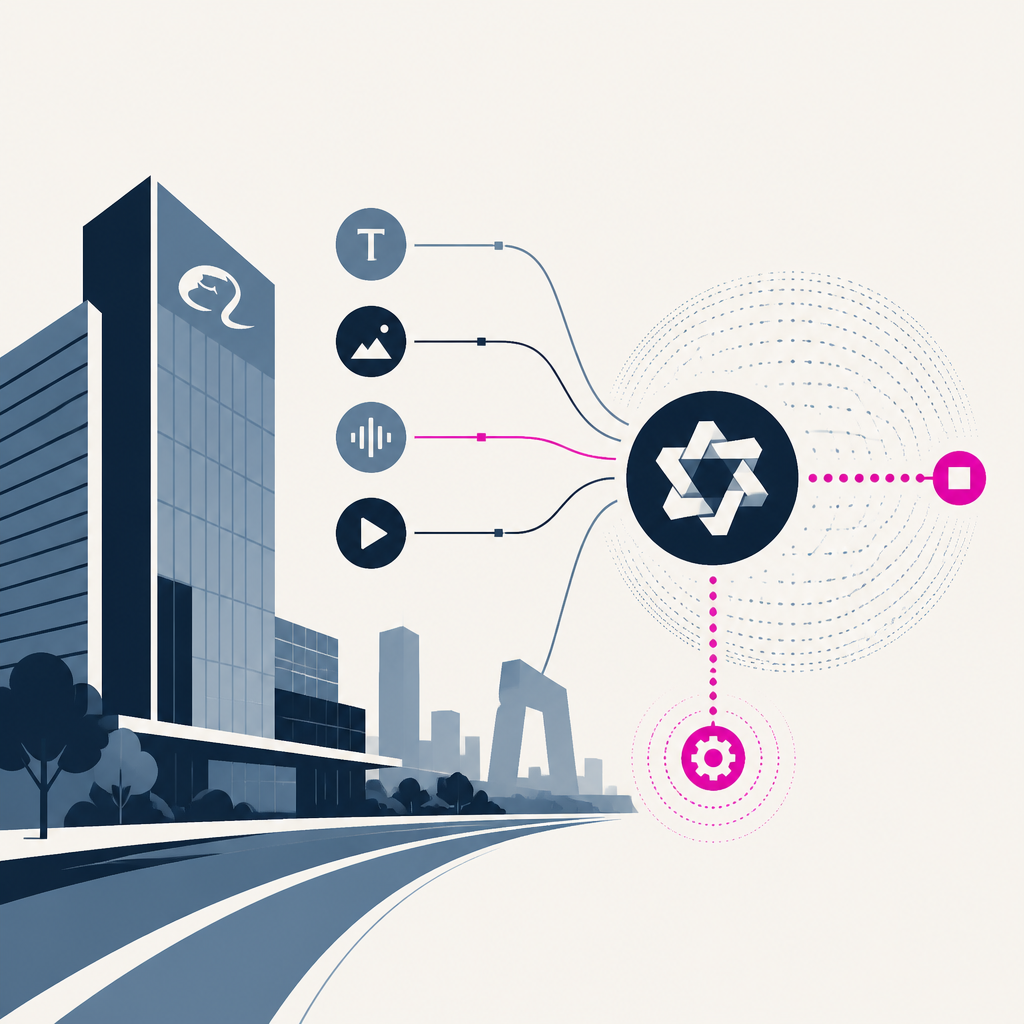
Alibaba’s Qwen released Qwen3.8-Omni-Flash, an omni-modal model that takes text, images, audio, and video and outputs text with agentic audio-video understanding, reasoning, and tool use. The model supports a 1M-token context window. It is available only via hosted APIs (no open weights), alongside Qwen-MM-Plugins released under Apache-2.0 to help agent harness multimodal capabilities.
AINews reported that its weekend scan found no additional Discord updates and otherwise compiled a roundup of AI agent productization, tooling, research, benchmarking, and security discussions across posts and releases. The standout quantitative detail was Anthropic’s claim that the Claude-led share of model R&D tasks rose from 1% to 26% in about 6 months. The coverage shifts from scattered “chat + tools” concepts toward orchestrated multi-session agents with managed harnesses, clearer eval methods, and more concrete internal measurement and security lessons.
Crusoe announced a $3.9 billion Series F funding round, raising its post-money valuation to $30.9 billion. The deal follows a roughly year-earlier Series E that valued the company at $10 billion, implying it tripled value in 10 months. The new capital will support projects like Abilene and expand Crusoe’s AI data-center and cloud offerings, with further board changes and potential IPO discussions.
A global fintech scaled its AI coding assistant traffic by running GLM 5.2 on Together’s Dedicated Model Inference to handle spiky, engineering-hours demand. It reported p50/p90/p95 usage at about 81K/163K/178K tokens and RPS at 3/6/7, and a specific incident involved 192-second requests queued behind a 2.3M-token pending-prefill backlog. Engineers gained self-service endpoint control with a metrics API and live configuration/model updates, replacing ticket-based coordination and reducing multi-minute queuing.
Every AI story that matters,
in your inbox by 8am.
TLDRocket reads all relevant sources, removes duplicate coverage, and summarises the
day in two minutes. Follow companies and topics for alerts, or get the
briefing in Slack. Free, no spam, unsubscribe anytime.
Reading TLDRocket needs no cookies, and the readership counts we rely on come from
our own cookieless analytics. Google Analytics is the exception: it sets cookies and
reports to Google, so it stays switched off until you allow it. You can change your
mind any time from “Cookie settings” in the footer.
Strictly necessary
Session security and form protection (tldrocket-session,
XSRF-TOKEN, 2 hours). The site cannot work without them,
so they need no consent.
Always on
Google Analytics 4 (_ga,
_ga_<id>, up to 2 years). Measures which
stories and sections readers use. Google acts as a third-party processor and may
store the data outside the EU. No advertising, no profiling, no data sold.