Q.ANT released the Q.ANT Native Computing Toolkit so developers can write and test software for its light-powered AI chips via a simulator on regular computers. The kit is free on GitHub under a license that allows commercial use. Access to the real photonic chips is still limited to a few research centers, so developers can start building now but can only validate energy and performance claims once cloud or on-site hardware access arrives in the coming months.
Meta introduced its Muse Charm standalone hardware device for its Muse AI agent at the end of the Meta Connect presentation.
The device was shown briefly by Mark Zuckerberg onstage.
The setup changes because users can start speaking to the agent directly on the gadget without unlocking a phone.
Vast Data introduced DataEnclave to let enterprises and AI labs deploy proprietary models in secure compute so data transfer risk works in both directions. It uses Nvidia’s Confidential Computing technology. As a result, companies can run models without sharing data or handing over model weights, and the market will test the approach through early access into general availability.
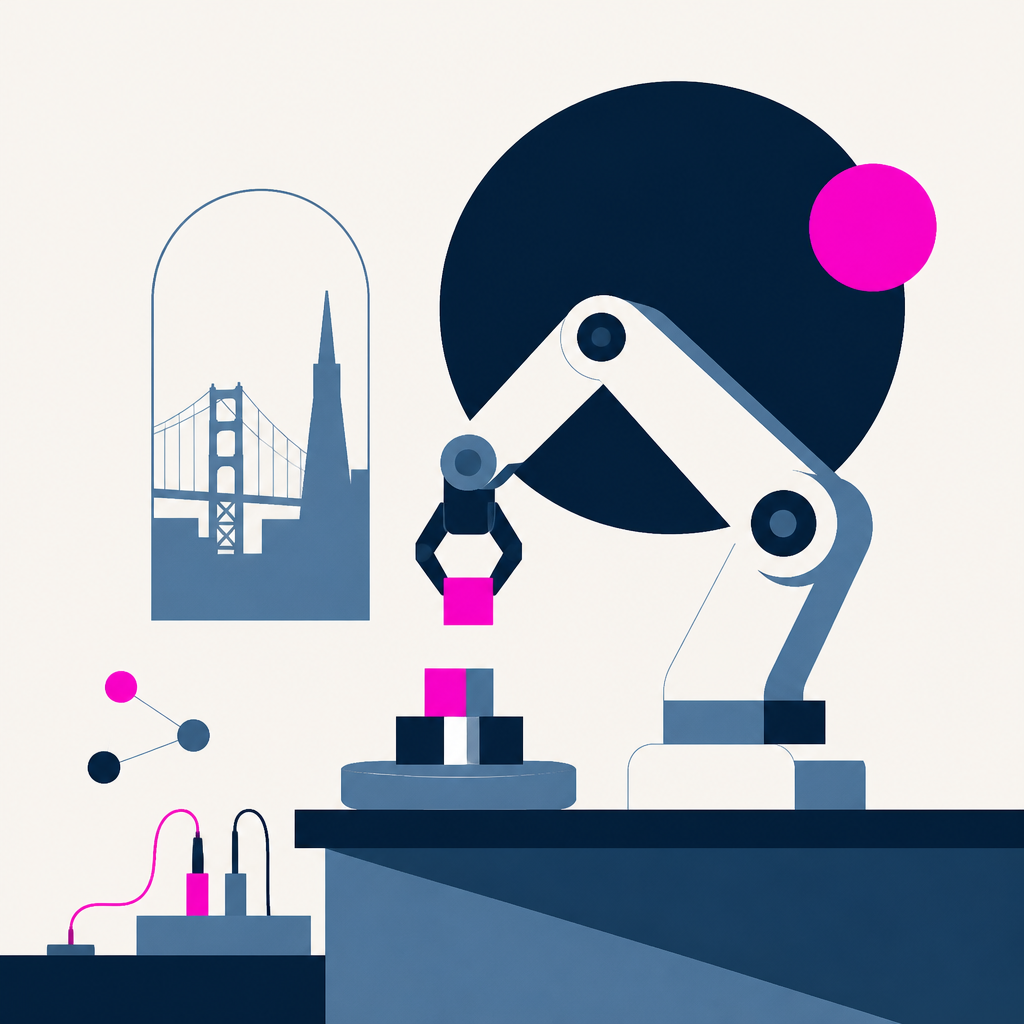
MJWarp moved a MuJoCo robot pick-and-place workflow onto NVIDIA GPU simulation by porting a compatible MJCF model to batched Warp physics and validating that it matches the CPU setup. The walkthrough scales the same scene to 2,048 parallel MJWarp environments and advances them in one call to the step function on the GPU. The result is higher aggregate throughput (more world-steps per second) for reinforcement learning and large-scale sampling instead of focusing on single-environment step latency.
NVIDIA released Nemotron 3 Diarization, an open-weight speaker diarization model on Hugging Face for attributing who spoke when in conversations. It tracks up to 8 speakers with one checkpoint spanning offline to real-time streaming, including a recommended 0.32 s buffer latency. Compared with its prior 4-speaker Streaming Sortformer, the diarization capacity doubles and benchmarks report a 14.72% DER (and about a 41.0% mean relative DER reduction at 1.04 s) along with higher throughput.
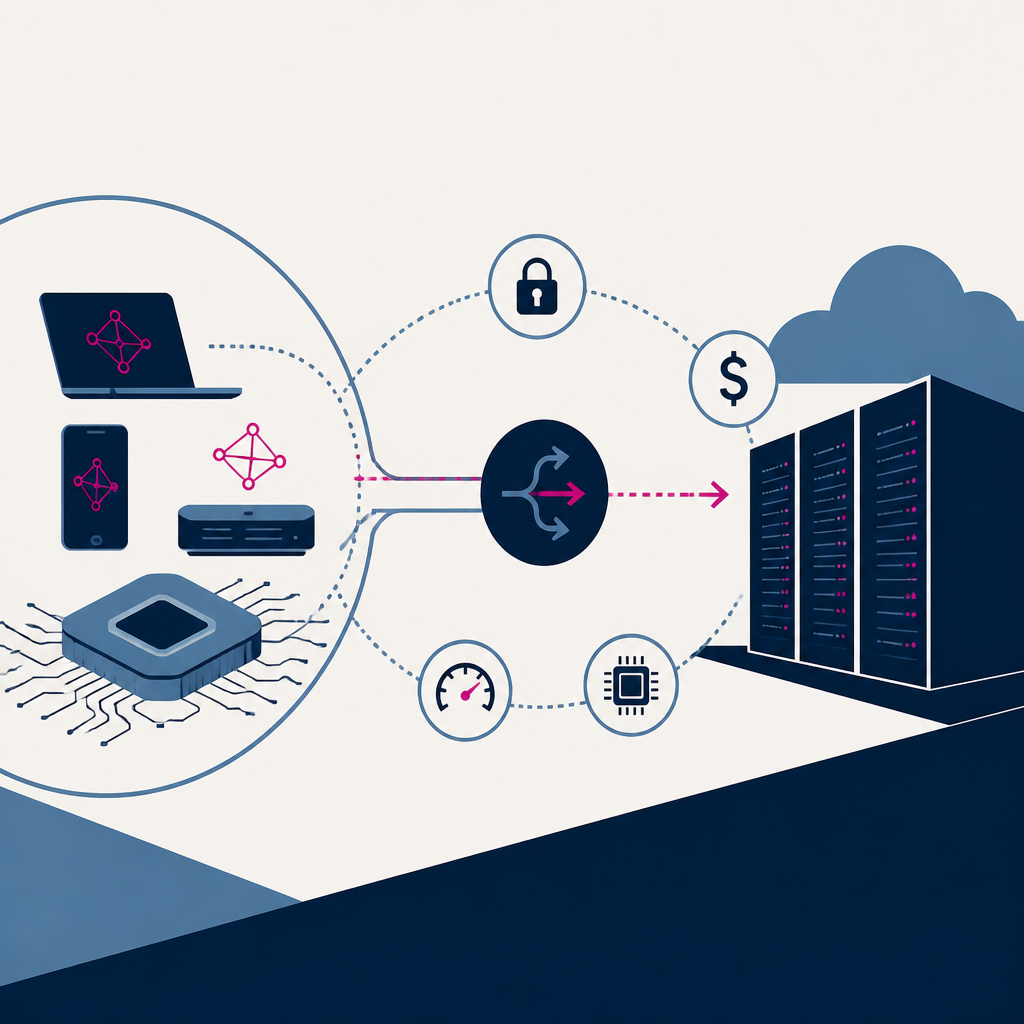
Intel’s Dr. Olena Zhu discussed hybrid AI, pairing local or edge models with a frontier cloud model to coordinate tasks. The episode highlights routing decisions across privacy, cost, capability, and hardware as key infrastructure choices. This shifts focus from picking a single model to building systems that decide where each part of the work runs.
CoreWeave is organizing Fully Connected 2026, a three-day conference for AI leaders and engineers focused on production AI infrastructure and deployment. Standard general admission costs $899, with the event running September 29 to October 1, 2026 at Moscone South in San Francisco. The schedule adds keynotes, breakout sessions, and hands-on labs, plus networking and receptions, while giving attendees access to product and engineering teams building the stack.
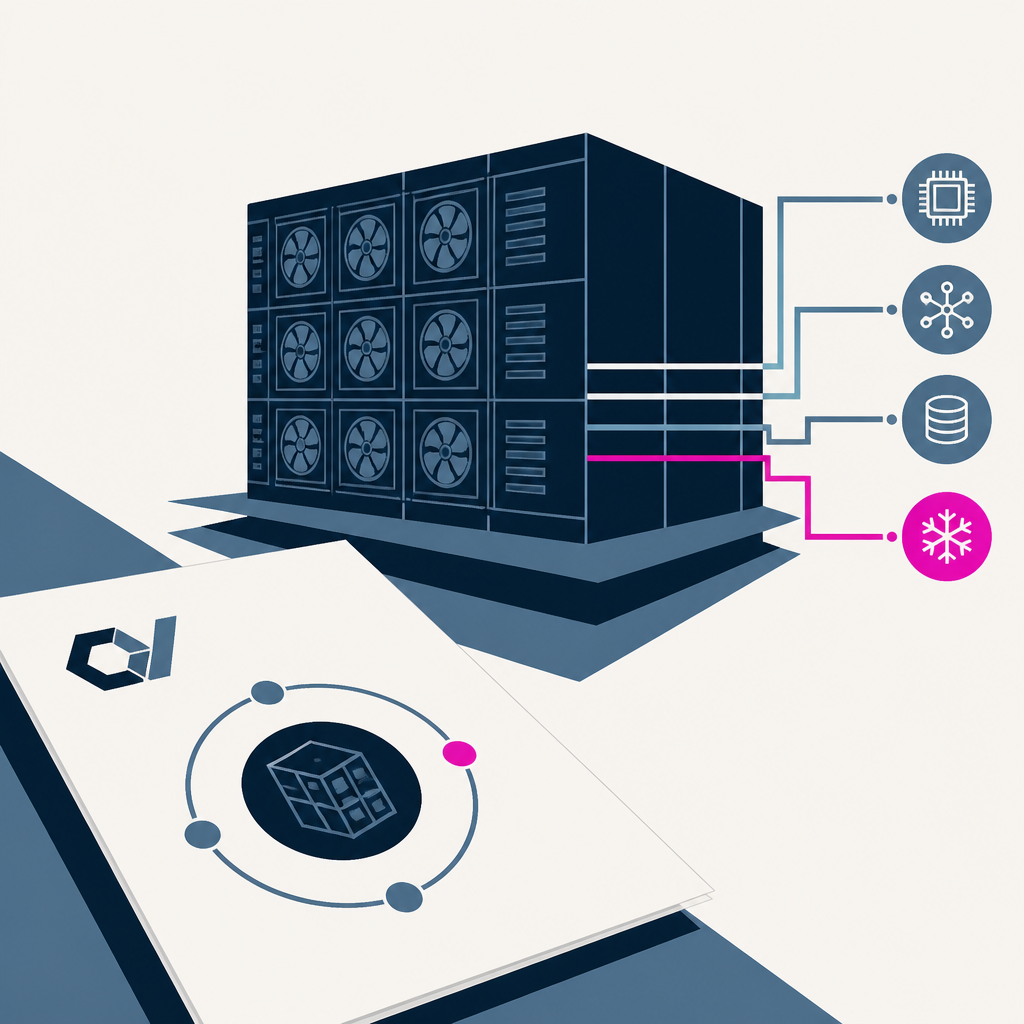
CoreWeave describes how multi-rack NVIDIA Vera Rubin NVL72 clusters are brought up by tightly coordinating compute, networking, power, and liquid cooling with automated validation to avoid distributed-system bottlenecks. It says each Rubin GPU is served by two ConnectX-9 SuperNICs delivering up to 1.6 Tb/s backend connectivity per GPU. As racks scale out, the process shifts from per-node checks to rack-, fabric-, and synchronized workload testing so stragglers and underperforming links are caught before production.
CoreWeave brought up multi-rack NVIDIA Vera Rubin NVL72 clusters on CoreWeave Cloud, creating a single scale-out setup for running training and inference across hundreds of Rubin GPUs. Each NVL72 rack pairs 72 Rubin GPUs with 36 Vera CPUs. CoreWeave also added cross-region write acceleration and a new Archive storage tier to keep AI data closer to compute and reduce checkpoint write pauses.
CoreWeave’s Chen Goldberg argues that an AI cluster should be treated as one integrated supercomputer rather than separate components like GPUs. She points to Kubernetes deployments needing an evolving resource model that accounts for compute, networking, storage, and cooling working together. As a result, cloud thinking shifts toward supporting AI agents and managing infrastructure as a single coordinated system.
Samsung’s SmartThings-issued firmware update caused some Samsung smart fridges in the Bespoke AI line to stop working after users initiated an update and the fridges went offline. Star News Korea reported that most affected units were four-door fridges from 2024 or later. Owners then experienced bricked fridges—leaving them with spoiled food until the issue is resolved.
ByteDance’s subsidiary used British AI infrastructure startup Nscale to rent access to Nvidia chips, according to reports. The reports say this arrangement would cover about 74%. As a result, ByteDance can obtain Nvidia compute through rental infrastructure that helps it avoid US chip rules.
Microsoft Research reports that running physical AI inference only on a robot’s onboard GPU can reduce performance, battery life, and scalability, and that offloading inference to edge or cloud GPUs improves results for mobile manipulation. Offloading increased battery life by up to 160% when replacing an onboard GPU (measured on the Stretch-3 robot). The Physical AI Toolchain was updated with Kubernetes-based tooling that lets developers containerize, deploy, and orchestrate offloaded inference across robots, edge, and cloud.
Google’s Private AI Compute team updated its architecture to add private, persistent server-side memory that keeps AI context across devices while meeting on-device privacy standards. The technical update is dated September 23, 2026. Private AI Compute shifts from a stateless cloud model that erased context after each task to a new encrypted “secure enclave” flow that decrypts memory only temporarily in isolated cloud storage and then re-encrypts it.
Sakeena Fiza, an NVIDIA validation engineer, describes how her team brings new data center systems up from first power and then hunts for failure causes across hardware, firmware, software, and manufacturing. A rack can involve close to 500,000 components that must be proven to work together under real conditions before mass production. This process helps catch problems before customers encounter them, making NVIDIA hardware more resilient at scale.
California Gov. Gavin Newsom signed bills on Monday that require data center operators to disclose more about how their facilities affect local electricity bills and water supply. The new disclosure rules start next year. Communities will gain more influence and better visibility into these impacts, though the reporting still may not show a complete picture.
NextLM brought its AI Prospecting Agent to the Google Cloud Marketplace and Gemini Enterprise to help sales teams identify and rank leads from behavioral signals mapped to individuals. The service reports processing 35 billion behavioral signals daily and it only surfaces prospects in the top 10% of its scores. This integration lets customers buy through existing Google Cloud commitments and run the agent directly in Gemini Enterprise or via Google’s Agent Designer workflows.
MSCI CEO said climate-related physical risk is being undervalued by financial markets despite rising extreme-weather impacts. From 2020 to 2024, the world saw 99 extreme-heat events versus 14 in the 1980s, and MSCI reported that only 27% of over 25,000 firms (2023–2025) provided substantial disclosure on physical climate risk. The CEO argues markets should improve transparency and use location-based tools, including AI, so physical risk is priced more accurately.
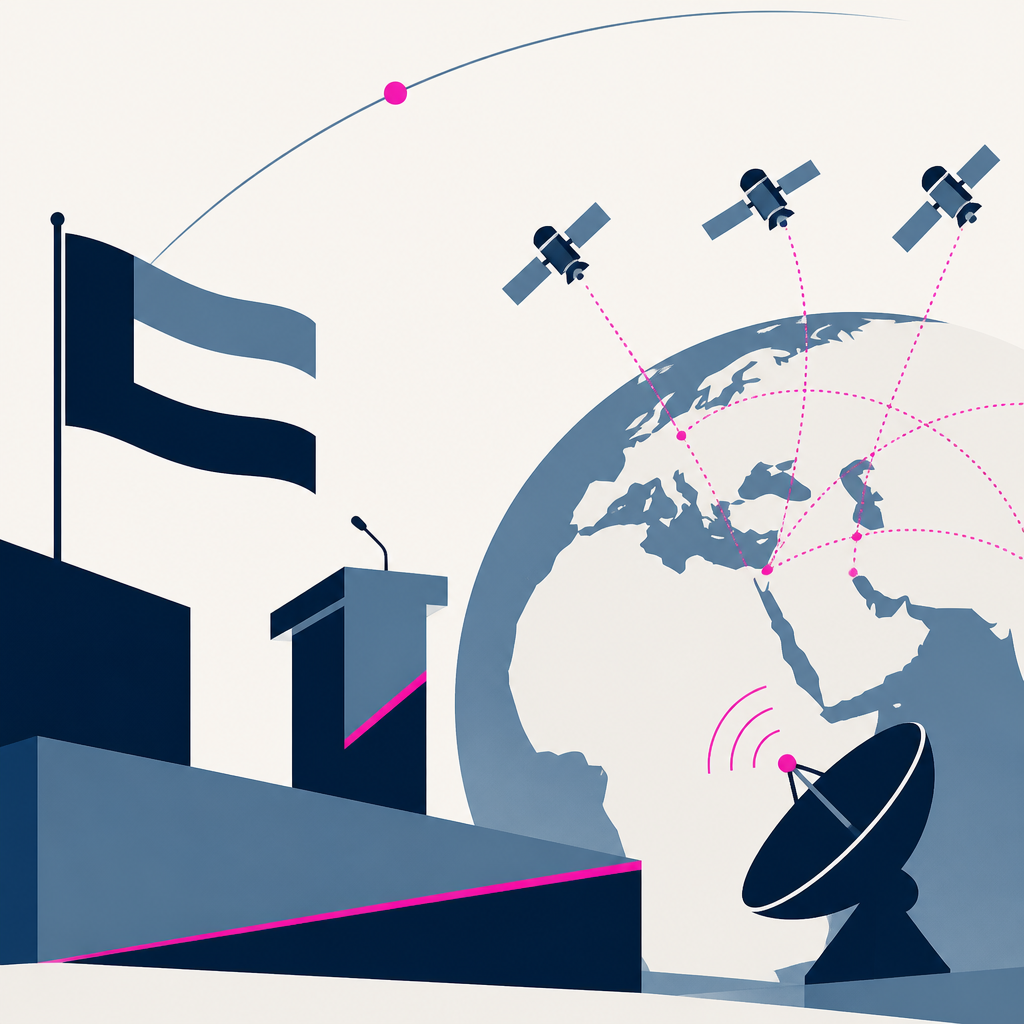
The UAE is prioritizing satellites as a strategic national asset while shifting its space activity toward commercial communications, Earth observation, and deep-space efforts. The UAE-backed Space42 plans Equatys with Viasat, committing up to $1 billion in equity and starting with fewer than 200 satellites before expanding to 2,800. This accelerates investment and operations across UAE satellite connectivity and geospatial intelligence, with satellite projects increasingly feeding national-security and infrastructure use cases rather than staying purely exploratory.
Climate-focused venture capital has shifted back into focus as AI increases demand for energy for data centers while climate-tech fundraising has weakened. Fundraising for climate-specialist VCs in 2025 was down nearly 40% from 2024 even as energy and related startups drew much more capital. Investors say AI is pulling more deal activity toward climate-compatible energy and storage, and climate investors are increasingly co-investing alongside generalists on a larger share of caps tables.
Ekai Inc. raised $1.7 million to build software that translates business experts’ definitions into verified semantic models and validation rules for enterprise AI agents to use corporate data safely. The company says semantic modeling that usually takes 3 to 6 months was completed in as little as 6 hours in early engagements. This funding will speed up product development and expand go-to-market and platform integrations for workflows on systems including Snowflake and Databricks.
OpenAI released GPT-6 Sol and GPT-6 Luna as cheaper versions of GPT-6 Astra with closer alignment to the flagship than the earlier GPT-5.6 Sol variant. API prices for Sol and Luna are down 50% compared with GPT-5.6 counterparts, including 58% lower output-token prices for Luna. OpenAI also added higher default prompt caching, more flexibility to change reasoning effort and tools without breaking cached context, and a Prompt Caching Dashboard to help developers diagnose and reduce token costs further.
OpenRouter launched a batch API that lets providers schedule batch processing within a 24-hour window at a reduced per-token rate. The beta on 230k+ completed batches saw a median completion time of 7 minutes, with 90% finishing within 1 hour. Jobs can now be run asynchronously and waited on later, with up to 30-day retention for inputs and results and per-request results returned together in a completed batch response.
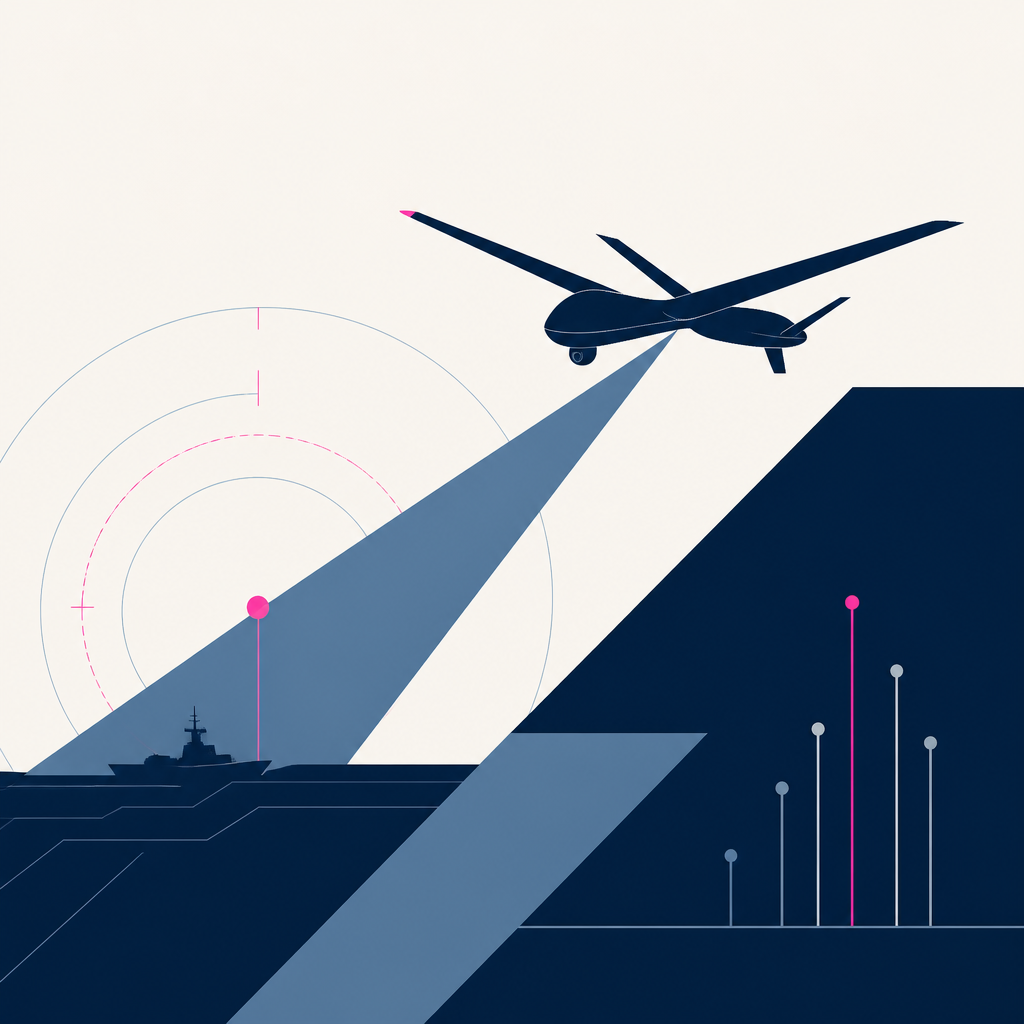
TEKEVER announced the first close of its Series D financing for AI-powered autonomous systems, including AI-enabled drones and related intelligence software. The round closed at $580 million, valuing the company at S$6.4 billion. TEKEVER says the funding and planned additional Series D closings will let it move faster, scale internationally, and expand industrial, technological, and acquisition capabilities.
VAST Data introduced DataEnclave to let companies run AI models inside confidential computing environments using sensitive data without exposing the model, data, or underlying infrastructure to the operator. The platform is positioned as a unified AI operating system that combines data storage, databases, and compute on a single platform. This shifts AI deployments from sending sensitive information to external AI providers toward bringing models to the data in protected “locked” compute environments.
SPRIND and NADI launched the AI-Native Chip Design Challenge to fund pan-European efforts to reinvent chip design processes. It commits €40 million over 20 months, selecting seven teams for €2.6 million each in Stage 1 from November to July 2027. The programme aims to move chip development from years to weeks and produce production-ready chip designs for AI training and inference while teams receive coaching to reach market readiness.
Qdrant is presented as moving from its original vector-search roots toward building “physical AI.” The article says the company launched 5 years ago, and it describes investors questioning whether Qdrant arrived too late. Because the provided article text is mostly garbled, the具体 details of what Qdrant will do next can’t be reliably extracted, so the practical takeaway is limited.
Greece’s prime minister Kyriakos Mitsotakis told roughly 250 tech founders, investors, and operators in San Francisco that he does not have answers to many AI questions leaders are debating. He said Greece’s 10-year bond yield is about 4.3% compared with around 5% for U.S. Treasuries. The visit reframes Greece’s push for investment around hosting AI policy discussions while pairing AI adoption plans—like a supercomputer and education pilots—with concerns about child social-media access, school use, and job displacement.
NVIDIA and partners used AI Day Singapore to showcase hands-on training, expert sessions, and AI tools aimed at speeding AI and high-performance computing work across Southeast Asia. A key event window is Sept. 22-23 at the Raffles City Convention Centre, where Singapore’s HTX said it is using NVIDIA Nemotron 3 Super and Nemotron 3 Nano Omni for public-safety research and local secure deployment. The focus shifts from AI pilots to production-scale deployments, with more region-specialized Nemotron model adoption and additional enterprise deployments such as Sea’s first ASEAN adoption of NVIDIA Vera Rubin.
Andreessen Horowitz launched the Horowitz Andreessen Academy, a one-year, non-accredited San Francisco program with no degree or federal student aid and no job guarantees. The academy will invest $42 million and enroll about 50 students starting Sept. 2027, with tuition-free attendance alongside $50,000 in compute credits and a $5,000 travel budget. It plans to seek approval for a two-year version in 2028 that would charge $60,000 to $90,000 per year, with paid and interview-focused partner co-ops used to shape student outcomes.
Every AI story that matters,
in your inbox by 8am.
TLDRocket reads all relevant sources, removes duplicate coverage, and summarises the
day in two minutes. Follow companies and topics for alerts, or get the
briefing in Slack. Free, no spam, unsubscribe anytime.
Reading TLDRocket needs no cookies, and the readership counts we rely on come from
our own cookieless analytics. Google Analytics is the exception: it sets cookies and
reports to Google, so it stays switched off until you allow it. You can change your
mind any time from “Cookie settings” in the footer.
Strictly necessary
Session security and form protection (tldrocket-session,
XSRF-TOKEN, 2 hours). The site cannot work without them,
so they need no consent.
Always on
Google Analytics 4 (_ga,
_ga_<id>, up to 2 years). Measures which
stories and sections readers use. Google acts as a third-party processor and may
store the data outside the EU. No advertising, no profiling, no data sold.