
Advancing Private AI Compute with secure, server-side memory
Google says it can give AI a lasting memory in the cloud without giving up device-level privacy. The catch is that only your devices hold the keys, even Google can’t read it.
Based on reporting by Google — read the original for the full story.
Summary, retelling and take written by AI under human oversight; images are AI-generated illustrations. How we work · Report an error
Google DeepMind says it has a way to add persistent memory to its Private AI Compute platform without dropping the privacy bar to cloud levels. That matters because current private cloud setups are built to forget everything once a task ends. Good for security. Not so good for an assistant that’s supposed to pick up where it left off on your laptop, phone, or glasses.
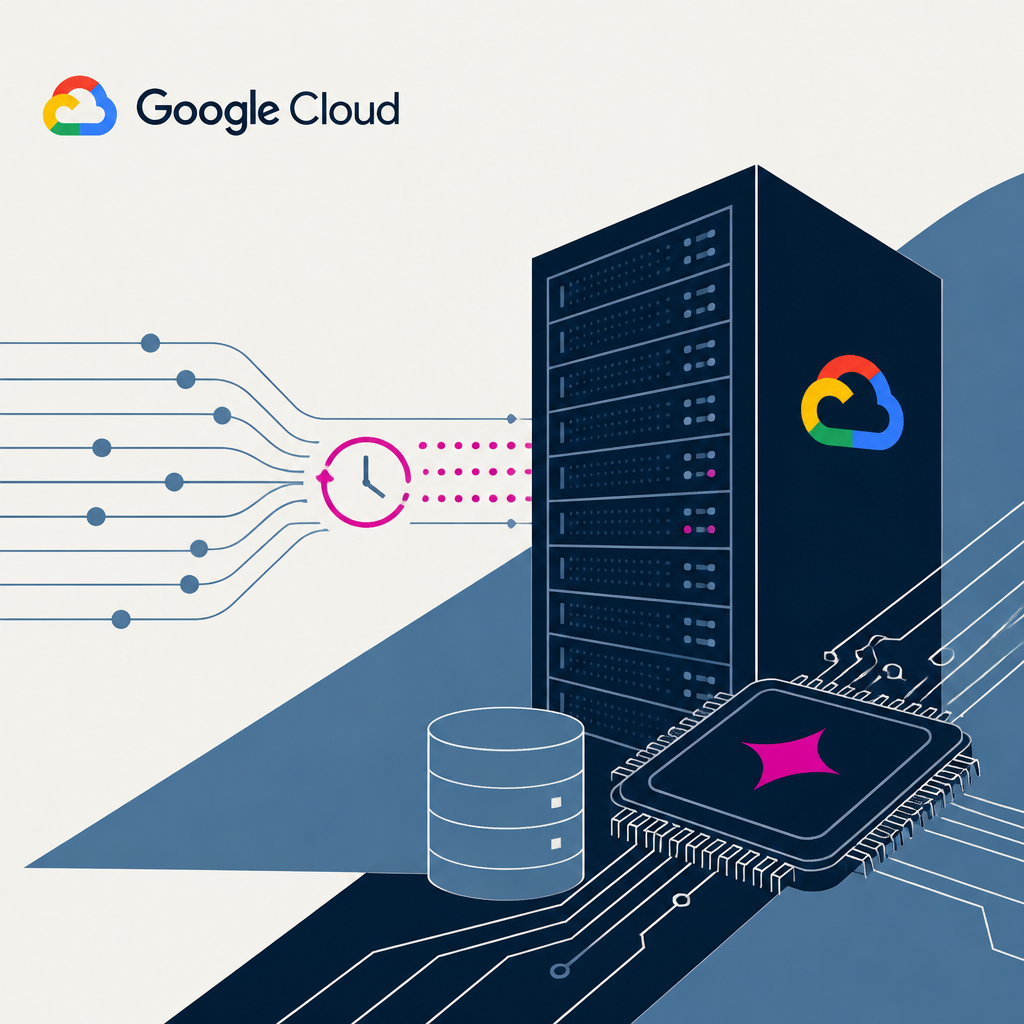
The new setup is built around what DeepMind calls a secure digital vault in the cloud. The data sits in encrypted storage, while the keys stay on the user’s own devices. When the system needs to help, an authenticated end-to-end encrypted channel opens to a protected enclave in the cloud. The enclave briefly decrypts the data in isolated memory, handles the request, stores any new context, and then encrypts it again.
DeepMind says this design uses hardware-enforced secure enclaves, encrypted channels, and per-user databases tied to device-derived encryption keys. The point is simple: the company wants cloud-scale compute without giving cloud-scale access to personal information. It also frames the move as necessary because frontier models need more power than a single device can usually provide.
The practical use cases sound familiar, and that’s the point. You could open assembly instructions on a laptop after looking at them through smart glasses, or continue a complicated conversation across mobile and web. That kind of continuity has been awkward until now, because stateless systems can’t hold onto context in a useful way.
Trust is the other half of the pitch. Google says it is publishing a tamper-proof public record of the server software, so devices can verify the software is authentic and unchanged before any personal data is sent. It is also sharing an updated technical whitepaper, system architecture, security proofs, verification protocols, and the results of an independent audit by a leading cybersecurity firm.
My take — AI-written commentary, not fact-checked reporting
This is the right fight to pick: privacy should not be the price of a useful assistant. The industry has spent years pretending “just save a few preferences” counts as memory, which is a neat trick if the goal is to undersell the problem. Google is at least treating trust like an engineering requirement instead of a marketing sticker.
Read more about this at: Google
Related stories
 Google Cloud’s Always-On Memory Agent Replaces RAG and Embeddings With Continuous LLM Consolidation on Gemini 3.1 Flash-Lite
MarkTechPost · 2 months ago ·
21
Toward provably private insights into AI use
Google Research · 10 months ago ·
50
As AI Increases Demands on Memory, Storage Steps Up
NVIDIA · 1 month ago ·
37
Google Cloud’s Always-On Memory Agent Replaces RAG and Embeddings With Continuous LLM Consolidation on Gemini 3.1 Flash-Lite
MarkTechPost · 2 months ago ·
21
Toward provably private insights into AI use
Google Research · 10 months ago ·
50
As AI Increases Demands on Memory, Storage Steps Up
NVIDIA · 1 month ago ·
37