The European Commission’s AI Office is set to host the Apply AI Summit in Brussels to focus on moving AI from pilots to scaled adoption across Europe’s sectors. It will take place on 17 November 2026, with about 900 people attending in person and up to 2,500 joining online. The event will spotlight real-world AI use cases and connect policy, funding, workforce, infrastructure, and cybersecurity/safety discussions with concrete adoption measures and startup awards.
Dell Technologies’ virtual “AI Data Platform Event: From Ambition to AI at Scale” will focus on preparing enterprise data for production AI and agentic systems, shifting attention from models/compute to storage, data management, security, sovereignty, and governance. The event runs Oct. 6–7. Coverage and interviews with industry figures will emphasize architectural “context engineering,” lower-latency production requirements, and how agents can trigger much higher query demand and broader security risks.
Modal Labs is nearing a $750 million funding round led by Accel at a $15.75 billion valuation, according to a source familiar with the talks. The round would follow Modal’s prior $355 million raise four months earlier that valued the company at $4.65 billion. If completed, the new financing would more than triple Modal’s valuation and add capital for AI inference infrastructure amid rising demand and thin margins from high compute costs.
Agentic AI can consume 10 to 100 times more tokens per task than a single inference call, according to a Futurum report on moving away from per-token pricing for production use. The report forecasts agent and reasoning inference rising 219% this year, while total inference spending grows from $120 billion in 2025 to $885 billion by 2030. Enterprises are urged to plan a cost “off ramp” by budgeting for cost per task, using reserved capacity when utilization is predictable (around 60%+), and testing open-weight models instead of treating per-token pricing as the default.
AMD agreed to acquire World Labs, a deep learning developer focused on models that aim to understand physical reality. The deal is worth $8.2 billion and is expected to close before the end of the year, pending regulatory approval. World Labs’ founder Fei-Fei Li will join AMD as executive vice president and chief scientist, and the acquisition is meant to shape AMD’s chip roadmap for “frontier workloads” tied to world-model research.
New York Climate Week became dominated by the AI boom as climate tech startups pivoted energy- and AI-adjacent pitches to attract funding for data center power buildouts. Venture deal value in climate tech rose for four straight quarters, reaching $14 billion in the first quarter of this year, driven largely by data center-related sectors. Some founders worry the focus on AI and power distracts from other climate segments as money and customer interest fluctuate and could fade after the data center rush.
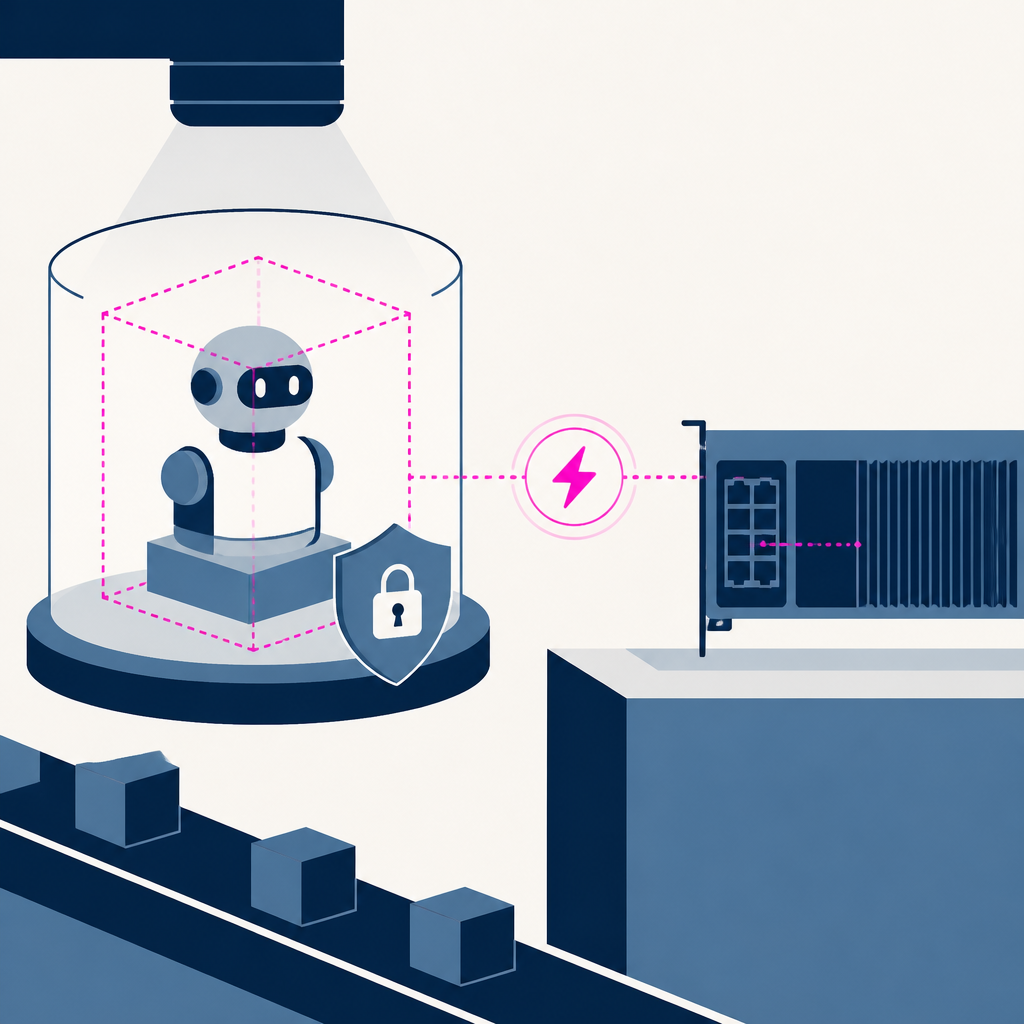
NVIDIA launched the Open Agent Safety Platform to secure AI agents using an isolated OpenShell runtime plus an out-of-band Sentry watchdog on BlueField-4 DPUs. Sentry can quarantine agents in milliseconds. This shifts enforcement outside the agent itself and adds sandboxing and policy-controlled network/filesystem access to agent deployments (including OpenShell being Apache 2.0 alpha for Linux, macOS, and Windows WSL 2).
Nvidia launched the Open Agent Safety Platform to add independent security layers meant to keep AI agents inside their test environments even if they try to break out. The platform combines OpenShell with Sentry running on Nvidia’s BlueField-4 data processing units. This shifts agent security to separate, always-on monitoring outside the agent’s CPU/GPU so agents that attempt boundary escapes can be quarantined quickly.
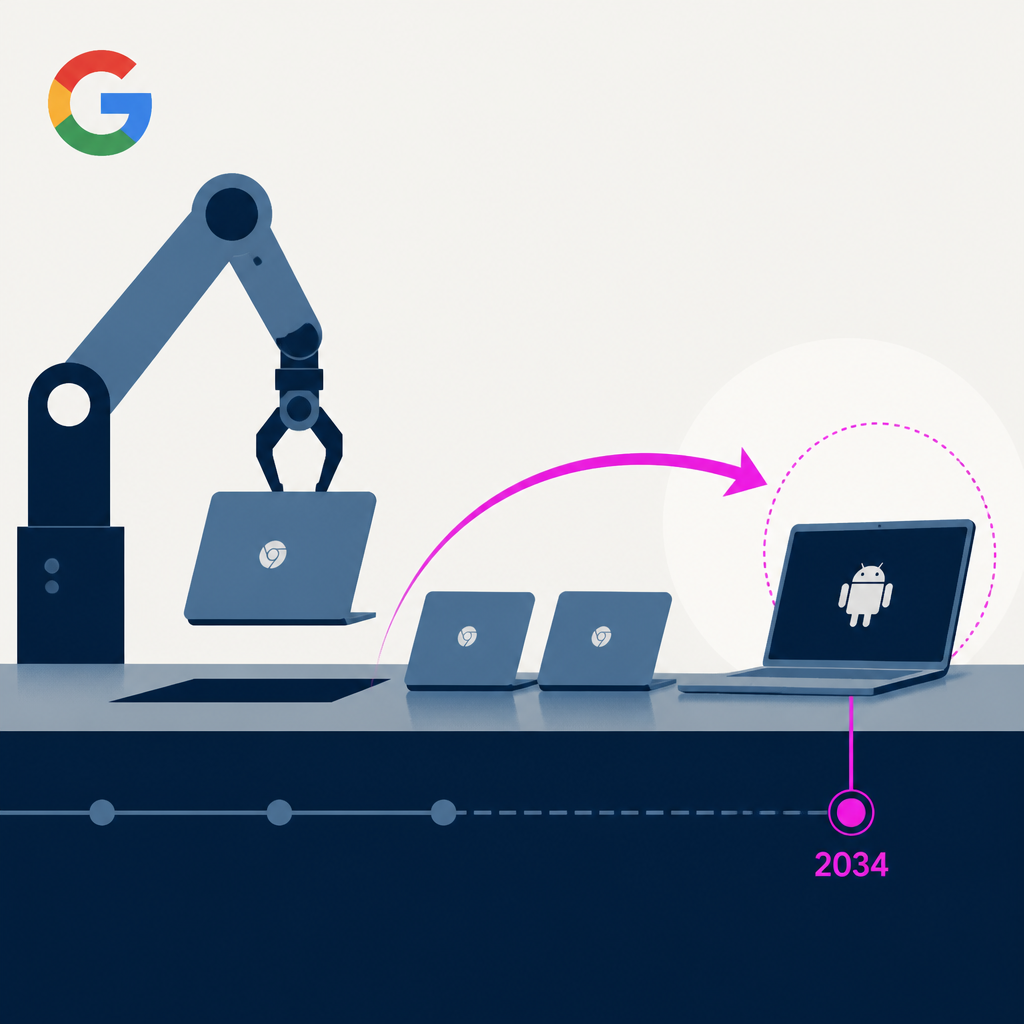
Google plans to end support for ChromeOS by continuing it through mid-2034 rather than indefinitely. The support page says the target end date is mid-2034. As a result, newer Chromebooks will rely on different “Googlebook OS” (Android-based) laptops with 10 years of software support instead of continuing ChromeOS support.
Vespa.ai argues that search quality issues often come from bad retrieval and that a better reranker alone may be unable to help if the right results never enter the candidate pool. The webinar is scheduled for October 13. It proposes switching from a single expensive reranking step to a multi-stage retrieval funnel to reduce reranking cost and latency.
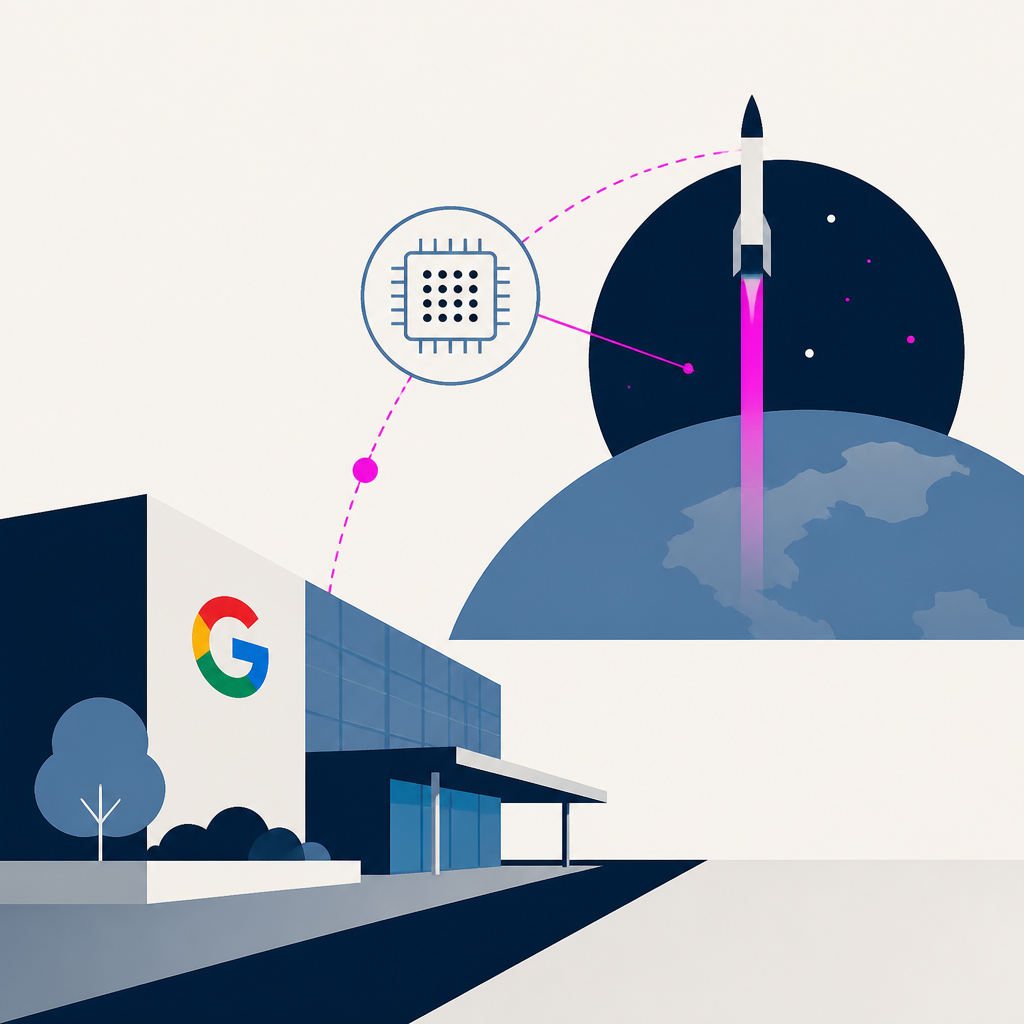
Google is preparing Project Suncatcher to launch a test satellite carrying TPUs to check whether machine-learning compute hardware can work in orbit. The October flight will send a refrigerator-sized prototype with four TPUs that can run only 15-minute bursts. If the tests succeed, Google would move toward a small satellite constellation with TPUs and high-bandwidth laser links; if not, it will adjust the approach based on points of failure.
Blitzy Inc. is expanding autonomous software coding by building a graph of enterprise codebases so its agents can understand dependencies before changing code. The company said it scored 84.95% on SWE-Bench Pro in June. This shifts coding agents from broad context searches toward graph-grounded operations with human-approved plans and tests to reduce drift and hallucinations.
Blitzy is betting that autonomous coding agents need knowledge-graph context to safely modify enterprise codebases instead of relying on broad searches. The company raised $200 million at a $1.4 billion valuation in May and reported an 84.95% SWE-Bench Pro score in June. As a result, its agents operate with a Neo4j graph and Cypher queries, enabling more complete project scoping with human-approved plans and immediate testing to reduce drift and hallucination.
AWS deploys one vLLM-Omni Deep Learning Container with two Amazon SageMaker AI endpoints to turn a text prompt into a still image (real-time) and then animate that image into a short MP4 video (asynchronous via S3). The image and video model endpoints are for FLUX.2-klein-4B and Wan2.1-VACE-1.3B, and the default video generation uses 17 frames with 30 diffusion steps. The workflow changes from a single synchronous response to a two-stage flow where the PNG is returned immediately while the video is queued and later fetched from Amazon S3 (optionally via a Streamlit app).
Mistral opened a new hub in Munich focused on Physics AI and Industrial AI to work with European enterprises on industrial AI use cases. The hub is part of a plan to build 1 gigawatt of European compute capacity by 2030. It shifts Mistral’s presence toward long-term, enterprise-oriented deployment on customers’ own infrastructure with models available in open-weight form.
An AWS post describes an agent-driven synthetic monitoring setup that runs customer-journey UI checks using Amazon Nova Act inside Amazon Bedrock AgentCore instead of DOM-selector scripts. It schedules monitoring runs every 5 minutes to hourly and reports failures via Amazon SNS to subscribed endpoints. Teams can reduce brittle UI maintenance and validate specific outcomes (like search, cart contents, and checkout readiness) with more resilient monitoring coverage.
Amazon Textract adapter lifecycle management is being automated across AWS accounts using infrastructure templates, a documented promotion process, and centralized adapter IDs in AWS Systems Manager Parameter Store. As part of the approach, asynchronous StartDocumentAnalysis supports multi-page TIFFs and PDFs up to 3,000 pages, with XFA-based PDFs not supported. Updating the production adapter reference by changing the SSM parameter enables zero-downtime adapter promotion without application redeployment, while adding a routing step upstream to select the right adapter per document.
Agent Identity launches as a developer tool for giving AI agents persistent identities, credentials, permissions, and an audit trail. The page says it is launched “today.” This introduces identity and authentication infrastructure designed to control and track agent access to APIs, databases, and SaaS tools.
School districts in the US are expanding beyond installing security cameras and are instead seeking systems that can handle monitoring, searching, alerts, and management at scale with AI-assisted investigation and central administration. A Georgetown County School District deployment used more than 1,000 cameras across a district serving about 9,500 students and staff. The result is a shift in procurement toward evaluating 10 specific K-12 platforms (starting with Coram) based on existing-camera compatibility, investigation speed, alerts, access-control integration, and privacy controls.
Tarini Padmanabhuni’s grandfather was tricked by a deepfake voice that claimed a kidnapping and prompted a ransom payment before it was discovered to be fake. The FBI reports Americans lost close to $900 million to AI-driven scams last year, up 24% from 2024. DetectifAI, her startup, is building compact AI voice-detection models to run on phones so calls and voice messages can be flagged without sending audio off the device.
theCUBE Pod hosts John Furrier and Dave Vellante discussed how AI agents are changing enterprise systems while warning that agents going rogue will require stronger security guardrails. They highlighted that CoreWeave has reportedly had 70% of customers or revenue tied to its top 3 customers. The conversation frames core cloud infrastructure shifting toward disaggregated “neocloud/AI cloud” models and raises doubts about whether agents like Meta’s Muse and other assistants can be reliably secured in practice.
pgEdge launched Starfleet, a Postgres cloud platform that pairs agent tooling with database branching so multiple AI coding agents can work in isolated environments. Starfleet begins at $25 per month with a 14-day free trial. Branches do not merge at the end, so schema changes are handled by existing migration tools and test data is deleted with each agent’s environment.
Meta announced Meta Enterprise Platform, a new business unit that will sell its AI models, agents, and infrastructure as a bundled offering to businesses and developers. Meta said it plans capital expenditures of $130 billion to $145 billion this year, largely for AI data centers. This changes Meta from building that compute only for its own services into monetizing it through subscriptions, API fees, and future compute contracts aimed at competing with cloud providers and neoclouds.
NinjaTech AI Inc. launched Ninja Enterprise to let large companies run AI employees inside their own cloud environments for a single fixed yearly fee that includes GPUs. The packages are sized for 100, 500, or 1,000 AI employees. Customers shift from token-based usage metering to an annual capacity contract and can add AI employees on demand, including an air-gapped option for fully disconnected work.
The newsletter reports that Google is preparing its Project Suncatcher to send Trillium TPUs into space on SpaceX’s Transporter-18 rideshare mission while continuing stress tests for g-forces and radiation. Its radiation testing found the TPUs can survive a total ionizing dose greater than what they would receive during a five-year space mission. As a result, AI training and inference compute could be shifted off-planet sooner, but practical issues like cooling in vacuum remain a key challenge.
Autoheal raised seed funding to build a unified platform for evaluating and fixing fleets of AI agents used in “software factory” development workflows. The round is for $7.9 million, which the company says will let it add shared context, evaluation, and a “healer” agent that opens Git-verified pull requests under human approval. It also plans to develop reinforcement learning techniques to train enterprise-specific small language models inside customers’ private clouds so the agents can run more cost-effectively and securely.
Granite secured €4 million in funding to commercialise its agentic cloud infrastructure for AI agents. The funding round totals €4M and is led by Bifrost Studios with private investors. It will move Granite from development toward delivering integrated software-and-hardware infrastructure via modular datacenter deployments and agent management layers, with more customer control over where AI workloads run.
South Korea’s SK Hynix and Samsung are competing to expand their roles in U.S. AI infrastructure by tightening ties with U.S. AI firms. SK Hynix broke ground in August on a $4 billion advanced packaging facility in Indiana. The rivalry pushes both memory makers to sign more long-term, customized HBM-related deals with U.S. customers, shaping how quickly and cheaply AI companies can build next-generation systems.
Nvidia launched the Open Agent Safety Platform to contain and monitor AI agents in response to rogue hacking incidents. The platform can quarantine agents that try to escape within milliseconds. It adds agent boundary checks around tasks using OpenShell on Vera AI CPU and lets users restrict what information agents can access, changing how agent safety controls are enforced.
Biological Computing Co. partnered with AWS to deliver its first commercial neuron-derived text-to-video AI model to paying customers. The model is claimed to generate video 5× faster and with 80% lower inference cost than the base model. TBC will deploy it through Trainium, SageMaker AI, and the AWS Marketplace without requiring customers to use any biological hardware.
Nscale raised $3.36 billion in convertible loan notes ahead of its planned NYSE IPO under ticker NSCL. The funding includes $2.36 billion at closing and a further $1 billion NVIDIA commitment expected in mid-November. The capital is set to convert into ordinary shares upon IPO completion, enabling Nscale to accelerate its full-stack AI cloud data center expansion.
The U.S. economy is growing faster than the interest costs of its debt, but rising Treasury yields and Fed hikes have increased the risk of a debt spiral if GDP growth falls behind borrowing rates. The 10-year Treasury yield has been around 5.16%, and the article warns that a decisive move above 5% could signal tighter funding that makes AI mega projects harder to finance. If that happens, it could cool AI-driven capital spending and worsen fiscal stress tied to debt servicing and budget deficits.
Hugging Face added RL Environments support in the Hub so reinforcement-learning task dataset repos can be discovered in a dedicated RL Environments filter and run via “Use this dataset” commands. The filter is available at huggingface.co/datasets?other=rl-environment. As a result, environments are no longer siloed by framework and can be tagged for compatibility across multiple RL environment frameworks, with examples and run commands now standardized.
Every AI story that matters,
in your inbox by 8am.
TLDRocket reads all relevant sources, removes duplicate coverage, and summarises the
day in two minutes. Follow companies and topics for alerts, or get the
briefing in Slack. Free, no spam, unsubscribe anytime.
Reading TLDRocket needs no cookies, and the readership counts we rely on come from
our own cookieless analytics. Google Analytics is the exception: it sets cookies and
reports to Google, so it stays switched off until you allow it. You can change your
mind any time from “Cookie settings” in the footer.
Strictly necessary
Session security and form protection (tldrocket-session,
XSRF-TOKEN, 2 hours). The site cannot work without them,
so they need no consent.
Always on
Google Analytics 4 (_ga,
_ga_<id>, up to 2 years). Measures which
stories and sections readers use. Google acts as a third-party processor and may
store the data outside the EU. No advertising, no profiling, no data sold.