Blitzy’s autonomous coding bet: Every codebase is already a graph
SiliconANGLE Jonathan Anthony ● Covered by 2 sources
Blitzy is using graphs to help AI change big codebases safely. The pitch: code isn’t just code; it’s the web of things around it.
Based on reporting by SiliconANGLE, Jonathan Anthony — read the original for the full story.
Summary, retelling and take written by AI under human oversight; images are AI-generated illustrations. How we work · Report an error
Blitzy is betting that autonomous coding lives or dies on one old idea with a fresh coat of AI: knowledge graphs. The company, which raised $200 million at a $1.4 billion valuation in May, is trying to run thousands of coding agents in parallel. But the point isn’t simply to make them write faster. It’s to make them understand what they’re touching.
That’s the argument Neeraj Deshmukh, Blitzy’s director of engineering, made at GraphSummit in a conversation with theCUBE Research’s John Furrier. The hard part, he said, is not code generation. It’s whether the system knows enough about the rest of the application to avoid breaking something far away with a tiny change. In a large enterprise codebase, that matters a lot more than a clever snippet.
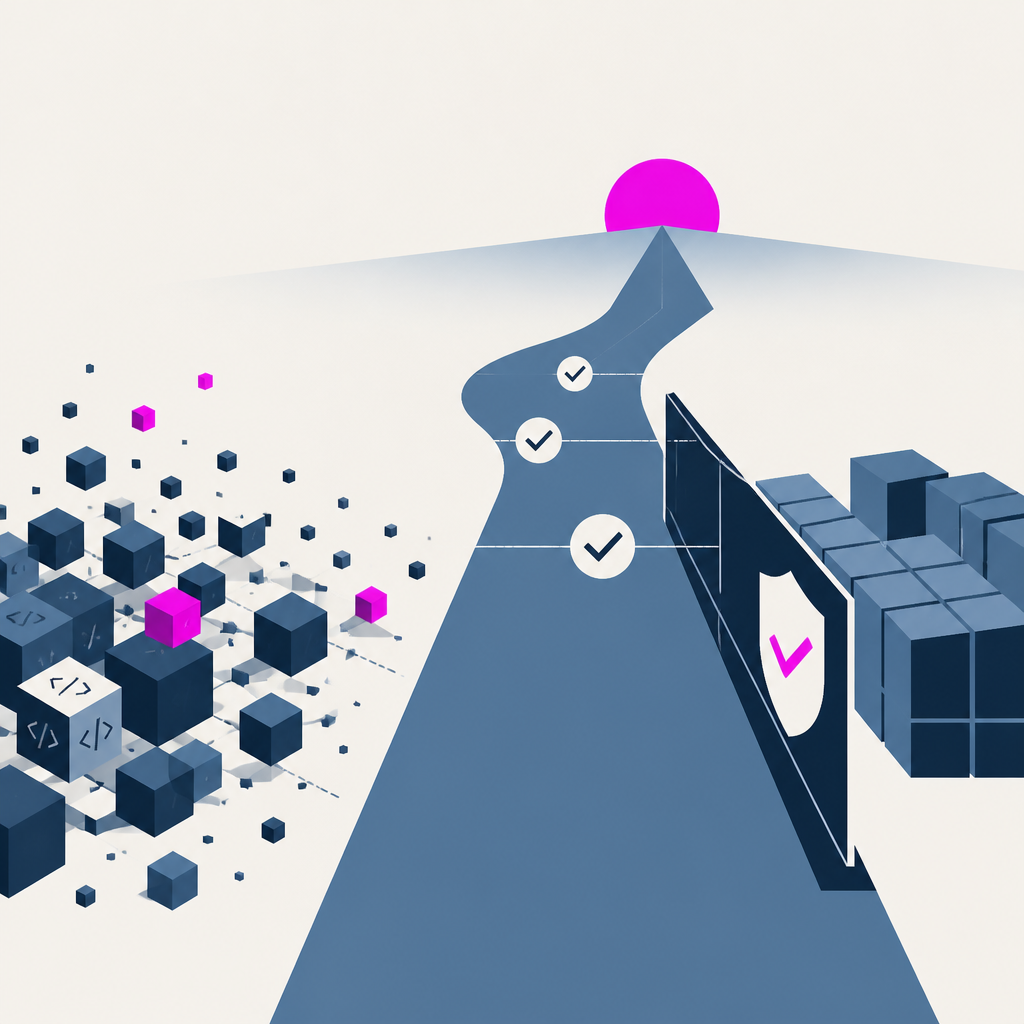
Blitzy starts by reverse-engineering a customer’s environment and turning the codebase into a dynamic graph. It connects that graph to GitHub and GitLab, so it updates as humans or agents make changes. The company’s logic is simple: code already behaves like a graph, with modules, files, functions, objects, classes and variables all tied together. If you model those relationships directly, agents can work from the right slice of the system instead of scraping around blindly.
The alternative is familiar and a little ugly. Without a graph, agents lean on vector search or grep-style lookups, and that chews through working memory fast. Deshmukh said an agent’s effective context tops out around 200,000 to 300,000 tokens, or about 20,000 to 30,000 lines of code. On a 100-million-line codebase, that gets messy quickly. With a graph, the agent starts from a known point and sees only what is reachable from there.
That changes the shape of the work. Blitzy says it can tackle whole projects at once instead of chopping them into the usual sprint-sized epics, stories and tasks. Humans still approve an Agent Action Plan before coding begins, and every generated line gets tested immediately. The company also said it hit an 84.95% score on SWE-Bench Pro in June. Deshmukh said other agents watch the first ones to keep them aligned with the approved plan and avoid drift or hallucination.
Neo4j is the plumbing underneath that pitch. Blitzy’s agents query its graph database constantly using Cypher, and Deshmukh argued that the language’s strictness is a feature: if the query is wrong, it returns nothing. That is a neat way to keep agents honest. It also makes the larger case for graphs feel less like hype and more like software admitting what it has been all along: a tangle of relationships pretending to be files.
My take — AI-written commentary, not fact-checked reporting
This is the right kind of boring AI. Not another demo that writes a function and calls it autonomy, but a system that cares about dependencies, approvals and testing. Graphs may not be flashy, but neither is debugging a broken enterprise rollout at 2 a.m., which is probably the better test.
Read more about this at: SiliconANGLE