
The U.S. economy is running hot and stuck on a hamster wheel as GDP growth must outpace borrowing costs—or risk getting sucked into a debt spiral
Fortune Jason Ma

The U.S. economy is growing faster than its borrowing costs, for now. AI spending and big deficits are propping it up, but the debt math can flip fast.
Based on reporting by Fortune, Jason Ma — read the original for the full story.
Summary, retelling and take written by AI under human oversight; images are AI-generated illustrations. How we work · Report an error
The odd thing about the U.S. right now is that the economy looks stronger than the public mood suggests. Gas prices hurt, living costs sting, and consumer sentiment is poor. But the numbers in the background show an economy that has kept shrugging off shocks, including President Donald Trump’s tariffs and the war on Iran.
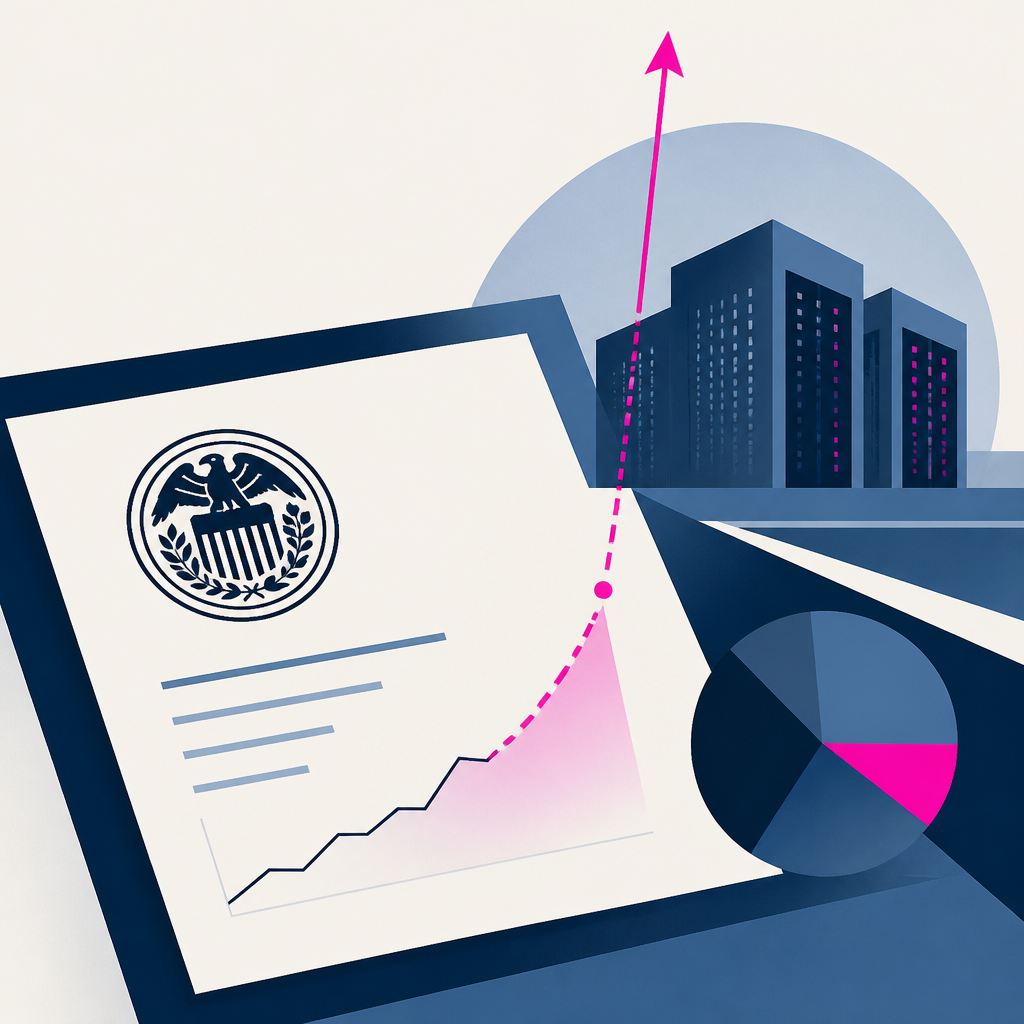
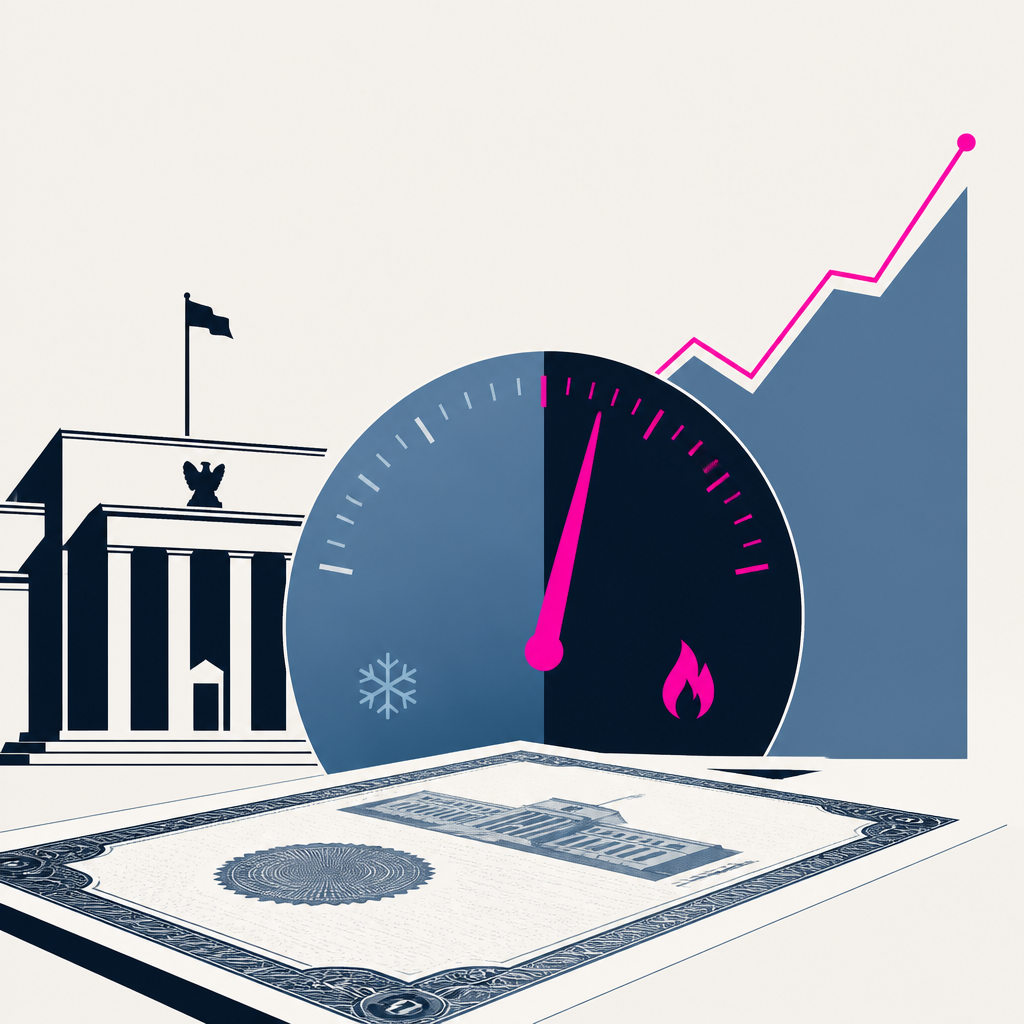
That strength has a price. Federal Reserve policymakers raised interest rates earlier this month because they see an economy that is not merely holding up but running hot. Treasury yields have climbed too, which makes it more expensive to carry $40 trillion in U.S. debt. The result is a kind of treadmill: growth has to stay ahead of borrowing costs, or the debt burden starts growing faster than the economy.
For the moment, growth is still winning. Real GDP has been running around 2%, while nominal growth has been above 6%. That is still higher than the 10-year Treasury yield of 5.16%, even after yields rose by more than a full percentage point since the war on Iran began. A September gauge of U.S. business activity also hit a five-year high, which suggests the third quarter could look even hotter.
A lot of that heat comes from AI. Capital spending by Alphabet, Amazon, Microsoft, Meta, Oracle, and SpaceX is projected to reach $870 billion this year, up from $470 billion in 2025. S&P Global says spending from the big hyperscalers could top $1.3 trillion in 2027. Economist Stijn van Nieuwerburgh says the AI build-out is on track to become the biggest boom in U.S. history, even bigger than the railroad mania. And the money is spilling beyond tech: Caterpillar and GE have benefited from the data center rush, with UBS economist Jonathan Pingle saying the investment impulse is spreading into the old economy.
The federal deficit is doing its part too. Washington is running a $2 trillion annual budget deficit, and much of the debt it sells ultimately flows back into consumers through entitlement payments and then into corporate profits and stock values, according to Research Affiliates. But this setup only works while growth outruns interest costs. Ruchir Sharma warned that the AI bubble could pop if the 10-year yield decisively moves above 5%, making those mega-projects harder to fund. The Committee for a Responsible Federal Budget says the country is already entering a debt spiral, with new Treasury borrowing near 5% and medium-term nominal growth closer to 4%.
That’s the real tension here. Slower growth won’t automatically rescue bond markets, because yields are also being pushed up by competition for capital, geopolitical risk, and the Fed’s ability to keep inflation in check. If those pressures keep building, the current comfortable math could disappear fast.
My take — AI-written commentary, not fact-checked reporting
This is classic America: borrow big, cheer the boom, and act surprised when the bill shows up with interest. The AI spendathon is real, but so is the habit of turning every hot trend into a macro crutch. Closed-model hype, open-model hype, it barely matters if the debt market decides the party needs smaller speakers and fewer capex confetti cannons.
Read more about this at: Fortune
Related stories
 Wall Street used to worry that too much U.S. debt would crowd out the private sector. But AI hyperscalers are 'reverse crowding' the Treasury
Fortune ·
30
Wall Street used to worry that too much U.S. debt would crowd out the private sector. But AI hyperscalers are 'reverse crowding' the Treasury
Fortune ·
30
 Exclusive: Goolsbee says AI is 'not far' from overheating the economy
Fortune ·
2
Exclusive: Goolsbee says AI is 'not far' from overheating the economy
Fortune ·
2
 Hot or not? The economy’s fate rests on Kevin Warsh’s answer to one key question
Fortune ·
6
Hot or not? The economy’s fate rests on Kevin Warsh’s answer to one key question
Fortune ·
6