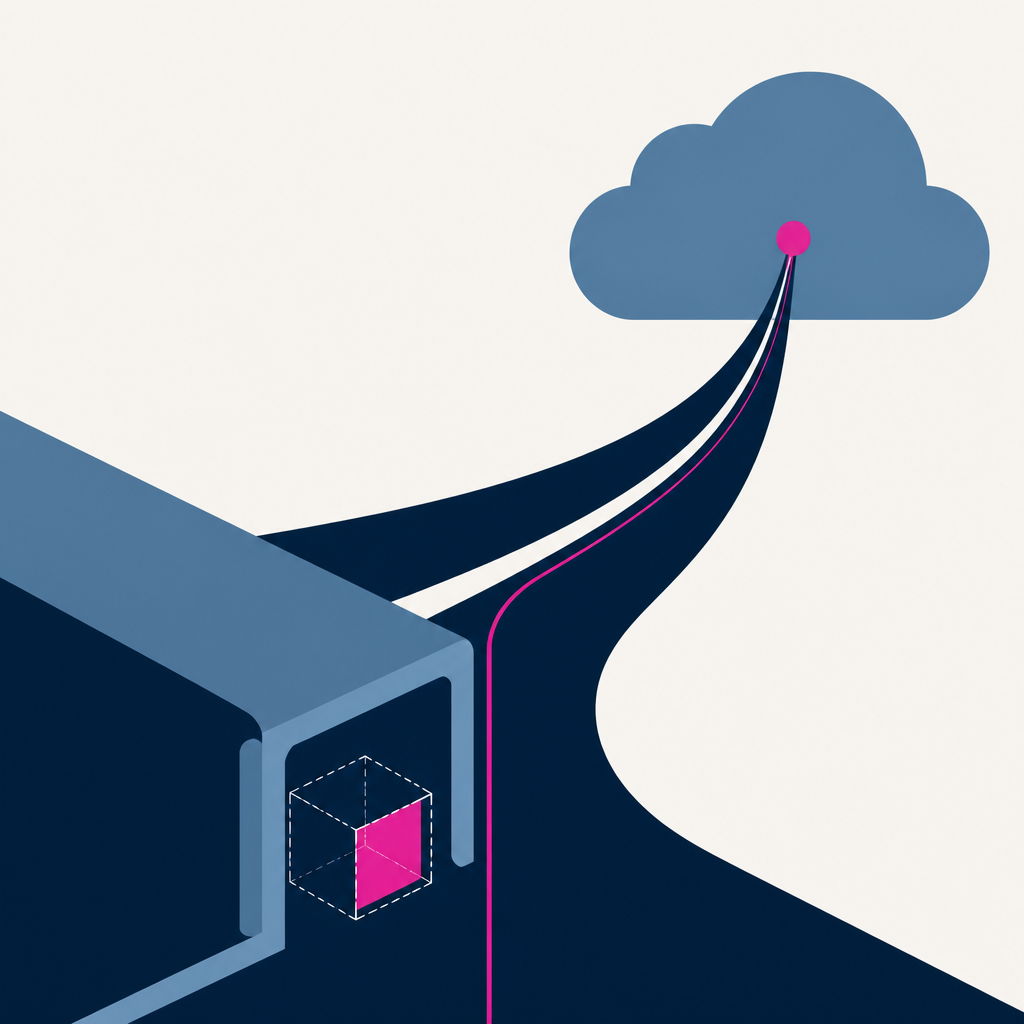
Cowork updated how it runs Claude by moving both model inference and the VM sandbox to the cloud instead of running the inference in the cloud while executing tool calls locally in an Anthropic-provided VM on the user’s device.
NetApp presented Novus to address AI data infrastructure issues, especially metadata bottlenecks that limit enterprise usability for GPU clusters and AI agents. Its storage architecture is reported to exceed 100TB/s of aggregate throughput, with metadata managed separately and a unified file view across multiple ONTAP clusters. The approach adds automated discovery, classification, and vectorization via an AI Data Engine, aiming to reduce long data-prep timelines and improve how quickly and safely AI agents can use protected enterprise data.
NetApp framed European data infrastructure decisions around sovereign storage to support AI, modernization, and cyber resilience. NetApp introduced its Keystone Sovereign service for qualified European customers. The approach shifts from treating sovereignty as only legal data location to making it an architectural and operational control that lets customers get a cloud-like experience while retaining control of their data.
Pi initially avoided MCP in its coding agent because MCP servers added large context overhead before the agent did anything useful. Chrome DevTools MCP alone used about 18,000 tokens (roughly 9% of a 200,000-token context window) to load without useful work. Pi later incorporated MCP but kept tools out of the model prompt by using Codemode tool discovery and calling tools from a sandbox, reducing prompt tokens.
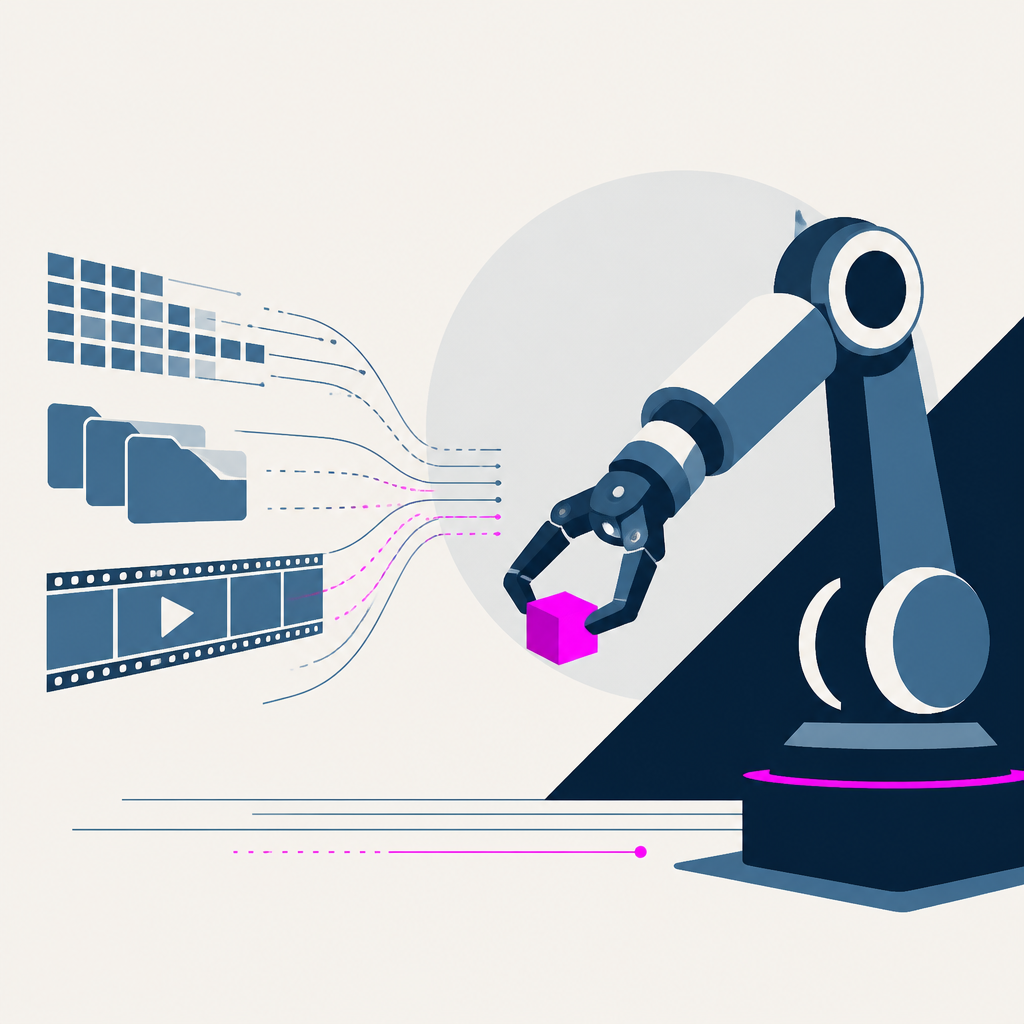
NVIDIA Cosmos3-DROID was used to build an end-to-end streaming robotics learning pipeline that reads Parquet and video data without downloading the full dataset locally. The pipeline avoids downloading a 707 GB repository and uses byte-range Parquet reads plus seek-based AV1 video decoding to fetch only needed data windows. It then trains and evaluates a multimodal behavior-cloning policy and saves the resulting policy checkpoint for downstream use.
Dynatrace completed its $915 million acquisition of Arize on October 1, adding Arize’s tracing and evaluation of AI agents to Dynatrace’s application and infrastructure monitoring offerings. The deal is valued at $915M and removes an independent AI observability vendor that a competitor invested in. As a result, teams can use the combined platform to track AI-agent failures and investigate issues where they occur, while automation is still expected to require human validation before production changes are approved.
Red Hat’s AI Safety team benchmarked nine AI guardrail configurations—comparing a small prompt-injection classifier, LLM judges, and Jev-style decision models—using NVIDIA’s NeMo Guardrails across prompt-injection and content-safety tests. Qwen3.6-35B as an LLM judge scored 89.31% accuracy on prompt injection, nearly matching DeBERTa’s 89.01% while also showing much higher median latency (312.5 ms vs 54.1 ms). Red Hat will ship both classifiers as default guardrails in OpenShift AI 3.6, while concluding that small task-specific classifiers work best for well-defined risks and that policy writing strongly affects results for decision models and other approaches.
RemoveMacAI removes Apple Intelligence models from Macs on macOS 27, so users who do not use Apple’s AI don’t have to keep the downloaded models. It can free up about 12GB of storage by deleting those models. Disabling individual features no longer prevents the models from occupying disk space, but after running the tool those features and related services stop working and the storage is reclaimed until macOS downloads the models again.
Dell is hosting the AI Cybersecurity and Resilience Summit to focus on whether enterprise AI can keep operating under cyberattacks and data integrity failures as models move from pilots into production. The flagship program runs on Oct. 27, with broadcasts for North America on Oct. 28–29. The agenda shifts security from separate controls to an integrated, recovery-oriented foundation across the AI infrastructure stack, with added attention to trusted operations during incidents and how much data can be restored quickly.
Amazon introduced the aws-ai-ml skill for the Agent Toolkit for AWS, which lets coding agents optimize and benchmark Amazon SageMaker AI generative inference and generate SageMaker Python SDK v3 code. The setup can take you from zero to a working conversation in 10 minutes. After installing the skill (or using a preconfigured SageMaker Studio space), agents can run endpoint load tests and produce ranked, code-ready deployment and performance recommendations instead of leaving engineers to pick instances and settings manually.
Amazon Bedrock AgentCore Evaluations was introduced to measure multi-agent systems for helpfulness, task success, instruction following, and explainability beyond just response quality. It supports on-demand and online modes, with online sampling set as a range example of 1–10% of production traces. This enables teams to score agent behavior across accuracy, business-validity checks, and separate explainability signals during development and continuous production monitoring.
Palo Alto Networks launched Cortex XCOR, an AI-driven observability platform that triggers agents when alerts fire to investigate outages and recommend mitigations instead of relying on dashboard-only workflows. It reports average automated root-cause analysis in under three minutes with a 75% success rate in complex production environments. For now it still pages engineers, but the company aims to keep reducing response time as customers trust the analysis and move more remediation to automation.
TechCrunch Disrupt 2026 will host multiple sessions focused on how AI founders decide between open models, proprietary frontier APIs, customized models, and building vs renting parts of the AI stack. The event runs October 13-15 at Moscone West in San Francisco. Attendees are directed toward a multi-model and flexible approach that can shift operating costs, infrastructure choices, and how quickly teams can adopt better models as technology changes.
TechCrunch Disrupt 2026 will feature the Disrupt Stage lineup across three days in San Francisco, with founders, CEOs, investors, and AI-related leaders discussing topics including AI scaling, AI hardware design, and AI/surveillance in public safety.
Iterate.ai launched Lifeboat, an inference engine for large language model agents with confidential computing and memory optimizations. It reported running 2,048 concurrent sessions on a single Nvidia RTX PRO 6000 Blackwell GPU, up to 6x more than its baseline. This lets enterprise teams scale agent throughput on the same GPUs without needing to buy more or shift work to token-cloud services that require data handoff.
Cohere unveiled North 2, an overhaul of its enterprise platform for running AI agents, adding redesigned multistep orchestration, sharing, memory, skills, and connector support.
The release includes token spending caps that track token use down to individual users and agents.
North 2 shifts agent deployment by giving administrators tiered usage limits and alerting in North Admin while keeping model choice model-agnostic and supporting on-prem or fully air-gapped installs.
Namespace raised $42M in a Series B financing round, seven months after its Series A, to speed up developers’ build and test workflows without managing infrastructure. The round totals $42M and was led by Scale Venture Partners with participation from 20VC, NEA, Essence, Burst Capital, and angel investors. The company will use the money to accelerate product development and expand its compute and server operations, positioning the platform as an infrastructure layer for AI coding agents.
Aston Martin Aramco F1 team and CoreWeave are pairing forward-deployed “physical AI” engineers with the team to meet rapid race deadlines, including a new service that places cloud engineers alongside the team. The article says the AI model can listen to 40 radio participants at the same time and generate a summary for action within 30 seconds. The setup shifts from internal, manual expertise to an AI-assisted workflow for turning high-rate data into near-real-time decisions, while also emphasizing when simple rules should replace over-engineering.
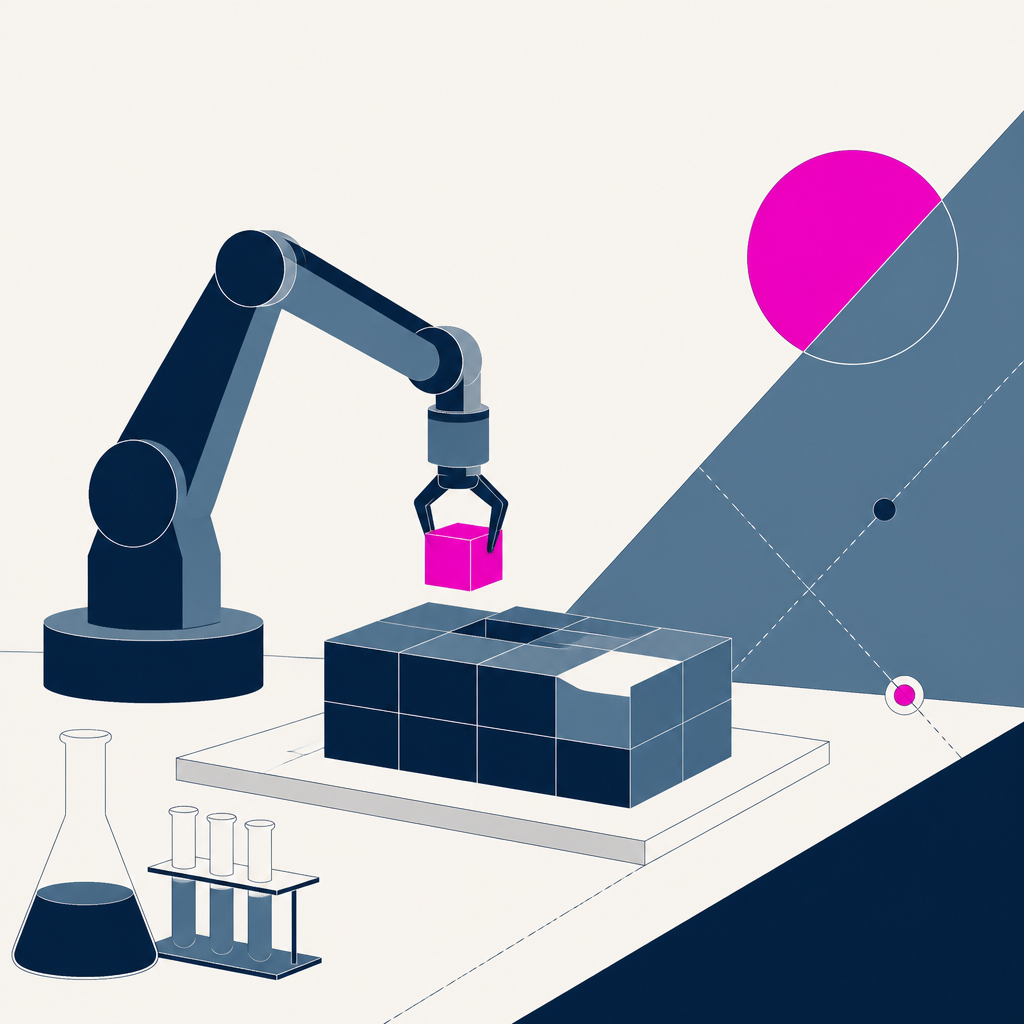
Physical AI is moving from training models in data centers to deploying adaptable robots on factory floors, where manufacturers must trust machines that handle constant process change. Walden Robotics, spun out of Toyota Research Institute in January 2026, launched with $300 million in July and has had robots working full production shifts since May. As a result, the bottleneck shifts to continuous learning in deployment supported by simulation and human assistance, including robots that can call remote help for better ongoing improvement.
Clockwork.io raised $31 million to build software fault tolerance that reduces GPU downtime for distributed AI workloads. The company says its LinkPass deployment prevents tens of thousands of GPU-hours of downtime every month. Its platform expansion will roll out fault tolerance across AI training, inference, and reinforcement learning, including its new TorchSnap checkpointing technology that works without code changes.
Safeworld, founded by Carnegie Mellon Safe AI Lab director Ding Zhao, launched from stealth to address safety validation for humanoid robots run by generative AI. The company raised a seed round of more than $12 million while preparing simulations that test robot control software against thousands of realistic human scenarios. As a result, robot builders may rely on Safeworld’s third-party simulation-based “safety case” evaluations to validate deployments across different factory conditions.
The article argues that indefinite exponential growth is limited by nature, then turns to Anthropic’s revenue growth as an example of something going wrong. It cites an illustrative cost of about ~500 trillion dollars in rice grains to model exponential “doubling” across a chessboard. As a result, it sets up an upcoming explanation for what is driving Anthropic’s apparent revenue trend problem.
Together Link was launched as a tool that connects coding agents to open models on Together AI. It launched as version 5.0. It lets developers keep existing tools and workflows while aiming to reduce model costs.
Ghost Core was launched as a personal AI computer intended to run AI models on-device and link to your apps, files, and devices for continuous context. It launched today and shows 30 followers. As a result, users can access an on-device AI setup that aims to proactively help by maintaining context across their apps and data.
ruOS launched a private cloud desktop that includes an AI team to handle tasks like research, writing, and code from your browser. It offers ruOS Lite free to try in seconds with no sign-up. As a result, users can start work immediately across devices with persistent files and AI memory, and power users get a Linux environment plus an MCP server for LLMs to control it.
AI data-center demand has driven up memory-chip costs, which is raising smartphone prices and making sub-$150 models shrink or disappear. Smartphone models launched this year are about 25% more expensive than last year, and 173 million sub-$100 phones shipped globally last year are forecast to be down almost 60% year over year in the second quarter of 2026. Chinese makers are cutting back on entry-level projects and shifting resources to higher-margin premium phones, potentially widening the digital divide as some people can’t afford or access an internet-enabled device.
Brnch launched a code hosting service aimed at coding agents working in the same repo as their sponsor. It launched today, with a page showing 6 followers. Developers can give an agent a dedicated identity, get line-level visibility into what it did, and verify signed receipts for each tested merge.
European tech deal-tracking coverage reported 70+ European tech funding deals alongside 5+ exits, M&A transactions, and rumours. The total value reported was over €3.9 billion, with cloud (€2.95 billion) the top funded industry. The roundup points readers to the Tech.eu Funding Explorer for deeper breakdowns of the funding data and market trends.
EnerCube formed a strategic partnership with Panasonic to launch a new prefabricated heat pump heating unit series for large commercial, industrial, and municipal buildings. The new series is planned to launch in Germany and Austria from 2027. It integrates Panasonic’s Big Aquarea M air-source heat pumps (up to 180 kW per unit) into EnerCube’s factory-built “Cubes,” enabling faster, in-series replacement of heating systems for large building portfolios.
Pandektes raised a €13.5 million Series A to build legal data infrastructure for cross-border legal research and to license its structured data to legal AI developers. The round was led by Alstin Capital. The funding will be used to expand into Europe and North America, grow the team, and provide more data access to external developers via an API, with an API waitlist tracking demand.
Vionmo won Travel Start-up Night Vienna 2026 after pitching its tourism mobility-data approach at the ÖBB Innovation Lab, beating four other companies. The event took place in 2026 at Vienna’s main train station and the prize advances vionmo to the annual final in Germany for “Travel Start-up 2026.” The result sets up vionmo to compete nationally, while two AI-focused finalists (touristinfo.ai and Majourny) continue toward partnership discussions rather than winning the Vienna event.
Deutsche Telekom is deploying AI to run parts of its hotline, network operations, and software and administration work while using AI to become a growth business. By 2030, it expects AI and automation to reduce about 2.5 billion euros in indirect costs compared with 2023. The company’s operations and customer-contact model shift toward AI handling large call volumes, while it reinvests some savings into digital transformation and pushes AI-related revenue from business customers and consumer services.
EmTech Future 2026 featured MIT Technology Review editors and speakers discussing how AI is reshaping areas like biology, infrastructure, manufacturing, and science as well as what happens when it converges with other technologies. The full on-demand program is available with a 20% discount, lowering the access price to $596. Attendees can now watch all sessions on demand, and the event’s themes are positioned around cross-domain technology convergence rather than standalone advances.
Every AI story that matters,
in your inbox by 8am.
TLDRocket reads all relevant sources, removes duplicate coverage, and summarises the
day in two minutes. Follow companies and topics for alerts, or get the
briefing in Slack. Free, no spam, unsubscribe anytime.
Reading TLDRocket needs no cookies, and the readership counts we rely on come from
our own cookieless analytics. Google Analytics is the exception: it sets cookies and
reports to Google, so it stays switched off until you allow it. You can change your
mind any time from “Cookie settings” in the footer.
Strictly necessary
Session security and form protection (tldrocket-session,
XSRF-TOKEN, 2 hours). The site cannot work without them,
so they need no consent.
Always on
Google Analytics 4 (_ga,
_ga_<id>, up to 2 years). Measures which
stories and sections readers use. Google acts as a third-party processor and may
store the data outside the EU. No advertising, no profiling, no data sold.