Vinci4D Inc. closed a $250 million Series B funding round at a $1.5 billion valuation for its engineering simulation platform. It says the platform can run simulations with hundreds of millions of degrees of freedom in a few minutes instead of several hours or days. The funding supports faster simulation workflows after design changes and expansion from chip thermal simulation to vehicles, aircraft, and satellites.
Cline Bot Inc. launched and expanded an open-source “AI coding harness” to help open-weight models choose tools, run correction loops, and pick cheaper inference when full frontier capability isn’t needed. Cline reported its token consumption grew 20x over four months, with a shift in May after several strong open-weight models appeared. As a result, the harness is broadening from coding into a more general tool and is being paired with Cline Desktop on CoreWeave’s serverless platform to support more day-to-day knowledge work.
Dell Technologies announced updates to its AI Data Platform that extend its data orchestration and data processing engines to support agentic AI and move toward an agentic data center architecture. The Dell Data Processing Engine is intended to run on Nvidia GPUs using the cuDF library to accelerate enterprise data preparation. These releases add a Unified Semantic Layer, Enterprise Knowledge Graph, and Knowledge Agents and bring processing closer to storage to reduce data movement for building AI-ready context.
Lambda is raising up to $4 billion at a $14.5 billion pre-money valuation ahead of a planned 2027 IPO, according to The Wall Street Journal. The company’s backlog rose from $15 billion in June to $50 billion in September, with much of the increase linked to a $35 billion Anthropic commitment signed in late August. The funding and backlog growth position Lambda to fund data center buildouts and potentially influence IPO pricing as it approaches public-market scrutiny.
CoreWeave announced CoreWeave Forge to connect model deployment, evaluation, and continuous improvement via reinforcement learning rollouts that repeat generate-and-update cycles. It said RL Rollouts helped post-train Nemotron 3.5 Lightning in eight hours using You.com’s web search tools. This shifts post-training toward higher GPU utilization by speeding weight synchronization and enabling cross-region data writes so jobs can feed each other between training rounds.
TheCUBE’s interview series on the Supermicro Open Storage Summit argues that enterprise storage strategy is becoming central to making AI deployments reliably deliver business results. The coverage highlights that key-value caches for inference can outgrow GPU memory, requiring additional storage tiers to balance capacity and fast access. As organizations move pilots to production, they must adopt workload-specific, operationally controlled storage systems and improve data access, orchestration, and governance across the full data life cycle.
A developer documented how to use Parseable with Datasette to send OpenTelemetry traces into Parseable’s local web UI. Datasette added OpenTelemetry support in version 1.0a41. The result is a working setup pattern, shown with an example screenshot of traces displayed in Parseable.
MasterClass is developing AI teaching agents that adapt lessons to student engagement to broaden access to tutoring while reducing staffing and cost pressures. The first cohort drew 30,000 applications for about 500 spots. It is deploying the agents with 10 behind-the-scenes agents per interaction and using W&B Weave for production tracing and monitoring to iteratively improve agent behavior at scale.
Finnish authorities ordered a halt to preparatory work on two planned Google data centres in Muhos and Kajaani over environmental assessment concerns. The stop order requires suspending measures by 23 October after more than 300 hectares of forest clearance concerns were raised. Google said it would follow the agency’s guidance, asked the developer for an explanation by 14 October, and Finland may start enforcement if it does not comply.
Vast said it is using tiered storage to reduce AI agent memory pressure by offloading KV caches from GPUs during long-running sessions. It noted that a half a million token session can use one-tenth to one-twentieth of a GPU’s memory. This shifts inference from being limited by GPU memory to a distributed setup using GPU, CPU, and persistent storage, enabling scheduling across a machine fleet.
Google announced a 20-year agreement to update six US nuclear power plant sites through Constellation to supply electricity for its data centers. The deal is tied to more than $4.3 billion in new investment by Constellation and targets 890 megawatts of added capacity over five years. This expands the nuclear power supply pipeline that Google relies on, while Constellation funds efficiency upgrades at the selected plants.
Amazon SageMaker Unified Studio guidance explains how to administer shared SageMaker HyperPod clusters with governance controls across organization, project, cluster, and workload layers. It proposes keeping cluster and scheduler ownership centralized in a designated capacity account. This changes administration by letting infrastructure teams run the cluster while project teams launch approved compute from their Unified Studio project context with aligned identity, network, capacity, and observability policies.
Amazon SageMaker Studio can now create and manage SageMaker Spaces running on Amazon SageMaker HyperPod EKS clusters directly from a new IDE and Notebooks tab. Startup time can drop from 5–7 minutes to around 30–40 seconds using node over-provisioning. This shifts day-to-day Space operations from HyperPod CLI/kubectl to a browser-based workflow with options to create, start/stop, and open Spaces (JupyterLab or Code Editor) or connect to them via remote VS Code.
A voice travel concierge was demonstrated for airline apps by wiring spoken requests to backend itinerary, booking, and policy actions using Amazon Bedrock AgentCore plus related AWS services. It streams real-time, bidirectional audio over a WebSocket session. It changes the customer experience by letting travelers tap and talk in the same session to manage travel tasks and optionally escalate to a live agent, rather than navigating screens.
NetApp presented an intelligent data infrastructure approach to make legacy enterprise data usable for AI without re-architecting or moving it. The company plans a fully managed storage service on Oracle Cloud Infrastructure within the next 12 months. This shifts legacy storage from a static archive toward unified, governed, protected data access via NetApp’s storage, control plane, and partner protection tools.
TechCrunch Disrupt 2026 announced a full 50-minute breakout session agenda with Q&A across topics like AI agents, inference economics, and physical AI at Moscone West in San Francisco. The event runs October 13–15, and session capacity is limited with first-come, first-served attendance. The result is that attendees can plan which sessions to attend for direct questions to the listed speakers, especially on AI-related startup execution and funding themes.
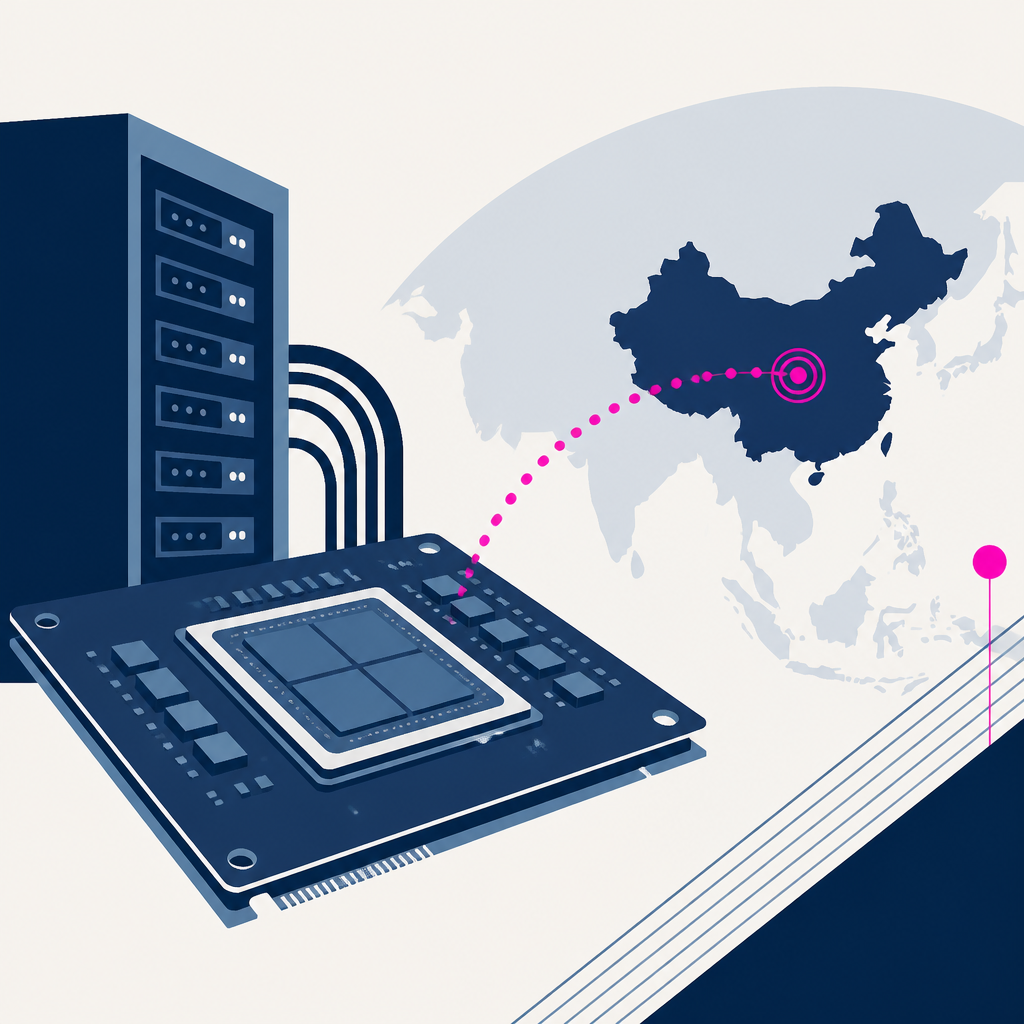
CSET analyzed location verification approaches intended to improve US export-control enforcement against AI chip smuggling into China despite existing enforcement still missing chips. It simulated more than 10 million scenarios and found ping-based location verification (PLV) was more cost-effective than physical inspections because inspections did not detect more diverted chips per dollar in any scenario. The report recommends PLV only as an initial option that meets strict criteria while treating physical inspections as a supplement, but it concludes policymakers may not get enough benefit to justify the overall cost given PLV’s limitations.
Antseed launched a decentralized peer-to-peer marketplace for routing AI inference requests across independent model providers instead of centralized gateways. It raised a $2.4 million token funding round and claims it can cut inference costs by up to 97% versus official API prices. Developers can now use a self-hosted local router and pay-per-request access with more predictable pricing driven by provider competition and verification-based reputation.
Anaconda Inc. is upgrading its enterprise AI platform to coordinate agent swarms and add AI security testing so customers can move applications into production. It says Enkrypt research found vulnerabilities in 73% of the agent tools examined across more than 25,000 Model Context Protocol (MCP) servers. The update introduces features like a shared message board with audit logs, autonomous agent red-teaming with least-privilege controls, and a larger curated model catalog, while retiring some legacy workbench and package-security products.
Vocca raised a $20 million Series A led by Norrsken VC to deploy an AI phone assistant for medical practices. The funding brings total investment to $25 million, and Vocca serves 15,000 practitioners. It will expand deeper scheduling infrastructure, add channels beyond voice, cover more specialties and scenarios, and grow its US presence.
Accenture Federal Services’ Bharat Patel argues that military AI projects fail less because of model design and more because of flawed or incomplete battlefield data, drawing examples from Project Maven and tank sensing efforts. He says Project Maven began in 2017 with lots of data that did not include relevant targets, requiring continuous collection of relevant data to improve real-world performance. The focus shifts toward building end-to-end “pipelines” with standards, governance, testing/evaluation, and ongoing data collection—while outsourcing most implementation work to industry and keeping data management in government hands.
Procuros, a Hamburg startup, raised a €20M Series A led by XAnge to build infrastructure for AI agents to automate B2B trade across systems and formats. The funding round is €20 million. The company will scale sales, develop its AI supply-chain infrastructure, and expand into more of Europe and the US so more businesses can connect once and exchange trading data without point-to-point integrations.
Ghost emerged from stealth after a year of building and announced a personal-AI hardware computer called Core, along with an $11M seed round led by Andreessen Horowitz. The Core device costs $3,499 and includes an Nvidia RTX Pro 4000 SFF Blackwell GPU. The company plans to start preorders on Monday with shipping in the last week of October and to deliver model and software updates via over-the-air updates so the agents can run locally.
Procuros raised a €20 million Series A funding round to develop its AI-native supply-chain connectivity platform for B2B data exchange. The round is €20 million, led by XAnge with participation from Point Nine, Creandum, and b2venture. The company plans to scale its go-to-market, expand internationally, and build a shared data layer that replaces point-to-point integrations and helps AI agents automate trade workflows.
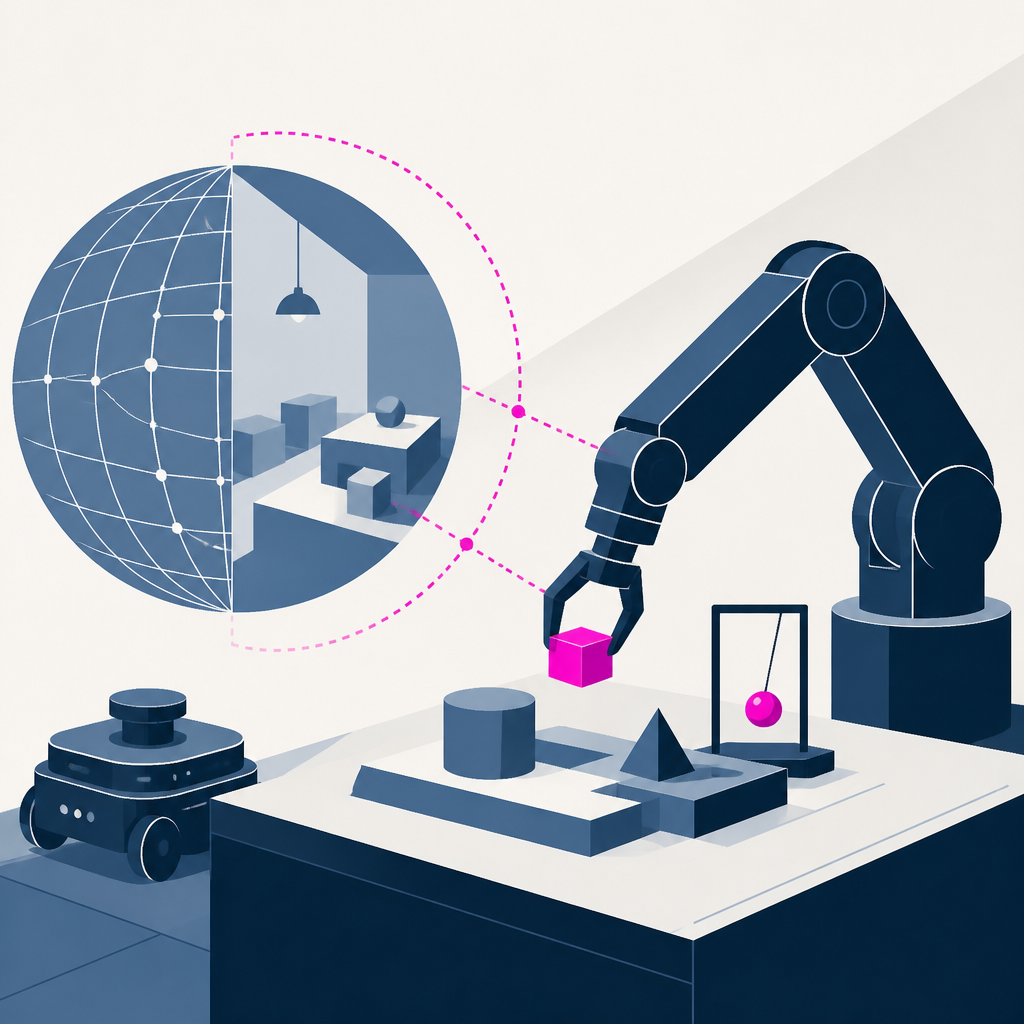
Reactor added Nvidia’s NVentures and Sapphire Ventures to its cap table as world model startups gain attention. The company’s total funding rose to $74 million after the new investment. It plans to use the money to secure more computing capacity, expand its team, and buy robot hardware to test its cloud platform.
SunSed launched its third AI-native app platform release that builds production apps from sealed, battle-tested components rather than generating large amounts of new code. Up to 20x fewer credits are claimed for app builds. The change is that subscriptions now bundle managed hosting, a private database, transactional email, user authentication, file storage, and automatic backups under the new framework.
Together AI announced it is working with IBM and NVIDIA to scale enterprise-grade AI inference via a large IBM Cloud cluster using NVIDIA B300 GPUs with NVIDIA Spectrum-X Ethernet networking.
Every AI story that matters,
in your inbox by 8am.
TLDRocket reads all relevant sources, removes duplicate coverage, and summarises the
day in two minutes. Follow companies and topics for alerts, or get the
briefing in Slack. Free, no spam, unsubscribe anytime.
Reading TLDRocket needs no cookies, and the readership counts we rely on come from
our own cookieless analytics. Google Analytics is the exception: it sets cookies and
reports to Google, so it stays switched off until you allow it. You can change your
mind any time from “Cookie settings” in the footer.
Strictly necessary
Session security and form protection (tldrocket-session,
XSRF-TOKEN, 2 hours). The site cannot work without them,
so they need no consent.
Always on
Google Analytics 4 (_ga,
_ga_<id>, up to 2 years). Measures which
stories and sections readers use. Google acts as a third-party processor and may
store the data outside the EU. No advertising, no profiling, no data sold.