Microsoft is stopping the use of the “Copilot Plus PC” label for newly released Surface Pro and Surface Laptop devices. The change applies even though the 12-inch Surface Pro and 13-inch Surface Laptop meet the Copilot Plus PC system requirements. Microsoft and Qualcomm’s shift means the brand name is no longer used for this hardware category going forward.
The author argues that people should stop obsessing over AI timelines and instead stay interested in their own meaning and relationships in an uncertain future shaped by AI.
Cisco CEO Chuck Robbins warned that employees uncomfortable with rapid, ongoing change from AI will struggle because “nothing’s going to feel good right now.” He said Goldman Sachs economists found AI substitution wiped out about 25,000 roles per month over the past year, reducing net tech jobs by roughly 16,000 per month. As companies restructure around AI agents, workers face job cuts and shifting skill expectations rather than guaranteed stability.
Meta announced the Muse Charm, a customizable AI character device aimed at making an AI agent feel like a personal fashion accessory rather than a typical gadget. Pop Mart’s Labubu bag charms reached $1.8 billion in 2024, a 7x increase from 2019, illustrating demand for dangling, retro-styled tech and beauty charms among Gen Z. If the Muse Charm catches on, Meta’s push could shift consumer AI toward wearable-style, touch-and-feel hardware with personalized character avatars, with adoption hinging on trust and privacy tradeoffs.
Google Photos has rolled out its AI virtual closet feature that turns photos of outfits into a digital wardrobe to more users. It is available to everyone in the U.S., Brazil, and India starting now on both iOS and Android. The rollout lets users filter wardrobe items by category and mix and match outfits, alongside other Google Photos AI-powered updates.
TechCrunch announced the judges for Startup Battlefield 200 at TechCrunch Disrupt 2026 and listed five additional VC investors who will help decide which founders advance. The judging event runs October 13–15 in San Francisco, and the competition’s onstage prize is $100,000. As a result, Startup Battlefield 200’s screening panel expands and more startups will be evaluated by these investors during the Disrupt 2026 pitch rounds.
TechCrunch Disrupt 2026 will host Shield AI, Waabi, and General Motors leaders on how to deploy AI systems in physical environments where failure has high real-world consequences. The event runs October 13–15 in San Francisco at Moscone West, with a Disrupt pass price-savings deadline of September 25 at 11:59 p.m. PT. The session shifts discussion toward safety culture, testing and validation, regulatory hurdles, and user trust, building on Shield AI’s Hivemind, Waabi World simulation, and General Motors robotics strategy.
Automat Workforce launched Ace, an AI coworker product positioned as a work-focused version of Instinct or Muse. It includes a 14-day free trial for users to try the service. Ace changes hiring by providing an AI worker with its own accounts and the ability to return finished work inside existing tools rather than only status updates.
Cal AI co-founder Zach Yadegari will discuss how his AI nutrition app achieved viral growth and then converted it into a durable business at TechCrunch Disrupt 2026. Cal AI reached more than 15 million downloads and over $30 million in annual revenue before it was acquired, with the deal closing in December 2025. The standalone app model was kept after the acquisition, and Yadegari’s session focuses on turning breakout attention into long-term retention and company building.
TechCrunch Disrupt 2026 is promoting a limited-time pass discount, urging readers to buy before the deadline. The savings end on September 25 at 11:59 p.m. PT, when attendees can save up to $200 and get a second guest ticket at 50% off. The event’s three-day program (Oct 13–15 in San Francisco) will focus on practical answers and interactive sessions for founders, investors, and technology leaders, including AI-related business questions.
Meta announced Horizon Create and Horizon Studio to let people build Horizon social-platform games using AI prompts. The tools are set for early access via a waitlist. Published Horizon games made with them will be recommended on Facebook and Instagram and made playable there as well.
Users alleged that Meta’s consumer AI agent Muse is directly built on OpenClaw, citing similarities in underlying components. The article says Muse reached 600,000 daily active users in the US per an Apptopia estimate. As a result, comparisons and accusations of close construction between the two platforms have intensified.
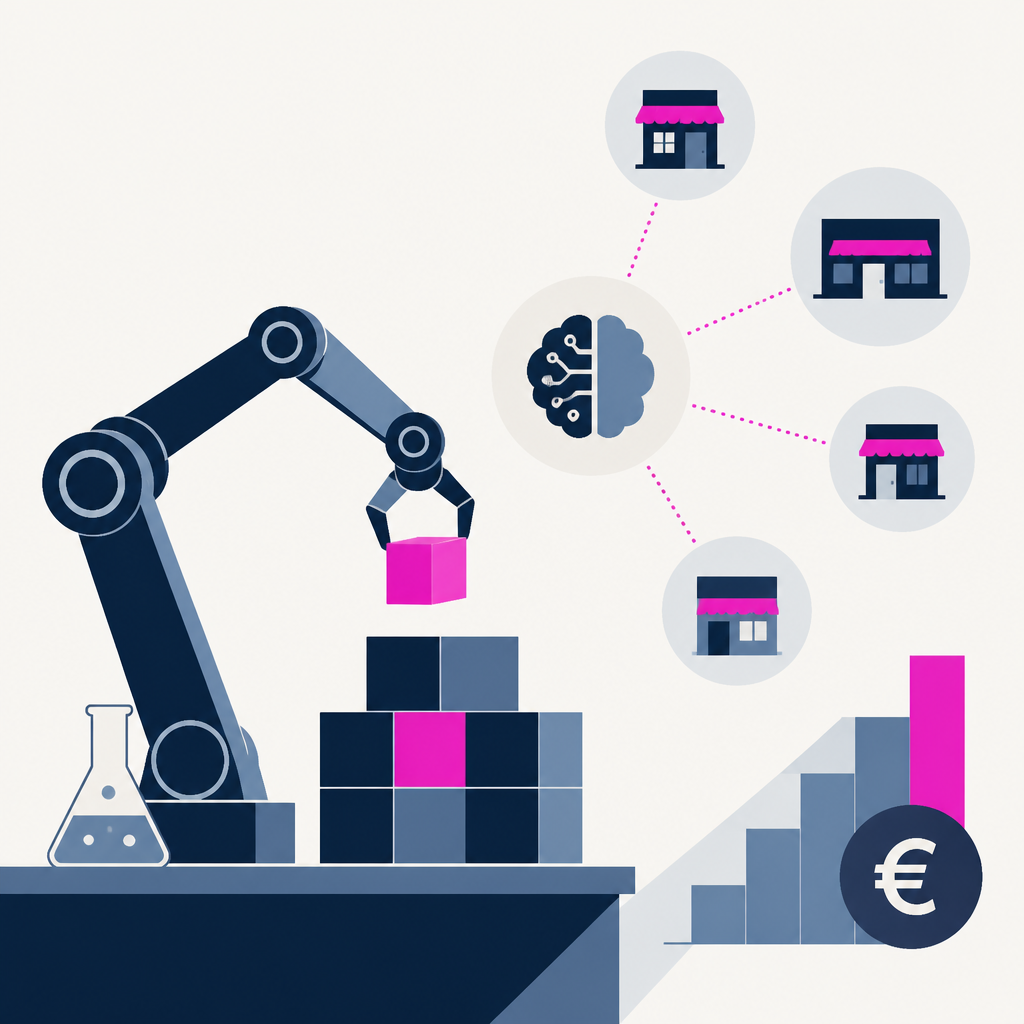
OWOW Venture Studio raised €2.65 million from eight family offices and angel investors to build and accelerate early-stage B2B startups in traditional industries such as manufacturing and OEMs. Investments will range from €100,000 to €250,000 per startup, and OWOW plans to add at least three new ventures to its portfolio each year for the next three years. As a result, the studio will back both internal ideas and external founders, while providing product development, market validation, and AI and software support.
The Catnip Queen founder describes how AI is shifting day-to-day ecommerce work for a small multichannel pet brand across research, listings, and ad operations. The single most concrete change is that market research that previously took 5 to 7 days of spreadsheet work can now return answers in hours. As a result, the brand can create and iterate faster within channel-specific rules using AI for execution while keeping strategy and brand voice as the main differentiators.
Enterprise Nation and the Visa Foundation launched AI for Every Business, a three-year UK and Ireland programme to help micro and small businesses adopt AI tools securely. The initiative is backed by a $2 million grant and aims to provide free support to more than 157,000 small businesses over three years. Small businesses will receive targeted learning and assessments (with a smaller cohort getting coaching and mentorship), and the programme is set to begin in autumn 2026.
The Perforce Delphix 2026 State of AI and Data Privacy Report found that privacy controls are making production-quality data harder to obtain and can break record relationships needed for reliable AI, analytics, and testing. 51% of surveyed organizations said they face data quality challenges. Organizations need to redesign privacy approaches to preserve referential integrity and usability so protected datasets remain realistic, representative, and accessible for AI development without adding new bottlenecks.
Reply Next raised €400,000 in pre-seed funding for its AI platform that manages multi-location businesses’ digital presence. The round was led by 4Founders Capital and totals €400,000. The company will use the funds to expand its technology and sales teams, speed up product development, and build new AI agents to automate customer responses and location-level actions.
Swiss tech companies raised more than €1.1 billion in the first half of 2026, with funding concentrated in a few large rounds across capital-intensive sectors. The largest disclosed single round among the top ten was Kandou AI’s $225M raised in H1 2026 for scaling production of AI connectivity chips. The market pattern described shifts toward early-stage breadth alongside later-stage concentration in semiconductors, energy, and healthtech, with most top-funding going to ten companies.
UIDCaption launched as a Windows app for generating automatic and animated captions locally on a PC without uploading videos to the cloud. It supports an end-to-end flow where you import a video, generate captions, edit them in a visual editor, and export the results. This adds a local, editor-based caption workflow instead of cloud-based processing.
China is expanding digital healthcare—using apps, telemedicine, and AI doctor chat—while also increasing drug research and licensing as Western firms buy rights to Chinese-developed medicines. The article says China’s share of global drug out-licensing deals could reach 60% this year. As a result, more drug and health-tech capabilities from China are entering global markets, while debates over safety, trade restrictions, and what the West will accept (including AI medical avatars) intensify.
Samsung’s Bespoke AI refrigerators in South Korea stopped cooling after a faulty software update rolled out via SmartThings, leaving some units with no display, lights, or cooling. The update was pushed on Tuesday afternoon and Samsung halted it the next morning. Samsung paused the update, launched an emergency response team, and offers free repairs with technician visits while deciding how to handle potential food-compensation cases.
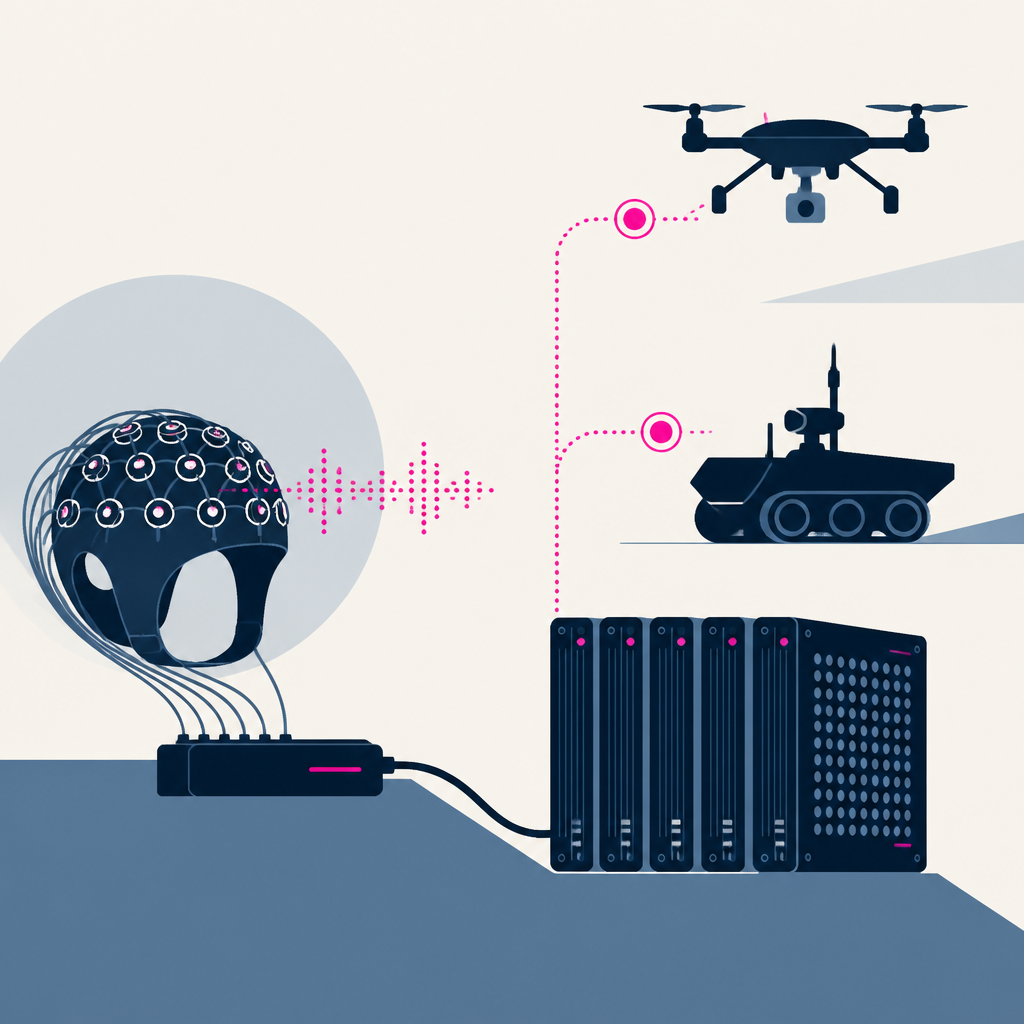
Cerebionics is building a modular, non-invasive brain-computer interface platform that translates EEG-recorded intent into machine commands for systems like drones and unmanned vehicles. In the optimistic case described, onboarding and calibration can take about 1 hour. The company says it will focus next on making the decoder and overall software generalisable so the system can scale with minimal calibration and cost closer to conventional controllers.
Paris overtook London as Europe’s leading AI hub in the first AI Cities Index, which evaluated AI investment, innovation, and real-world applications. The index covered 57 cities across 36 countries. VC investors on both sides of the Channel pushed back on the ranking’s conclusions as a result.
Meta announced lightweight Meta VR Glasses at its Connect event, positioning them against Apple’s Vision Pro. The glasses weigh 100 grams and are set to ship in spring 2027 for $1,299. Meta also unveiled the Muse Charm keychain device with a real-time voice Muse AI agent and refreshed its smart glasses lineup.
NUS Enterprise (rebranded as NUSX) opened its first European outpost in Munich with UnternehmerTUM, linking the Singapore and Munich startup ecosystems across outposts, investment, and talent development. The partnership initial focus includes biotech, AI, and semiconductors at the Munich Urban Colab, an 11,000-square-metre innovation centre. As a result, NUS students gain access to European validation and UnternehmerTUM programmes, while Munich-based ventures may get an entry point into Singapore via a planned UnternehmerTUM presence, alongside an expanded NUS VC programme and related AI-driven research commercialisation efforts like Nova.
Numeral raised $100 million in Series C funding to automate sales tax, VAT, and GST compliance for businesses using an AI-backed tax platform. The round is led by Insight Partners and values the company’s total funding at $157 million. The investment is intended to expand Numeral’s software reach and teams, as California’s SaaS tax law begins taking effect in January 2027.
Every AI story that matters,
in your inbox by 8am.
TLDRocket reads all relevant sources, removes duplicate coverage, and summarises the
day in two minutes. Follow companies and topics for alerts, or get the
briefing in Slack. Free, no spam, unsubscribe anytime.
Reading TLDRocket needs no cookies, and the readership counts we rely on come from
our own cookieless analytics. Google Analytics is the exception: it sets cookies and
reports to Google, so it stays switched off until you allow it. You can change your
mind any time from “Cookie settings” in the footer.
Strictly necessary
Session security and form protection (tldrocket-session,
XSRF-TOKEN, 2 hours). The site cannot work without them,
so they need no consent.
Always on
Google Analytics 4 (_ga,
_ga_<id>, up to 2 years). Measures which
stories and sections readers use. Google acts as a third-party processor and may
store the data outside the EU. No advertising, no profiling, no data sold.