
Meta announces new lightweight virtual reality glasses to one-up Apple's Vision Pro
Fortune Sebastian Herrera ● Covered by 6 sources
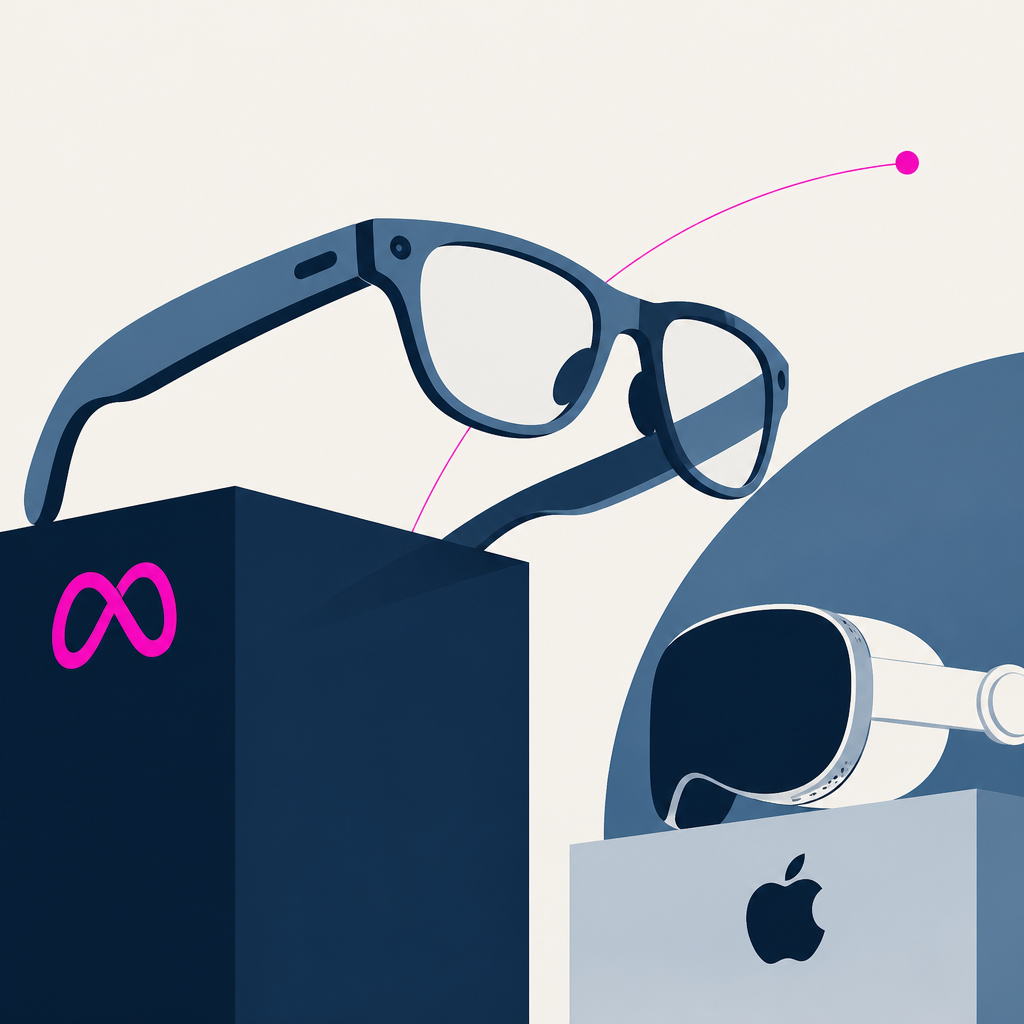
Meta showed 100-gram VR glasses that aim at Apple’s Vision Pro. They’re lighter, cheaper, and not coming until spring 2027.
Based on reporting by Fortune, Sebastian Herrera — read the original for the full story.
Summary, retelling and take written by AI under human oversight; images are AI-generated illustrations. How we work · Report an error
Meta just made its next move against Apple a lot more literal. At Connect in Menlo Park, Mark Zuckerberg unveiled Meta VR Glasses, a 100-gram device he pitched as light enough to feel like normal glasses. The target is obvious: Apple’s Vision Pro, which has been weighed down by size, heft, and a price that sits around $3,700.
Meta says the glasses will ship in spring 2027 and cost $1,299. They’re aimed at cinematic uses like movies, spatial computing, and gaming, and they come with a connected battery pack. That’s still a long wait for something meant to prove the future is already here, but Zuckerberg clearly wants the market to see a different kind of headset race: fewer devices, only after “real breakthroughs.”
He also leaned hard on the social proof. In the demo, creators including Casey Neistat and Draymond Green reacted to the glasses, while Meta showed people using them to watch an NBA game and juggle apps. The point wasn’t subtle. Apple’s mixed-reality bet may have arrived first, but Meta is trying to make it look clunky and expensive.
And Zuckerberg didn’t stop at glasses. He introduced the Muse Charm, a compact handheld device that fits on a keychain and uses Meta’s Muse AI agent, including a real-time voice mode. Meta says it has only a few early working units and wants to release it by the holidays. The company is also pushing new versions of its smart glasses: updated Ray-Ban camera glasses, Meta Display glasses with a small digital box on the right lens, and its first audio-only glasses in Ray-Ban’s Clubmaster and Burbank styles.
My take — AI-written commentary, not fact-checked reporting
Meta is doing what Meta does best: turning hardware into a status fight and calling it the future. Apple made the easy mistake of shipping a luxury brick; Meta is now selling lightness, style, and a battery pack as progress. That’s probably the smarter play, especially when the post-smartphone era looks less like one big headset and more like a pile of small, annoying accessories.
Read more about this at: Fortune