NetApp is promoting its unified storage as the data foundation for enterprise AI workloads at its INSIGHT event and via theCUBE coverage. The event and exclusive theCUBE livestream are scheduled for Sept. 30. The focus shifts toward making enterprise data continuously available across data center, cloud, and edge to reduce fragmentation and operational complexity as AI moves from pilots to production.
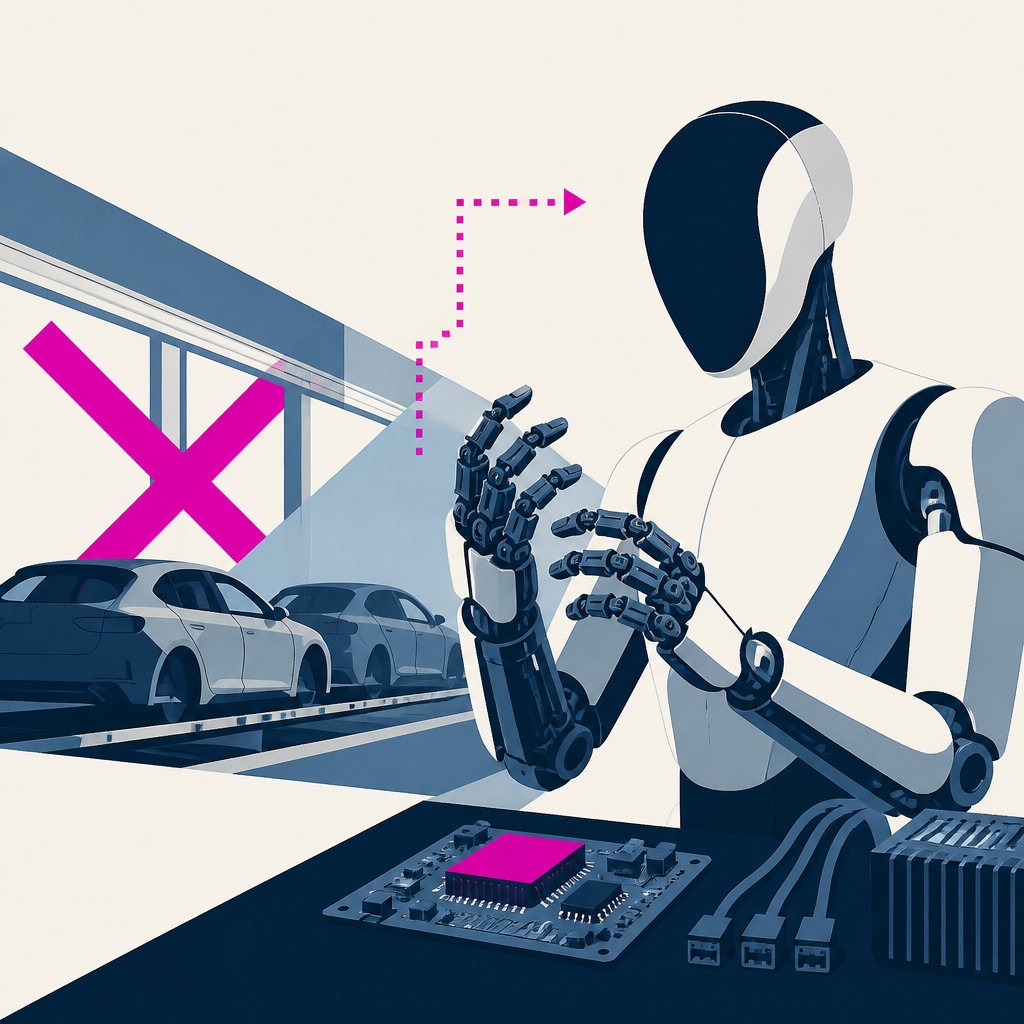
Tesla is trying to train its Optimus humanoid robots to replace workers, but complex robot hands and employee resistance are slowing scaling. Tesla stopped making the Model S and Model X at its Fremont factory in May 2026. That shift is intensifying internal pushback while Tesla works through multiple development complications to reach mass production.
Economics researchers at CESifo report that recent college graduates have not seen significant hiring displacement in AI-impacted occupations. The working paper states there is no evidence of any significant, widespread displacement or reduction in hiring in absolute or relative levels. The finding challenges earlier claims by suggesting unemployment data so far doesn’t show broad reductions in entry-level hiring as AI adoption rises.
The Rockefeller Foundation president says U.S. global standing is declining, citing a survey showing many people view the United States as a threat rather than an example. One-third of people globally see the United States as a threat. He argues the U.S. should change foreign assistance by shifting from traditional donor-driven aid to more politically sustainable investments, including technology use such as AI tools.
WarTalk hosts Bryan Clark, Justin McIntosh, and Tony Stark discussed U.S. defense deployments, a continued Iran blockade, and how upcoming midterm budget pressure could reshape the Pentagon and its defense-tech suppliers. They said the midterms are about 39 days away and that roughly 30% of U.S. missile stockpiles are tied up amid Middle East operations. As a result, they expect defense spending to flatten or drop, more contractors (including Anduril) to refuse “work at risk,” and a risk of reduced readiness if new platforms can’t be sustained.
The article reports improving interoperability between OpenTelemetry and Prometheus, alongside real-world migrations and survey data on observability for AI systems. Ease-of-use ratings for using both rose 0.5 points, from 3.1 to 3.6, while views of it as “hard” fell from 29% to 10%. Teams are shifting more instrumentation and metrics pipelines to OpenTelemetry while still targeting remaining gaps in data-model alignment, metadata handling, and naming/formatting.
Meta promoted its new AI app Muse at Meta Connect as early downloads and reviews surged. Muse passed 2.5 million downloads after launch on September 8 and reached more than 3.4 million downloads by the latest Sensor Tower estimates. The app’s momentum increased further after Meta’s conference, with daily active users rising 27% on Wednesday and Muse holding top rankings on the U.S. App Store and Google Play.
Meta’s consumer AI agent Muse is reportedly moving faster than ChatGPT and is being positioned for smart glasses and a small Tamagotchi-style device. OpenAI and Anthropic released updated models in close succession, with OpenAI’s GPT-6 updates arriving 90 minutes after Anthropic’s Opus 5.5. The focus shifts to Meta’s rollout as the pace of frontier-model releases and the availability of consumer AI experiences both accelerate.
Datacor built self-service rental analytics inside its TrackAbout application by embedding Amazon Quick Sight dashboards and a natural-language search for rental billing data previously locked behind IT reports. The rollout started with a data pipeline phase in July 2025, then added a pilot of 6-7 customers in September 2025 and released broadly in November 2025. The change lets business users explore and ask questions about rental performance without filing IT tickets, with data refreshed automatically from operational systems into Quick Sight datasets.
NatWest’s AI Adoption Report finds that UK businesses are split between early-stage AI pilots and a small share that has embedded AI to change operations. Only 6% of firms are at the “transforming” stage, while adoption is much higher among companies with more than 100 employees (67% vs 36%) and most early users report time savings of 1% to 10% compared with 61% to 70% for transforming firms. NatWest responds by expanding training and support (including 5,000 AI engagements over 12 months), adding Google Cloud assistance, and launching a pilot with Lancaster University to help smaller firms move beyond experimentation.
Duqu, an Amsterdam fintech startup, raised a €1.5 million pre-seed round from Curiosity VC and No Such Ventures to expand its invoice-advance service. The company says its AI underwriting engine automates 95% of credit assessment and it can advance funds in 24 hours. As a result, Duqu plans to grow both the business and its modular, white-label AI credit assessment offering to banks and lenders.
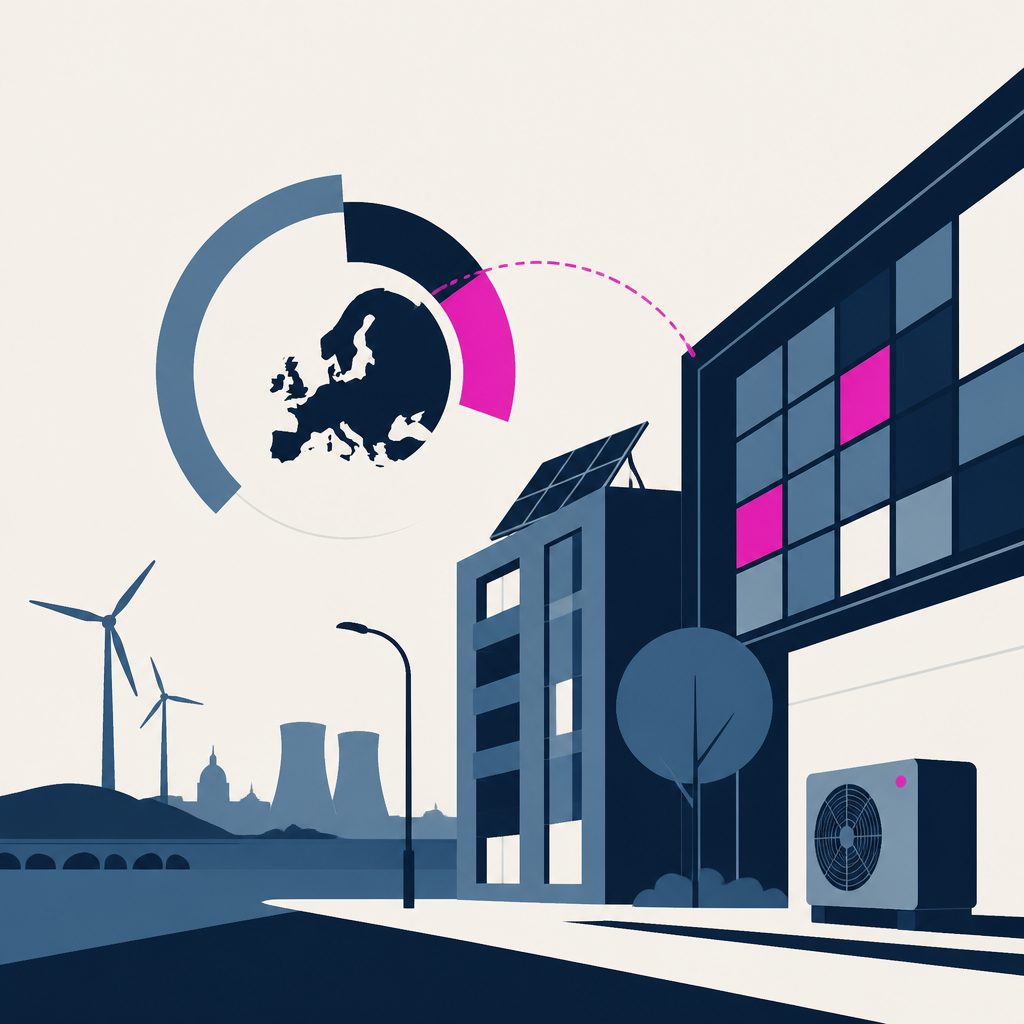
Russia’s invasion of Ukraine made European gas costs and supply security less predictable, forcing the energy transition to be planned around affordability and reliability as well as emissions cuts. Europe’s energy mix is cited as 48% renewables and 28% nuclear in 2024, but the article argues regulation should speed industry adoption and avoid slowing it while tightening emissions from remaining fossil generation. The piece says AI—especially “physical AI” for buildings and factories—can improve efficiency by learning from real-world conditions and automating tasks like multi-detector safety testing, reducing manual energy waste and labor bottlenecks.
Lovable’s staff describe how their AI-native organizational model changes day to day work beyond just using AI tools. 71% of people (including managers) in the author’s study said they want to spend at least half their time on IC work. As a result, titles, meetings, information flow, and management roles become less hierarchical and more autonomous, which can also increase duplicated effort and chaos.
The article argues that personal AI will grow by feeling approachable, earning trust via well-timed permission requests, and handling avoided tasks with useful next steps.
Akamai signed a multi-year compute agreement with Anthropic to expand its distributed CPU workload capacity using Akamai Cloud infrastructure and software.
Jennifer Pattison Tuohy tested AI camera features across Google’s Nest Doorbell, Aqara’s HomeKit-compatible G400, and Amazon’s Ring Pro 4K. The Ring Pro 4K scenario included multiple “motion detected” alerts while a requested video clip kept buffering. The takeaway is that the AI text summaries didn’t consistently translate into reliable, fast video playback across the setups.
Leonardo’s UK capability chief outlined how the defence prime links emerging technologies to deployment by working with startups through alliances, staged funding, and access to testing resources while embedding AI and autonomy into field-tested prototypes. He said government R&D funding is provided over four years to give small firms stable income and planning signals. The approach shifts innovation from one-off trials or acquisitions toward long-term partnership-based prototyping and capability evaluation tied to specific operational needs.
VCs debated when founders should take VC capital versus bootstrapping, and whether startups should raise larger rounds or aim for “top ten” lists at Infobip Shift in Zadar, Croatia. David Clark said founders have “never” been in a better time to bootstrap Central European startups. They argued that AI should be integrated into core product and customer value rather than added as a chatbot, and that founders should plan for AI usage-based credits while avoiding lock-in to a single AI model provider.
Lightspeed is targeting $250 million for a new early-stage India fund focused on AI, after filing disclosures about a new vehicle and sending an investor letter. The fund, Lightspeed India Partners V, aims to be half the size of its prior $500 million India fund raised in 2022 and plans to start investing within two months. Lightspeed will align its India fundraising cycle with its global funds and concentrate this new regional vehicle’s investments entirely on AI rather than multiple sectors.
Every AI story that matters,
in your inbox by 8am.
TLDRocket reads all relevant sources, removes duplicate coverage, and summarises the
day in two minutes. Follow companies and topics for alerts, or get the
briefing in Slack. Free, no spam, unsubscribe anytime.
Reading TLDRocket needs no cookies, and the readership counts we rely on come from
our own cookieless analytics. Google Analytics is the exception: it sets cookies and
reports to Google, so it stays switched off until you allow it. You can change your
mind any time from “Cookie settings” in the footer.
Strictly necessary
Session security and form protection (tldrocket-session,
XSRF-TOKEN, 2 hours). The site cannot work without them,
so they need no consent.
Always on
Google Analytics 4 (_ga,
_ga_<id>, up to 2 years). Measures which
stories and sections readers use. Google acts as a third-party processor and may
store the data outside the EU. No advertising, no profiling, no data sold.