Rockefeller Foundation President: America is losing its global standing. Here's how to fix it
Fortune Rajiv J. Shah
Opinion — commentary, not a factual news event.
A Rockefeller-backed poll says people in 34 countries now see the U.S. as the biggest threat. That’s a brutal sign America’s moral clout is slipping, and aid may need a reset.
Based on reporting by Fortune, Rajiv J. Shah — read the original for the full story.
Summary, retelling and take written by AI under human oversight; images are AI-generated illustrations. How we work · Report an error
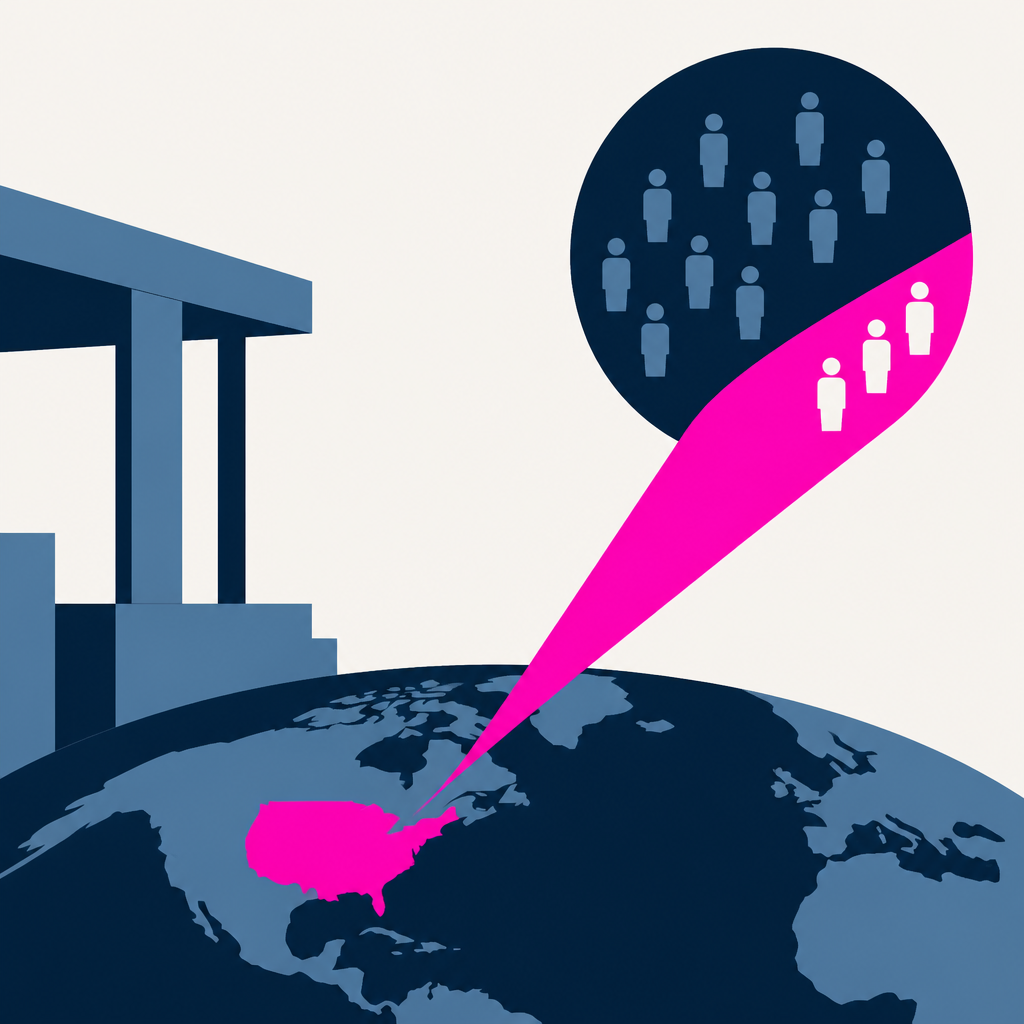
A new Rockefeller Foundation-backed survey lands like a cold slap: among 35,000 people in 34 countries, the United States was picked as the biggest threat in half of them. Roughly one in three respondents worldwide now sees America as a threat, more than China. For a country that has spent generations selling itself as the “last best hope on earth,” that’s a serious drop in trust.
The piece leans hard on the idea that America once won influence not just through force, but through a moral promise. It points to Kennedy’s portrait in schoolhouses abroad, the Marshall Plan, Cold War development aid, and health programs such as GAVI and PEPFAR as examples of the U.S. putting that promise into practice. The argument is simple enough: military power mattered, but so did the sense that America stood for universal human dignity.
The problem, according to the article, is that recent U.S. choices have pushed in the other direction. It cites $38 billion spent on a war of choice, alongside a $38 billion cut to global foreign assistance between 2024 and 2025. The result, it says, is not abstract reputational damage. The piece points to 9.4 million vulnerable people projected to die by 2030 if food and disease programs keep shrinking, and to Boston University researchers who estimate more than 700,000 deaths already tied to dismantled programs. In Kenya’s Kakuma refugee camp, 150,000 people reportedly lost food support after U.S. funding to the World Food Programme stopped.
The fix, in this telling, is not a return to old-school aid alone. The article pushes a newer model built around electricity access, AI tools, and more countries and sectors sharing the load. It highlights Mission 300, which has reached almost 100 million people in Africa with electricity access, and says every dollar invested has brought in $15 of additional investment. It also cites a Gates Foundation finding of a 16% jump in diagnostic accuracy at Penda Health clinics in Nairobi after an AI “second opinion” tool was introduced. The pitch is that America can still lead — but only if it stops confusing fear with strength.
My take — AI-written commentary, not fact-checked reporting
This is the rare foreign-policy argument that actually sounds like adulthood. America can’t keep acting shocked when it funds less dignity and more chaos, then acts surprised when the world notices. The old aid machine clearly needs a rebuild, not a victory lap, and pretending otherwise is just expensive nostalgia.
Read more about this at: Fortune