AI growth gap emerging across UK businesses, as smaller firms risk missing out on AI opportunity
Startups Magazine Roshini Bains ● Covered by 2 sources
UK businesses are splitting on AI: bigger firms are pulling ahead, smaller ones are still testing it. NatWest says the gap may come down to skills, confidence and cash, not geography.
Based on reporting by Startups Magazine, Roshini Bains — read the original for the full story.
Summary, retelling and take written by AI under human oversight; images are AI-generated illustrations. How we work · Report an error
Britain may be heading for an AI split. NatWest’s first AI Adoption Report, based on 1,400 UK SMEs and mid-market firms, found that 44% are already using AI and another 41% expect to adopt it within five years. But only 6% have reached the point where AI is truly reshaping operations, decisions and customer experience.
That matters because plenty of companies are still barely past the starting line. Nearly a third of firms already using AI are stuck in pilot mode or early awareness-building. They can say they’re experimenting. They can’t yet claim they’re getting much business value out of it.
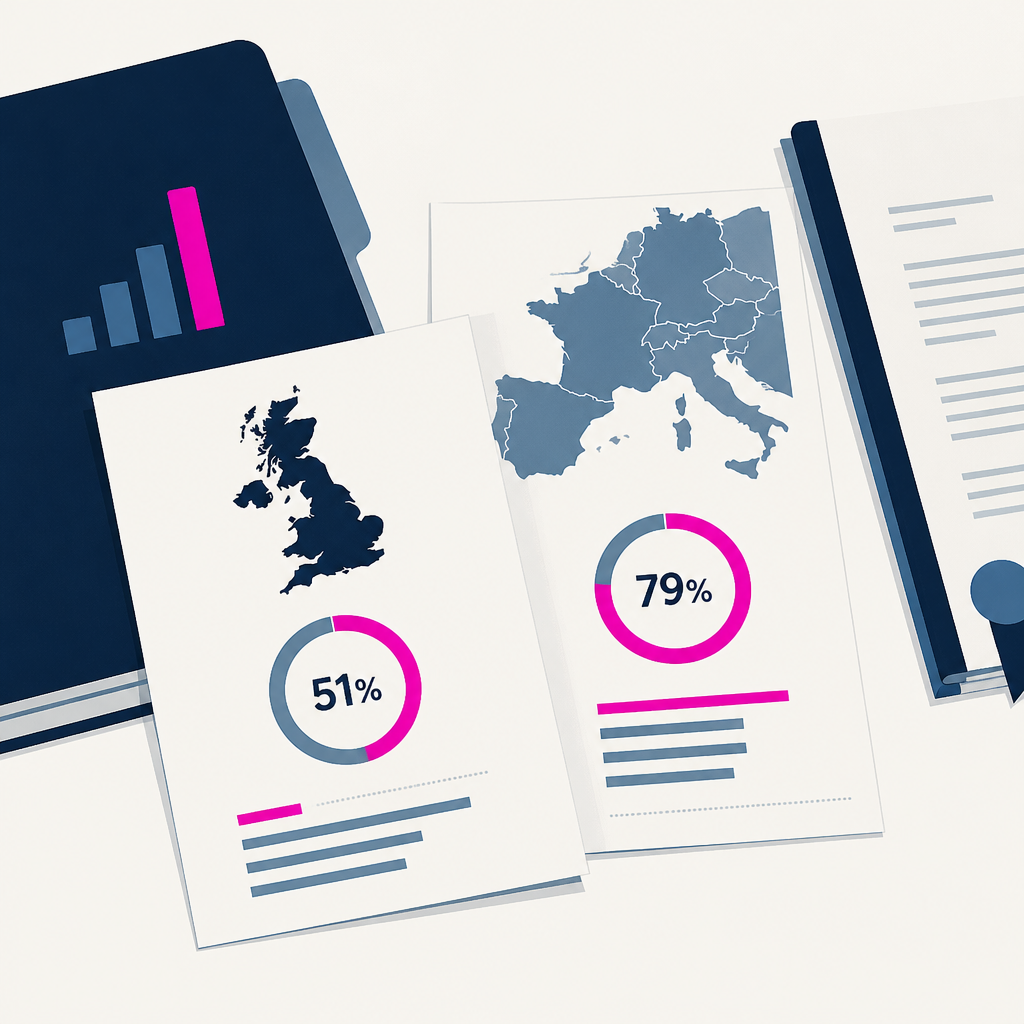
Size, not postcode, seems to be the real divider. Firms with more than 100 employees are using AI at a rate of 67%, versus 36% for smaller companies. NatWest says regional factors explain just 8% of the variation in adoption, while headcount explains 39% and turnover another 24%. In other words: this looks less like a London-versus-the-regions story than a story about scale, skills and leadership confidence.
The payoff grows fast once businesses move beyond dabbling. NatWest says companies in the early stages usually report time savings of 1% to 10%, while businesses in the “transforming” stage often see savings of 61% to 70%. Almost all firms in that category, 95%, report higher revenue. Fewer than three in ten firms at the earliest stage can say the same.
Customers, meanwhile, are not rejecting AI. In a separate survey of more than 2,400 NatWest retail customers, 74% said AI makes everyday tasks easier and 67% said it can improve customer service. But they want human backup. 81% said access to a real person when needed is the most important trust factor, and around three-quarters want transparency about AI use, data handling and independent regulation.
NatWest also set out the blockers: skills shortages, tight budgets, uncertainty about which tools are worth it, weak in-house capability and security or governance worries. The bank is responding with 5,000 AI learning and adoption engagements through its Accelerator programme over the next 12 months, plus a broader partnership with Google Cloud and a pilot with Lancaster University for around 350 mid-sized firms. The message is blunt: the UK’s AI winners won’t just be the ones who buy the tech. They’ll be the ones who can actually use it.
My take — AI-written commentary, not fact-checked reporting
This is the usual British productivity story wearing an AI badge: the big firms get the tools, the small ones get a webinar. Everyone loves “innovation” right up until it needs skills, governance and actual money. The market is not missing AI; it’s missing the boring plumbing that makes AI useful.
Read more about this at: Startups Magazine