Fortune AIQ Summit speakers Amy Webb and Runway’s leadership argued that many large firms are wasting AI spending through pilots without strategy, organizational friction, and unclear ROI measures while employees build side tools or get overwhelmed. Webb estimated that taxi-style “learned helplessness” from giving workers tools but not skills has been a pattern for about 2 years, and she cited a case where a team later planned to spend a couple hundred million dollars on AI tokens after bypassing security approval. As a result, the discussion pushes companies to replace fear-and-FOMO rollouts with flexible mechanisms, clearer leadership, and responsible AI use that increases productivity rather than creating extra work.
Honeywell and Ecolab executives said deploying AI models in buildings and industrial operations is limited by real-world needs for accuracy and cost. Ecolab cut token costs by about 70% to 80% after running its best-available model on high-volume work, where token “tokenomics” became too expensive. They shift toward semi-autonomous, human-led operation and more optimized model setups, rather than fully autonomous agents at scale.
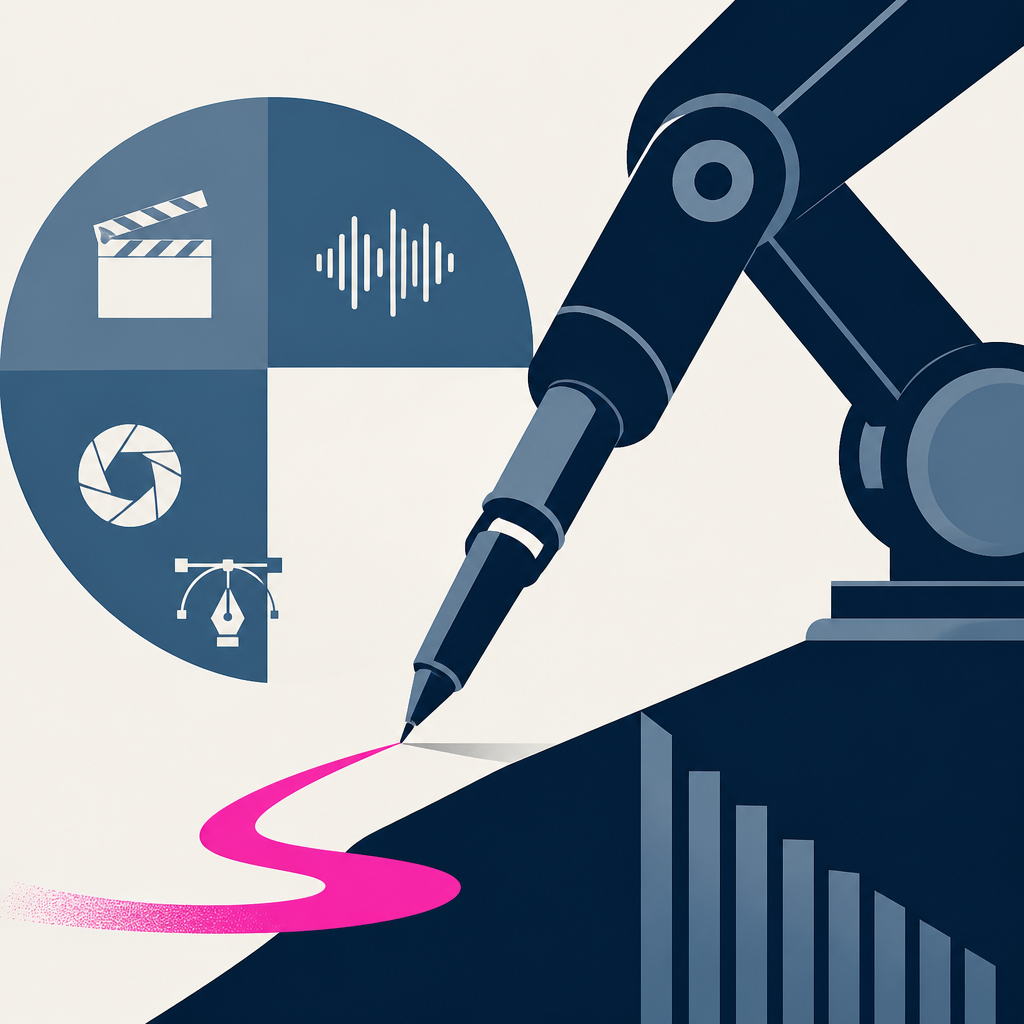
Creative class researcher Richard Florida argued that AI will not eliminate creative jobs but will change which kinds of creative work are most valuable. Creative-sector employment fell by roughly 189,000 jobs, with film and sound recording dropping 120,000 jobs between August 2022 and August 2026. Florida says the result will shift value toward social and judgment-based skills concentrated in major cities, while automating more routine cognitive work.
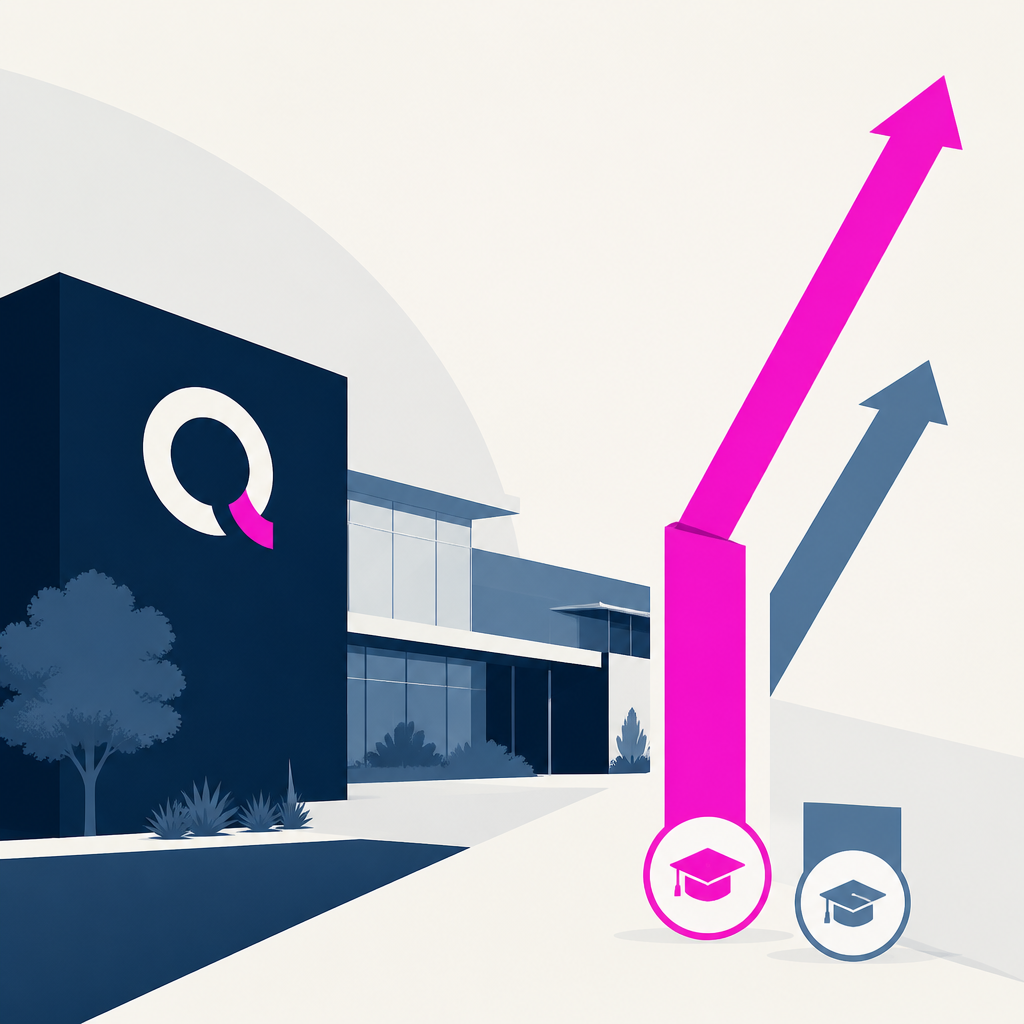
ServiceNow used its Enterprise AI Maturity Index to explain what separates AI “pacesetters” from other organizations at Fortune’s AIQ Summit. Pacesetters invest in ongoing AI upskilling at 57% versus 4% for other organizations, and the report’s largest gap is attracting, hiring, and retaining AI talent at 68% versus 10%. The focus shifts from providing AI tools broadly to building workforce training and recruiting plans plus disciplined process redesign and iterative deployment to achieve commercial value.
Pickle Sensei launched as an iPhone AI pickleball coach for solo training, providing ratings and drill feedback from one stroke.
It starts with a free trial that includes one rating, then charges $7.99 per month for Pro.
Users get technique scores, checkpoint scores, and slow-motion form review with a skeleton overlay, with videos staying on their device.
Talkdesk’s survey found that AI in customer experience is widely adopted but too rarely orchestrated to resolve end-to-end customer needs. Only 15% pair agentic AI with orchestration needed to complete resolution across systems. IT teams are urged to stop treating “use” as the goal and instead focus on operationalization—integrating data and workflows, embedding knowledge, picking resolution-focused journeys, and building measurable KPIs.
Kortext acquired the UK edtech platform StudyStash, a neuroscience-backed AI study tool that turns dense course materials into personalised flashcards, practice tests, and podcasts. The acquisition was reported with tens of thousands of students using StudyStash across 160+ institutions. StudyStash will gain access to Kortext’s institutional network while its founders are expected to remain CEO and CTO, continuing it as a distinct brand.
Booking Holdings CFO Ewout Steenbergen said AI hyperscalers that spend large sums on large language models do not truly know their ROI, while Booking is learning and rebuilding processes to manage benefits and costs. He cited that referrals from large language models accounted for under 1% of total room nights, and described using effective model cost routing to keep token costs tied to merge requests reaching production. Booking’s AI effort is shifting from experimentation toward end-to-end process redesign and higher-frequency trip planning, with early internal gains in customer service cost per booking and booking efficiency while customer-facing gains remain small.
Clay co-founder Kareem Amin will speak at TechCrunch Disrupt 2026 on how AI has created and shaped the emerging “GTM engineer” job category and how AI-native go-to-market systems are built. Clay said its annual recurring revenue tripled to $100 million in a year and later announced a $115 million Series D at a $7.1 billion valuation. The result is growing demand for automated revenue workflows—shifting go-to-market work from manual, tool-hopping tasks toward system-building that reduces reliance on adding headcount and traditional engineering for each workflow.
Airbnb CTO Ahmad Al-Dahle described how the company is rebuilding its software process and customer-facing systems around an “inside-out AI” strategy. Roughly half of Airbnb’s support tickets are now resolved purely by AI. The approach shifts development from handoff-heavy document workflows toward code-and-prototype iteration and expands AI from internal tooling like Everest into production services such as support and new guest-facing offerings.
Trustly received more than $40m in equity investment commitments from Nordic Capital and Alfvén & Didrikson to support its planned growth strategy. The company said it will use the funding to build new AI-leveraging products. Other existing shareholders will be given the option to join the capital raise, which is expected to conclude in November 2026.
Muse-related consumer agents are being pushed by app companies like DoorDash and Airbnb, creating tension over whether general agents like Meta’s Muse can stay ad-free while vertical agents compete via their own app surfaces. The DoorDash iOS pilot was reported as live for 20,000 US users, and Grocery orders built with Ask DoorDash had nearly 50% higher basket value than traditional orders. As a result, the monetization debate shifts from in-agent ads to merchant fee models and “trust” as general-purpose agents may be advantaged by cross-service advocacy without steering toward a single company’s inventory.
Yubi is a Mac menu-bar dictation app that lets you speak and have your words inserted at the cursor using modifier keys. It is described as a 6 MB app and is free to use. This changes how users can dictate text and request on-screen help without sending their voice off the Mac.
Black Lake Technologies founder Yuxiang Zhou switched his factory sales recruiting from traditional enterprise software hires to food delivery riders and then added intensive training to close deals. In 2025, Black Lake reported profit since then and said revenue grew more than 60% a year. Zhou argues AI agents are still replacing tasks rather than restructuring industries, so his new PopZao platform aims to accelerate factory integration of creator ideas by converting them into designs and industrial data.
Customers at a New York City restaurant have been pushing back on allergy warnings by citing ChatGPT, leading to close calls. In one case, diners with a shellfish allergy were served a fish dish that includes broth made from shellfish. As a result, servers say they must repeatedly ask about allergies and face more disputes when AI outputs conflict with food ingredients.
StudyStash, an adaptive study platform, was acquired by edtech company Kortext about a year after its founders graduated from the University of Birmingham. The deal terms were not disclosed, and StudyStash is used by tens of thousands of students across more than 160 institutions. The acquisition folds StudyStash into Kortext’s portfolio, keeps the founders as CEO and CTO, and leads the team to relocate to Silicon Valley while expanding in the US and other markets.
Lottie acquired CareMaster, a care billing software provider, to deepen its AI use in social care operations. The deal adds nearly 75 care providers—covering more than 750 care home locations—and Lottie expects Found plus CareMaster to support £3 billion in annual invoicing by the first half of 2027. Lottie plans to migrate CareMaster customers onto Found and use AI starting with credit control to cut manual administration across billing and the wider care customer journey.
Every AI story that matters,
in your inbox by 8am.
TLDRocket reads all relevant sources, removes duplicate coverage, and summarises the
day in two minutes. Follow companies and topics for alerts, or get the
briefing in Slack. Free, no spam, unsubscribe anytime.
Reading TLDRocket needs no cookies, and the readership counts we rely on come from
our own cookieless analytics. Google Analytics is the exception: it sets cookies and
reports to Google, so it stays switched off until you allow it. You can change your
mind any time from “Cookie settings” in the footer.
Strictly necessary
Session security and form protection (tldrocket-session,
XSRF-TOKEN, 2 hours). The site cannot work without them,
so they need no consent.
Always on
Google Analytics 4 (_ga,
_ga_<id>, up to 2 years). Measures which
stories and sections readers use. Google acts as a third-party processor and may
store the data outside the EU. No advertising, no profiling, no data sold.