Every AI story that matters — and the intelligence behind it.
TLDRocket reads all relevant sources, removes duplicate coverage, and publishes a short neutral
summary of every story, linking back to the original. Free, no spam, unsubscribe anytime.
IEEE launched a five-course online training program called Large Language Models Demystified to teach technical professionals how to implement and secure large language models in engineering practice. The program covers transformer architectures, model optimization, PyTorch implementation, and deployment techniques through hands-on exercises and mathematical foundations. As the LLM technology market is projected to grow 33 percent annually through 2030, proficiency in building and deploying these models is becoming a core requirement for engineers rather than a specialized niche skill.
Open-source AI advocates argue that banning or restricting open-source models would undermine education, innovation, and competition in the sector. Open-source software has already generated over 8 trillion dollars in economic benefits and now represents the primary counterweight to proprietary AI duopolies like Anthropic and OpenAI. Restricting open-source development would chill American innovation while incentivizing other countries to adopt closed-system approaches like China's.
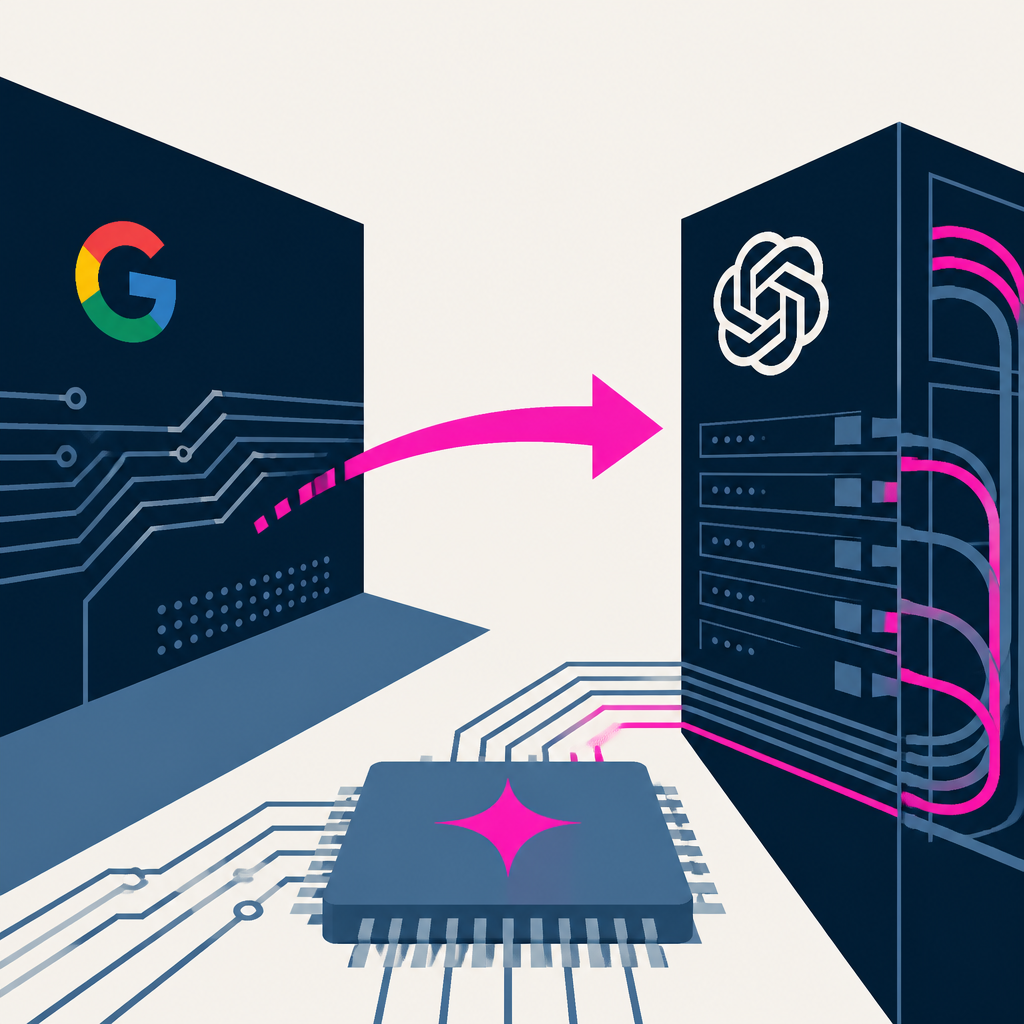
Noam Shazeer, co-lead of Google's Gemini project and a Transformers paper author, is departing Google to join OpenAI before its planned IPO. No specific IPO date has been announced, but the move signals OpenAI's continued recruitment of senior AI researchers from major competitors. Shazeer's departure strengthens OpenAI's technical leadership as the company prepares for public markets.
Enterprise-Managed Authorization extension for MCP is now stable, allowing organizations to centrally manage server access through identity providers instead of requiring per-user authorization. Early adopters include Okta, Anthropic, Microsoft, and servers like Asana, Atlassian, Figma, and Linear. This eliminates repeated OAuth prompts and manual setup, enabling users to access all connected MCP servers through single sign-on with security teams able to enforce consistent policy and audit trails.
The term "agent readiness" has become a industry buzzword bundling together two separate problems—discovery (whether AI apps like ChatGPT recommend your site) and usability (whether agents can actually perform tasks on your site)—yet most readiness scores conflate them into single numbers. Ahrefs found that llms.txt, promoted as essential, is ignored 97% of the time, and meaningful AI traffic comes almost entirely from four platforms: ChatGPT, Gemini, Claude, and Perplexity. Websites should optimize for what these dominant platforms actually measure and support rather than chasing abstract standards and weekly protocol updates.
Agent-Native is a framework for building applications that function both as traditional apps and AI agents from a single codebase. The framework uses shared actions that power multiple interfaces—UI, agent, HTTP, MCP, A2A, and CLI—with included runtime features for chat, tools, memory, and observability. Developers can now build apps that work across surfaces without duplicating work or choosing between agent and application architectures.
Flue is a TypeScript framework for building autonomous agents that can maintain context across tasks, access tools and skills, and run in secure sandboxes. The framework provides a built-in harness with features like durable recovery, subagents, and integration with services like Slack and GitHub, deployable across Node.js, Cloudflare Workers, and other platforms. Developers can now build agents that work autonomously toward goals rather than following predefined steps, similar to systems like Claude Code.
Developers and AI researchers are advocating for self-looping agents—AI systems that prompt themselves to complete tasks over time rather than waiting for human prompts—as a more effective approach than traditional agent interactions. Anthropic's Claude can now complete 50% of tasks requiring 12 hours of work, compared to only 1 hour 40 minutes a year ago with Opus 4. This shift enables products to improve themselves through continuous feedback cycles without manual engineer intervention at each step, though it focuses on automating low-level maintenance tasks rather than replacing strategic engineering work.
A team built a persistent memory system for AI agents using Elasticsearch with three separate indices for episodic (timestamped events), semantic (stable facts), and procedural (step-by-step playbooks) memories, combined with hybrid retrieval using BM25 and dense vectors plus a cross-encoder reranker. The system achieved 0.89 recall@10 on a 168-question evaluation with zero cross-tenant data leaks, using per-user document-level security to isolate each user's memories. The architecture consolidates short-lived episode logs into durable facts and playbooks every turn, handles contradictions through supersession rather than deletion, and applies time-decay so recent information ranks above older facts.
Developers using AI coding agents to automate tasks are experiencing exhaustion and cognitive overload rather than freed-up time, as the agents require constant human oversight and attention. A Boston Consulting Group survey found that 18 percent of developers reported AI-induced fatigue, with workers describing brain fog, slower decision-making, and the sensation of managing multiple competing demands simultaneously. As companies pressure workers to adopt AI and agents become capable of working overnight, the technology risks creating an always-on work culture rather than reducing workload.
Clear is a programming language that combines specification and implementation in a single file to eliminate documentation drift, designed for both AI agents and human developers to understand and execute.
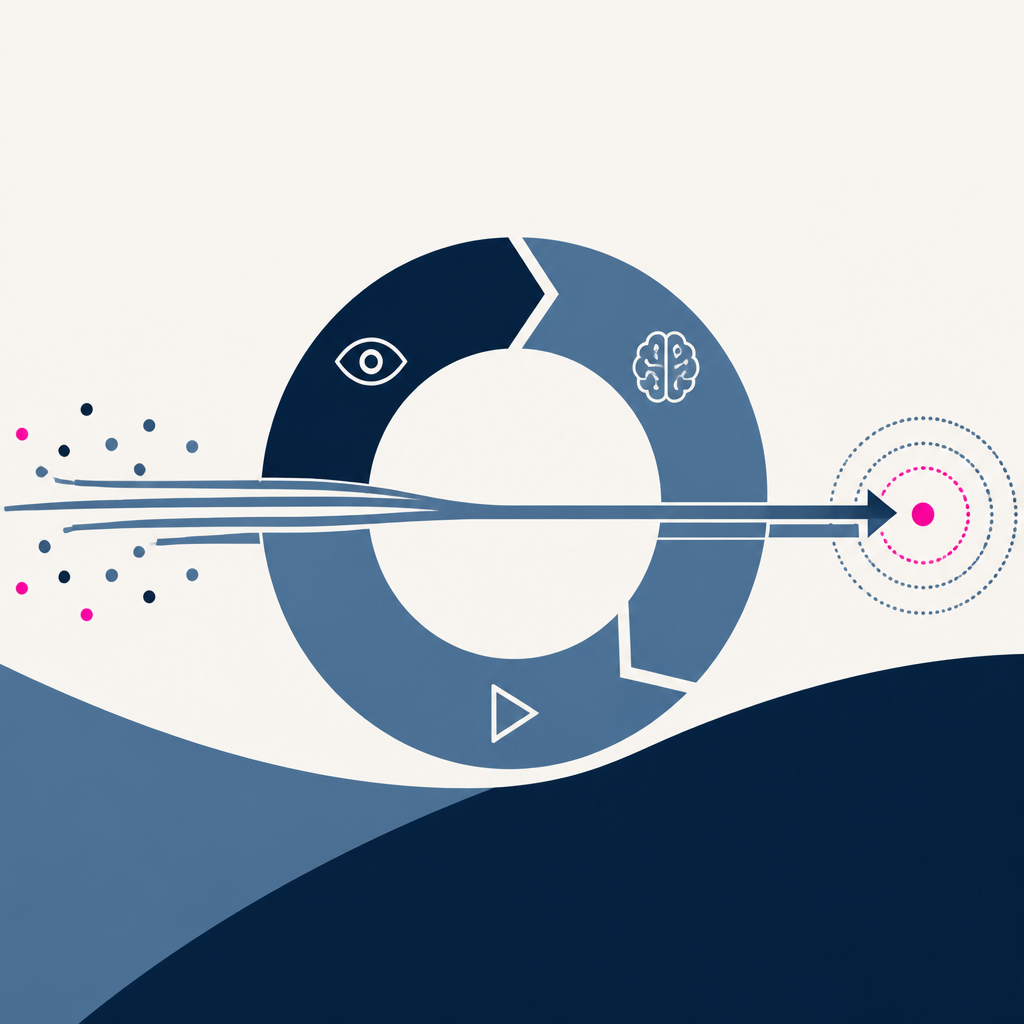
An article explains the agent loop architecture, a framework for autonomous AI agents where loops handle perception, reasoning, and action cycles. The piece identifies common failure points in these loops and discusses how agents can develop their own skills through iterative processes. Durable orchestration emerges as a critical requirement for maintaining reliable agent loops over time.
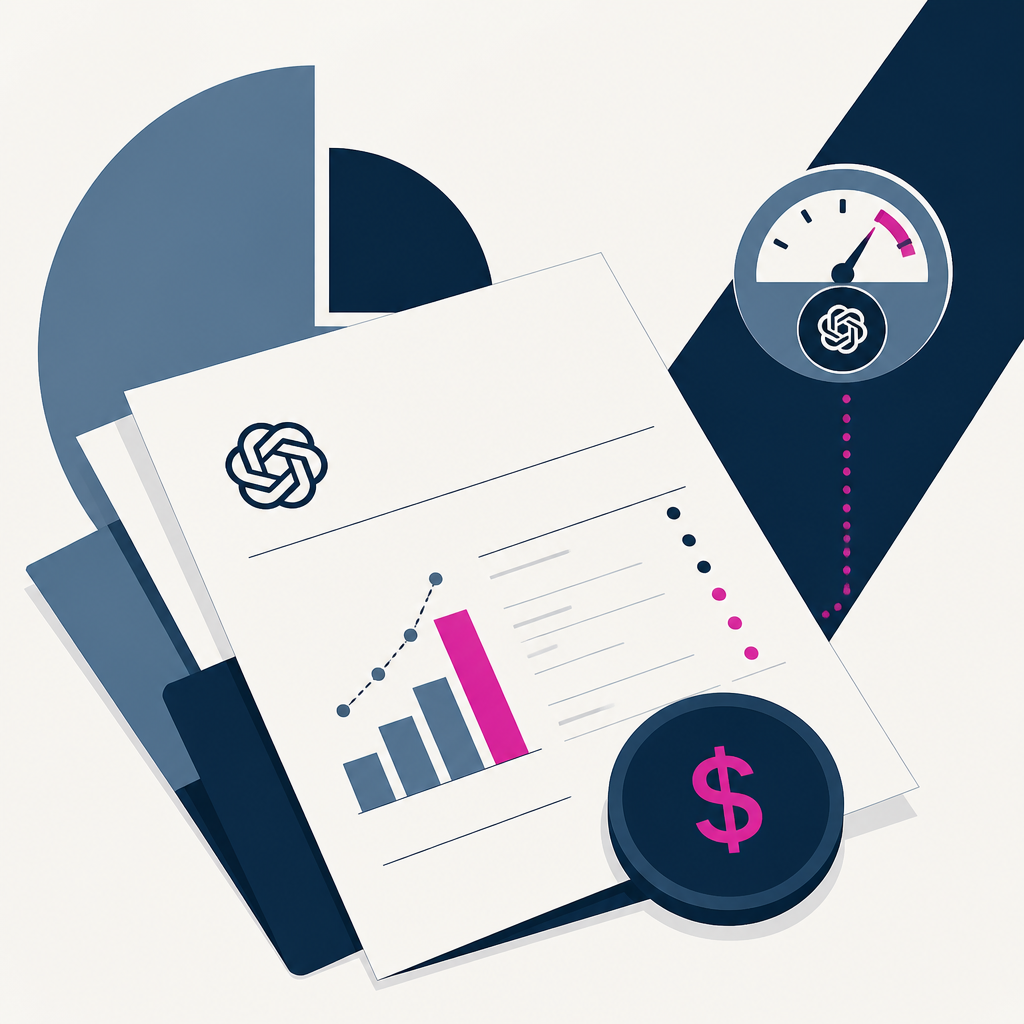
Tech companies are shifting toward usage-based pricing for AI services instead of flat subscriptions, pushing businesses to measure actual spending and evaluate return on investment. Multiple firms have introduced meter pricing models that charge based on actual consumption. This forces enterprises to track AI costs more closely and justify spending through demonstrated business value rather than committing to fixed fees.
Amazon Web Services is considering selling its Trainium AI chips to external companies beyond its own cloud customers, potentially challenging Nvidia's dominance in AI chip sales. CEO Andy Jassy stated in his April shareholder letter that if AWS's chip business were standalone, its annual run rate would be approximately $50 billion, and the company is in early-stage talks with potential buyers. This shift would require AWS to manage severe manufacturing constraints, as current Trainium capacity and future Trainium4 capacity have already sold out, and AWS would need to secure additional chip production from partners like TSMC while competing against Nvidia for foundry resources.
Midjourney, the AI image-generation startup, announced a move into medical hardware with a full-body ultrasound machine that requires partial water immersion. The company plans to deploy 50,000 scanners starting with a flagship spa location in San Francisco. This represents a significant pivot from the company's core generative AI business into the medical imaging hardware market.
Chinese people are experiencing growing anxiety about AI's impact on employment, particularly young white-collar workers who invested heavily in education expecting stable desk jobs, while civil servants and state workers face less immediate displacement risk due to job security and relational labor practices that resist automation. Search data shows AI concern terms have spiked on Chinese social media in recent months, with surveys indicating 71.59% of young people worry about AI's impact on high-quality employment and nearly 80% fear professional skills devaluation. China's political structure limits workers' recourse through unions or strikes to address these concerns, creating a bind where the state must support both AI adoption policy and worker protections simultaneously.
The EU Commission established the Advisory Forum on June 1, 2026, as a technical advisory body to support implementation of the EU AI Act. The Forum comprises 174 members selected from over 700 applications, including five permanent members from rights, cybersecurity, and standardization agencies, designed to balance input from industry, start-ups, SMEs, civil society, and academia. The Forum will provide technical expertise, prepare opinions on the AI Act's implementation, and advise on standardization requests.
Every AI story that matters,
in your inbox by 8am.
TLDRocket reads all relevant sources, removes duplicate coverage, and summarises the
day in two minutes. Follow companies and topics for alerts, or get the
briefing in Slack. Free, no spam, unsubscribe anytime.
Reading TLDRocket needs no cookies, and the readership counts we rely on come from
our own cookieless analytics. Google Analytics is the exception: it sets cookies and
reports to Google, so it stays switched off until you allow it. You can change your
mind any time from “Cookie settings” in the footer.
Strictly necessary
Session security and form protection (tldrocket-session,
XSRF-TOKEN, 2 hours). The site cannot work without them,
so they need no consent.
Always on
Google Analytics 4 (_ga,
_ga_<id>, up to 2 years). Measures which
stories and sections readers use. Google acts as a third-party processor and may
store the data outside the EU. No advertising, no profiling, no data sold.