
AI Startup Midjourney Pivots to Health With Ultrasound Machine
Bloomberg
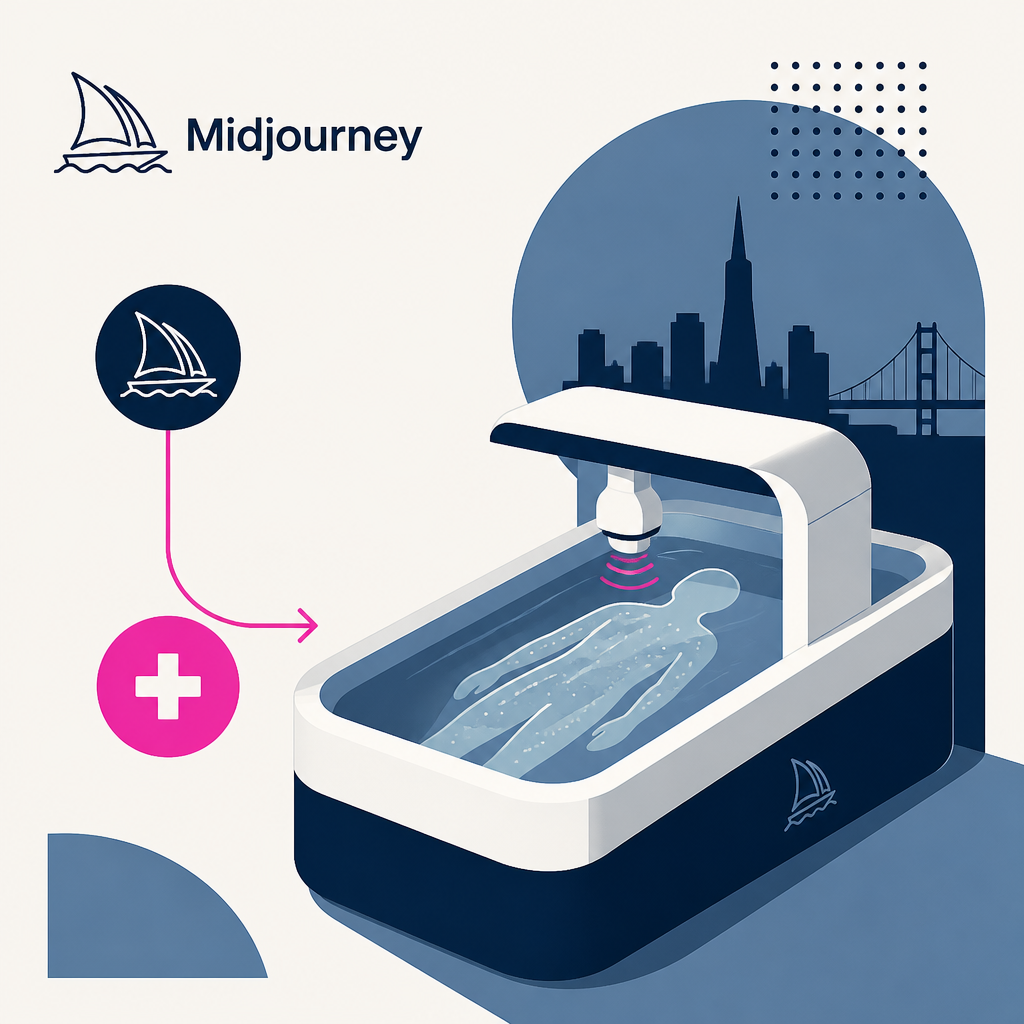
Midjourney, the AI image generator, is now building a full-body ultrasound scanner you sit in water for. They want 50,000 of these things, starting with a spa in San Francisco.
Based on reporting by Bloomberg — read the original for the full story.
Summary, retelling and take written by AI under human oversight; images are AI-generated illustrations. How we work · Report an error
Midjourney made its name turning text prompts into surreal, painterly images. Now it wants to scan your organs. The company just unveiled the Midjourney Scanner, a full-body ultrasound machine that requires users to be partially submerged in water, and it's planning to manufacture 50,000 of them.
The first unit will land somewhere unexpected: a 'Midjourney Spa' in San Francisco, rather than a hospital or imaging clinic. That choice says a lot about the strategy here. This isn't being pitched as a medical device rollout through insurance networks and radiologists. It's being pitched as a consumer wellness experience, the kind of thing you'd book alongside a massage.
Water-based ultrasound isn't some novel invention Midjourney cooked up in a lab overnight. Submersion helps sound waves travel more evenly through tissue, which is why some existing full-body scanning setups already use it. What's new is who's building it. A company known for diffusion models and art generation moving into hardware, and specifically into medical imaging hardware, is a genuinely strange pivot on paper.
But it fits a pattern showing up across the AI industry this year. Flush with cash and facing plateauing returns on pure software plays, image and language model makers are looking for physical products that can turn their brand into something people touch and feel. Health and wellness is an obvious target because it commands premium pricing and taps into a cultural moment obsessed with biomarkers, longevity, and quantified self data.
Whether Midjourney can actually execute at 50,000-unit scale, navigate FDA-adjacent regulatory questions around medical imaging claims, and convince people to trust an AI art company with their internal organs is a separate question entirely. Spas are a low-friction way to test demand without wading into full clinical certification just yet. That's probably the point.
My take — AI-written commentary, not fact-checked reporting
I run an AI news site and even I think this is a weird flex — an image-generation company deciding organs are the next canvas. It smells more like a hype-cycle diversification play than a genuine health mission, and burying it in a spa instead of a clinic tells you they know regulators would ask harder questions than spa customers will.
Read more about this at: Bloomberg
Related stories
 The next wave of AI startups will live in the physical world
Startups Magazine ·
14
Google Research at The Check Up: from healthcare innovation to real-world care settings
Google Research · 5 months ago ·
8
The next wave of AI startups will live in the physical world
Startups Magazine ·
14
Google Research at The Check Up: from healthcare innovation to real-world care settings
Google Research · 5 months ago ·
8